


 To help and support our clients we are providing a limited number of 250 daily discount codes. Hurry, first come, first served!




Business Analysis Courses FAQs
Business Analysis is the process of identifying business needs and finding solutions to problems. It involves analysing processes, systems, and data to improve performance and drive strategic decision-making across an organisation.
The duration of these Business Analysis Courses varies. Please visit our course pages for specific information.
Key skills include critical thinking, stakeholder communication, problem-solving, process modelling, data analysis, and the ability to translate business requirements into actionable outcomes. Familiarity with tools like UML, BPMN, or Agile frameworks is a bonus.
The prerequisites for Business Analysis Courses depend on the specific programme and the target group of professionals it serves. As a reputable training provider in the United Kingdom, we outline all entry requirements clearly on each course page, so learners can easily check what is needed before joining.
The benefits of attending these courses equips you with industry-relevant tools and techniques, enhances your decision-making abilities, prepares you for certification, and boosts your employability in project management, operations, and business improvement roles.
As a global accredited training provider, The Knowledge Academy offers delegates intensive training delivered by experienced instructors. You will also receive a digital delegate pack with important course notes and a certificate upon successful completion of the training.
As a top training provider, The Knowledge Academy offers 24/7 support via phone & email before attending, during, and after the course. Our customer support team is available to assist and promptly resolve any issues you may encounter.
Yes. The Knowledge Academy is an accredited BCS Training Provider, and all our Business Analysis Courses are fully accredited by The BCS (The Chartered Institute for IT). This guarantees globally recognised standards and high‑quality training delivery.
Yes. Since The Knowledge Academy is an established certification provider, you will receive a certificate of completion after finishing the course. This verifies your accomplishment and showcases your expertise in the subject.
Most exams are multiple-choice or scenario-based, lasting 60 to 90 minutes, depending on the course level. Some advanced certifications may include case studies or oral components.
Earning a Business Analysis Certification through a trusted training provider enhances your credibility, opening doors to senior roles and greater salary progression. Certified Business Analysts are highly valued for their ability to drive organisational transformation and improve business efficiency.
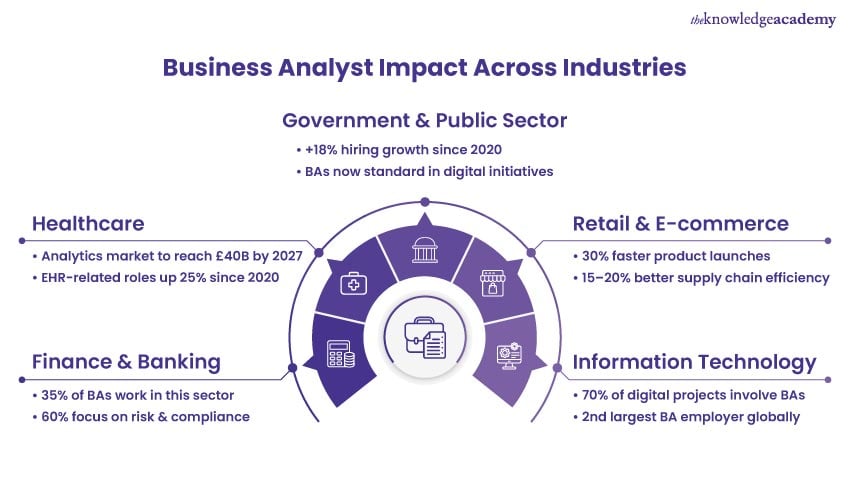
After completing these Business Analysis Courses, you can pursue roles such as Business Analyst, Process Analyst, Requirements Engineer, Product Owner, or Consultant across sectors like IT, healthcare, finance, government, and logistics.
People who enjoy solving problems, working with stakeholders, improving processes, and interpreting data are well-suited for Business Analysis. Strong communicators and critical thinkers thrive in this field.
It validates your ability to analyse and improve business processes. Certification makes you stand out to employers, enabling faster career progression and eligibility for senior or strategic business roles.
Our Business Analysis Courses are regularly updated based on BCS standards, Agile practices, technology trends, and evolving business methodologies. As an Accredited Business Analysis Training Provider, we ensure our content reflects real‑world case studies and remains relevant in today’s dynamic business landscape.
The Knowledge Academy in the United Kingdom stands out as a prestigious training provider known for its extensive course offerings, expert instructors, adaptable learning formats, and industry recognition. It's a dependable option for those seeking these Business Analysis Courses.
Please see our Business Analysis Courses available in the United Kingdom
The Knowledge Academy is one of the Leading global training provider for Business Analysis Courses.
The training fees for Business Analysis Courses in the United Kingdom starts from £2295

Why we're the go to training provider for you

Best price in the industry
You won't find better value in the marketplace. If you do find a lower price, we will beat it.

Trusted & Approved
Recognised by leading certification bodies, we deliver training you can trust.

Many delivery methods
Flexible delivery methods are available depending on your learning style.

High quality resources
Resources are included for a comprehensive learning experience.





"Really good course and well organised. Trainer was great with a sense of humour - his experience allowed a free flowing course, structured to help you gain as much information & relevant experience whilst helping prepare you for the exam"
Joshua Davies, Thames Water



Looking for more information on Business Analysis Courses
What is Business Analysis? A Beginner's Guide British Computer Society Jobs: Salary, Sector, and ScopeTop 20+ Business Analysis ToolsBusiness Impact Analysis (BIA): What it is and How to ConductWhat is Business Process Analysis? Complete GuideBusiness Analytics vs Business Analysis: Insightful GuideEffective Business Analysis Techniques to Achieve SuccessReal-Life Business Analysis Examples
British Computer Society Jobs: Salary, Sector, and ScopeTop 20+ Business Analysis ToolsBusiness Impact Analysis (BIA): What it is and How to ConductWhat is Business Process Analysis? Complete GuideBusiness Analytics vs Business Analysis: Insightful GuideEffective Business Analysis Techniques to Achieve SuccessReal-Life Business Analysis Examples 


 If you wish to make any changes to your course, please


