Who Should Attend this Emotional Intelligence Training Course?
This Emotional Intelligence Course is ideal for individuals who want to improve their self-awareness, empathy, and interpersonal skills to enhance personal and professional relationships. This course can be beneficial for a wide range of professionals, including:
- Managers
- Supervisors
- Team Leaders
- Sales Executives
- Customer Service Executives
- Educators
- Healthcare Professionals
Prerequisites for the Emotional Intelligence Training
There are no formal prerequisites to attend this Emotional Intelligence Training. However, an interest in self-awareness, communication, interpersonal relationships, and emotional development will help delegates engage effectively with the course content.
Emotional Intelligence Training Course Overview
Emotional Intelligence Training helps delegates understand how emotions influence behaviour, communication, and workplace interactions. It covers self-awareness, emotional responses, communication styles, habits, conflict management, active listening, and self-confidence.
Delegates develop skills in recognising emotional patterns, communicating assertively, listening effectively, managing conflict, and responding constructively to difficult situations. They also strengthen empathy, emotional awareness, and interpersonal communication.
This 1-Day course by The Knowledge Academy enables delegates to apply Emotional Intelligence across professional situations. They will be better equipped to manage challenging conversations, improve workplace relationships, and respond appropriately to different behavioural and emotional situations.
Emotional Intelligence Training Course Objectives
- To understand the principles of emotional intelligence
- To develop self-awareness and emotional regulation skills
- To improve empathy and interpersonal communication
- To manage conflict using emotional intelligence techniques
- To strengthen self-confidence and communication in workplace situations
- To apply emotional intelligence to leadership and decision-making
Learning Outcomes of this Emotional Intelligence Training
Upon completing this Emotional Intelligence Training, delegates will be able to apply emotional intelligence techniques to improve communication and manage workplace interactions effectively. They will strengthen professional relationships and support positive team performance.
Key Skills You'll Gain from this Emotional Intelligence Training
Our Emotional Intelligence Training develops the skills needed to understand emotions, improve communication, and build stronger workplace relationships. Delegates will gain the following skills:

- Self-Awareness: Recognise your emotions, understand their impact, and respond more effectively in different situations.
- Self-Regulation: Develop techniques to manage emotions, remain composed under pressure, and respond thoughtfully rather than react impulsively.
- Empathy: Strengthen your ability to understand others' perspectives, build trust, and improve professional relationships.
- Effective Communication: Improve active listening, emotional awareness, and communication techniques to foster productive interactions.
- Relationship Management: Build stronger workplace relationships by managing conflict, influencing others positively, and encouraging effective collaboration.
Benefits of this Emotional Intelligence Training
This Emotional Intelligence Training supports the development of practical capabilities that can be applied across a range of professional situations. Key benefits include:
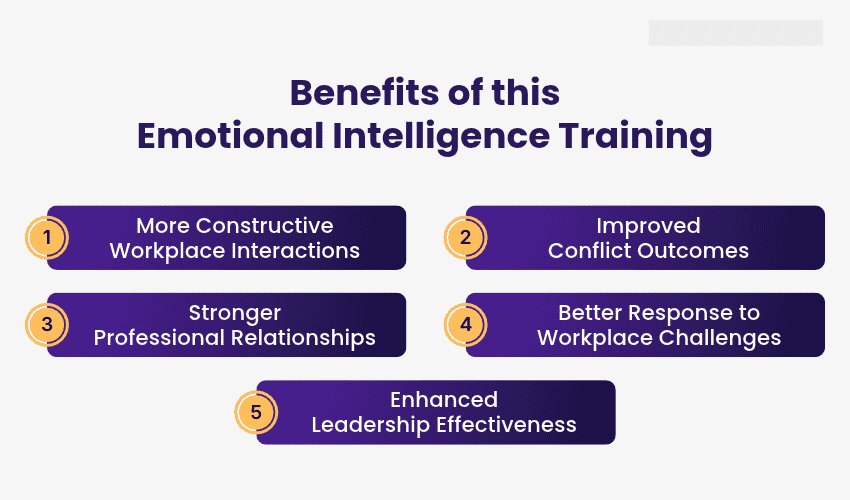
- More Constructive Workplace Interactions: Apply greater emotional awareness when communicating and responding to others.
- Improved Conflict Outcomes: Approach disagreements and difficult conversations with greater control and understanding.
- Stronger Professional Relationships: Use empathy, listening, and appropriate communication to support trust and cooperation.
- Better Response to Workplace Challenges: Apply Emotional Intelligence techniques when handling pressure, criticism, or changing situations.
- Enhanced Leadership Effectiveness: Use greater self-awareness, communication, and emotional understanding when working with and guiding others.





 If you miss out, enquire to get yourself on the waiting list for the next day!


 If you wish to make any changes to your course, please


