




We may not have the course you’re looking for. If you enquire or give us a call on 01344203999 and speak to our training experts, we may still be able to help with your training requirements.
How to Improve Mental Health: Small Steps for Big Changes
ByMichael JonesLast updated on: 09 September 2026
To improve mental health, focus on connecting with others, staying active, and gratitude. Prioritise sleep, eat a balanced diet, and manage stress effectively. Embrace mindfulness, nature, creativity, reduced screen time, and reaching out for support to build emotional resilience, enhance lasting wellbeing, and achieve greater inner balance.

Heaping care on your wellness can make you feel a lot more stable and empowered. Even small daily changes can make you happier and stronger emotionally. If your goal is to acquire knowledge on how to improve mental health, let us go through the major steps that are coming next.
What is Mental Wellbeing?
Mental wellness is the term used to describe the state of self-acceptance and the mastery of daily difficulties. It consists of one's emotional equilibrium, personal worth, and the ways in which one deals with other people and stress.
The condition of one's mental health determines to a large extent the degree of self-confidence, the quality of choices made, and the overall enjoyment of life. This is not to say that a person with good mental health will experience no unpleasant feelings at all; rather, such a person will have the strength to endure and overcome life's varying episodes.

10 Tips to Improve Your Mental Health
Improving mental well-being involves a diverse range of activities, from physical exercises and creative pursuits to mindfulness practices and fostering meaningful connections. Let’s explore the 10 effective ways to boost your overall mental health:
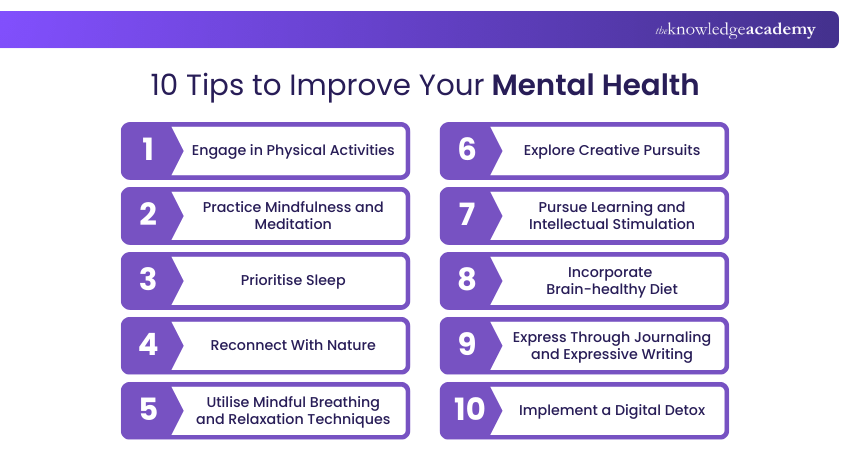
1) Engage in Physical Activities
Regular movement fuels both the body and mind. Exercise stimulates the release of endorphins and serotonin, reducing stress and boosting mood. It does not always have to be intense. Walking, yoga, or light stretching can improve focus, energy, and emotional resilience.
2) Practice Mindfulness and Meditation
Mindfulness trains the brain to stay present rather than dwell on worries or regrets. Daily meditation, even in short bursts, can quiet mental chatter, lower anxiety, and enhance emotional balance. This helps cultivate greater awareness, patience, and inner calm.
3) Prioritise Sleep
Restorative sleep is essential for brain function, emotional regulation, and decision-making. Creating a consistent routine, reducing screen time before bed, and optimising your sleep environment can significantly improve mental clarity, memory, and mood stability.
Elevate workplace dynamics with our Psychology of Behaviour at Work Training. Join now!
4) Reconnect With Nature
Spending time outdoors has a proven calming effect on the nervous system. Exposure to natural light balances circadian rhythms, while greenery reduces cortisol levels. Gardening, hiking, or even a simple walk in the park can restore balance and perspective.
5) Utilise Mindful Breathing and Relaxation Techniques
Conscious breathing activates the body’s relaxation response and helps reduce tension instantly. Techniques such as box breathing or progressive muscle relaxation can be practised anywhere, offering quick relief from stress and grounding in challenging situations.
6) Explore Creative Pursuits
Engaging in creativity such as painting, music, cooking, or crafts stimulates the brain in new ways and provides emotional release. Creativity encourages problem-solving, builds confidence, and offers a healthy outlet for expressing feelings that are difficult to verbalise.
7) Pursue Learning and Intellectual Stimulation
Continuous learning strengthens cognitive health and builds resilience against mental decline. Reading, attending courses, or learning a new skill keeps the mind active and engaged. It also provides a sense of achievement that supports self-worth.
8) Incorporate a Brain-healthy Diet
Food directly affects how we feel and think. Diets rich in omega-3s, antioxidants, and vitamins such as leafy greens, nuts, and oily fish support brain health. Limiting processed foods, excess sugar, and caffeine helps stabilise mood and energy levels.
9) Express Through Journaling and Expressive Writing
Writing allows emotions to be processed in a constructive way. Journaling clarifies thoughts, reduces mental clutter, and can highlight patterns that affect wellbeing. Expressive writing is linked to better emotional regulation, problem-solving, and even improvements in physical health.
10) Implement a Digital Detox
Constant notifications and online pressures can overwhelm the mind. Scheduling device-free time creates space for reflection, deeper human connections, and better sleep. A balanced relationship with technology supports focus, creativity, and reduced stress levels.
Start Psychology Of Personal Growth Training today and unlock lasting confidence, resilience, and personal transformation.
How to Improve Mental Health in the Workplace?
It is a supportive culture that encourages communication and balance that improves mental health at work. By offering resources, engaging in awareness, and nurturing a positive culture, the employees will be able to feel appreciated and supported.
1) Raise Awareness and Reduce Stigma
One of the first steps in improving Mental Health in the workplace is raising awareness and addressing stigma. Organisations can achieve this by conducting workshops, seminars, and training sessions that educate employees about Mental Health and common conditions.
Encouraging open discussions helps create a supportive environment where employees feel comfortable sharing concerns without fear of judgment. This approach fosters trust, reduces stigma, and builds understanding across the workplace.
2) Provide Accessible Support Services
Offering support services that are easy to access guarantees that employees will have high-speed access to help when required. The availability of counselling, resources, and confidential support acts as a motivating factor for staff to come forward.
Unambiguous communication, positive reinforcement, and skilled supervisors are the key to trust and to the development of a workforce that is healthier and more resilient.
3) Promote Work-life Balance
The burnout often results from excessive workload and constant pressure. By encouraging balance, employees can recharge, spend quality time with their families, and pursue hobbies. Encouraging a healthy work-life balance by setting reasonable working hours, promoting flexible schedules, and respecting employees' time off. This can help reduce the stress of employees.
Elevate workplace dynamics with our Psychology of Behaviour at Work Training. Join now!
4) Foster a Supportive Work Environment
Fostering a supportive work environment can cultivate a culture of empathy, respect, and understanding where employees feel valued, encouraged, and empowered. Encourage teamwork, collaboration, and mutual support among colleagues. This practice can help foster a sense of belonging and connection, significantly boosting morale and mental resilience.
5) Implement Stress-reduction Initiatives
Workplace stress is a major contributor to mental health issues, so stress-relief initiatives are important. Activities like yoga, meditation, and relaxation sessions can ease tension and support well-being. Group exercise, walking breaks, and quiet spaces help employees unwind and refocus, improving balance and concentration.
6) Encourage Regular Communication
Promote open and regular communication between managers and employees. Managers should continuously check in with their team members to discuss work-related challenges, goals, and achievements. Encourage employees to express their concerns and provide feedback. This approach can foster a sense of trust and transparency within the workplace.
7) Offer Training on Stress Management and Resilience
Organise training sessions on Stress Management techniques, resilience-building, and coping strategies. Organisations can equip employees with the skills and knowledge to handle stress effectively and manage their workload. This can also help them to maintain a positive mindset even in challenging situations. Resilient employees are better equipped to navigate workplace pressures and bounce back from setbacks.
Build optimism, wellbeing, and emotional balance daily with our Positive Psychology Course – Join Now!
8) Promote Physical Health
Physical health and mental well-being are closely intertwined. Encourage physical health initiatives such as providing access to gym facilities, organising group exercises, or promoting walking meetings. Healthy eating options in the workplace can also contribute to employees' overall well-being, regular physical activities and a balanced diet help in improving Mental Health.
9) Recognise and Reward Efforts
Acknowledging and rewarding employees’ efforts is vital for morale and mental wellbeing. Recognition, through awards or simple appreciation, builds self-esteem and a positive culture. When employees feel valued, it strengthens purpose, reduces stress, and boosts overall job satisfaction.
10) Provide Continuous Learning and Development Opportunities
Continuous learning supports mental health by developing new skills and knowledge. It enhances job performance while encouraging personal growth and fulfilment. Training and certifications aligned with career goals boost motivation and resilience, leading to greater job satisfaction and long-term wellbeing.
What are the Four Factors That Can Cause Mental Disorders?
Mental disorders can stem from multiple interconnected causes that affect both mind and body.
1) Biological factors: Genetics, brain chemistry, or brain injury
2) Psychological factors: Trauma, neglect, unresolved stress
3) Environmental factors: Poverty, isolation, unsafe living conditions
4) Lifestyle and substance use: Alcohol, drugs, poor diet, poor sleep
What is the Hardest Mental Illness to Live With?
Intense emotional swings, unstable relationships, and self-image problems make Borderline Personality Disorder (BPD) one of the toughest mental disorders to live with in the opinion of many mental health professionals. These issues can greatly interfere with day-to-day life and make the situation more difficult to handle.
Most of the time, the disorder is treated with a combination of long-term support, therapy, and structured treatment, which helps the patients to control their emotions and develop better ways of coping. With proper treatment, patients will not only get a significant improvement but also a higher level of stability.
Learn proven methods to manage stress better with our Handle Stress And Develop Your Resilience Course – Register Today!

Michael Jones develops practical resources that help professionals recognise workplace hazards and implement appropriate preventive measures. His content connects day-to-day safety responsibilities with the wider need for compliant and responsible working environments.
View Detail

 If you wish to make any changes to your course, please


