


We may not have the course you’re looking for. If you enquire or give us a call on 01344203999 and speak to our training experts, we may still be able to help with your training requirements.
Top Mindfulness Techniques to Improve Your Daily Routine
ByMichael JonesLast updated on: 21 October 2026
Explore different mindfulness techniques, including mindful breathing, body stretching and meditation, to understand how each practice encourages present-moment awareness.
Quick Preview
1. Mindfulness involves paying attention to present experiences with openness and without unnecessary judgement.2. Setting daily intentions encourages greater awareness and purpose in everyday activities.3. Mindful breathing, meditation and stretching promote awareness of the mind and body.4. Acknowledging emotions encourages thoughtful responses to challenging situations.5. Short, comfortable practices offer an accessible starting point for developing mindfulness habits.
Have you ever finished a meal without remembering how it tasted or reached your destination without noticing the journey? It's surprising how often we move through life on autopilot. With endless thoughts competing for attention, being fully present can feel unusually difficult.
Mindfulness techniques offer simple ways to reconnect with the moment and become more aware of everyday experiences. This blog explores different mindfulness techniques and how each helps bring awareness to the present moment. Let's dive in!
Mindfulness Techniques to Practise Every Day
Mindfulness does not have to be limited to structured exercises. Everyday activities can also provide opportunities to practise present-moment awareness. The following techniques can be adapted to various situations:
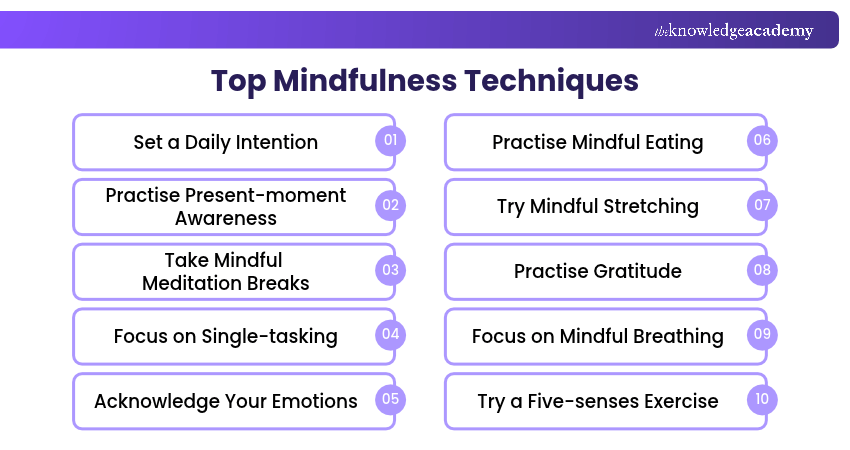
1) Set a Daily Intention
Setting a daily intention involves taking a moment to consider how you want to approach your day. Unlike setting goals or completing a to-do list, a mindful intention focuses on the attitude and awareness you bring to everyday experiences. For example, you might intend to be more patient with others, appreciate small moments or stay present during daily activities.
How to Practise:
a) Pause at the Start of Your Day: Take a moment to notice your thoughts, emotions and how you are feeling.
b) Choose an Intention: Identify a quality you would like to cultivate, such as patience, kindness or attentiveness.
c) Connect It to Daily Activities: Think about how you can apply your intention while eating, walking, spending time with family or completing household tasks.
d) Use Gentle Reminders: Revisit your intention at different points throughout the day to bring your attention back to the present.
e) Reflect Without Judgement: At the end of the day, consider how your intention influenced your thoughts, actions and interactions.
This practice can help you approach everyday experiences with greater awareness and purpose without placing unnecessary pressure on yourself.

2) Practise Present-moment Awareness
Present-moment awareness involves noticing what is happening around and within you during an activity. Rather than automatically moving from one task to another, you briefly recognise your current experience.
How to Practise:
a) Notice Your Surroundings: Observe the space around you, including sounds, colours or physical sensations.
b) Recognise Your Current Activity: Bring your attention towards what you are doing.
c) Acknowledge Distractions: Notice when your mind moves towards unrelated concerns.
d) Return Gently: Redirect your attention towards the present activity without criticising yourself.
e) Repeat When Convenient: Use ordinary transitions as opportunities to practise awareness.
For example, before joining a meeting, you might briefly notice your posture, surroundings and current thoughts.
Trainer's Insight
A wandering mind does not mean you are practising mindfulness incorrectly. Recognising when attention has shifted and choosing where to direct it next is an important part of developing present-moment awareness.
3) Take Mindful Meditation Breaks
Mindful meditation breaks involve setting aside short periods to observe thoughts, sensations or surroundings without unnecessary judgement. These breaks can be incorporated into a workday without requiring specialist equipment.
How to Practise:
a) Choose a Suitable Time: Find a moment when you can pause without neglecting an important responsibility.
b) Settle Comfortably: Sit in a position that feels natural and supportive.
c) Select an Attention Point: Focus on sounds, physical sensations or another comfortable aspect of your present experience.
d) Notice Distractions: Recognise thoughts as they arise without needing to follow them.
e) Return to Your Activity: Finish the practice gently and resume your work.
A guided meditation recording may be helpful for those who prefer additional structure.
Develop healthy habits for a balanced and mindful lifestyle with Meditation Course – Register today!
4) Focus on Single-tasking
Single-tasking involves directing attention towards one activity rather than repeatedly switching between multiple tasks. When combined with mindfulness, it encourages awareness of the activity itself rather than simply trying to work faster.
How to Practise:
a) Choose One Activity: Identify a task that currently requires your attention.
b) Create a Suitable Environment: Reduce avoidable interruptions where practical.
c) Notice the Process: Pay attention to the actions, physical sensations and thoughts that arise while completing the task, without judging them.
d) Recognise Distractions: Observe when unrelated thoughts or activities capture your attention.
e) Make Mindful Transitions: Pause briefly before moving towards another responsibility.
For example, while preparing a report, you might focus on reviewing the information rather than repeatedly switching to unrelated messages.
5) Acknowledge Your Emotions
Mindfulness involves recognising emotions without immediately suppressing, judging or reacting to them. Acknowledging feelings allows you to observe your emotional experience before deciding how to respond.
How to Practise:
a) Notice the Emotion: Recognise feelings such as frustration, disappointment or excitement.
b) Name the Experience: Gently identify what you are feeling without labelling it as good or bad.
c) Observe Physical Sensations: Notice whether the emotion is accompanied by tension, warmth or other bodily sensations.
d) Allow a Pause: Give yourself a moment before responding where circumstances permit.
e) Choose an Appropriate Response: Consider what action, if any, would be helpful.
Workplace Example: Handling a Difficult Conversation
Imagine receiving unexpected criticism during a meeting.Your immediate response might be frustration or defensiveness. Instead of reacting automatically, you could notice those feelings and pause briefly.This does not mean accepting unfair treatment or ignoring concerns. It means recognising your response and choosing how to communicate your perspective appropriately.
6) Practise Mindful Eating
Mindful eating involves paying attention to the sensory experience of food rather than eating entirely on autopilot. It encourages awareness of taste, smell, texture and other experiences associated with meals.
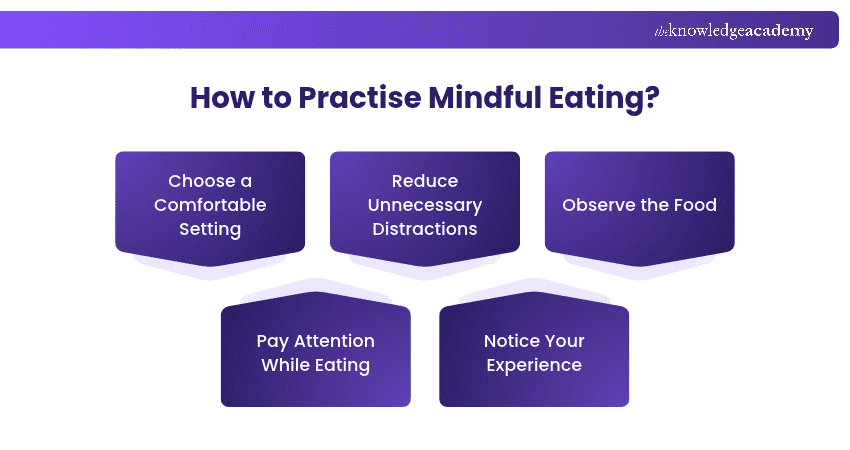
How to Practise:
a) Choose a Comfortable Setting: Find a quiet and comfortable place where you can enjoy your meal without feeling rushed. Creating a relaxed environment allows you to focus on the eating experience.
b) Reduce Unnecessary Distractions: Put aside work-related tasks, mobile phones and other distractions where possible. Giving your meal your full attention helps you become more aware of the eating process.
c) Observe the Food: Take a moment to notice the colours, appearance, aroma and texture of your food before eating. Engaging your senses encourages greater awareness of the present moment.
d) Pay Attention While Eating: Notice the different flavours, textures and sensations as you eat at a comfortable pace. Focus on each bite without rushing or feeling pressured to finish quickly.
e) Notice Your Experience: Pay attention to your thoughts, emotions and physical sensations throughout the meal. Recognise feelings of hunger, satisfaction or fullness without judging or trying to change them.
Mindful eating does not require rigid eating rules or forcing yourself to eat at a particular speed. It simply offers an opportunity to pay attention to an everyday activity.
7) Try Mindful Stretching
Mindful stretching combines gentle movement with awareness of bodily sensations. Rather than concentrating only on completing a stretch, you notice how the movement feels.
How to Practise:
a) Choose a Comfortable Movement: Select a gentle stretch suitable for your physical abilities.
b) Move Slowly: Avoid rushing or forcing your body into an uncomfortable position.
c) Notice Physical Sensations: Observe how different areas of your body respond.
d) Maintain Comfortable Breathing: Allow your breathing to remain natural throughout the movement.
e) Pause When Necessary: Stop or modify the movement if discomfort occurs.
For example, you might gently move your shoulders during a break while observing the sensations associated with the movement.
8) Practise Gratitude
Gratitude practices involve intentionally recognising experiences, relationships or opportunities that you appreciate. When approached mindfully, gratitude encourages awareness of positive experiences without denying difficult emotions or circumstances.
How to Practise:
a) Pause for Reflection: Choose a suitable moment to consider your day.
b) Notice Something You Appreciate: This could be helpful feedback, a supportive colleague or a completed activity.
c) Recognise the Experience: Notice the thoughts, feelings or physical sensations associated with that moment, without forcing a particular emotional response.
d) Express Appreciation When Appropriate: Thank someone whose contribution you value.
e) Avoid Forcing Positivity: Allow yourself to recognise difficult experiences alongside positive ones.
You might choose to record your reflections in a journal, although writing them down is not essential.
9) Focus on Mindful Breathing
Mindful breathing involves observing the natural rhythm and sensations of breathing. It can provide a simple point of attention during a mindfulness practice. Unlike controlled breathing exercises, mindful breathing does not require changing the speed or depth of your breath.
How to Practise:
a) Find a Comfortable Position: Sit or stand in a way that feels natural.
b) Notice Your Breathing: Observe the sensation of air moving through your nose or the gentle movement of your chest.
c) Allow Your Breath to Remain Natural: Avoid forcing deep breaths or holding your breath unnecessarily.
d) Recognise Distractions: Notice thoughts or sounds that draw your attention away.
e) Return Gently: Bring your awareness back to breathing whenever you feel comfortable doing so.
Mindful breathing can be practised briefly before a meeting or during a suitable work break.
10) Try a Five-senses Exercise
The five-senses exercise is a grounding technique that encourages you to notice your immediate surroundings through sight, touch, hearing, smell and taste. It provides a structured way to bring attention back to the present moment.
How to Practise:
a) Notice Five Things You Can See: Look around and observe objects, colours or shapes.
b) Identify Four Things You Can Feel: Notice textures, physical sensations or contact with nearby surfaces.
c) Listen for Three Sounds: Pay attention to sounds in your surroundings.
d) Recognise Two Smells: Notice any scents around you without judging them.
e) Identify One Taste: Observe any taste in your mouth or take a mindful sip of water.
This exercise can help redirect attention towards immediate sensory experiences.
Keep This in Mind
Mindfulness techniques offer practical ways to develop present-moment awareness during a busy day. The key is to approach mindfulness with patience and without unnecessary pressure. By choosing comfortable practices and incorporating them into everyday activities, you can gradually develop greater awareness of your thoughts, emotions and surroundings.
Build the knowledge and skills to create healthier, more supportive environments with the Mental Health Training – Sign up now!

Michael Jones develops practical resources that help professionals recognise workplace hazards and implement appropriate preventive measures. His content connects day-to-day safety responsibilities with the wider need for compliant and responsible working environments.
View Detail

 If you wish to make any changes to your course, please


