


 Top Rated Course

We may not have the course you’re looking for. If you enquire or give us a call on 01344203999 and speak to our training experts, we may still be able to help with your training requirements.
How to Get Rid of Hiccups: Quick Remedies
Scarlett Adams 15 December 2025To Stop Hiccups, try simple remedies like holding your breath, covering your ears, sipping cold water, or swallowing a teaspoon of sugar. These quick actions help relax your diaphragm and reset your breathing pattern, making the Hiccups disappear within a few minutes. Gentle breathing can also help to get rid of Hiccups faster.

Training Outcomes Within Your Budget!
We ensure quality, budget-alignment, and timely delivery by our expert instructors.
Table of Contents
Have you ever been caught off guard by a sudden hic during a serious talk, an important meeting, or a nice meal? It’s amusing at first, but when it won’t stop, it quickly becomes frustrating. So, what causes these random spasms, and more importantly, How to Stop Hiccups before they ruin your moment? Understanding why they happen is the first step to ending them fast.
From holding your breath to sipping cold water, there are countless tricks people swear by, but which ones really work? In this blog, we’ll explore How to Stop Hiccups using simple, proven methods that calm your diaphragm and restore smooth breathing. Get ready to discover how a few small actions can bring big relief.
Table of Contents
1) Understanding the Causes of Hiccups
2) Natural Ways to Get Rid of Hiccups
3) Medical Ways to Get Rid of Hiccups
4) How to Prevent Hiccups?
5) Conclusion
Understanding the Causes of Hiccups
Hiccups are involuntary contractions of the diaphragm that cause a sudden intake of air, followed by the familiar “hic” sound. They can be triggered by several factors, including:
1) Eating too quickly or overeating
2) Drinking carbonated or alcoholic beverages
3) Sudden excitement or emotional stress
4) Rapid changes in temperature
5) Nerve irritation or dysfunction (vagus or phrenic nerves)
6) Gastrointestinal issues such as acid reflux
7) Central nervous system disorders like stroke or brain injury
While most Hiccups are harmless and short-lived, persistent ones may signal underlying medical conditions requiring attention.
Natural Ways to Get Rid of Hiccups
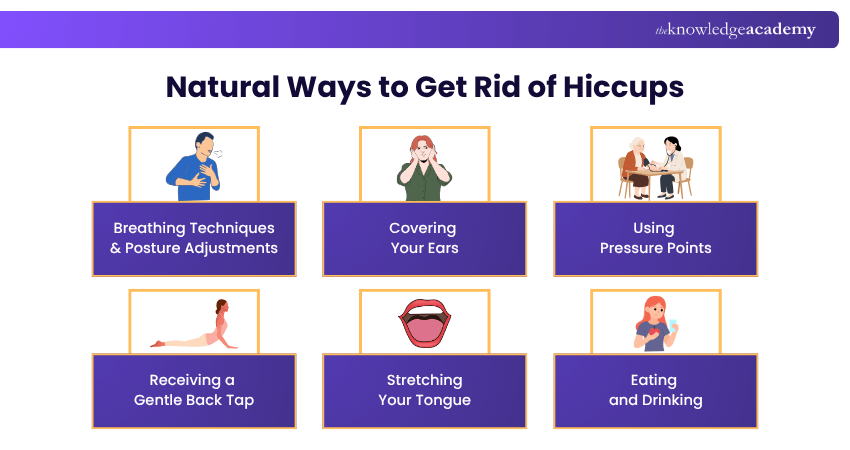
We have some natural remedies to get rid of Hiccups, without any medicine or medical support, we can stop them. Here are some remedies:
1) Breathing Techniques & Posture Adjustments
Slow, deep breathing can help calm your diaphragm and stop Hiccups. Try inhaling for five seconds, holding briefly, and exhaling slowly. Sitting upright or leaning slightly forward can also ease pressure on your diaphragm.
2) Covering Your Ears
Gently cover your ears with your fingers for 20–30 seconds. This stimulates the vagus nerve, which can help interrupt the hiccup reflex and restore normal breathing.
3) Using Pressure Points
Apply gentle pressure to areas like the back of your neck or the diaphragm. Massaging these points can help relax muscles and stop diaphragm spasms that cause Hiccups.
4) Receiving a Gentle Back Tap
Ask someone to lightly tap or pat your upper back between the shoulder blades. This can stimulate your nerves and reset the diaphragm’s rhythm, helping Hiccups stop.
5) Stretching Your Tongue
Gently pull your tongue forward once or twice. This motion stimulates nerves and muscles in your throat, helping reduce diaphragm contractions that cause Hiccups.
6) Eating and Drinking
Sip cold water slowly or swallow a teaspoon of sugar or honey. These actions stimulate the vagus nerve, distracting your body and stopping the hiccup reflex naturally.
Upskill Healthy Lifestyles tips by signing up for our Active and Healthy Lifestyles Training today!
Medical Ways to Get Rid of Hiccups
When Hiccups persist for more than 48 hours, you need medical support or treatment. Because it will change your daily routine and lifestyle, in this situation, you need to consult a Doctor. They will diagnose your problem and possible medications will start. Let's discuss the steps for medical treatment.
1) Diagnosis
If Hiccups last longer than 48 hours, a doctor will look over your medical history and perform a physical examination to identify possible causes such as nerve irritation, digestive issues, or underlying health conditions.
2) Laboratory Examinations
Blood tests may be done to detect metabolic or electrolyte imbalances, infections, or kidney problems that can trigger persistent Hiccups. These tests help rule out systemic conditions affecting diaphragm function.
3) Imaging Assessments
X-rays, CT scans, or MRI scans can help identify abnormalities such as tumours, infections, or injuries that might irritate nerves or organs linked to Hiccups. These imaging tools assist in pinpointing internal causes.
4) Endoscopic Procedures
If other tests are inconclusive, an endoscopy may be performed to examine the oesophagus and stomach. This helps detect inflammation, ulcers, or reflux-related issues that could be contributing to chronic Hiccups.
Learn meditation techniques to effectively manage and reduce stress by signing up for our Meditation Course - today!
How to Prevent Hiccups?
Hiccups are a common case for everyone; the main reason for Hiccups is our lifestyle factors. So, we can easily prevent Hiccups by adopting a Healthy Lifestyle and making simple changes to our daily habits. Some of the things you can easily avoid are:
1) Eat slowly
2) Eat smaller amount of food
3) Avoid spicy food
4) Stop smoking
5) Stop drinking alcohol
6) Avoid carbonated drinks
7) Avoid cold food items after eating hot food
8) Practise meditation
9) Make daily diet
10) Routine workouts
Conclusion
Hiccups are usually harmless but can be quite annoying when they linger. Knowing How to Stop Hiccups helps you act quickly and find relief. Whether through natural remedies or medical care, the key is understanding your body’s signals and taking simple steps to restore calm inorder to Reduce Anxity, steady breathing.
Recognise how to develop positive health habits in daily lifestyle with our Healthy Lifestyles Training – join now!
Frequently Asked Questions
How Long Should Hiccups Last?

Most hiccups go away within a few minutes to a couple of hours. However, if they continue for more than 48 hours or frequently return, it could indicate an underlying issue that needs medical attention.
Are Hiccups a Warning?
Occasional Hiccups are usually harmless and not a cause for concern. However, persistent or frequent Hiccups lasting more than 48 hours may signal an underlying medical issue. They could be linked to nerve irritation, digestive problems, or metabolic disorders.
What are the Other Resources and Offers Provided by The Knowledge Academy?
The Knowledge Academy takes global learning to new heights, offering over 3,000 online courses across 490+ locations in 190+ countries. This expansive reach ensures accessibility and convenience for learners worldwide.
Alongside our diverse Online Course Catalogue, encompassing 19 major categories, we go the extra mile by providing a plethora of free educational Online Resources like Blogs, eBooks, Interview Questions and Videos. Tailoring learning experiences further, professionals can unlock greater value through a wide range of special discounts, seasonal deals, and Exclusive Offers.
What is The Knowledge Pass, and How Does it Work?
The Knowledge Academy’s Knowledge Pass, a prepaid voucher, adds another layer of flexibility, allowing course bookings over a 12-month period. Join us on a journey where education knows no bounds.
What are the Related Courses and Blogs Provided by The Knowledge Academy?
The Knowledge Academy offers various Healthy Lifestyles Training, including the Yoga Training, Nutrition Course and Active and Healthy Lifestyles Training. These courses cater to different skill levels, providing comprehensive insights into Reduce Melanin for a Brighter Skin.
Our Health & Safety Blogs cover a range of topics related to Healthy Lifestyles, offering valuable resources, best practices, and industry insights. Whether you are a beginner or looking to advance your Healthy Lifestyles knowledge, The Knowledge Academy's diverse courses and informative blogs have got you covered.
Upcoming Health & Safety Resources Batches & Dates
Date
 Yoga Training

 If you wish to make any changes to your course, please


