




We may not have the course you’re looking for. If you enquire or give us a call on +44 1344 203 999 and speak to our training experts, we may still be able to help with your training requirements.
The Theory of Planned Behaviour (TPB): A Complete Overview
ByAkhil KLast updated on: 12 October 2026
The Theory of Planned Behaviour explains how attitudes, social norms, and perceived control influence intentions to predict human behaviour. It offers a clear framework for understanding why people act in certain ways and is widely used in psychology, healthcare, education, and organisational decision-making.
Quick Snapshot
1. Purpose: Understand what influences the gap between intention and actual behaviour.2. Best used for: Exploring behaviours that involve deliberate choices and perceived control.3. Key takeaway: Strong intentions do not always result in action when practical barriers exist.4. Practical value: TPB can help identify which influence should be addressed before designing a behaviour-change initiative.5. Important consideration: Context matters, so TPB findings should be interpreted alongside real-world constraints.
Every day, people make conscious decisions about what they want to change, improve, or avoid. Yet, good intentions alone are rarely enough to guarantee action, as behaviour is shaped by more than just motivation.
The Theory of Planned Behaviour (TPB) explains this complexity by examining how attitudes, social expectations, and perceived control influence intentions and actions. This blog introduces TPB and explains why it remains a valuable framework for understanding human behaviour in real-world situations.
What is the Theory of Planned Behaviour?
The Theory of Planned Behaviour (TPB) is a psychological model used to understand and predict specific behaviours. It proposes that behavioural intention is influenced by attitude toward the behaviour, subjective norm and perceived behavioural control, while intention and perceived behavioural control help predict behaviour.
By analysing all these factors together, TPB can be used to determine the probability that a person may adopt a particular behaviour, and it is extensively used in the disciplines of psychology, health, marketing, and social sciences.

Key Components of Theory of Planned Behaviour
The TPB is a psychological framework that explains how human behaviour is influenced by individual intentions. According to this theory, a person’s behavioural intentions are determined by three key components. Let's check what those components are:
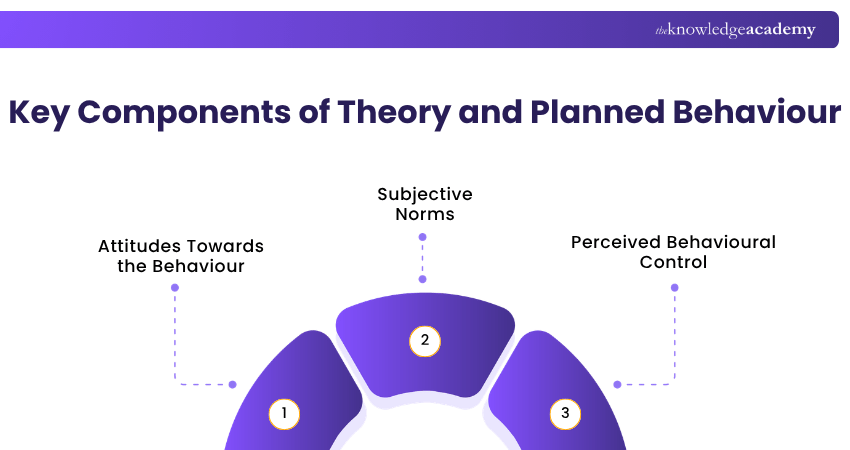
1) Attitudes Towards the Behaviour
Attitude toward the behaviour refers to how positively or negatively a person evaluates performing a particular behaviour. For example, someone may develop a positive attitude towards regular exercise if they believe it will improve their fitness, mood, and wellbeing. A more favourable evaluation can strengthen the intention of performing the behaviour.
2) Subjective Norms
Subjective norm refers to the perceived social pressure to perform or not perform a behaviour. It can be influenced by whether people or groups are important to an individual, such as family, friends or colleagues, approve of or engage in the behaviour.
3) Perceived Behavioural Control
Perceived behavioural control refers to how capable a person believes they are of performing a particular behaviour. It is influenced by control beliefs about factors that could make the behaviour easier or more difficult, such as time, resources, opportunities or other obstacles.
Trainer's Insight: When gathering behavioural data, avoid wording that encourages a particular response. For example, asking "How beneficial is sustainable shopping?" assumes a positive judgement, whereas "How would you evaluate sustainable shopping?" allows a more balanced response.
Explore the principles behind human behaviour and decision-making with our Psychology Course – Sign up today!
Key Terms of Theory of Planned Behaviour
Now, it is time for you to explore the key terms used in the TPB. Here are some of the popular terms used in TPB:
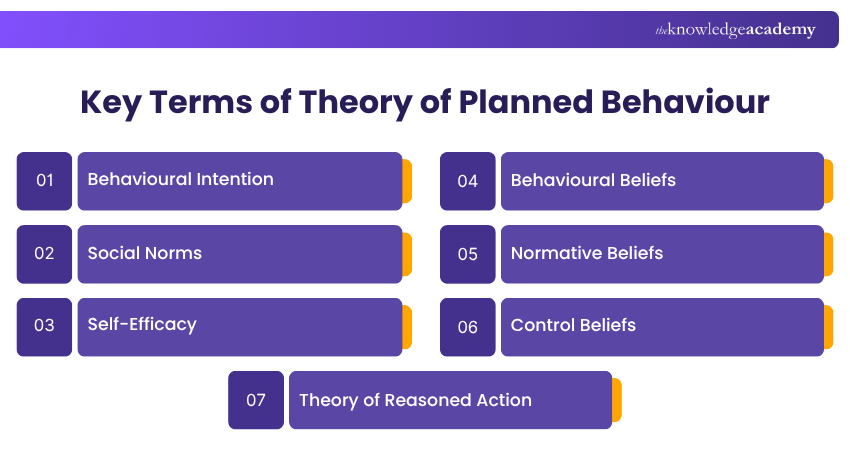
1) Behavioural Intention
Behavioural intention refers to a person's readiness to perform a specific behaviour. It is influenced by attitudes toward the behaviour, subjective norms, and perceived behavioural control. A stronger intention increases the likelihood of performing the behaviour.
2) Social Norms
Social norms, or subjective norms, involve perceived social pressure to perform or not perform a behaviour. They are shaped by normative beliefs about whether important others approve or disapprove of the behaviour.
3) Self-Efficacy
Self-efficacy, closely related to perceived behavioural control, refers to an individual's belief in their capability to execute behaviours necessary to produce specific performance attainments. High self-efficacy can enhance motivation and persistence in behaviour change.
4) Behavioural Beliefs
Behavioural beliefs are the individual's beliefs about the likely outcomes of a behaviour and the evaluations of these outcomes. These beliefs contribute to forming an attitude toward behaviour and play a crucial role in Behaviour Management by shaping how individuals assess and respond to specific actions.
5) Normative Beliefs
Normative beliefs pertain to the perceived expectations of important others regarding whether one should perform a behaviour. These beliefs, combined with motivation to comply, shape subjective norms.
6) Control Beliefs
Control beliefs involve the perceived presence of factors that may facilitate or impede performance of a behaviour. These beliefs influence perceived behavioural control, affecting both intentions and actions.
7) Theory of Reasoned Action
The Theory of Reasoned Action (TRA) is a precursor to TPB, positing that behavioural intention is determined by attitudes toward the behaviour and subjective norms. TPB extends TRA by adding perceived behavioural control to account for behaviours outside of one's complete volitional control.
Understand how individual and group behaviour influences organisations with our BCS Foundation Certificate in Organisational Behaviour – Register today!
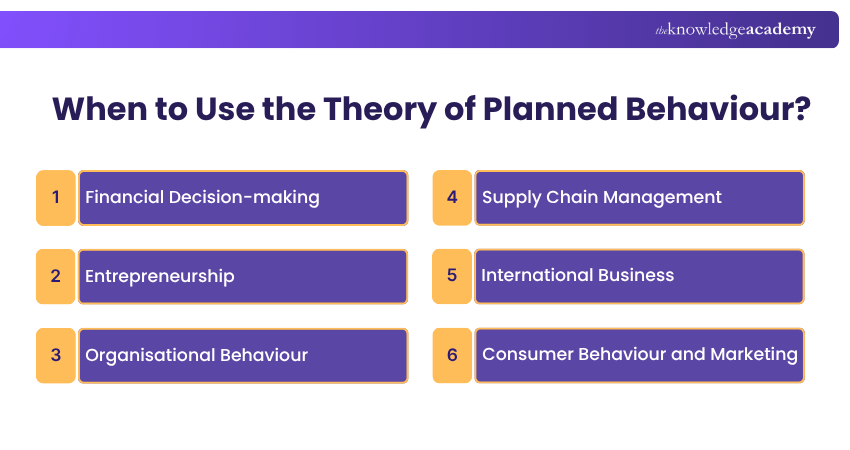
When to Use the Theory of Planned Behaviour?
The TPB is widely utilised in fields where understanding and predicting human behaviour is essential. Its adaptability makes it relevant across various domains, aiding in the design of effective interventions, policies, and campaigns. Here are some key areas of application.
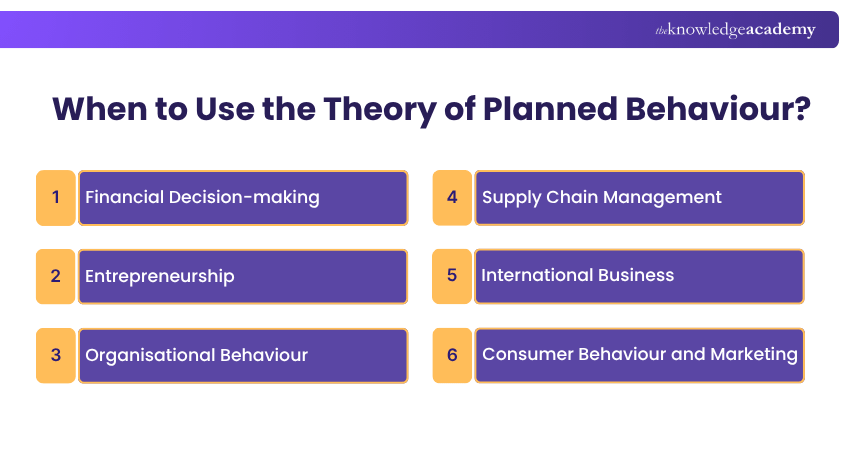
a) Financial Decision-making: TPB analyses factors influencing financial behaviours such as saving, investing, borrowing, and retirement planning, aiding in the development of financial policy initiatives.
b) Entrepreneurship: TPB applies to entrepreneurial intentions and attitudes towards entrepreneurship, fostering an entrepreneurial culture.
c) Organisational Behaviour: TPB enables managers to improve employee attitudes, job satisfaction, and intentions to engage in organisational behaviour.
d) Supply Chain Management: TPB can be used to analyse supplier and partner relationships and predict intentions to engage in supply chain practices.
e) International Business: TPB helps evaluate attitudes and intentions towards international expansion, market entry strategies, and cross-cultural business practices.
f) Consumer Behaviour and Marketing: TPB helps in understanding consumer attitudes, intentions, and purchase decisions, guiding marketing strategies, product development, and branding efforts.
Evaluation of the Theory of Planned Behaviour
Now you know what is TPB, the theory that is popularly considered helpful in the context of human behaviour. Although it has been successfully implemented in different areas, such as health psychology, it possesses some limitations as well. The analysis of its main strengths and weaknesses is as follows:
1) Strengths
The strengths are:
a) TPB provides a structured framework for examining how attitudes, subjective norms and perceived behavioural control contribute to behavioural intentions.
b) It considers both personal evaluations and perceived social influences rather than explaining behaviour through attitude alone.
c) Its belief-based structure can help researchers identify factors that may be targeted when designing behaviour-change interventions.
2) Limitations
The weak points are:
a) The core model focuses strongly on beliefs, intentions and perceived control, so emotional or automatic influences may require additional consideration.
b) TPB research often relies on self-reported attitudes, intentions and behaviours, which can be affected by measurement and response biases.
c) Intentions do not always translate into behaviour, particularly when circumstances change, actual control is limited or habitual and automatic processes influence actions.
Real World Examples of Theory of Planned Behaviour
The TPB provides a robust framework for understanding how attitudes, subjective norms, and perceived behavioural control influence our intentions and actions. By applying this theory, businesses can better predict and shape consumer behaviour. Here are some real world examples to illustrate how TPB can be utilised in real-world scenarios:
1) Samsung
Samsung's use of recycled materials in Galaxy smartphones and initiatives that improve product accessibility can be interpreted through TPB. Positive environmental attitudes and perceptions of affordability or availability could influence consumers' intentions to purchase these products.
2) Ford
Ford's electric vehicle initiatives, including expanded charging access and ownership support, illustrate how TPB can explain purchasing intentions through environmental attitudes and perceived control over EV ownership.

Akhil K is a Copywriter and Video Editor with experience in content creation, visual storytelling, advertising and brand communication. His background in journalism, research and audience-focused communication strengthens his ability to create clear and engaging Business Skills content.
View Detail

 If you wish to make any changes to your course, please


