


 Top Rated Course

We may not have the course you’re looking for. If you enquire or give us a call on +1 7204454674 and speak to our training experts, we may still be able to help with your training requirements.
Digital Marketing Funnel: Definition, Importance, and Types
James Smith 16 July 2026A Digital Marketing Funnel is the blueprint for turning prospects into loyal customers, guiding them through awareness, consideration, and conversion. Master the art of attracting, engaging, and retaining your audience with powerful strategies that optimise each stage for maximum impact and drive sustainable business growth.

Training Outcomes Within Your Budget!
We ensure quality, budget-alignment, and timely delivery by our expert instructors.
Table of Contents

Have you ever clicked on a website, read a blog, and suddenly found yourself signing up for a newsletter or making a purchase? That’s the magic of a Digital Marketing Funnel in action! It’s not about throwing ads everywhere and hoping for the best—it’s about guiding potential customers on a journey, from “Hey, this looks interesting” to “I need this in my life!”
Think of it like dating—you wouldn’t propose on the first meeting, right? A Digital Marketing Funnel works the same way, warming up your audience with great content, building trust through engagement, and finally sealing the deal. Whether you're a business owner or a marketer, understanding how this funnel works can turn casual visitors into loyal customers. Ready to crack the code? Let’s go!
Table of Contents
1) What is a Digital Marketing Funnel?
2) The Importance of a Digital Marketing Funnel
3) Different Types of Digital Marketing Funnels
4) How to Build an Effective Marketing Funnel?
5) The Three Key Stages of a Digital Marketing Funnel
6) Advantages of a Marketing Funnel
7) Digital Marketing Funnel Strategies
8) Tips for Engaging Shoppers at Every Stage
9) What is Full Funnel Digital Marketing?
10) What is the 3-3-3 Strategy?
11) Conclusion
What is a Digital Marketing Funnel?
A Digital Marketing Funnel attracts and nurtures leads through content, SEO, and social media, building awareness and engagement. In contrast, a sales funnel focuses on converting leads into customers using direct methods like calls, demos, and offers, driving final purchase decisions efficiently.

The Importance of a Digital Marketing Funnel
A well-defined Digital Marketing Funnel offers businesses a clear map to convert leads into customers efficiently. Here’s why it matters:
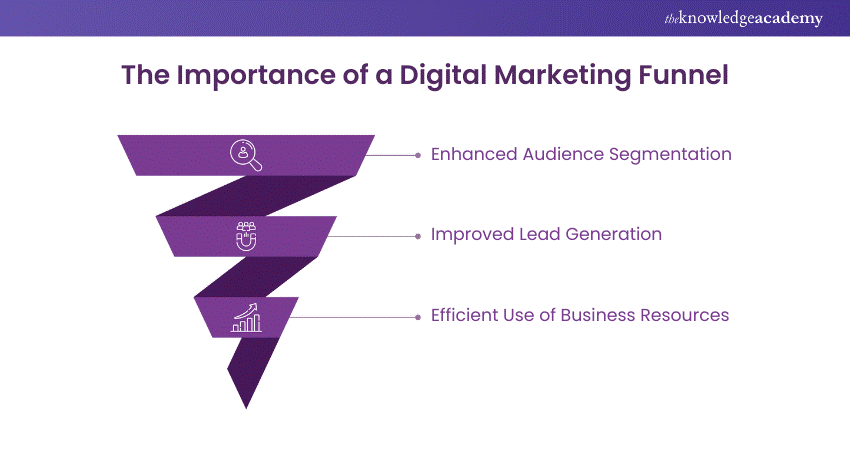
1) Enhanced Audience Segmentation
A structured marketing funnel allows businesses to segment their audience effectively. By categorising leads based on their position in the funnel, marketers can craft personalised content that resonates with each stage of the buyer’s journey, increasing engagement and conversions.
2) Improved Lead Generation
By nurturing leads at every stage, a marketing funnel, combined with strategies of Funnel Hacking, ensures that businesses attract potential customers who are more likely to convert. The funnel optimises engagement by addressing audience pain points and providing tailored solutions.
3) Efficient Use of Business Resources
Instead of using a one-size-fits-all approach, a well-planned marketing funnel helps businesses allocate their resources efficiently. This ensures time, budget, and efforts are directed towards strategies that deliver measurable results.
Different Types of Digital Marketing Funnels
There is no universal approach to marketing funnels. Different business models and industries require tailored funnel strategies. Below are three widely used types of Digital Marketing Funnels:
1) Hourglass Marketing Funnel
The hourglass marketing funnel extends beyond the conventional funnel by including post-purchase engagement and retention strategies. It ensures that customer relationships continue after the sale, increasing brand loyalty and repeat business.
2) Looping Marketing Funnel
This funnel acknowledges that customers don’t always move through a linear path. Instead, they might revisit earlier stages before making a purchase decision. It focuses on continuous engagement and nurturing prospects until they convert.
3) Micro-Moments Marketing Funnel
Micro-moments occur when potential customers instinctively turn to their devices to seek information, decide on a purchase, or take immediate action. This funnel leverages real-time engagement to capture customer interest at the right moment.

How to Build an Effective Marketing Funnel?
Creating an effective marketing funnel involves:
1) Understanding Your Audience: Conducting research to identify pain points, needs, and behaviour.
2) Mapping the Customer Journey: Defining the stages of engagement and crafting content tailored to each stage.
3) Using Multi-Channel Marketing: Integrating different digital platforms such as social media, email, and paid ads for Performance Marketing.
4) Analysing and Optimising: Tracking performance metrics and optimising strategies for better results.
Master the principles of Customer Experience (CX) with our Digital Marketing Course – register now!
The Three Key Stages of a Digital Marketing Funnel
Each stage of the funnel plays a critical role in guiding potential customers toward a purchase, ensuring they receive the right information at the right time.
1) Top of Funnel Marketing (TOFU)
The awareness stage where businesses attract potential customers through content marketing, SEO, and social media engagement. The focus is on providing value and educating prospects.
2) Middle of Funnel Marketing (MOFU)
This stage nurtures leads by addressing their concerns and interests through personalised email campaigns, webinars, and case studies. The goal is to build trust and guide them towards a purchase decision.
3) Bottom of Funnel Marketing (BOFU)
The decision stage where leads convert into paying customers. At this point, businesses offer product demos, discounts, and compelling CTAs to encourage final action.
Advantages of a Marketing Funnel
A marketing funnel provides a structured approach to customer acquisition, retention, and revenue growth, making it an invaluable asset for businesses of all sizes. Here are a few advantages:
1) Higher ROI
By structuring the customer journey, businesses can optimise their marketing efforts, ensuring higher returns on investment.
2) Increased Conversion Rates & Revenue
Targeted messaging at different funnel stages results in improved lead-to-customer conversion rates, driving revenue growth.
3) Enhanced Customer Retention & Satisfaction
With personalised engagement strategies, businesses can foster long-term relationships, boosting customer loyalty and satisfaction.
4) Targeted & Personalised Marketing
Marketing funnels allow brands to deliver relevant content to their audience, increasing engagement and reducing customer drop-offs.
5) Generation of Qualified Leads
A funnel ensures businesses attract high-quality leads who have a genuine interest in their products or services.
6) Turning Prospects into Loyal Customers
By nurturing relationships throughout the funnel, businesses can convert casual prospects into devoted brand advocates.
7) Optimising Upselling and Cross-Selling
A well-structured funnel helps businesses identify opportunities to introduce complementary products or premium upgrades to existing customers.
Begin your Social Media journey with our Social Media Marketing Course – register now to enhance your Digital Marketing skills!
Digital Marketing Funnel Strategies
Implementing the right strategies within your funnel can significantly impact brand visibility, engagement, and overall conversion rates.
1) SEO
Search Engine Optimisation (SEO) is essential for attracting organic traffic. High-ranking content increases brand visibility and fuels the top of the funnel.
2) B2B Marketing Funnel
Business-to-Business (B2B) marketing funnels require longer nurturing periods and personalised outreach strategies, such as LinkedIn marketing and email campaigns.
3) B2C Marketing Funnel
In business-to-Consumer (B2C) marketing, funnels focus on emotional triggers, social proof, and urgency-driven tactics to influence purchase decisions.
4) Content Marketing Funnel
Content plays a crucial role in guiding leads through the content marketing funnel, from blog posts and guides to case studies and testimonials.
5) Video Marketing Funnel
Videos help engage audiences at every funnel stage—explainer videos for TOFU, webinars for MOFU, and product demos for BOFU.
6) Email Marketing Funnel
Email campaigns nurture leads by providing personalised recommendations, limited time offers, and follow-up messages.
7) Inbound Marketing Funnel
Inbound strategies focus on attracting customers organically through valuable content, SEO, and engagement-driven tactics.
Tips for Engaging Shoppers at Every Stage
Understanding how to connect with customers at different funnel stages ensures a seamless and personalised shopping experience, increasing the likelihood of conversions.
1) Provide 24/7 Support
Offering round-the-clock customer support through chatbots and live agents ensures customers get immediate assistance, boosting satisfaction rates.
2) Look Beyond Metrics
While tracking analytics is crucial, focusing solely on numbers can be misleading. Businesses should prioritise customer engagement and feedback to refine their strategies.
3) Leverage AI & Machine Learning
AI-driven insights help businesses predict customer behaviour, automate responses, and personalise experiences across multiple touchpoints.
4) Target the Ideal Customer
A marketing funnel works best when businesses identify and focus on their ideal customer profile, ensuring that marketing efforts reach the right audience.
5) Maximise Brand Value
Brand storytelling, consistent messaging, and value-driven marketing help businesses establish authority and trust within their industry.
What is Full Funnel Digital Marketing?
Full Funnel Digital Marketing is a strategy that nurtures potential customers through every stage of their journey - from awareness (TOFU) to consideration (MOFU) and conversion (BOFU). It involves targeted content, ads, SEO, and personalised engagement to guide users seamlessly toward making a purchase and fostering long-term loyalty.
What is the 3-3-3 Strategy?
The 3-3-3 Method boosts workplace efficiency by structuring tasks effectively. It involves:
1) Completing 3 tasks per session
2) Allocating 3-hour work periods for each set of tasks
3) Following this structure consistently for 3 days
Conclusion
A well-structured Digital Marketing Funnel is the backbone of a successful marketing strategy. It helps businesses attract, engage, and convert leads into loyal customers while optimising resources. By understanding the different funnel types, leveraging the right strategies, and continuously refining the customer journey, businesses can maximise growth and long-term success.
Learn about the latest tools and trends in Digital Marketing with our Digital Marketing Courses – Sign up today!
Frequently Asked Questions
What is the Difference Between Digital Marketing Funnel and Sales Funnel?

A Digital Marketing Funnel attracts, and nurtures leads through content, SEO, and social media, building awareness and engagement. while a sales funnel focuses on direct conversions through calls, demos, and offers. Digital marketing builds awareness, whereas the sales funnel drives purchase decisions.
How to Reach TOFU Users?
To attract Top of Funnel (TOFU) users, focus on educational and engaging content like blog posts, videos, and social media campaigns. Leverage SEO, paid ads, and influencer collaborations to boost visibility. Offering free resources helps capture interest and nurture leads toward deeper engagement with your brand.

James Smith


Digital Marketing Manager and Trainer
James Smith is a digital marketing professional with over a decade of experience in SEO, content strategy, paid media and analytics. He has supported both SMEs and global brands in transforming their digital presence. James’s writing and training are rooted in results-driven tactics and the latest marketing trends.
View Detail

 If you wish to make any changes to your course, please


