


 Top Rated Course

We may not have the course you’re looking for. If you enquire or give us a call on 01344203999 and speak to our training experts, we may still be able to help with your training requirements.
Corporate Performance Management: A Detailed Guide
James Smith 15 July 2026This blog talks about how Corporate Performance Management as a strategic Management tactic involves monitoring and enhancing an organisation’s Performance. Let’s dive into this blog to understand how organisations gain valuable insights into their operations with CPM.

Training Outcomes Within Your Budget!
We ensure quality, budget-alignment, and timely delivery by our expert instructors.
Table of Contents

Business entities continuously pursue avenues for enhancing their Performance and attaining strategic objectives. To do this, they employ the Corporate Performance Management (CPM) strategy to efficiently oversee, control, and enhance their Performance. Furthermore, various facets are associated with the CPM system.
Within this extensive blog, we will explore the importance of CPM and the optimal timing for its implementation. Additionally, we will emphasise its efficacy and provide guidance on selecting suitable CPM software.
Table of Contents
1) What is Corporate Performance Management (CPM)?
2) The Significance of Corporate Performance Management (CPM)
3) How Does Corporate Performance Management Work?
4) When to Implement a Corporate Performance Management System?
5) Maximising the Effectiveness of CPM
6) CPM Metrics
7) Strategies to Avoid Pitfalls in Corporate Performance Management
8) Tips for Selecting an Effective CPM Software Solution
9) The Future of CPM
10) Conclusion
What is Corporate Performance Management (CPM)?
Corporate Performance Management (CPM) is a structured approach that organisations use to monitor, manage, and improve their overall business performance. It combines methodologies, metrics, processes, and systems to help businesses plan, budget, forecast, and evaluate results in a consistent and data-driven way.
At its core, CPM links an organisation’s strategic goals with daily operations, turning long-term objectives into measurable targets and actionable plans. Using financial and operational data helps leaders monitor progress, identify gaps, and make better decisions to improve efficiency and profitability.

The Significance of Corporate Performance Management (CPM)
Corporate Performance Management plays a pivotal role in contemporary times. Employing this system enables organisations to realise the following importance:
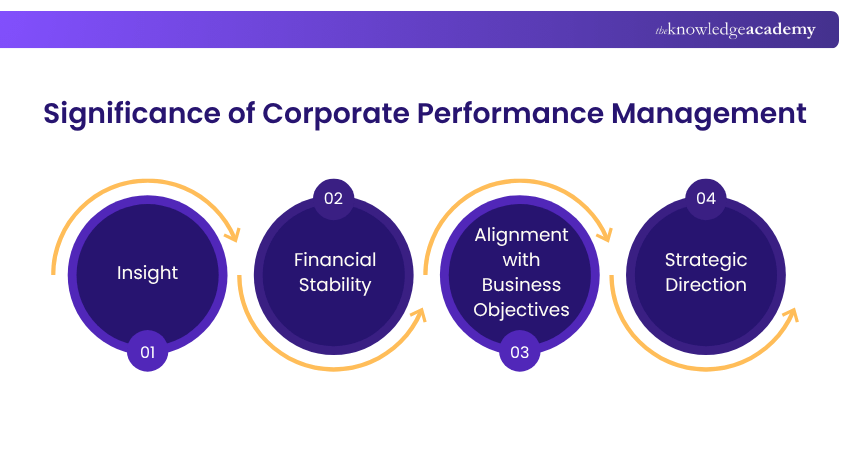
1) Insight
Corporate Performance Management plays a pivotal role in providing organisations with valuable insights into their Performance metrics. CPM enables businesses to attain a thorough comprehension of their operations by analysing their Key Performance Indicators (KPIs). By identifying strengths, weaknesses, opportunities, and threats, organisations can make smarter decisions based on reliable data insights. For instance, CPM may reveal how a specific product line can prompt a strategic shift in marketing efforts.
These further insights enable organisations to stay agile in a dynamic market, responding swiftly to changing trends and customer demands. CPM ultimately empowers leaders to make informed decisions and drive the organisation towards success.
2) Financial Stability
Financial stability is a fundamental pillar of any successful organisation, and CPM plays a crucial role in achieving this stability. By closely monitoring financial Performance metrics such as revenue, expenses, and profitability, organisations can proactively manage their finances. For example, CPM may highlight areas where costs are exceeding budgeted amounts, prompting cost-saving measures.
Additionally, it can provide prior warnings of potential financial risks, allowing organisations to take corrective actions before issues escalate. This proactive approach to financial Management ensures that organisations remain resilient in the face of economic uncertainties. CPM essentially helps organisations maintain financial stability, optimise resource allocation, and ensure sustainable growth.
3) Alignment with Business Objectives
One of the primary advantages of CPM lies in its capacity to synchronise individual and team objectives with business goals. This alignment also ensures that every effort within the organisation is directed towards achieving the overall strategic vision. Understanding Corporate Strategy vs Business Strategy helps in effectively directing these efforts to ensure consistency across all levels. For instance, CPM may highlight the performance of specific departments or teams in relation to the company's growth targets.
This information better allows organisations to realign priorities, redistribute resources, and provide targeted support where needed. By fostering a sense of purpose and direction among employees, CPM creates a cohesive and motivated workforce. Ultimately, when team efforts are synchronised with organisational goals, the entire organisation moves towards success in a unified manner.
4) Strategic Direction
Corporate Performance Management enables organisations to set strategic priorities and allocate resources effectively to achieve these objectives. By scrutinising Performance data, organisations can detect emerging opportunities and potential market risks. For example, CPM may reveal a growing demand for a particular product category, prompting the organisation to invest more resources in its development and marketing.
Moreover, CPM furnishes a strategic blueprint for long-term planning, steering Decision-making across all tiers of the organisation. This strategic alignment ensures that resources are deployed efficiently, risks are mitigated, and growth opportunities are capitalised upon. Ultimately, CPM empowers organisations to navigate the complexities of the business landscape, ensuring sustained success in the long run.
Elevate efficiency and innovation with our Business Process Improvement Training – join us now!
How Does Corporate Performance Management Work?
Corporate Performance Management integrates planning, budgeting, forecasting, and performance tracking into one system to align goals with measurable actions and continuous monitoring. This is achieved through the following key stages:
1) Strategic Planning: Organisations set long-term goals and break them into clear, actionable targets across departments to ensure alignment.
2) Budgeting and Forecasting: Financial plans are developed and updated regularly, helping businesses adapt to market changes and manage resources effectively.
3) Operational Integration: CPM combines data from different functions such as finance, sales, and HR to create a complete view of performance.
4) Performance Monitoring: Dashboards and scorecards track KPIs in real time, allowing the quick identification of issues and opportunities.
5) Data Analysis and Decision-making: Insights from performance data help leaders make informed decisions, improve efficiency, and drive business growth.
When to Implement a Corporate Performance Management System?
Deploying a CPM system offers numerous advantages. Organisations can implement them if they aim for the following factors:
a) Improve decision-making processes
b) Enhance operational efficiency
c) Align goals and objectives
d) Monitor and measure Performance
e) Drive accountability and transparency
Learn essential management principles to lead teams with confidence daily. Join our Introduction to Management Training today!
Maximising the Effectiveness of CPM
As mentioned earlier, CPM has various positive effects. The following aspects further enhance the efficiency of CPM in organisations:
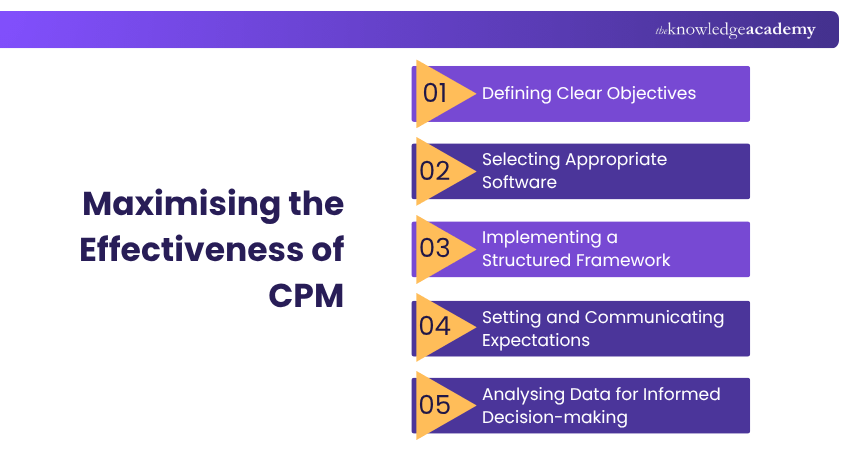
1) Defining Clear Objectives
The cornerstone of effective Corporate Performance Management lies in establishing clear and quantifiable objectives. Organisations should, thus, meticulously define specific objectives that align with their overarching strategy. These goals should be communicated clearly and consistently throughout the organisation to ensure everyone is working towards the same objectives. By setting clear goals, organisations provide employees with a clear direction and purpose, fostering motivation and focus.
2) Selecting Appropriate Software
Choosing the right CPM software is a critical step in maximising effectiveness. Organisations should, therefore, consider their unique needs and requirements when selecting a software solution. Factors such as scalability, integration capabilities with existing systems, ease of use, and robust reporting functionalities should all be considered. The selected software should easily integrate with other systems, provide customisable reporting options, and offer user-friendly interfaces.
3) Implementing a Structured Framework
A structured CPM framework is essential for consistency and clarity in Performance Management. This includes clearly defining roles and responsibilities within the organisation and creating a feedback loop for continuous improvement. By implementing a structured framework, organisations ensure that Performance Management is conducted transparently, leading to more effective resource allocation.
4) Setting and Communicating Expectations
Transparent communication of expectations is vital for the CPM initiatives’ success. Employees should, therefore, have a clear understanding of what is expected of them and how their Performance is measured. This clarity enables employees to align their efforts with organisational objectives and motivates them to perform at their best. Additionally, managers should regularly guide employees to ensure they can meet expectations and address any Performance issues promptly.
5) Analysing Data for Informed Decision-making
Data Analysis lies at the heart of effective CPM. Organisations should leverage performance data to gain valuable insights into their operations and identify trends, opportunities, and areas for improvement. By analysing data, organisations can make informed decisions, forecast future Performance, and proactively address challenges.
Advanced web analytics tools can also provide scenario planning capabilities, enabling organisations to anticipate market changes and make strategic adjustments accordingly. Data-driven decision-making mostly enables organisations to optimise Performance and stay ahead of the competition.
CPM Metrics
CPM metrics are key indicators used to measure how effectively an organisation achieves its goals, helping track performance and identify gaps. The main metrics include:
1) Conversion Rate: Measures how well a business turns leads into paying customers, indicating the effectiveness of marketing and sales efforts.
2) Employee Retention: Tracks how successfully a company retains its employees, reflecting workplace satisfaction and stability.
3) Budget Variance: Compares planned budgets with actual spending to assess financial accuracy and cost control.
4) Sales Growth: Shows how revenue changes over time, helping businesses identify trends and growth opportunities.
Elevate your company's impact and reputation with our Corporate Social Responsibility (CSR) Training - Join now!
Strategies to Avoid Pitfalls in Corporate Performance Management
Corporate Performance Management (CPM) can face challenges that hinder its effectiveness. However, implementing the following strategies can help organisations overcome these pitfalls and achieve success:
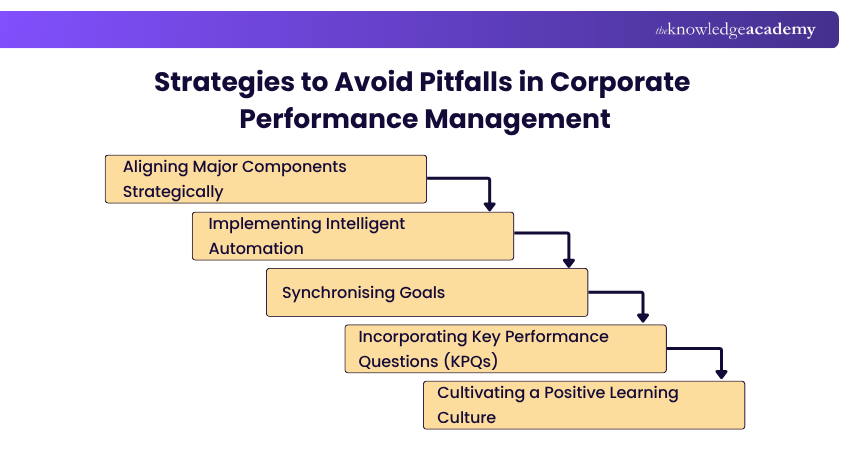
1) Aligning Major Components Strategically
To ensure the success of CPM initiatives, it's crucial to align all components strategically with the organisation's overarching goals. This includes setting clear goals that are connected to the strategic priorities of an organisation. Metrics and initiatives should also be aligned to support these goals by creating a cohesive approach towards achieving common objectives. Organisations can focus on activities that drive meaningful results and contribute to long-term success by ensuring strategic alignment.
2) Implementing Intelligent Automation
Leveraging automation tools is essential for streamlining CPM processes and reducing manual effort. Intelligent automation can also handle routine tasks to focus on more strategic activities. Organisations can improve the efficiency, accuracy, and timeliness of Performance data by automating repetitive tasks. This not only saves time but also enhances the quality of insights generated. Intelligent automation also enables organisations to respond quickly to changes in the business environment, making CPM more adaptive and agile.
3) Synchronising Goals
Regularly reviewing and updating goals is crucial to keep them relevant and aligned with evolving business conditions. Moreover, market dynamics and internal factors may necessitate adjustments to goals to keep them aligned with strategic priorities. Organisations can stay responsive and proactive by synchronising goals with changing business landscapes. This flexibility also allows for course corrections and ensures that efforts focus on contributing most effectively to organisational success.
4) Incorporating Key Performance Questions (KPQs)
Key Performance Questions (KPQs) are pivotal in focusing on critical areas of Performance and facilitating meaningful discussions within the organisation. These questions help identify key drivers of success and areas requiring attention or improvement. Organisations can gain deeper insights into what truly matters by incorporating KPQs into the Performance Management process. KPQs also guide discussions towards actionable insights, enabling informed decision-making and strategic planning.
5) Cultivating a Positive Learning Culture
Fostering a culture centered on ongoing learning and enhancement is crucial for optimising the efficacy of CPM. Organisations should, therefore, provide opportunities for skill development, training, and feedback to employees at all levels. This fosters a culture where employees are encouraged to seek growth and development, leading to enhanced Performance. Recognition of achievements and contributions also plays an important role in motivating employees and reinforcing positive behaviours.
Make smart, high-impact decisions in dynamic business environments with our Management Courses – Register now!
Tips for Selecting an Effective CPM Software Solution
Organisations should consider several factors to ensure that it aligns with their goals and needs when choosing a CPM software solution. Here are some detailed tips to guide the selection process:
1) Consider Scalability and Integration Capabilities: Choose a CPM solution that can grow with your organisation and handle increasing data and users. It should integrate smoothly with existing systems to avoid silos and ensure efficient, unified data management.
2) Evaluate Ease of Use and User Interface: A simple, user-friendly interface helps employees easily navigate the system and gain insights. Conduct demos to ensure the software is intuitive and encourages adoption across teams.
3) Look for Strong Reporting and Analytics Features: Ensure the tool offers flexible reporting, custom dashboards, and advanced analytics like forecasting or scenario planning to support informed decision-making.
4) Assess Vendor Reputation and Customer Support: Select a trusted vendor with positive reviews and proven experience. Reliable customer support is essential for resolving issues and ensuring smooth implementation.
The Future of CPM
The future of Corporate Performance Management is moving towards unified, AI-driven, and cloud-based systems that enhance speed, accuracy, and decision-making. This shift is driven by the following key trends:
1) AI and Machine Learning: Enable predictive forecasting, anomaly detection, and automated insights for faster decisions.
2) Unified Cloud Platforms: Provide a single source of truth, improving data accuracy and collaboration.
3) Self-service Tools: Allow users to create reports and forecasts with minimal IT support.
4) Integrated Planning (IFOP): Links operational and financial data for a complete performance view.
5) Scenario Planning: Helps organisations prepare for multiple outcomes in uncertain conditions.
Conclusion
By delivering valuable insights and supporting informed decision-making, CPM plays a crucial role in driving organisational success. To maximise the effectiveness of Corporate Performance Management, organisations should define clear goals and analyse data for informed decision-making. Overall, CPM empowers organisations to achieve their strategic goals and adapt to changing market dynamics.
Master the art of successful conferences with our Conference Management Course – join us now!
Frequently Asked Questions
What is the Concept of Corporate Performance?

Corporate Performance encompasses assessing a company's achievements and progress toward strategic goals. It also enables informed decision-making and ensures alignment with objectives for sustained success.
What is a CPM Tool?
A CPM tool is a software facilitating the Management, analysis, and monitoring of Performance metrics. This tool also aids organisations in making informed decisions and optimising operational efficiency. With its comprehensive reporting and analytics features, it helps organisations to adapt improvement strategies.

James Smith


Digital Marketing Manager and Trainer
James Smith is a digital marketing professional with over a decade of experience in SEO, content strategy, paid media and analytics. He has supported both SMEs and global brands in transforming their digital presence. James’s writing and training are rooted in results-driven tactics and the latest marketing trends.
View Detail

 If you wish to make any changes to your course, please


