


We may not have the course you’re looking for. If you enquire or give us a call on 01344203999 and speak to our training experts, we may still be able to help with your training requirements.
What are the Top Benefits of Using LinkedIn
ByThe Knowledge AcademyLast updated on: 17 September 2026
Discover how LinkedIn can help you build professional connections, find opportunities, showcase your skills, strengthen your professional brand and support career growth.
You could have the right skills, experience and qualifications, yet still be overlooked if the right people never see what you can offer. LinkedIn has more than 1.3 billion members worldwide, making it a major platform for professional networking and career opportunities.
More than an online professional profile, LinkedIn can help you build relationships, showcase expertise, discover opportunities and stay connected with your industry. In this blog, we'll explore the key Benefits of Using LinkedIn and practical ways to make the platform more valuable for your professional goals.
What is LinkedIn?
LinkedIn is a professional networking platform that allows people to create professional profiles, connect with others, explore career opportunities and engage with industry content. It can be used by job seekers, employees, students, recruiters, freelancers, business owners and other professionals.
A LinkedIn profile can bring together information such as experience, education, skills, projects, certifications and professional achievements, giving others a clearer view of your background. LinkedIn also provides tools for finding jobs, following people and companies, building connections and staying informed.
Who Should use LinkedIn?
LinkedIn can be useful at different stages of a professional journey such as:
1) Students and Graduates: Build an early professional presence and connect with people in their chosen field.
2) Job Seekers: Discover vacancies, connect with recruiters and communicate their skills.
3) Working Professionals: Maintain industry connections and showcase career achievements.
4) Freelancers and Consultants: Demonstrate expertise and build professional relationships.
5) Recruiters: Search for potential candidates and connect with relevant talent.
6) Business Owners: Build professional visibility and develop business relationships.
The value of LinkedIn depends less on your job title and more on what you want to achieve through the platform.
Myth vs Fact
Myth: LinkedIn is mainly useful when you are looking for a job.Fact: LinkedIn can also support networking, professional visibility, industry awareness, learning and business development, whether or not you are actively job hunting.
Benefits of Using LinkedIn
LinkedIn brings professional networking, career discovery, visibility and learning into one platform. How much value you gain depends on how actively and purposefully you use these features.
Here are the key Benefits of Using LinkedIn:
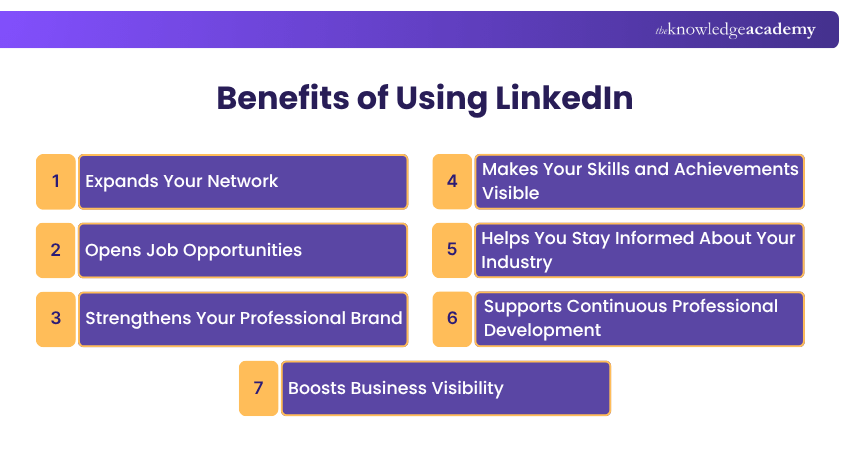
1) Expands Your Network
LinkedIn can help you connect with colleagues, industry professionals, recruiters, former classmates and other relevant contacts beyond your immediate workplace.
A strong network is not simply about collecting connections. Meaningful professional relationships can help you exchange knowledge, discover opportunities and stay connected with developments in your field. LinkedIn recommends using connections, follows and conversations to build your professional network.
2) Opens Job Opportunities
LinkedIn provides direct access to job listings and tools designed to support job searches. You can search for roles, set job alerts and indicate that you are open to opportunities. The platform also allows recruiters to identify potential candidates based on their profiles and skills.
Test Your Understanding
You have strong technical skills but very few professional connections. Which LinkedIn benefit could help you most?
A. Expands Your NetworkB. Creates a CV AutomaticallyC. Guarantees a Job OfferAnswer: A. Expands Your Network
Building relevant connections can increase your exposure to professional conversations and potential opportunities.
3) Strengthens Your Professional Brand
LinkedIn gives professionals a space to communicate who they are professionally and what they want to be known for. Your headline, About section, experience, activity and the topics you engage with can work together to communicate your expertise, career direction and professional interests.
Trainer Insight
A strong LinkedIn presence should do more than reproduce your CV. Use your profile and activity to communicate the professional direction and expertise you want others to associate with you.
4) Makes Your Skills and Achievements Visible
LinkedIn allows you to present skills alongside relevant experience, projects, qualifications and achievements. This gives recruiters, employers and professional contacts additional context about what you can do and where you have applied those capabilities.
5) Helps You Stay Informed About Your Industry
LinkedIn allows you to follow relevant companies, professionals and topics while engaging with industry discussions and updates. This can help you stay aware of emerging skills, changing practices and important conversations within your professional field.
6) Supports Continuous Professional Development
LinkedIn can support professional development through industry content, professional communities and learning opportunities. LinkedIn Learning also provides courses across areas such as business, technology, leadership and professional development. Together, these resources can help professionals explore skills and knowledge relevant to their career goals.
7) Boosts Business Visibility
LinkedIn is not limited to individual career development. Businesses can use the platform to build professional visibility, share expertise, communicate with their audience and develop relationships with potential customers, partners and talent.
For professionals working in business development, consulting or entrepreneurship, a strong presence can therefore support both personal credibility and business visibility.
Build your Google Ads expertise and learn to create and manage effective paid search campaigns with our Google Ads Certification - Sign up today!
How to Get More Value From LinkedIn
Creating a LinkedIn profile alone does not guarantee that you will gain its full benefits. The following actions can help you use the platform more purposefully:
1) Keep Your Profile Current
Update your experience, skills, qualifications and achievements when meaningful changes occur so your profile accurately reflects your current professional position.
2) Build Relevant Connections
Prioritise meaningful professional relationships rather than simply increasing your connection count. Connect with people relevant to your industry, interests or career direction.
Did You Know?
LinkedIn currently reports that more than 18,000 connections are made every minute on the platform. This highlights the scale of professional networking activity taking place across LinkedIn
3) Participate in Relevant Conversations
Share useful insights or contribute thoughtfully to discussions related to your field. Consistent, relevant activity can make your professional interests and expertise more visible.
4) Follow Information That Supports Your Goals
Follow organisations, professionals and topics connected to your career objectives so your feed contains more relevant professional information.
5) Keep Your Profile Evidence-based
Where possible, connect skills with relevant experience, projects, qualifications or achievements instead of presenting them only as standalone claims.
Quick LinkedIn Profile Check
Before considering your profile complete, ask:1) Profile: Does it clearly explain what you do?2) Skills: Are your most relevant skills visible?3) Experience: Have you shown achievements rather than only responsibilities?4) Network: Are your connections relevant to your professional goals?5) Activity: Are you engaging with useful industry content?If several answers are "No", there is an opportunity to make your LinkedIn presence more effective.
Build practical digital marketing skills and strengthen your online marketing expertise with our Digital Marketing Courses - Join now!

The Knowledge Academy develops accessible learning content across Project Management, IT, Cybersecurity, Data Science, Business Analysis, HR, Accounting and Finance, Leadership and Health and Safety. Its resources combine subject research with clear explanations to help professionals build practical knowledge across a wide range of disciplines.
View Detail

 If you wish to make any changes to your course, please


