


We may not have the course you’re looking for. If you enquire or give us a call on 01344203999 and speak to our training experts, we may still be able to help with your training requirements.
Benefits of Meditation: A Complete Guide
ByMichael JonesLast updated on: 21 October 2026
Explore the benefits of meditation for mental and physical well-being, including stress reduction, better focus, emotional balance, and improved sleep. Discover how regular meditation can support everyday life and contribute to greater self-awareness and a healthier lifestyle.
Key Highlights
1. Meditation may reduce stress and anxiety by promoting relaxation and emotional awareness.2. Regular practice can improve emotional well-being, encourage kindness and develop self-compassion.3. It may improve sleep quality and help lower blood pressure in some individuals.4. It can strengthen self-awareness, helping individuals recognise their thoughts and emotions more clearly.5. Regular meditation may build patience and resilience in everyday life.
Stressful days, endless distractions and constant responsibilities can make it difficult to relax and stay focused. Meditation offers a practical way to slow down, become more aware of your thoughts and develop a calmer response to everyday challenges.
Research suggests that regular meditation can support mental well-being, improve sleep quality and help manage certain symptoms of stress and anxiety. This blog explores the benefits of meditation and what to expect from regular practice. Read on!
Benefits of Meditation
Meditation offers a range of benefits that go beyond simply calming the mind. From managing everyday stress to improving concentration and emotional well-being, regular meditation can positively influence different aspects of life. Understanding these benefits can help you see how incorporating meditation into your daily routine may support both mental and physical health.
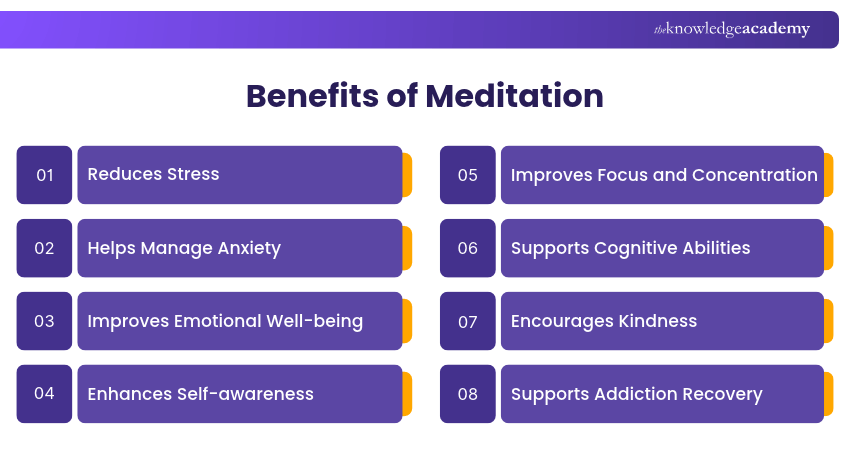
1) Reduces Stress
Meditation can help reduce perceived stress by encouraging relaxation and greater awareness of thoughts and emotions. Techniques such as mindful breathing and body scanning allow individuals to notice tension and respond more calmly to stressful situations.
Regular practice may also support emotional regulation, helping individuals recognise stress-related reactions without immediately acting on them. Mindfulness-based practices may also help reduce stress symptoms, although their effectiveness can vary from person to person.

2) Helps Manage Anxiety
Meditation may help individuals manage anxiety by encouraging present-moment awareness rather than becoming absorbed in worries about the future. It can help individuals recognise recurring anxious thoughts, reduce excessive worrying and develop a more balanced response to uncertainty.
Mindfulness-based practices can also help individuals observe anxious feelings without becoming overwhelmed by them. Over time, regular practice may help individuals manage anxious thoughts more calmly and develop a greater sense of emotional stability.
3) Improves Emotional Well-being
Meditation encourages individuals to observe emotions with greater awareness and acceptance. This can help them recognise emotional reactions and respond more thoughtfully to challenging situations.
Techniques such as loving-kindness meditation, gratitude meditation and self-compassion meditation may help cultivate positive emotions, empathy and a more compassionate attitude towards oneself and others. Over time, these practices can contribute to a healthier relationship with thoughts and emotions.
4) Enhances Self-awareness
Self-awareness involves recognising personal thoughts, emotions and behavioural patterns. Meditation encourages this awareness by creating opportunities to observe internal experiences without immediate judgement.
Regular practice can help individuals notice recurring reactions, identify sources of stress and reflect on their responses to different situations. This awareness may support more deliberate choices and thoughtful behaviour.
5) Improves Focus and Concentration
Focused-attention meditation involves concentrating on an object, sound or breathing pattern and gently returning attention whenever the mind wanders.
This repeated practice may help strengthen attentional control and reduce habitual distraction. Some studies suggest improvements in attention and concentration, although the extent and consistency of these benefits differ across individuals and research settings.
6) Supports Cognitive Abilities
Meditation may help strengthen certain cognitive abilities, such as planning, problem-solving and adapting to new situations. By encouraging greater mental awareness, it can help individuals approach tasks more thoughtfully and manage information effectively.
Regular practice may also support mental flexibility, making it easier to adjust to changing circumstances and consider different approaches to challenges. These benefits can contribute to clearer thinking and more effective decision-making in everyday life.
7) Encourages Kindness
Meditation can help individuals develop a more compassionate and understanding attitude towards themselves and others. It encourages positive feelings, reduces harsh self-judgement and promotes greater awareness of how one's actions and words affect those around them.
Practices such as loving-kindness and compassion meditation focus on cultivating goodwill, empathy and concern for others. With regular practice, these techniques may help individuals respond to others with greater patience, understanding and kindness.
8) Supports Addiction Recovery
Mindfulness-based approaches may support people recovering from substance use disorders by helping them recognise cravings, emotional triggers and habitual responses.
Practising awareness of urges without immediately acting on them can form part of broader recovery strategies. These practices may help some individuals manage cravings and develop healthier responses to triggers. However, meditation should complement rather than replace evidence-based addiction treatment.
9) Promotes Better Sleep
Meditation can encourage relaxation before bedtime by helping individuals redirect attention away from persistent worries and everyday distractions. This may help improve sleep quality by calming the mind and reducing racing thoughts that can make it difficult to fall asleep.
It also encourages relaxation and helps individuals unwind, particularly after a stressful or demanding day. Techniques such as guided meditation, body scanning and breathing exercises may help ease physical tension and promote a more relaxed state before bedtime.
10) Assists in Pain Management
Meditation may help individuals manage certain types of pain by changing how they attend to and respond to uncomfortable sensations. Mindfulness-based approaches encourage awareness of physical experiences without automatically responding with distress or resistance.
Research suggests potential benefits for some chronic pain conditions, although findings are mixed. Meditation can complement an existing pain management plan but should not replace medical assessment or prescribed treatment.
11) May Help Lower Blood Pressure
Meditation may help reduce stress and promote relaxation, which could contribute to modest improvements in blood pressure. Regular practice can also encourage slower breathing and a calmer state of mind, which may contribute to better cardiovascular health.
Techniques such as breathing meditation and transcendental meditation have been studied for their potential effects on blood pressure. While some individuals may experience modest improvements, meditation is best used alongside healthy lifestyle habits and prescribed medical treatment rather than as a replacement.
Develop healthier daily habits and strengthen your approach to well-being with our Active and Healthy Lifestyles Training – Sign up today!
12) Accessible From Anywhere
One practical benefit of meditation is that many techniques require little or no specialised equipment. Mindful breathing, focused attention and simple awareness exercises can be practised in a comfortable and suitable environment.
Individuals can incorporate brief meditation sessions into their morning routines, work breaks or evenings. Guided audio sessions and meditation applications also provide structured options for those who prefer additional support.
13) Strengthens Self-control
Meditation may help individuals develop better self-control by encouraging them to pause before reacting to impulses or distractions. Mindfulness practices help individuals observe urges without immediately acting on them, supporting more deliberate responses in everyday situations.
Regular practice may also support emotional regulation and behavioural self-control, particularly when dealing with stressful situations or habitual reactions. Over time, this can help individuals make more thoughtful decisions and respond to everyday challenges with greater patience.
14) May Help Manage Depressive Symptoms
Mindfulness-based interventions may help some individuals manage depressive symptoms by encouraging awareness and acceptance of difficult thoughts and emotions.
Mindfulness-based Cognitive Therapy (MBCT), which combines mindfulness practices with elements of cognitive therapy, is also recognised as an option for preventing depressive relapse in certain circumstances.
However, meditation should not be treated as a standalone cure for depression. Individuals experiencing persistent depressive symptoms should seek appropriate professional support.
What Happens When You Meditate Regularly?
Regular meditation may help individuals become more familiar with their thoughts, emotions and attention patterns. Some people notice improvements in relaxation and stress awareness after practising for a period of time, while others experience gradual changes or limited benefits.
Practising daily can help establish consistency, but there is no fixed duration that guarantees noticeable improvements. After one month, individuals may find it easier to maintain a meditation routine, although changes in focus, mood and sleep vary.
Starting with short sessions and gradually adjusting the duration can make meditation easier to incorporate into everyday life. Those who experience distress or worsening symptoms during meditation should pause the practice and seek appropriate professional guidance.
Bonus Tip
Pair meditation with an existing daily habit, such as your morning routine or evening wind-down. Starting with just a few minutes can make the practice easier to maintain without focusing on immediate results.
Build healthier habits and cultivate a more balanced mindset with Mindfulness Training – Join now!

Michael Jones develops practical resources that help professionals recognise workplace hazards and implement appropriate preventive measures. His content connects day-to-day safety responsibilities with the wider need for compliant and responsible working environments.
View Detail

 If you wish to make any changes to your course, please


