


We may not have the course you’re looking for. If you enquire or give us a call on +44 1344 203 999 and speak to our training experts, we may still be able to help with your training requirements.
Top 30 Market Research Tools: Features and Uses
ByAishwarya UnniLast updated on: 31 October 2026
Explore 30 market research tools for collecting customer feedback, analysing competitors and identifying market trends. Compare survey solutions, consumer intelligence platforms and research resources to find suitable options for your business.

In a Nutshell
1. Market research tools cover different jobs, including surveys and forms, usability testing, secondary data, social listening and audience intelligence.2. Primary research collects new information, while secondary research uses data that already exists.3. Some tools are dedicated research platforms, while others, such as Google Trends, Ubersuggest and Tableau, only support research.4. Findings are only as useful as the question design, sample selection and data quality behind them.5. The right tool depends on the research question, the target audience, the method and the total cost.
Two coffee shops open on the same street. One offers expensive speciality drinks, while the other focuses on affordable takeaway coffee. Both have attractive interiors and quality products. But which one understands what local customers actually want?
The answer depends on more than a good business idea. Customer preferences, spending habits, nearby competitors and local demand all influence business decisions. Market research tools help organisations find these factors through surveys, consumer insights and existing market data.
From understanding customer opinions to exploring market trends, different tools provide different types of information. This blog explores 30 market research tools, their features and uses to help you find suitable options for your research needs.
Best Market Research Tools
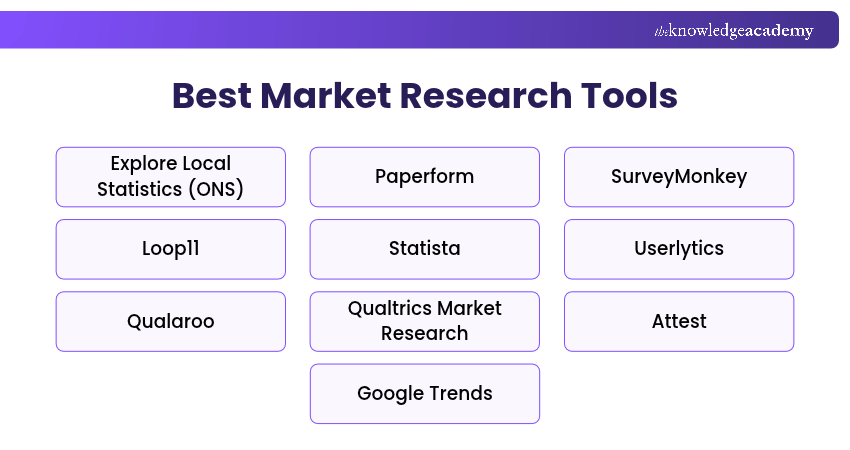
Market research tools support activities such as collecting primary research data, examining existing statistics, analysing digital markets and understanding consumer behaviour. Some are dedicated research platforms, while others provide supporting data or analytical capabilities.
Here are 30 tools worth exploring:
1) Explore Local Statistics (ONS)
Explore Local Statistics is a free interactive digital service provided by the UK's Office for National Statistics (ONS). It allows businesses and researchers to explore demographic, economic and social indicators across different UK locations.
Users can compare local statistics, identify regional trends and download data to support market analysis and location-based business decisions. The availability and geographical coverage of indicators may vary.
Key Features:
1) Local statistical indicators
2) Regional comparisons
3) Interactive data visualisations
4) Downloadable statistical data
Best For: Businesses researching local markets and regional opportunities in the UK.

2) Paperform
Paperform is an online form and survey builder that allows businesses to collect structured feedback without extensive technical knowledge. It supports research questionnaires, customer feedback forms and other data collection activities.
Its conditional logic allows questions to change based on earlier responses. Businesses can also use different question formats and connect collected data to supported applications, making Paperform useful for research processes that require flexible survey design.
Key Features:
1) Customisable forms and surveys
2) Conditional logic and question branching
3) Multiple question types and multimedia content
4) Response collection and analysis features
Best For: Small businesses and teams creating custom surveys and feedback forms.
3) SurveyMonkey
SurveyMonkey is an online survey platform used for collecting and analysing responses from customers, consumers and other target audiences. It supports market research activities such as product feedback, concept testing and brand perception surveys.
The platform provides survey templates, question logic and reporting capabilities. Businesses can distribute surveys to their own contacts or use available audience services to reach selected respondent groups.
Key Features:
1) Market research survey templates
2) Question branching and customisation
3) Response filtering and analysis
4) Audience targeting through available services
Best For: Organisations conducting structured surveys and consumer opinion research.
Trainer Insight: Avoid Leading Survey Questions
A question such as "How much do you love our new product?" assumes a positive opinion. Instead, ask "How would you rate our new product?" and provide balanced response options.
Neutral wording can reduce response bias and make the findings more useful.
4) Loop11
Loop11 is a usability testing platform that helps organisations understand how people interact with websites, applications and digital prototypes.
Researchers can assign participants tasks, such as finding a product or completing a checkout process, and examine where difficulties occur. This makes Loop11 useful for evaluating digital customer experiences rather than measuring general market demand.
Key Features:
1) Task-based usability studies
2) Website and prototype testing
3) User navigation and task analysis
4) Usability reports and research findings
Best For: UX researchers and digital teams investigating website usability and user journeys.
5) Statista
Statista is a data and research platform that provides statistics, market insights, industry information and selected forecasts. It supports secondary research by helping users explore information collected or analysed through existing sources.
Businesses can use Statista to investigate industry developments, compare markets and examine consumer or economic indicators.
Key Features:
1) Industry and market statistics
2) Market insights and forecasts
3) Charts and downloadable data
4) Access to published research information
Best For: Market Analysts and organisations needing secondary research, industry statistics and market comparisons.
Pro Tip: Check the Original Data Source
Before quoting a statistic, check when it was collected, which population it covers and whether it represents measured data, survey findings or an estimate. A recent publication date does not always mean the underlying data is equally recent.
6) Userlytics
Userlytics is a User Experience (UX) research platform designed to help businesses evaluate digital products through participant feedback. It supports research involving websites, mobile applications, prototypes and other digital experiences.
Researchers can observe how participants complete tasks and explain their experiences. These findings can reveal confusing interfaces, navigation problems and unmet user expectations that may not be apparent from numerical analytics alone.
Key Features:
1) Remote usability testing
2) Participant feedback and recordings
3) Website, app and prototype research
4) Task-based user experience studies
Best For: Product teams and UX researchers seeking qualitative feedback on digital experiences.
7) Qualaroo
Qualaroo is a customer feedback platform that allows businesses to collect responses directly from people using their websites or digital products.
Its targeted surveys, often referred to as Nudges, can appear in response to selected user behaviours or page conditions. For example, an online retailer might ask visitors who abandon a particular page what prevented them from continuing.
Key Features:
1) Targeted website surveys
2) Behaviour-based survey triggers
3) Customisable questions and branching
4) Feedback reporting and analysis
Best For: Website owners and product teams collecting contextual visitor feedback.
8) Qualtrics Market Research
Qualtrics Market Research is a research platform that supports consumer studies, brand research, product testing and other market research activities.
It combines research design, data collection and analytical capabilities within a broader research environment. Organisations can use its research tools and available audience services to evaluate concepts, examine consumer preferences and track changes in market perceptions.
Key Features:
1) Survey creation and research management
2) Product and concept research
3) Brand and consumer studies
4) Research audience access and data analysis
Best For: Established research teams managing complex or recurring market research programmes.
Learn to build customer satisfaction and brand loyalty in the business environment with our Strategic Marketing Course – Join now!
9) Attest
Attest is a consumer research platform that helps businesses gather opinions from selected audiences. It supports research into purchasing behaviour, brand perceptions, product concepts and customer preferences.
Businesses can use Attest to investigate questions before making product or marketing decisions. For example, a company considering a new packaging design might collect consumer feedback on several options before selecting one for further development.
Key Features:
1) Consumer survey research
2) Audience targeting
3) Brand and concept testing
4) Research results and analysis
Best For: Brands and marketing teams validating ideas through consumer feedback.
Research Example: Finding the Right Participants
A fitness brand wants feedback from people who visit a gym at least once a week. Before conducting its survey, it asks:How often do you visit a gym?1. Three or more times a week2. Once or twice a week3. Less than once a week4. NeverTrainer Insight: Based on the study's eligibility criteria, only respondents choosing the first two options proceed to the main survey.
10) Google Trends
Google Trends is a free tool that shows how relative search interest changes across locations and time periods. It helps researchers explore seasonality, compare search topics and identify changes in online interest.
For example, a business selling outdoor equipment could examine how interest in selected products changes throughout the year. However, Google Trends scores represent normalised search interest rather than absolute search volume, sales or market size.
Key Features:
1) Relative search-interest analysis
2) Time-period and regional comparisons
3) Related topics and queries
4) Seasonal trend exploration
Best For: Businesses researching emerging topics, seasonal demand signals and changing search interests.
11) Latana
Latana is a brand tracking platform designed to help organisations evaluate how consumers perceive their brands over time.
It focuses on measures such as brand awareness, consideration and perception across selected audiences. Businesses can use these findings to explore whether their brand positioning is changing and how different consumer groups view their offerings.
Key Features:
1) Brand awareness tracking
2) Brand consideration research
3) Audience segmentation
4) Brand performance reporting
Best For: Marketing and brand teams studying consumer perceptions across target markets.
12) Pollfish
Pollfish is a consumer survey platform that enables businesses to conduct research using targeted respondents. It can support studies involving brand awareness, consumer preferences and product concepts.
Researchers can create questionnaires, specify respondent characteristics and review the resulting responses. As with any panel-based research, the usefulness of the findings depends on question design, sample selection and data quality.
Key Features:
1) Consumer survey creation
2) Respondent targeting
3) Survey distribution
4) Response analysis and reporting
Best For: Organisations conducting targeted consumer surveys and exploratory market studies.
13) Mention
Mention is an online media monitoring and social listening tool that helps businesses track references to their brands, competitors and industry topics.
It allows teams to follow relevant online conversations and identify emerging issues or discussions. Rather than directly asking customers questions, Mention examines what people are already saying across supported online sources.
Key Features:
1) Brand mention monitoring
2) Keyword and competitor tracking
3) Online conversation analysis
4) Alerts and reporting
Best For: Marketing teams tracking brand visibility and competitor discussions.
14) Similarweb Digital Research Intelligence
Similarweb Digital Research Intelligence is a digital market intelligence platform that helps organisations examine online industries, websites and competitor activity.
It provides digital traffic estimates, audience information and competitive benchmarking capabilities. These insights can support decisions about market entry, digital partnerships and competitive positioning, although estimated traffic figures should not be treated as exact internal analytics.
Key Features:
1) Website traffic estimates
2) Digital market and competitor analysis
3) Audience behaviour insights
4) Industry benchmarking and trends
Best For: Businesses researching digital competitors, online markets and website performance trends.
15) AnswerThePublic
AnswerThePublic is a search listening tool that helps users explore questions and topics associated with keywords. It draws on supported search and discovery sources to organise relevant queries into research-friendly formats.
Businesses can use it to investigate the questions people ask about products, services or problems. These findings are particularly useful for content planning, identifying information needs and exploring possible customer concerns.
Key Features:
1) Question-based keyword discovery
2) Search topic exploration
3) Visual representations of queries
4) Content and audience-interest research
Best For: Content teams and marketers researching audience questions and information needs.
Understand content marketing strategies with our Content Marketing Course – Join now!
16) QuestionPro
QuestionPro is a survey and research platform that supports structured questionnaires, market research studies and feedback collection. It offers tools for designing surveys, distributing questionnaires and analysing responses. Depending on the product offering, research teams can use it for consumer studies, concept evaluation and more specialised research projects.
Key Features:
1) Customisable survey design
2) Survey distribution and respondent management
3) Research analysis and reporting
4) Advanced survey logic and question branching
Best For: Market researchers managing structured consumer studies and survey-based projects.
17) Ubersuggest
Ubersuggest is primarily an SEO and keyword research platform that can also support digital market research. It helps businesses examine search demand signals, competitor keywords and the visibility of websites in search results.
Researchers can compare keyword opportunities and investigate which subjects attract search interest. However, its SEO metrics reflect online search activity and estimates, rather than direct measurements of total consumer demand.
Key Features:
1) Keyword research and suggestions
2) Competitor keyword analysis
3) Organic traffic estimates
4) Search visibility and content research
Best For: Businesses researching online search demand and competitors' SEO strategies.
18) NielsenIQ (NIQ)
NielsenIQ, also known as NIQ, provides consumer intelligence, retail measurement and market analysis services. Its research capabilities are particularly relevant to brands and retailers examining purchasing behaviour and product performance.
Businesses can use NIQ's available market data and analytical services to investigate product categories, retail channels and consumer trends. The exact datasets and services available vary by market and commercial arrangement.
Key Features:
1) Retail market measurement
2) Consumer and shopper insights
3) Product category analysis
4) Market and sales intelligence
Best For: Consumer goods brands and retailers analysing category performance and shopper behaviour.
19) Experian Mosaic UK
Experian Mosaic UK is a consumer segmentation solution that helps businesses understand UK households using demographic, behavioural and lifestyle characteristics.
It classifies UK individuals and households into consumer segments, allowing organisations to explore customer profiles, compare audiences and investigate potential market opportunities.
Key Features:
1) UK household segmentation
2) Demographic and lifestyle insights
3) Customer profiling
4) Geographic audience analysis
Best For: Organisations researching UK consumer segments and developing targeted marketing strategies.
20) PureSpectrum
PureSpectrum is a market research technology provider focused on survey sample sourcing and research operations. It helps research organisations access respondents and manage elements of survey fieldwork.
The platform is particularly useful when a business has a questionnaire but needs to reach an appropriate audience. Its role differs from a general-purpose survey builder because its core offering centres on sample access and research execution.
Key Features:
1) Survey sample sourcing
2) Audience targeting
3) Research fieldwork management
4) Respondent quality controls
Best For: Research agencies and teams needing respondent samples for survey projects.
21) Typeform
Typeform is a form and survey platform recognised for its interactive, question-led format. It enables businesses to collect responses through surveys, questionnaires and feedback forms.
For market research, Typeform can support concept feedback, customer questionnaires and small-scale audience studies. Its presentation style may make it suitable for research where respondents need a straightforward and visually engaging experience.
Key Features:
1) Interactive survey design
2) Customisable question formats
3) Conditional logic
4) Integrations and response management
Best For: Businesses creating engaging consumer surveys and online feedback experiences.
22) GWI
GWI is a consumer insights and audience intelligence platform that helps organisations explore people's interests, attitudes, behaviours and media habits.
Rather than relying only on a company's existing customers, GWI provides access to consumer research datasets covering supported markets and audiences. Businesses can compare groups, investigate purchasing motivations and develop evidence-based audience profiles.
Key Features:
1) Consumer audience profiling
2) Attitudinal and behavioural research
3) Audience segment comparisons
4) Media consumption insights
Best For: Brands and agencies researching consumer lifestyles, preferences and audience characteristics.
23) Tableau
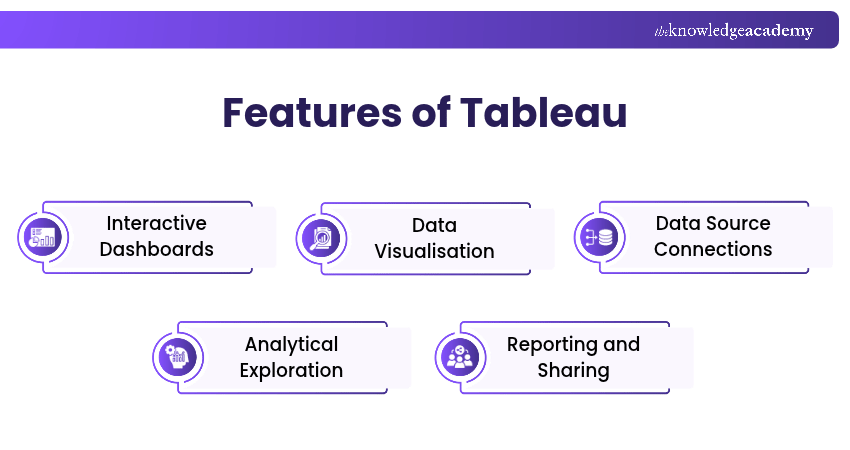
Tableau is a data visualisation and analytics platform that can support market research by helping teams explore and present collected data.
It connects to supported data sources and enables users to create interactive charts, dashboards and reports. For example, researchers can visualise survey findings alongside regional statistics or business performance data to identify patterns and differences.
Key Features:
1) Interactive dashboards
2) Data visualisation
3) Connections to supported data sources
4) Reporting and analytical exploration
Best For: Research Analysts working with existing datasets that need visual interpretation.
Understand how to connect, blend, and prepare data from multiple sources with our Tableau Desktop Training – Join today!
24) BrandMentions
BrandMentions is an online monitoring platform that helps businesses follow references to brands, products and competitors across supported digital sources. It can help researchers identify recurring subjects, changes in online discussion and potential reputation concerns.
Its research value lies in observing public conversations rather than collecting structured responses from a representative consumer panel.
Key Features:
1) Brand and keyword monitoring
2) Competitor mention tracking
3) Sentiment analysis
4) Alerts and reporting
Best For: Businesses monitoring online brand discussions and competitor visibility.
25) YouGov Profiles
YouGov Profiles is an audience intelligence platform that provides information about consumer demographics, attitudes, interests and behaviours. It allows researchers to create and compare audience groups using available survey-based data. Marketing teams can investigate how particular customer segments differ in their media habits, brand preferences and lifestyle characteristics.
Key Features:
1) Audience segmentation
2) Consumer attitudes and preferences
3) Media consumption research
4) Audience comparison dashboards
Best For: Organisations developing detailed audience profiles and comparing consumer groups.
26) Brandwatch
Brandwatch is a digital consumer intelligence platform that helps organisations examine online conversations about brands, products and industries.
It supports social listening and analysis of trends, topics and sentiment across available digital sources. Businesses can use these insights to identify emerging conversations, evaluate brand perceptions and understand how selected online audiences discuss competitors.
Key Features:
1) Social listening and topic monitoring
2) Consumer conversation analysis
3) Brand sentiment research
4) Trend and competitor intelligence
Best For: Larger marketing and research teams analysing digital consumer conversations.
27) Resonate
Resonate is a consumer and audience intelligence platform that uses available consumer data to help organisations understand audience characteristics and motivations. It supports audience analysis through behavioural, attitudinal and psychographic information.
Businesses can use these insights to explore differences between consumer groups and refine research-informed targeting decisions.
Key Features:
1) Audience intelligence
2) Psychographic segmentation
3) Consumer behaviour analysis
4) Audience comparison and profiling
Best For: Marketing teams investigating consumer motivations and audience segments.
28) SurveySparrow
SurveySparrow is a survey and experience management platform used to collect structured feedback from customers and other respondent groups.
Its conversational survey presentation, distribution options and reporting features support market research questionnaires and recurring feedback studies. Organisations can use it to track customer opinions over time and examine changes in responses.
Key Features:
1) Conversational survey design
2) Multiple survey distribution options
3) Recurring feedback collection
4) Response analysis and reporting
Best For: Teams conducting recurring surveys and customer feedback programmes.
29) Jotform
Jotform is an online form-building platform that businesses can use to create questionnaires, surveys and data collection forms without writing code. It supports different question types and integrations that can help teams organise responses. In market research, Jotform is useful for collecting feedback, conducting simple polls and gathering structured information from selected audiences.
Key Features:
1) Drag-and-drop form creation
2) Customisable survey templates
3) Conditional logic
4) Form submissions and integrations
Best For: Small businesses and teams needing flexible online forms for research and feedback.
30) Sogolytics
Sogolytics is a survey and experience management platform that supports market research, customer feedback and related research activities. It provides tools for building questionnaires, gathering responses and examining results. Organisations can use its survey capabilities for concept evaluation, customer studies and other structured research projects.
Key Features:
1) Survey design and distribution
2) Market research questionnaires
3) Response analysis and reporting
4) Experience and feedback management
Best For: Organisations conducting structured surveys and ongoing feedback research.
How to Choose the Right Market Research Tool?
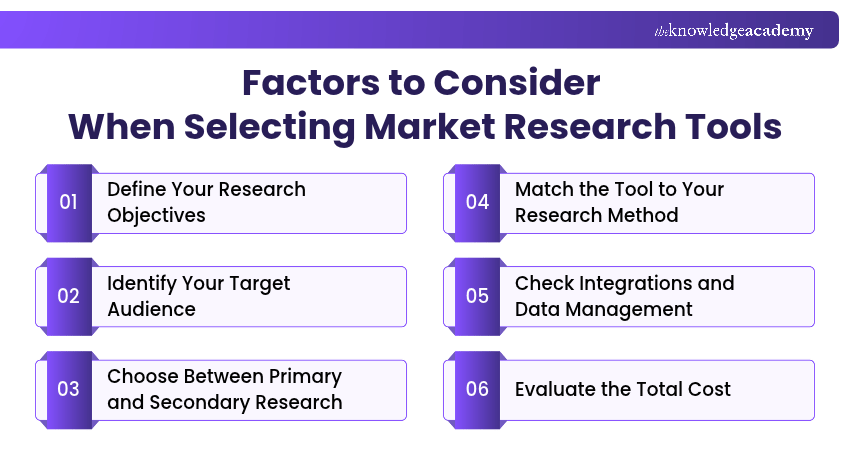
Choosing the right market research tool depends on the questions you want to answer, the data you need and how you plan to use the findings. Here are six factors to consider:
1) Define Your Research Objectives
Start with a clear research question. For example, understanding why customers abandon a website requires a different approach from estimating demand in a new geographical market. Choose a tool that directly supports the decision you need to make.
2) Identify Your Target Audience
Consider whether you need feedback from existing customers, prospective buyers, particular consumer segments or a wider population. Check whether the platform can reach your intended respondents or whether you must provide your own participant list.
3) Choose Between Primary and Secondary Research
Primary research involves gathering new information through methods such as surveys and interviews. Secondary research uses information that already exists, including published statistics and industry reports.
SurveyMonkey and QuestionPro support primary data collection, while Statista and ONS Explore Local Statistics provide sources for secondary research.
4) Match the Tool to Your Research Method
Select the platform according to the type of evidence required. Surveys can collect stated opinions, usability tests can reveal interaction problems, and social listening can examine public conversations. An unsuitable research method may produce findings that do not answer your original question.
5) Check Integrations and Data Management
Consider how the tool exports data and works with existing analytical or reporting systems. Also examine relevant privacy protections, data access controls and retention requirements. These considerations matter particularly when research involves personal information or multiple teams.
6) Evaluate the Total Cost
Compare subscription fees, respondent recruitment costs, available features and the effort required to manage research projects.
A low-cost survey builder may be sufficient when you already have respondents, while a panel-based research project may involve additional sampling and fieldwork costs.
Keep This in Mind
Market research findings can reveal opportunities, but they do not eliminate uncertainty. Treat the evidence as a way to test assumptions, compare possible decisions and identify areas that need further investigation.
Understand market trends and consumer behaviour to strengthen business strategies with our Marketing Courses - Join now!

Aishwarya Unni is a Copywriter with 2+ years of experience in reporting, web content, blogs, email marketing, and case studies. Her journalism background, combined with her research and writing experience across Business Skills and Human Resources, helps her create clear, engaging content for different audiences.
View Detail

 If you wish to make any changes to your course, please


