


We may not have the course you’re looking for. If you enquire or give us a call on 01344203999 and speak to our training experts, we may still be able to help with your training requirements.
Mental Health Tips: 15 Ways to Improve Your Wellbeing
ByThe Knowledge AcademyLast updated on: 18 November 2026
Discover 15 practical mental health tips to support everyday wellbeing, from improving sleep and staying active to managing stress and building supportive relationships. Explore healthy habits, coping strategies and ways to seek help when needed.
Quick Preview
1. Small, manageable changes can help build healthier habits and support mental wellbeing over time.2. Sleep, physical activity and balanced nutrition contribute to overall wellbeing.3. Supportive relationships can provide comfort, belonging and encouragement.4. Mindfulness, journalling and healthy coping strategies may help manage everyday stress.5. Seeking appropriate help is important when emotional difficulties persist or interfere with daily life.
Life moves fast, and with all the stress and challenges we face, looking after our mental health is more important than ever. Our mental health influences how we respond to situations, make decisions and navigate everyday experiences.
Yet, with so many responsibilities competing for our attention, it's easy to overlook our own emotional needs. Recognising the importance of mental wellbeing is a good starting point, but how can we put that awareness into practice? Let's find out.
15 Essential Mental Health Tips
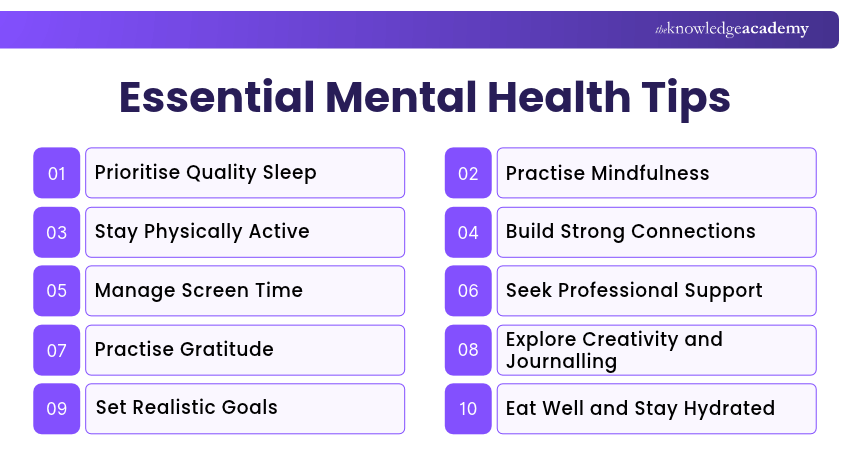
There are several practical steps you can take to look after your mental health. Explore the following 15 tips to get started:
1) Prioritise Quality Sleep
If you've ever had a poor night's sleep, you know how much it can affect your mood, energy and ability to handle daily activities. Sleep plays an important role in emotional regulation, concentration and overall wellbeing.
Many adults need around seven to nine hours of sleep each night, although individual requirements vary. If getting enough rest has been difficult, consider making a few changes:
a) Follow a calming evening routine to prepare your mind and body for rest.
b) Reduce caffeine later in the day and limit stimulating activities close to bedtime.
c) Try to go to bed and wake up at the same time each day.
Pro Tip
Rather than changing your entire sleep routine overnight, start with one manageable habit. Try waking up at a consistent time or spending a few minutes unwinding before bed. Small adjustments are often easier to maintain than major changes.
2) Practise Mindfulness and Meditation
Have you ever been so caught up in your thoughts that you barely noticed what was happening around you? Mindfulness encourages you to pay attention to the present moment, including your thoughts, feelings and surroundings.
Practising mindfulness or meditation may help some people manage everyday stress and become more aware of their emotions. You can begin with a short breathing exercise, notice the sounds around you or take a few moments to observe how you're feeling.
3) Stay Physically Active
Our body and mind are closely connected, so taking care of one can benefit the other. Regular physical activity can support mental wellbeing, improve sleep and help manage stress. You don't have to become an athlete to benefit. Walking, cycling, dancing or gardening can help you stay active.
If you enjoy company, consider joining a fitness class, walking group or recreational sports team. These activities can combine movement with valuable social interaction. Choose activities that suit your abilities and preferences and build up gradually. Even a short walk can be a useful starting point.
4) Build Supportive Social Connections
Maintaining meaningful relationships is an important part of mental wellbeing. Strong relationships with friends, family and colleagues can offer emotional support and a sense of belonging. Make time to stay connected with those you trust.
This could mean having a conversation, sharing a meal, arranging a visit or simply checking in with someone. Helping others can also strengthen social connections. Small acts of kindness, supporting a neighbour or volunteering in your community may create opportunities to connect and develop a sense of purpose.
5) Manage Social Media and Screen Time
Social media helps us stay connected, but spending too much time online can sometimes affect our mood, sleep and daily routines. Constant notifications, negative content or comparing ourselves with others may leave us feeling distracted or overwhelmed.
If your digital habits are affecting your wellbeing, try these simple steps:
a) Set reasonable limits on social media use.
b) Allocate screen-free time for hobbies or relaxation.
c) Make opportunities for face-to-face conversations.
d) Reduce unnecessary notifications and digital distractions.
The goal isn't to avoid technology completely. Instead, develop a healthier relationship with it by noticing how different online activities affect you.
6) Seek Professional Help When Needed
Sometimes, looking after your mental health means recognising when additional support could be helpful. If you're experiencing persistent sadness, anxiety, stress or other emotional difficulties, consider speaking to a qualified mental health professional.
A Counsellor, Therapist or Psychiatrist may be able to help you understand your experiences and explore appropriate support or treatment options. If your mental health is affecting your sleep, relationships, work or daily activities, seeking professional advice can be an important step.
Your Personal Wellbeing Toolkit
Everyone has different ways of looking after their mental health. Creating a personal wellbeing toolkit can help you identify activities that bring comfort, relaxation or a sense of connection.Choose one activity for each of these three areas to create your own wellbeing toolkit:1) Something That Calms You: Deep breathing, listening to music or spending time outdoors.2) Something That Energises You: Taking a walk, dancing or enjoying a creative hobby.3) Something That Connects You: Catching up with friends, spending quality time with family or taking part in social activities.Your toolkit can change as your needs and circumstances evolve.
7) Practise Gratitude
Taking time to appreciate positive experiences can help you recognise things that bring meaning, comfort or enjoyment to your life. You might reflect on a conversation with a friend, a pleasant walk or something you accomplished during the day.
Try writing down a few things you're grateful for or sharing your appreciation with someone who has helped you. However, practising gratitude doesn't mean ignoring difficult emotions or pretending everything is fine. You can acknowledge challenging experiences while also noticing moments that matter to you.
8) Explore Creative Activities and Journalling
Whether you enjoy painting, listening to music, writing, cooking or crafting, creative hobbies may provide opportunities for relaxation and self-expression. Journalling is another useful option. Writing down your experiences can help you organise your thoughts and recognise patterns in how you feel.
You could use a journal to:
a) Express emotions that are difficult to discuss.
b) Reflect on experiences and thought patterns.
c) Record meaningful moments or personal achievements.
You don't need to be an expert writer or artist. The process of expressing yourself matters more than producing a perfect result.
9) Set Realistic Goals
Setting achievable goals can provide direction and help you recognise progress. However, unrealistic expectations may create unnecessary pressure. Divide larger tasks into smaller, achievable steps. For example, instead of trying to change your entire daily routine, begin with one activity you can reasonably maintain.
It can also help to set flexible goals that account for your available time, energy and circumstances. Celebrate progress along the way, even when it seems small. Completing manageable tasks can support motivation and a sense of accomplishment.
Develop practical goal-setting skills and strengthen your motivation with the Motivation and Goal Setting Training – Sign up now!
10) Eat a Balanced Diet and Stay Hydrated
What we eat and drink contributes to our physical health and can influence how we feel throughout the day. A balanced diet that includes fruits, vegetables, whole grains and appropriate sources of protein can help support general health. Regular meals may also help maintain energy throughout the day.
Staying hydrated is important too. As a general guide, the National Health Service (NHS) recommends around six to eight cups or glasses of fluid daily, although individual needs vary. Water, milk and other suitable drinks can contribute to your fluid intake.
Pro Tip
It is also worth paying attention to caffeine and alcohol consumption. Excessive caffeine can contribute to sleep problems or feelings of anxiety in some people, while alcohol may negatively affect mood and sleep.
11) Learn to Set Healthy Boundaries
Do you often agree to additional tasks even when you're already overwhelmed? Learning to set boundaries can help you manage commitments and protect time for your own needs. Boundaries involve communicating what you can reasonably manage and recognising when you need rest, space or support.
For example, you might explain that you're unavailable outside working hours or decline an additional commitment when your schedule is already full. Setting boundaries doesn't mean being unkind. It means communicating your limits respectfully while considering your wellbeing and responsibilities.
12) Spend Time in Nature
Life can become overwhelming when we're constantly surrounded by responsibilities, technology and busy environments. Spending time outdoors may offer a welcome opportunity to relax and reconnect with our surroundings.
Activities such as walking, gardening or resting in a peaceful outdoor setting can help you unwind. The Japanese practice of Shinrin-yoku, known as forest bathing, involves experiencing nature through mindful observation.
13) Establish a Consistent Routine
A regular routine can provide structure and make everyday responsibilities feel more manageable. It can also help you develop consistent habits around sleep, meals, work and relaxation. Plan a flexible daily routine that balances essential tasks, exercise, relaxation and social activities.
For example, you might begin the day with breakfast, take a short walk during your lunch break and reserve some quiet time in the evening. However, routines should support your wellbeing rather than become another source of pressure. Leave room for unexpected events, rest and changes in your circumstances.
14) Develop Healthy Coping Strategies
Everyone experiences stressful situations, difficult emotions and unexpected challenges. Developing healthy coping strategies can help you respond to these experiences in more constructive ways. Different activities work for different people. Some may prefer movement, while others find quiet reflection or creative activities more helpful.
Consider trying:
a) Slow, comfortable breathing exercises to settle your attention.
b) Progressive muscle relaxation to ease physical tension.
c) A calming hobby, short break or conversation with someone you trust.
It's useful to have several coping options rather than relying on a single technique.
15) Recognise and Challenge Unhelpful Thoughts
When we're feeling stressed, worried or upset, our thoughts can sometimes become overly negative. We might imagine the worst possible outcome or judge ourselves harshly after making a mistake. Learning to recognise these thinking patterns can help us respond to situations more thoughtfully.
For example, if you think, "I made one mistake, so I'm terrible at my job," consider whether that conclusion reflects the full situation. Ask yourself whether there is evidence supporting the thought, whether another explanation is possible and what you would say to a friend experiencing something similar.
Daily Mental Wellbeing Checklist
Use this checklist as a flexible reminder of ways to support your wellbeing:□ Make time for adequate rest and sleep.□ Include movement or physical activity that suits you.□ Eat regular meals and drink enough fluids.□ Connect with someone you trust when possible.□ Take a break from unnecessary digital distractions.□ Make time for an enjoyable or relaxing activity.□ Recognise your emotions and personal boundaries.□ Seek additional support when you need it.
Recognise factors that influence mental wellbeing and behaviour through our Mental Health Courses – Register today!

The Knowledge Academy develops accessible learning content across Project Management, IT, Cybersecurity, Data Science, Business Analysis, HR, Accounting and Finance, Leadership and Health and Safety. Its resources combine subject research with clear explanations to help professionals build practical knowledge across a wide range of disciplines.
View Detail

 If you wish to make any changes to your course, please


