


 Top Rated Course

We may not have the course you’re looking for. If you enquire or give us a call on 01344203999 and speak to our training experts, we may still be able to help with your training requirements.
What is Self-Care? Why It Matters More Than Ever
The Knowledge Academy 14 July 2026Self-care means caring for your physical, mental, and emotional health through daily habits and choices that support well-being, not selfish indulgence. It means to take intentional actions to help you effectively manage pressure, improve focus, and maintain balance in both your personal and professional life.

Training Outcomes Within Your Budget!
We ensure quality, budget-alignment, and timely delivery by our expert instructors.
Table of Contents
Have you ever felt tired after a night’s sleep, or overwhelmed before the day even started? Between work pressure, constant notifications, and personal responsibilities, it is easy to put your needs last. This is where What is Self-care becomes important. It is not about taking breaks or treating yourself, but about recognising when your mind and body require attention with care, intention, and balance.
Understanding What is Self-care matter more than ever in a world that celebrates being busy and occupied. When you prioritise simple Self-care habits, you regain control, reduce burnout, and build a healthier routine. In this blog, you will learn about Self-care, its importance, benefits, key tips, and more!
Table of Contents
1) What is Self-care?
2) Why is Self-care Important?
3) Types of Self-care
4) What are the Examples of Self-care?
5) Benefits of Self-care?
6) 7 Key Tips to Practice Self-Care
7) What are the Signs That You Need More Self-care?
8) What is the Difference Between Self-care and Wellness?
9) Conclusion
What is Self-care?
Self-care means the actions people take to look after their own health and well-being. This includes everyday habits, such as hygiene, healthy eating, physical activity, lifestyle choices, and responsible use of medicines. It shows that self-care is not a luxury, but a daily practice that supports long-term physical and mental health.
Practising self-care strengthens overall wellness, helps manage common health concerns, and improves resilience during stressful or uncertain situations. It also involves recognising personal limits and understanding when to seek professional support. When these habits are combined thoughtfully, they create a strong foundation for a healthier, more balanced life.

Why is Self-care Important?
Self-care is important because it helps you build and maintain a healthy relationship with yourself. When you look after your well-being, you create a foundation of energy, patience, and emotional balance. Caring for yourself ensures you have the physical and emotional capacity to support, connect, and positively influence yourself and the people around you.
It is important to know that Self-care must not be mistaken for selfishness. Taking time to recharge and rejuvenate enables you to show up as a calmer, happier, and more resilient version of yourself. When you feel well, that creates a ripple effect and brings positivity into your work, relationships, and daily interactions.
Types of Self-care
At different stages, you may need to focus on more than one type of Self-care. Let’s look at its different types for a deeper understanding of What is Self-care below.
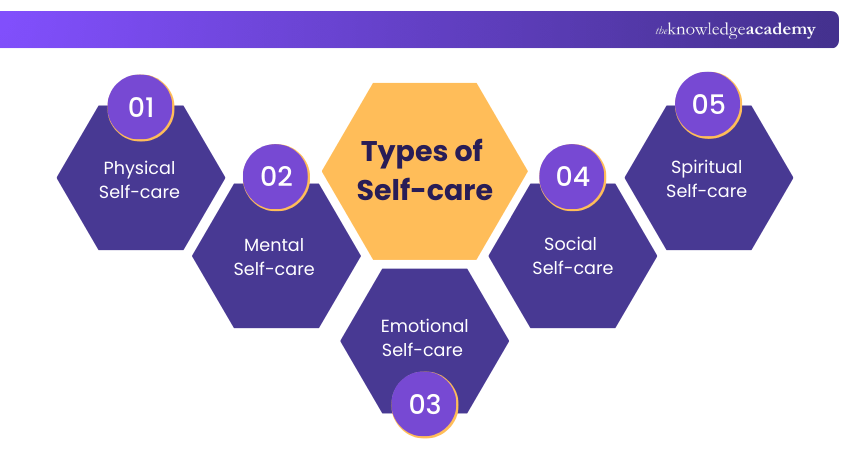
1) Physical Self-care
Physical Self-care focuses on caring for your body so that it functions efficiently. This involves eating a balanced diet, getting adequate sleep, staying active, and managing your health needs. When your body is looked after properly, your mind and emotions tend to feel stable as well.
Key Questions to Reflect on:
a) Are you getting adequate sleep?
b) Is your diet properly fuelling your body?
c) Are you taking charge of your health needs?
2) Mental Self-care
Mental Self-care involves keeping your mind active and protecting your psychological health. Reading, learning new skills, or engaging in inspiring content support mental clarity, while self-compassion helps maintain a healthy inner dialogue.
Key Questions to Reflect on:
a) Are you making time for activities that mentally stimulate you?
b) Are you keeping a positive internal dialogue?
c) Are you taking proactive steps to support your mental health?
3) Emotional Self-care
Emotional Self-care focuses on understanding and managing your emotions in healthy ways. Expressing feelings, talking to someone you trust, or doing activities that help you revive and support emotional balance in your life.
Key Questions to Reflect on:
a) Do you have healthy ways to process your emotions?
b) Are you doing activities that make you feel emotionally recharged?
c) Are you allowing yourself to process anxiety, stress, or sadness?
4) Social Self-care
Social Self-care is about maintaining healthy relationships and staying connected with others. Making time for friends and family supports emotional well-being and reduces feelings of isolation, even during busy periods.
Key Questions to Reflect on:
a) Are you getting sufficient time with loved ones?
b) What are you doing to nurture your relationships?
c) Do your relationships leave you feeling valued or drained?
5) Spiritual Self-care
Spiritual Self-care helps you develop a sense of meaning, purpose, and connection. This involves meditation, reflection, prayer, or time in nature. Anything that helps you feel grounded and aligned with values is meant to reignite your spiritual life.
Key Questions to Reflect on:
a) Do you engage in practices that give you a sense of purpose or meaning?
b) Are you taking time to reflect, meditate, or connect with what matters to you?
c) Do you feel grounded and aligned with your personal values?
Take control of your time and get more done with less stress with Time Management Training now!
What are Examples of Self-care?
Self-care can look different for everyone because it's about meeting your own mental and physical needs. Here are some examples:
a) Personal Hygiene: Simple acts like flossing regularly or taking a relaxing bath can be forms of Self-care. Personal Hygiene Importance lies in how these habits help you feel clean and refreshed.
b) Taking Time for Yourself: This could mean setting aside time to relax, read a book, or enjoy a hobby. It's about giving yourself a break and doing something you love.
c) Health Management: In the medical context, Self-care involves making healthy lifestyle choices and managing any long-term conditions. This might include eating well, exercising, or taking prescribed medications, and practicing self-management to maintain overall well-being.
d) Meditation: Many people find meditation to be a key part of their Self-care routine. It's about focusing your awareness and developing a better sense of perspective. Meditation involves breathwork and staying present now, which can greatly improve mental health.
e) Personal Grooming: Getting a new haircut or dressing in a way that makes you feel good can also be Self-care. It's about doing things that boost your confidence and make you feel cared for.
Learn how to deal with stress with our Stress Management Course – Join today!
Benefits of Self-care
Self-care is more than a feel-good habit; it is crucial for maintaining overall health and balance. Understanding What is Self-care requires learning how small, consistent actions can improve your quality of life. Let’s look at the key benefits it provides below.
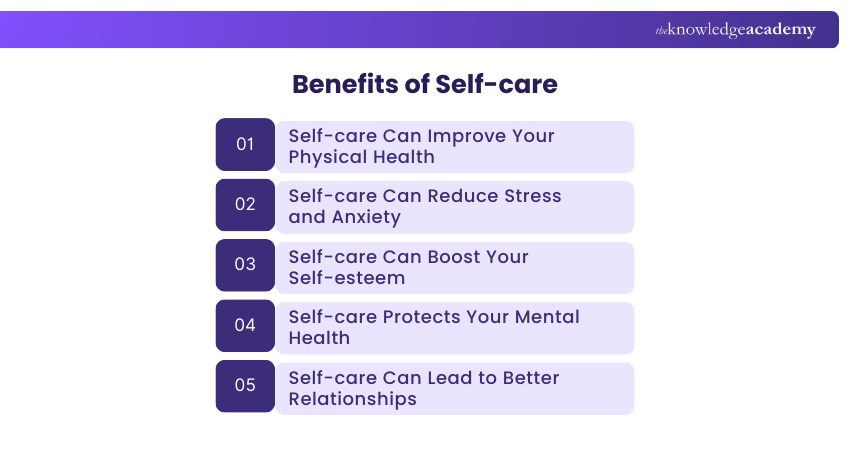
1) Self-care Can Improve Your Physical Health
Self-care plays a key role in supporting your physical health. Simple habits such as brushing your teeth twice a day, eating a balanced diet, staying physically active, and getting enough sleep help you become more aware of your body’s needs. Over time, these small, consistent efforts contribute to stronger immunity, better energy levels, and long-term well-being.
2) Self-care Can Reduce Stress and Anxiety
Making time for relaxation is an important part of Self-care. Activities such as, listening to uplifting music, taking a warm bath, practicing yoga or meditation help to calm the mind. These moments of rest enable your body and mind to reduce feelings of stress and ignite feelings of balance and emotional steadiness.
3) Self-care Can Boost Your Self-esteem
Self-care encourages you to treat yourself with kindness, leading to positive feelings about yourself. When you take time to care for your needs, you build confidence and self-respect. Regular habits, such as exercise and proper rest, help you feel stronger and capable. This makes it easier to cope with setbacks and stay motivated towards personal growth.
4) Self-care Protects Your Mental Health
Self-care supports Mental Health by helping you manage emotional strain before it escalates. While it is not a replacement for professional support when needed, it forms a strong foundation for psychological stability. Looking after yourself physically and emotionally improves mood, increases clarity, and promotes healthier coping strategies.
5) Self-care Can Lead to Better Relationships
When you feel healthier and happier, you can provide time, energy, and care to others. Self-care helps you show up more positively in relationships. It is crucial for people who often put other people first. Looking after your own well-being helps to build the capacity to support others while maintaining a strong and healthy network.
Become a Confident Voice Over Artist with our Voice Over Artist Course! Signup Now!
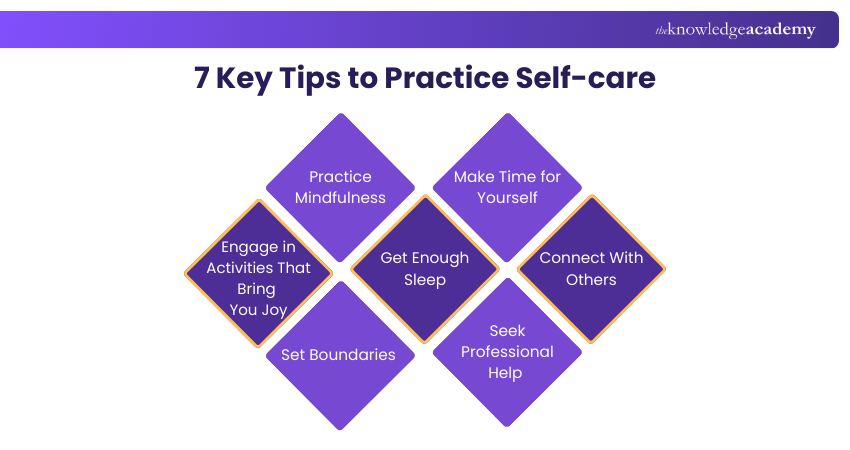
7 Key Tips to Practice Self-care
For boosting your Understanding of What is Self-care, the next step is putting it into practice. Let's look at the practical tips to help well-being become a top priority in your daily routine.
1) Practice Mindfulness
Mindfulness helps you stay present and aware of your thoughts and feelings without any judgment. Simple practices, such as deep breathing, meditation, and yoga, can calm your mind, lower stress, and improve overall well-being.
2) Make Time for Yourself
Self-care begins by setting time aside just for you. Even 15 to 30 minutes a day can help you relax, recharge, rejuvenate, and protect your mental well-being. It is important to treat this time as a priority.
3) Engage in Activities That Bring You Joy
Self-care is about doing what makes you feel joyful and relaxed. Whether it is reading, walking, listening to music, or pursuing a hobby, these help to reduce stress, ease tension, and uplift your mood.
4) Get Enough Sleep
Quality sleep is essential for a healthy physical and mental state. Try to get a minimum of seven to nine hours every night and try to build a calming bedtime routine. This will help your body to unwind and rest properly.
5) Connect With Others
Strong social connections support and uplift emotional well-being. Make time to talk, meet, and check in with your loved one. These interactions can lower your stress levels and uplift your overall mood.
6) Set Boundaries
Setting boundaries means to protect your time, energy, and priorities. Learning to assertively yet respectfully say no helps to prevent burnout and enable you to focus on what truly supports your well-being.
7) Seek Professional Help
If you struggle with your mental health, reaching out to a professional is an important form of Self-care. Therapists or counsellors can offer guidance, support, and personalised strategies to help you feel balanced and better.
Strengthen your mindset and bounce back from challenges with Resilience Training now!
What are the Signs That You Need More Self-care?
Let’s look at the common signs that may signal your well-being requires your time and focus. Let’s look at them below.
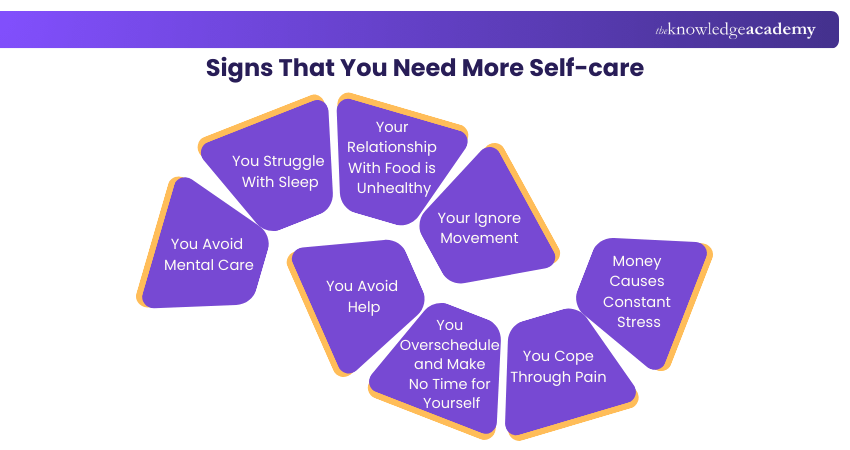
a) You Avoid Mental Care: If you skip the doctor or routine health visits. It may be a sign you are neglecting your body’s needs.
b) You Struggle With Sleep: Poor or irregular sleep, racing thoughts, and constant exhaustion can signal unmet emotional or physical needs.
c) Your Relationship With Food is Unhealthy: Using food to cope with emotions, feeling shame around eating, relying on alcohol or sugar may point to deeper stress.
d) Your Ignore Movement: Avoiding exercise or dismissing movement as unimportant can affect both physical and mental health.
e) You Avoid Help: Feeling like you must handle everything alone or that support is unavailable can be a sign of emotional overload or disappointment.
f) You Overschedule and Make No Time for Yourself: Constant busyness and feeling guilty for resting often mean your own needs are being overlooked.
g) You Cope Through Pain: Using physical pain to manage intense emotions is a serious sign that stress has become too much to handle alone.
h) Money Causes Constant Stress: Ongoing anxiety around spending, saving, or control over money can be linked to emotional pressure.
What is the Difference Between Self-care and Wellness?
Self-care and wellness are closely linked, but they are different. Self-care refers to intentional actions you take to support your physical, emotional, and mental needs. Wellness is the broader outcome of consistent Self-care over time. It reflects your overall state of health, resilience, and well-being. To put it simply, Self-care is the daily practice, while wellness is the long-term result of those supportive habits.
Conclusion
Self-care is about listening to yourself and responding with care, consistency, and intention. In a world that constantly demands more, understanding What is Self-care helps you to step back, protect your well-being, and create habits that truly support your physical, mental, emotional, and spiritual health. This leads to strength, balance, and resilience for a heathier and more fulfilling life.
Unlock your potential and grow with confidence with Personal Development Courses – Join now!
Frequently Asked Questions
How can Self-care Support Long-term Health?

Self-care supports long-term health by preventing chronic illness, reducing stress, and improving physical and mental functioning. Habits, such as balanced nutrition, regular sleep, adequate sleep, leads to lower risk and supports a longer, healthier life.
What are the Common Barriers to Self-care?
Common barriers to Self-care include lack of time, guilt, financial limits, and low energy. It is often caused by prioritising others, perfectionism, or ignoring personal needs. These obstacles lead to burnout and poor health.

The Knowledge Academy


Global Training Provider
The Knowledge Academy is a world-leading provider of professional training courses, offering globally recognised qualifications across a wide range of subjects. With expert trainers, up-to-date course material, and flexible learning options, we aim to empower professionals and organisations to achieve their goals through continuous learning.


 If you wish to make any changes to your course, please


