


 Top Rated Course

We may not have the course you’re looking for. If you enquire or give us a call on 01344203999 and speak to our training experts, we may still be able to help with your training requirements.
Sales Process: Map Out Your Customer's Journey
Charlotte Wilson 26 February 2026Sales Process defines the key stages sales teams follow to attract leads, engage prospects, close deals and build lasting customer relationships. It provides structure, improves consistency, supports forecasting, and helps teams align actions with customer needs to achieve predictable revenue growth and stronger long-term business performance.

Training Outcomes Within Your Budget!
We ensure quality, budget-alignment, and timely delivery by our expert instructors.
Table of Contents

Navigating the world of Sales Process can feel like solving a complex puzzle. Without a clear roadmap, turning leads into loyal customers becomes a daunting task. That’s where a Sales Process comes in – a carefully crafted series of steps that empower businesses from initial contact to closing deals.
Mastering a Sales Process isn't just about making more Sales; it's about creating meaningful connections with your customers, building trust, and offering real solutions. In this blog, we’ll dive deep into a Sales Process, exploring each step, identifying common pitfalls, and sharing strategies to improve your sales approach. Ready to streamline your sales journey? Let’s get started!
Table of Contents
1) What is a Sales Process?
2) What Are the Stages of a Sales Process?
3) Why is a Sales Process Important?
4) What are the Sales Process Challenges?
5) Best Practices for Creating Your Sales Process
6) Conclusion
What is a Sales Process?
A Sales Process is an end-to-end model that companies employ in transforming prospective buyers into paying customers. It contains such steps as lead generation, qualification, pitching, managing objections, and making sales. This process gives the sales departments a clear pattern to follow and thus it is easier to determine the progress made.
In the case of B2B businesses specifically, the Sales Process is important. It makes the management of complex buying decisions easier, enhances efficiency, and maximises possibilities of transforming leads into loyal customers.

What are the Stages of a Sales Process?
Every organisation follows a slightly different sales process based on its products, market, and customers. However, most successful sales processes share common stages that help teams identify opportunities, build relationships, and convert prospects into long-term customers. These stages provide a structured approach that can be documented, refined, and scaled across the business.
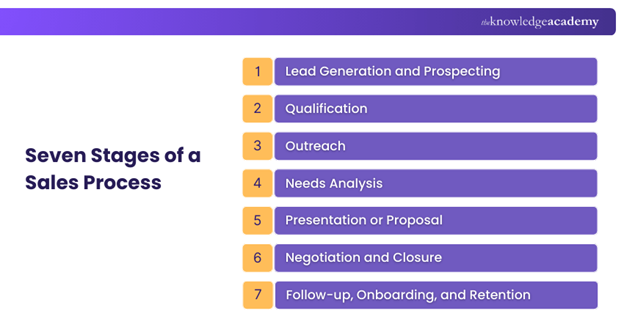
1) Lead Generation and Prospecting
This is the starting point of the sales process, where potential customers are identified. Leads may be inbound, where prospects approach the business, or outbound, where sales teams proactively reach out using methods like cold calls, emails, content marketing, or automation tools.
2) Qualification
At this stage, sales teams assess whether a lead is a good fit. This involves understanding the prospect’s needs, budget, authority, and timeline to determine their likelihood of making a purchase and prioritise efforts effectively.
3) Outreach
Outreach focuses on initiating contact and building engagement with qualified leads. Sales representatives connect through calls, emails, social media, or events to start meaningful conversations and establish rapport.
4) Needs Analysis
During needs analysis, sales professionals explore the prospect’s challenges, goals, expectations, and constraints in detail. This insight allows them to tailor solutions that directly address the customer’s specific requirements.
5) Presentation or Proposal
Based on the information gathered, a customised presentation or proposal is created. This may include product demonstrations, detailed proposals, or solution overviews that clearly communicate value and benefits.
6) Negotiation and Closure
This stage involves discussing pricing, terms, and conditions while addressing any concerns from stakeholders. Successful negotiations lead to agreement and contract signing, marking the deal as closed.
7) Follow-up, Onboarding, and Retention
After closing, attention shifts to onboarding the customer smoothly. Ongoing follow-up ensures satisfaction, supports adoption, and helps build a strong, lasting relationship.
8) Customer Success Management (CSM)
Customer success focuses on long-term value creation. By supporting customers post-sale, businesses encourage renewals, upsells, and referrals, turning satisfied customers into advocates and driving sustainable growth.
Learn customer engagement strategies with our Online Sales Training – Register now!
Why is a Sales Process Important?
A well-defined clear Sales Process shapes your team into walking through every phase of the pipeline as they have a better probability of making sales. It provides understanding of what action to take and enables control of buyer journeys and fosters a repeatable and consistent process amongst your salespeople.
It also gives you a picture of your Sales Process in general so that you can figure out where you are losing deals, or where delays or trends exist in your Sales Process. The knowledge of how the seller is walking can help you implement a refined strategy and make you pursue the right message at the right moment.
What are the Sales Process Challenges?
A strong Sales Process can drive consistent results, but common mistakes often undermine its effectiveness. Avoid these pitfalls to improve performance and team alignment.
1) Vague Sales Process Steps: This might cause your team to become confused and act inconsistently without defining each of the steps. Record intact actions and keep practicing them with sales reps.
2) Relying on One Sales Methodology: There is not one correct approach that applies to all situations. Combine effective methods and be flexible to change customer behaviours and sales trends to get the best.
3) Treating the Sales Process as Static: Your Sales Process must advance. Make sure to evaluate its performance periodically, collect feedback from reps, and implement enhancements.
4) Misaligned Sales Plays: Failure to tailor your sales effort to every stage of the process means that you will lose deals. Orchestrate strategies and activities within the same playbook in order to keep your team together.
5) Excluding Marketing: Marketing and sales have to go hand in hand. Insights Would better leads, material, and assistance be produced throughout the entire sales life cycle?
6) Focusing Only on Closing: It should not be your objective to close. Be a value adder by knowing the needs of customers and providing solutions that are of value and are personalised to them.
7) Not Tracking KPIs: You cannot improve, unless you track the key metrics. Keep track of KPIs, such as conversion rates, pipeline speed, and deal closings via dashboards to set the course of optimisation.
Boost your confidence with our top Sales Interview Questions. Prepare to impress and land your next sales role with ease!
Best Practices for Creating Your Sales Process
Creating a successful Sales Process takes more than simply copying templates. These four expert-backed practices will help you build a customer-focused and effective system that delivers results.
Start with the Customer in Mind, Not the Tools
Avoid designing your Sales Process around existing tools. Begin by understanding your ideal customer’s needs, concerns, and decision triggers. Build a process that supports their journey from awareness to confidence in a natural, helpful way.
Then Design the Steps you Take Around the Path They Must Follow
Consider how customers think and feel at each stage of the buying journey. Each interaction should build trust and clarity, guiding them smoothly towards a decision rather than forcing them through fixed, activity-based steps.
Map Your Actions to the Customer's Journey
Every sales action should help the customer move forward. Align discovery calls, follow-ups, and discussions with the buyer’s emotional and informational needs to create a credible, value-driven experience.
Map Your Actions to the Tools Needed to Execute Them
Select tools only after defining your actions. CRMs, call scripts, and forms should simplify workflows and support consistent execution, making it easier for sales teams and more reassuring for customers.
Measure and Improve Over Time
No Sales Process is perfect at launch. Track key metrics such as response rates, conversions, and deal closures. Use real data to refine each stage and continuously improve effectiveness and customer experience.
Elevate your Sales game with our Sales Analytics Training today!
Conclusion
A Sales Process is a dynamic and continuous journey that involves a continuous series of well-defined steps. Each phase, from pre-Sales preparation to continuous improvement, contributes to building relationships, driving revenue, and sustaining business growth. By understanding and mastering each step, you can enhance your ability to effectively connect with prospects, address their needs, and establish enduring partnerships. Remember, the key lies in meticulous planning, strategic execution, and a commitment to constant enhancement.
Learn Sales marketing strategies with our Sales Management Training – Register today!
Frequently Asked Questions
How can Technology Enhance the Sales Process?

Technology enhances the sales process by automating routine tasks, improving lead tracking, enabling data-driven insights, and personalising customer interactions. Tools like CRMs, analytics, and automation help sales teams work efficiently, respond faster, and close deals more consistently.
What are Some Strategies for Measuring Sales Performance?
Common strategies include tracking key metrics such as conversion rates, average deal size, sales cycle length, and revenue generated. You can also evaluate performance through customer feedback, pipeline health, and progress against sales targets or KPIs.
What are the Other Resources and Offers Provided by The Knowledge Academy?
The Knowledge Academy takes global learning to new heights, offering over 3,000+ online courses across 490+ locations in 190+ countries. This expansive reach ensures accessibility and convenience for learners worldwide.
Alongside our diverse Online Course Catalogue, encompassing 17 major categories, we go the extra mile by providing a plethora of free educational Online Resources like Blogs, eBooks, Interview Questions and Videos. Tailoring learning experiences further, professionals can unlock greater value through a wide range of special discounts, seasonal deals, and Exclusive Offers.
What is The Knowledge Pass, and How Does it Work?
The Knowledge Academy’s Knowledge Pass, a prepaid voucher, adds another layer of flexibility, allowing course bookings over a 12-month period. Join us on a journey where education knows no bounds.
What are the Related Courses and Blogs Provided by The Knowledge Academy?
The Knowledge Academy offers various Sales Courses, including the Sales Negotiation Training, Sales Management Training, and Closing Sales Training. These courses cater to different skill levels, providing comprehensive insights into Sales Strategy.
Our Business Skills Blogs cover a range of topics related to Sales, offering valuable resources, best practices, and industry insights. Whether you are a beginner or looking to advance your Business skills, The Knowledge Academy's diverse courses and informative blogs have got you covered.

Charlotte Wilson


Soft Skills and Business Training Manager
Charlotte Wilson is an expert in soft skills development, with over 14 years of experience helping individuals and teams improve communication, productivity and emotional intelligence in the workplace. Her training content is focused on enhancing interpersonal effectiveness and fostering positive, collaborative environments across all levels of an organisation.
View Detail
Upcoming Business Skills Resources Batches & Dates
Date
 Online Sales Training
Online Sales Training
Fri 10th Apr 2026
Online Sales Training
Fri 10th Jul 2026
Online Sales Training
Fri 2nd Oct 2026

 If you wish to make any changes to your course, please


