


 Top Rated Course

We may not have the course you’re looking for. If you enquire or give us a call on 01344203999 and speak to our training experts, we may still be able to help with your training requirements.
Number Series: The Basics You Need to Know
William Brown 03 February 2026A Number Series, such as an arithmetic or geometric series, is a sequence of numbers that follow a specific pattern or rule, and each number is called a term. This blog explores the basics of the Number Series, outlining its types, the essential patterns, and the process of solving problems based on it. Read on!

Training Outcomes Within Your Budget!
We ensure quality, budget-alignment, and timely delivery by our expert instructors.
Table of Contents

From the complex structure of DNA and the process of cell division to the shape of a pinecone, it's clear that nature is a combination of amazing codes. It’s not just nature, but every technology that we use has some sort of code at its heart. But is there a way to map out this code? Yes - by using Number Series. This fundamental concept in Mathematics forms the backbone of Logical Reasoning and problem-solving.
Whether it’s addition, subtraction, or something more convoluted, Mastering Number Series helps you spot trends and patterns everywhere, predict future numbers, and solve complex puzzles. Understanding this concept is a skill worth learning, and this blog will help you take the first steps towards it. So read on, go on a fascinating hunt for patterns and explore the magic of numbers!
Table of Contents
1) What is Number Series?
2) Important Patterns of Number Series
3) Different Types of Number Series
4) Example Questions on Number Series
5) Conclusion
What is Number Series?
A Number Series is an arrangement of numbers that follows a specific order or pattern. This order is derived from rules involving various mathematical relationships. In essence, Number Series can be viewed as maps, where each position in the sequence corresponds to a particular value.
These sequences can appear in various formats, such as arithmetic, geometric, or hybrid patterns. Mastering Number Series is essential in Mathematics and Logical Reasoning, as they form the basis for solving complex problems and understanding patterns. Additionally, the application of Binomial Distribution in probability theory can further enhance your ability to solve real-world problems involving random variables and outcomes.

Important Patterns of Number Series
Important patterns in the Number Series include:
1) Arithmetic Sequence: A series where the difference between consecutive terms is constant (e.g., 2, 4, 6, 8).
2) Geometric Sequence: A series where each term is calculated by multiplying the previous term with a constant (e.g., 3, 9, 27).
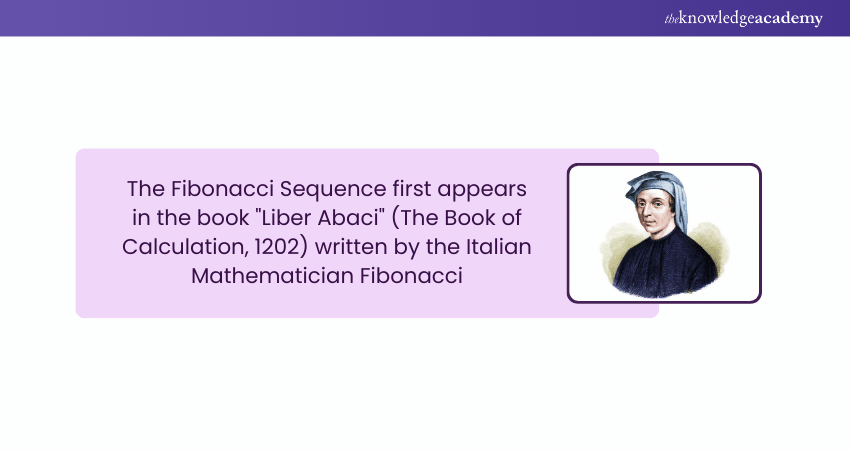
3) Fibonacci Sequence: Each number is the sum of two preceding ones (e.g., 0, 1, 1, 2, 3, 5).
4) Square Numbers: Series consisting of the squares of integers (e.g., 1, 4, 9, 16).
5) Triangle Numbers: This series represents objects arranged in triangular formations (e.g., 1, 3, 6, 10).
Gain insight into the practical applications of Statistics in diverse industries in our comprehensive Statistics Course - Sign up now!
Different Types of Number Series
Number Series are diverse and have been extensively studied in mathematics, Discrete Mathematics, and number theory. They include a series of additions, the subtraction series, the division series, and many more intriguing variations. Let's take a look at them:

1) Series of Additions
In this type of Number Series, a specific number or pattern is consistently added to each term to produce the next number in the sequence.
Example: In the series 2, 5, 8, 11, 14, the pattern involves adding 3 to each preceding number. This logic is commonly used in arithmetic progression problems.
2) Subtraction Series
This type of Number Series involves subtracting a specific integer or following a subtraction pattern to derive the next term.
Example: In the series 20, 18, 15, 11, 6, each term is obtained by sequentially subtracting 2, 3, 4, and 5. These series test logical deduction skills in reasoning exercises.
3) Series of Multiplication
Here, each term is multiplied by a specific number or follows a pattern to generate the next number.
Example: In a series like 2, 4, 8, 16, 32, each number is obtained by multiplying the previous term by 2. This logic is typical in geometric progressions or pattern-based problems.
4) Division Series
This series involves dividing each term by a specific number to get the subsequent term.
Example: In a series like 64, 32, 16, 8, 4, each number is derived by dividing the previous term by 2. Division series often appear in Logical Reasoning tests.
5) Square Series
In a square series, each term is the square of a specific number following a consistent pattern.
Example: In a series like 1, 4, 9, 16, 25, each number is the square of consecutive integers (1², 2², 3², etc.). These series help in understanding the relationship between numbers and their squares.
Gain practical skills in problem-solving and cost reduction with our Mathematical Optimisation for Business Problems Course - Sign up now!
Example Questions on Number Series
Here are some sample questions and answers on Number Series that help you gain deeper insight into the subject:
Q1) Given a series: 60, 55, 50, 45, 40, ?
What number would come in place of the question mark (?)?
a) 30
b) 35
c) 25
d) 20
Answer: (b) 35
Here’s the Explanation:
If you observe the pattern, it is a constant difference series:
1) 60 - 5 = 55
2) 55 - 5 = 50
3) 50 - 5 = 45
4) 45 - 5 = 40
5) 40 - 5 = 35
Hence, the correct answer is 35.
Become familiar with the different types of control charts for variables in our Statistical Process Control Training - Sign up now and amplify your Business Analysis strategies!
Q2) Given a series: -12, -10, 8, 50, 120, ?
What number would come in place of the question mark (?)?
a) 225
b) 256
c) 200
d) 150
Answer: (c) 200
Here’s the Explanation:
This question belongs to the category of square series:
1) -12 + (2² - 2) = -10
2) -10 + (4² - 2) = 8
3) 8 + (6² - 2) = 50
4) 50 + (8² - 2) = 120
5) 120 + (10² - 2) = 200
Hence, the correct answer is 200.
Q3) Given a series: 36, 64, 100, 196, ?
What number would come in place of the question mark (?)?
a) 324
b) 225
c) 289
d) 361
Answer: (a) 324
Here’s the Explanation:
This series combines square numbers and even numbers:
1) 6² = 36
2) 8² = 64
3) 10² = 100
4)14² = 196
5) 18² = 324
Hence, the correct answer is 324.
Dive into our guide on Fibonacci Series in C Programming and master the implementation of this classic algorithm.
Conclusion
Understanding the concept of the Number Series is a gateway to developing logical thinking and problem-solving skills. By gaining insight into the basics, you can tackle complex puzzles, excel in reasoning tests, and appreciate the beauty of mathematical sequences found in nature. And with each new series you decode, you’ll find yourself venturing deeper into the boundless tapestry of numbers that shape our world.
Hone your analytical and problem-solving skills with our Business Analyst Courses - Register now!
Frequently Asked Questions
What are the Rules of Doing Different Types of Number Series?

Number Series follow patterns like constant differences (arithmetic), constant ratios (geometric), sum of previous terms (Fibonacci), or squares/cubes. Identify the pattern by checking differences, ratios, or well-known sequences (e.g., squares or cubes).
How do you Find the Missing Number in a Number Series?
Follow these steps:
a) Identify a pattern in the sequence to find the missing term
b) Check if the sequence is ascending or descending
c) Calculate differences or sums and apply the right formula for natural numbers
d) Subtract the array's sum from this total to identify the missing element
e) Verify the rule by testing two or three terms
What are the Other Resources and Offers Provided by The Knowledge Academy?
The Knowledge Academy takes global learning to new heights, offering over 3,000+ online courses across 490+ locations in 190+ countries. This expansive reach ensures accessibility and convenience for learners worldwide.
Alongside our diverse Online Course Catalogue, encompassing 19 major categories, we go the extra mile by providing a plethora of free educational Online Resources like Blogs, eBooks, Interview Questions and Videos. Tailoring learning experiences further, professionals can unlock greater value through a wide range of special discounts, seasonal deals, and Exclusive Offers.
What is The Knowledge Pass, and How Does it Work?
The Knowledge Academy’s Knowledge Pass, a prepaid voucher, adds another layer of flexibility, allowing course bookings over a 12-month period. Join us on a journey where education knows no bounds.
What are the Related Courses and Blogs Provided by The Knowledge Academy?
The Knowledge Academy offers various Business Analyst Courses, including the Mathematical Optimisation For Business Problems and the Business Process Mapping Training. These courses cater to different skill levels, providing comprehensive insights into Inferential Statistics.
Our Business Analysis Blogs cover a range of topics related to the use of numbers in business processes, offering valuable resources, best practices, and industry insights. Whether you are a beginner or looking to advance your Business Analysis skills, The Knowledge Academy's diverse courses and informative blogs have got you covered.

William Brown


Senior Business Analyst and Strategic Advisor
William Brown is a senior business analyst with over 15 years of experience driving process improvement and strategic transformation in complex business environments. He specialises in analysing operations, gathering requirements and delivering insights that support effective decision making. William’s practical approach helps bridge the gap between business goals and technical solutions.
View Detail
Upcoming Business Analysis Resources Batches & Dates
Date
 Mathematical Optimisation for Business Problems
Mathematical Optimisation for Business Problems
Fri 5th Jun 2026
Mathematical Optimisation for Business Problems
Fri 28th Aug 2026
Mathematical Optimisation for Business Problems
Fri 27th Nov 2026

 If you wish to make any changes to your course, please


