




We may not have the course you’re looking for. If you enquire or give us a call on +44 20 4538 6376 and speak to our training experts, we may still be able to help with your training requirements.
Problem-solving Skills: A Practical Development Guide
ByAkhil KLast updated on: 10 October 2026
Problem-solving Skills help individuals identify, analyse, and resolve challenges using analytical thinking, creativity, decision-making, research, emotional intelligence, and collaboration.
Quick Look
1. Problem-solving skills help identify issues, analyse causes, and develop suitable solutions.
2. Analytical, creative, and critical thinking support effective problem-solving.
3. Research, communication, adaptability, and emotional intelligence strengthen the process.
4. Problem-solving skills can be improved through practice, reflection, and structured techniques.
5. Strong examples on a CV or cover letter can demonstrate problem-solving ability to employers.
Feeling stuck while facing a problem can be frustrating, especially when the right solution is not immediately clear. Developing strong problem-solving skills can help you think critically, stay calm under pressure, and develop practical solutions.
In the workplace and everyday life, strong problem-solving abilities can support better decisions and effective responses to challenges. This blog provides a practical roadmap for strengthening your problem-solving skills and applying them in different situations.
What are Problem-solving Skills?
Problem-solving skills combine critical thinking, creativity, logical reasoning, and decision-making to help individuals understand challenges and identify suitable solutions. Understanding problem-solving skills is vital for individuals seeking personal growth and professional success. These skills enhance decision-making capabilities and foster a proactive mindset.
By actively developing these skills, individuals become better equipped to overcome obstacles and make informed choices. Problem-solving skills can involve analytical thinking, creativity, and adaptability, while structured Problem-solving techniques can help individuals apply these abilities effectively.

Various Problem-solving Skills
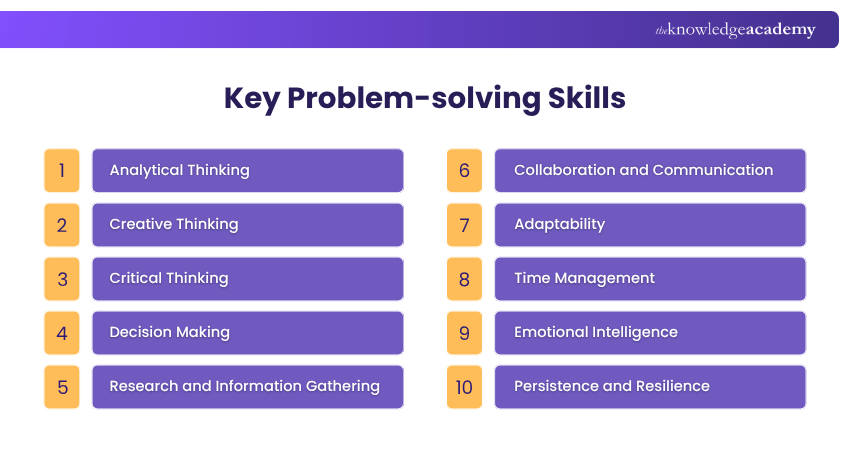
Problem-solving skills include several abilities that people can develop and apply in various situations. Here are some different problem-solving skills that are valuable in addressing diverse challenges:
1) Analytical Thinking
1) Analytical thinking means breaking complex problems into smaller, manageable parts.
2) It looks at each part carefully and understands how they connect.
3) This skill helps people spot important details, recognise patterns and find useful insights.
4) Using logic and data, analytical thinkers make better decisions and can create focused solutions.
2) Creative Thinking
1) Creativity in problem-solving means staying flexible and exploring many possible options.
2) It can be applied when researching, brainstorming ideas, drawing conclusions, or combining choices into a final solution.
3) Critical thinking can complement creative thinking by challenging assumptions, broadening perspectives, and helping assess potential solutions
4) Creative problem solvers embrace free thinking, brainstorming, and uncertainty.
5) This helps them uncover original answers to complex challenges.
Develop creative and analytical thinking skills with our Creative And Analytical Thinking Training – Sign up now!
3) Critical Thinking
1) Critical thinking helps people judge how valid and reliable information is.
2) It helps spot biases or errors and reach sound conclusions using logical thinking.
3) Critical thinkers ask questions, examine arguments, and consider different perspectives before making a decision.
4) This skill is especially valuable when careful analysis and balanced judgment are needed.
4) Decision-making
1) Decision-making involves evaluating available information, considering alternatives and selecting an appropriate course of action.
2) During problem-solving, you may face several choices, and decision-making skills help you pick the best solution.
3) Essentially, decision makers gather relevant information, compare the advantages and drawbacks, and consider the likely consequences of their choices.
5) Research and Information Gathering
1) Research and information gathering are important parts of problem-solving.
2) They involve collecting and analysing data from reliable sources to fully understand an issue.
3) Effective problem solvers utilise techniques such as surveys, interviews, online research, or company resources to gather useful insights.
4) They may also seek advice from colleagues or brainstorm with others.
5) By helping identify the cause of a problem and gather relevant information, research can support informed decisions and practical solutions.
6) Collaboration and Communication
1) Communication is about clearly sharing problems, findings, and solutions with others.
2) Communication can take place through email, meetings, or video calls.
3) Effective problem solvers also listen actively, respect different viewpoints, and encourage open dialogue.
4) By articulating ideas clearly, they make it easier to develop and implement solutions.
5) Understanding essential communication principles can strengthen teamwork, reduce confusion, and help everyone work together towards effective outcomes.
7) Adaptability
1) Adaptability refers to the ability to adjust to changing circumstances.
2) If one solution doesn’t work, adaptable problem solvers stay flexible.
3) They can rethink the issue and try new approaches without getting frustrated.
4) They embrace change, adjust their approach when circumstances shift, and treat challenges as opportunities to learn and grow.
8) Time Management
1) Good problem solvers understand the importance of managing time effectively.
2) They set priorities, give enough time to problem-solving tasks and stick to deadlines.
3) Strong time management can help you stay organised.
4) It can help you stay focused and use resources effectively throughout the problem-solving process.
9) Emotional Intelligence
1) Emotional intelligence involves understanding emotions and responding to them effectively.
2) This can help individuals stay calm and approach problems systematically.
3) It is particularly useful in situations involving teamwork, conflict, or collaboration.
4) People with strong emotional intelligence can manage difficult conversations effectively.
5) They can maintain positive relationships, which can support better problem-solving outcomes.
Build practical conflict resolution skills with our Conflict Management Training - Sign up now!
10) Persistence and Resilience
1) Persistence and resilience involve the ability to persevere through challenges, setbacks and obstacles without losing motivation.
2) Persistent individuals remain committed to finding solutions and are willing to put in the necessary effort.
3) Resilient problem solvers recover from setbacks, learn from their mistakes, and adjust their approach to overcome challenges effectively.
How to Improve Your Problem-solving Skills?
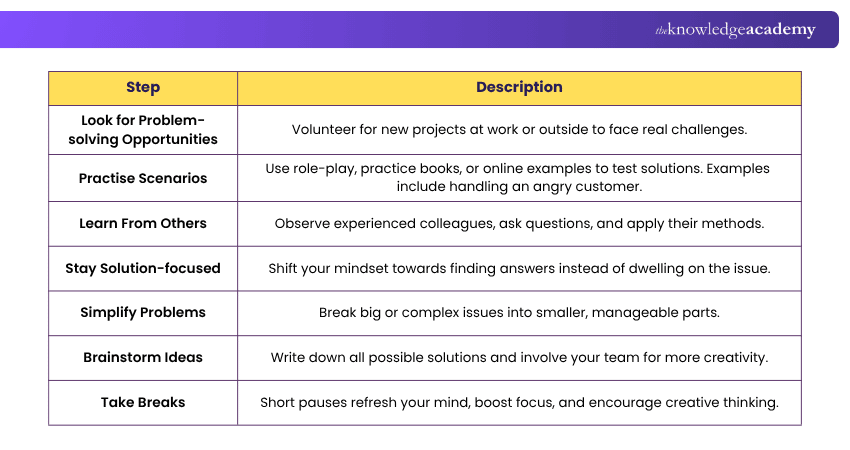
Developing problem-solving skills is a continuous process that can strengthen the ability to analyse and resolve challenges effectively. These abilities can be improved through deliberate practice and conscious effort. Here are some strategies for developing problem-solving skills:
Trainer's Pro Tip
Test possible solutions on a small scale before applying them fully. Reviewing the results can help you identify weaknesses, refine your approach, and choose a more effective solution.
Ways to Highlight Problem-solving Skills
There are different ways to highlight your Problem-solving Skills depending on the context and purpose. Here are some common ways to showcase your problem-solving abilities on your CV and in cover letters:
Problem-solving Skills on Your CV
Your CV summarises your education, work experience, skills, and achievements. It can create an important first impression with a hiring manager, so it is important to showcase your problem-solving skills effectively. Here are some tips to do that:
1) Use action verbs and specific examples to describe your problem-solving skills.
2) For example, instead of saying “solved problems”, you can say “resolved customer complaints”, “troubleshot technical issues”, or “implemented new solutions”.
3) Quantify your achievements and results whenever possible.
4) For example, you can say “reduced costs by 15%”, “increased sales by 25%”, or “improved customer satisfaction by 10%”.
5) Highlight your problem-solving skills in different sections of your CV, such as your summary, skills, work experience, and education.
6) For example, you can mention your problem-solving skills in your summary statement or list them as one of your key skills.
7) Provide examples of how you used them in your previous jobs or mention any relevant projects or courses that involved Problem-solving.
Remember
Do not simply list “problem-solving” as a skill. Show how you identified an issue, the action you took, and the result you achieved to make your experience more credible.
Problem-solving Skills for Cover Letters
Your cover letter accompanies your CV and explains why you are applying for a specific role and why you are a suitable candidate. It provides an opportunity to demonstrate your problem-solving skills in relation to the job requirements. Here are some tips to do that:
1) Research the company and job role to understand the challenges, priorities, and requirements relevant to the position.
2) For example, you can look at their website, social media, news articles, or job descriptions to learn more about their goals, values, needs, and expectations.
3) Explain how your problem-solving skills can help them address those problems or challenges.
4) For example, you can mention a specific problem you solved in a similar or relevant context, describe the steps you took to solve it, and highlight the outcome or impact you achieved.
5) Demonstrate your enthusiasm and interest in the job and the company.
6) For example, you can express your curiosity, creativity, or passion for problem-solving and show your eagerness to learn, grow, and contribute to their success.
How Do I Say I Have Problem-solving Skills?
You can highlight problem-solving skills by explaining how you identify challenges, analyse them, and find effective solutions. Use phrases like “I can assess situations, think critically, and develop practical solutions”. Back it up with real examples in interviews or your CV.
What are Examples of Problem-solving in the Workplace?
Common examples include:
1) Resolving conflicts between team members
2) Handling customer complaints
3) Finding ways to reduce costs
4) Improving inefficient processes
5) Troubleshooting technical issues
Each situation shows your ability to stay calm, think logically and apply solutions that benefit the team or business.

Akhil K is a Copywriter and Video Editor with experience in content creation, visual storytelling, advertising and brand communication. His background in journalism, research and audience-focused communication strengthens his ability to create clear and engaging Business Skills content.
View Detail

 If you wish to make any changes to your course, please


