


 Top Rated Course

We may not have the course you’re looking for. If you enquire or give us a call on 01344203999 and speak to our training experts, we may still be able to help with your training requirements.
Manual Handling Operations Regulations 1992
Michael Jones 04 March 2026The Manual Handling Operations Regulations 1992 (MHOR) outline the responsibilities and duties of employers and employees regarding safe Manual Handling. This blog explores this 1992 Regulation and dives into its benefits as well as the associated responsibilities of employers and employees. Read ahead to know more!

Training Outcomes Within Your Budget!
We ensure quality, budget-alignment, and timely delivery by our expert instructors.
Table of Contents
An ideal workplace is one where workers can handle tasks in a confident and injury-free manner. But what could serve as a trustworthy net that keeps employees out of harm's way? This is where Manual Handling Operations Regulations 1992 (MHOR) comes in. These aim to reduce injury risks, especially for tasks that involve lifting, carrying, pushing, or pulling loads. They empower employers to spot hazardous tasks, reduce risks, and create a safer environment.
This blog explores the essential aspects of Manual Handling Operations Regulations 1992, from the major advantages to the various responsibilities of the individuals involved. So read on and ensure the manual tasks move loads and your business moves forward safely and efficiently!
Table of Contents
1) What is Manual Handling Operations Regulations 1992?
2) Responsibilities of Employers Under MHOR 1992
3) Responsibilities of Employees Under MHOR 1992
4) Benefits of MHOR 1992
5) What are the Challenges Associated With Manual Handling Operations Regulations 1992
6) What Types of Manual handling Tasks are Covered Under the Manual Handling Operations Regulations 1992
7) Conclusion
What are Manual Handling Operations Regulations 1992?
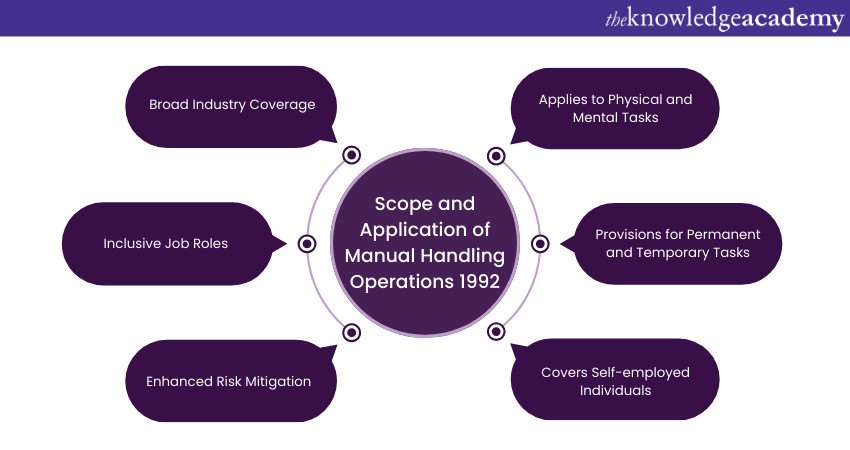
The Manual Handling Operations Regulations 1992 is a set of legal guidelines designed to reduce the risk of injuries caused by activities in the workplace. These regulations apply to various industries and job roles, emphasising the significance of protecting employees from harm while carrying out tasks.
The Manual Handling Operations Regulations (MHOR) 1992 was amended by the Health and Safety (Miscellaneous Amendments) Regulations 2002. It covers the responsibilities of the following people in controlling and reducing injury risks in the workplace due to Manual Handling operations:
1) Managers
2) Employers
3) Safety Representatives
4) Employees
a) Injuries that occured due to manual handling are part of a broader group known as Musculoskeletal Disorders (MSDs). These injuries can cause pain to: Back
b) Tendons
c) Ligaments
d) Joints
e) Limbs

Responsibilities of employers under Manual Handling Operations Regulations 1992
Employers should conduct Manual Handling Risk Assessments for Manual Handling tasks under the Manual Handling Operations Regulations 1992. They have the option to perform the risk assessment on their own or hire an external expert. Regardless of the choice, the assessor must possess the necessary competence.
1) Risk Assessment: A risk assessment must identify hazardous Manual Handling tasks and devise appropriate measures to implement controls to avert injuries.
2) Legal Framework: Under the Management of Health and Safety at Work Regulations 1999, employers must evaluate, manage, and reduce workplace risks. This includes Manual Handling and Upper Limb Disorders (ULDs).
3) Training Obligations: Employers are legally obliged to provide training to employees, including through a Manual Handling Course, when injury risks are identified. The training can be generic and must also align with the findings from the risk assessment.
Learn how to administer First Aid and the contents of its kit with our First Aid at Work Course. Join now!
Responsibilities of Employees Under Manual Handling Operations Regulations 1992
While the Manual Handling Operations Regulations 1992 heaps most of the responsibilities on employers, employees are equally necessary in maintaining a safe working environment. These regulations highlight the importance of collaboration between employers and employees to reduce the risks associated with Manual Handling activities.
1) Training and Education:Employees must actively engage in the training and education provided by their employer, as it equips them with the skills necessary to safely perform Manual Handling tasks. By attentively participating in these sessions, employees not only contribute to their own safety but also fulfill their Manual Handling Responsibilities.
2) Follow Safe Practices: Employees must follow the safe Manual Handling practices outlined in the training. This includes:
a) Using proper lifting techniques
b) Avoiding excessive force
c) Using available equipment and tools appropriately
d) By following these guidelines, employees reduce the likelihood of accidents and injuries.
3) Reporting Manual Handling Hazards and Concerns: Employees must be able to identify Manual Handling Hazards or concerns. They must promptly report to their supervisors or relevant authorities if they encounter:
a) Unsafe conditions
b) Faulty equipment
c) Practices that could lead to injuries
Timely reporting enables swift corrective action to be taken.
4) Open Communication: It's important to maintain open lines of communication with supervisors and colleagues. Employees must not hesitate to voice their concerns regarding any particular Manual Handling task. Effective Communication is the key for employees to work together and find safer alternatives.
5) Proper use of Equipment: Employees are responsible for using it correctly when provided with equipment designed to facilitate safe Manual Handling. This includes:
a) Understanding how the equipment functions
b) Following operating procedures
c) Reporting any malfunctions or defects immediately
6) Active Participation in Health Surveillance: If an employer implements health surveillance, employees should actively participate in it and other such initiatives. Regular health assessments play a crucial role in Preventing Manual Handling Injuries by identifying any signs of discomfort or injury early, allowing for timely intervention and preventive measures.
Join our Health and Safety Training for Managers and Supervisors Course to learn how to use accident prevention techniques effectively and efficiently – Sign up now!
Benefits of Manual Handling Operations Regulations 1992
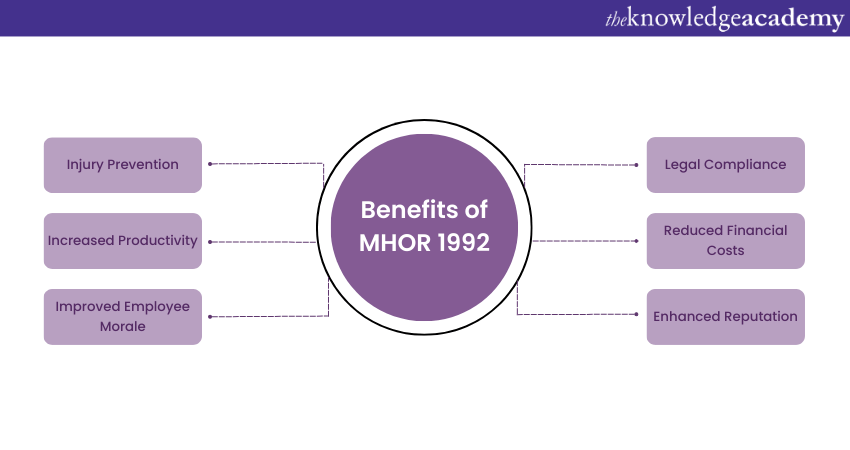
Enforcing the MHOR brings numerous benefits for both employers and employees. These regulations aren't best required by way of law, however in addition they provide a shape to increase protection, health, and productivity in UK's places of work. Consider the following benefits of following the Manual Handling Operations Regulations 1992:
a) Injury Prevention: One of the most important benefits of the MHOR 1992 is warding off workplace injuries. By selling correct Manual Handling Techniques, offering training on the identical, and ensuring the usage of appropriate equipment, the chance of injuries consisting of lines, sprains, and musculoskeletal problems can be appreciably minimised. This leads to a team of workers that is both healthier and more efficient.
b) Increased Productivity:A workforce free from injuries is an effective workforce. When employees are assured in their potential to perform Manual Handling tasks appropriately, they can work successfully without fearing injuries. Reduced injuries also mean fewer workdays lost due to absence, contributing to consistent productivity.
c) Improved Employee Morale:Employees who experience their employer prioritises their protection and well-being tend to have better task satisfaction and morale. Knowing that the organisation adheres to regulations designed to guard personnel fosters a sense of trust and loyalty, leading to a wonderful working environment.
d) Legal Compliance: Complying with the MHOR 1992 guarantees employers meet their prison obligations. Failure to comply with those rules can bring about the following:
a) Legal consequences
b) Fines
c) Potential lawsuits
By following the guidelines, employers safeguard themselves from legal complications and maintain a strong reputation.
e) Reduced Financial Costs: Workplace injuries incur significant financial costs for employers, including:
i) Medical expenses
ii) Compensation claims
iii) Costs of hiring and training replacements
Adhering to the MHOR 1992 reduces the likelihood of such costs, supporting sound Financial Management and contributing to long-term financial stability.
f) Enhanced Reputation: Companies that prioritise employee safety and adhere to regulations develop a positive reputation. Such organisations attract top talent and are more likely to retain skilled employees, as prospective and current workers appreciate the commitment to their well-being.
Join our Healthy Working Environment Training and become familiar with different international policies about workplace health!
What are the Challenges Associated With Manual Handling Operations Regulations 1992?
The challenges include:
1) Complex risk assessments
2) Ensuring employees are adequately trained on safe Manual Handling practices
3) Unique challenges of different industries and work environments
4) Ensuring employees follow safe Manual Handling practices
5) Some tasks may inherently involve heavy loads that are difficult to handle safely
What Types of Manual Handling Tasks are Covered Under the Manual Handling Operations Regulations 1992 (MHOR)?
MHOR covers any tasks involving carrying, lifting, pushing, pulling, or moving loads that could pose injury risks. This includes tasks that involve:
1) Physical strain
2) Awkward postures
3) Repetitive movements
Conclusion
In conclusion, the Manual Handling Operations Regulations 1992 plays a pivotal role in nurturing a safe and healthy work environment. Through these regulations, employers can ensure the well-being of their workforce, reduce the risk of injuries, and create a positive workplace culture. Employees, in turn, benefit from increased safety, improved job satisfaction, and a sense of security in their workplace. As companies prioritise safety, the MHOR 1992 remains a cornerstone of responsible business practices across the UK industries.
Expand your knowledge on Workplace Safety through the Health & Safety in the Workplace Course – Sign up today!
Frequently Asked Questions
What are the Three Main Legislation Covering Manual Handling?

The three main pieces of legislation covering Manual Handling in the UK are:
a) The Manual Handling Operations Regulations 1992 (MHOR).
b) The Health and Safety at Work etc. Act 1974.
c) The Management of Health and Safety at Work Regulations 1999.
What are the Four Different Categories of Manual Handling?
The four categories of Manual Handling (often referred to as TILE) are:
a) Task: The specific Manual Handling activity such as lifting, pushing, pulling, or carrying.
b) Individual: The person performing the task.
c) Load: The object being moved.
d) Environment: The surroundings where manual handling tasks take place.
What are the Other Resources and Offers Provided by The Knowledge Academy?
The Knowledge Academy takes global learning to new heights, offering over 3,000+ online courses across 490+ locations in 190+ countries. This expansive reach ensures accessibility and convenience for learners worldwide.
Alongside our diverse Online Course Catalogue, encompassing 17 major categories, we go the extra mile by providing a plethora of free educational Online Resources like Blogs, eBooks, Interview Questions and Videos. Tailoring learning experiences further, professionals can unlock greater value through a wide range of special discounts, seasonal deals, and Exclusive Offers.
What is The Knowledge Pass, and How Does it Work?
The Knowledge Academy’s Knowledge Pass, a prepaid voucher, adds another layer of flexibility, allowing course bookings over a 12-month period. Join us on a journey where education knows no bounds.
What are the Related Courses and Blogs Provided by The Knowledge Academy?
The Knowledge Academy offers various Health & Safety in the Workplace Courses, including the First Aid at Work Course and the Manual Handling at Work Course. These courses cater to different skill levels, providing comprehensive insights into What is Construction Risk Assessment.
Our Health & Safety Blogs cover a range of topics related to Manual Handling, offering valuable resources, best practices, and industry insights. Whether you are a beginner or looking to advance your Manual Handling skills, The Knowledge Academy's diverse courses and informative blogs have got you covered.

Michael Jones


Health and Safety Consultant and Compliance Trainer
Michael Jones is a seasoned health and safety expert with more than 15 years of experience in workplace safety, risk management, and compliance training. He has worked across construction, manufacturing, and corporate sectors, helping organisations meet legal requirements and create safer working environments. Michael’s training and writing are known for being practical, clear, and aligned with UK regulations.

Upcoming Health & Safety Resources Batches & Dates
Date
 Manual Handling at Work
Manual Handling at Work
Fri 15th May 2026
Manual Handling at Work
Fri 4th Sep 2026
Manual Handling at Work
Fri 18th Dec 2026

 If you wish to make any changes to your course, please


