


 Top Rated Course

We may not have the course you’re looking for. If you enquire or give us a call on 01344203999 and speak to our training experts, we may still be able to help with your training requirements.
Lean Manager Job Description: Key Skills and Roles Explained
The Knowledge Academy 11 February 2026The Lean Manager Job Description includes driving process optimisation, reducing waste and creating a culture of continuous improvement across the organisation. These professionals analyse workflows, identify inefficiencies, and implement data-driven solutions. Collaboration across teams is key to sustaining long-term gains.

Training Outcomes Within Your Budget!
We ensure quality, budget-alignment, and timely delivery by our expert instructors.
Table of Contents

Top-performing companies have one thing in common: Smooth, waste-free operations. If you are wondering who scripts such streamlined and flawless success stories for these companies, the answer is simple: Lean Managers. They are the strategic thinkers, process optimisers and waste eliminators who are armed with a sharp eye for process flaws and a sharp mind for crafting great strategies.
In this blog, we’ll explore the Lean Manager Job Description, look at the must-have skills and spotlight the role they play in driving operational excellence. So read on and plan your place in the world of lean leadership!
Table of Contents
1) Who is a Lean Manager?
2) Responsibilities of a Lean Manager
3) Lean Manager Qualifications
4) Essential Skills for Lean Managers
5) Average Salary of Lean Managers
6) Example of Lean Manager Job Description
7) How to Become a Lean Manager?
8) How Does a Lean Manager Measure Success?
9) Conclusion
Who is a Lean Manager?
A Lean Manager is a mid-level or senior-level professional responsible for applying Lean Management strategies within an organisation. Lean Managers use the Five Lean Principles to find gaps in improvement areas and develop tactics to address them. Lean Managers aim to attain significant, long-term company development through continuous, minor adjustments.

Responsibilities of a Lean Manager
The specific duties of a Lean Manager can differ based on their employer. However, their common duties involve executing the five key principles of Lean Development. Let’s explore the responsibilities here:

1) Developing a Pull System
A pull system ensures products are accessible to customers more quickly than conventional methods. It focuses on completing products or services as needed, minimising inventory. This approach helps lower inventory costs while meeting customer needs promptly and sustaining high standards.
2) Continuously Improving
In Lean Management, the aim is constant improvement toward efficiency and productivity. Rather than setting specific targets, you continually look for improvement opportunities, even after attaining positive results. Perfection is unattainable, so ongoing analysis and changes are vital for long-term performance.
3) Identifying Value
In a Lean Management role, your primary aim is to find value within your organisation and uphold the Benefits of Lean Management to the customers. As a Manager, you identify sources of value and create methods to improve this value and its delivery. For example, you might use market research to understand why customers find your company's products or services appealing.
4) Mapping the Value Stream
The value stream refers to the process of developing and delivering value to customers. Creating a value stream map visually represents your company's primary functions and necessary components. You can use this map to analyse performance and identify areas for improvement.
5) Making a Continuous Workflow
Flow is a crucial concept in a lean organisation, which creates a system with no disruptions or delays. You aim to ensure products and resources are available when needed, reducing pauses in production. Analysing involves inspecting supply and staff availability to minimise waste and inefficiencies.
Embrace Lean and empower organisational change and eliminate waste like never before. Sign up for our Certified Lean Practitioner Course now!
Lean Manager Qualifications
To become a Lean Manager, qualifications typically include a bachelor’s degree in engineering, business, or a related field, along with Lean Six Sigma certification. Experience in process improvement and Operations Management is key. Many professionals also build expertise through hands-on roles in Manufacturing or service industries.
Strong analytical skills, leadership qualities, and a passion for continuous improvement make a real difference in this results-driven, efficiency-focused career. Having knowledge of Lean tools like Kaizen, 5S, and Value Stream Mapping also strengthens your ability to drive meaningful change across teams and processes.
Essential Skills for Lean Managers
Incorporating Lean qualities is crucial for any Manager aiming to succeed in Lean Management. These qualities are honed through conscious effort and dedication to Lean principles. Here’s a closer look at six key Lean Management skills and qualities:
1) Engaging with Respect
Respect is a keystone of Lean culture. Lean Managers treat everyone with dignity, creating an environment where Employees feel motivated to learn, contribute, and excel. This respectful engagement builds a collaborative and empowered workforce.
2) Embracing Patient Improvement
Patience is vital in Lean Management, focusing on long-term growth and quality. Lean Managers teach rather than dictate, allowing the team to address challenges collectively. They prioritise progress over quick fixes.
The practice of "stopping the line" empowers teams to solve problems together, valuing quality over quantity. Lean leaders focus on long-term goals for customers, team growth, and lasting outcomes.
3) Demonstrating Authentic Leadership
Successful Lean Managers seize authenticity, valuing truthfulness and transparency. They engage with the front lines to understand operations accurately. This approach displays real issues and drives effective problem-solving.
4) Cultivating a Curiosity Mindset
Curiosity is a stamp of authentication for Lean leadership. Lean Managers desire to learn and understand processes and outcomes. By developing curiosity, they encourage autonomy and critical thinking within their teams, promoting Continuous Improvement and Innovation.
5) Practicing Humility and Self-Reflection
Humility is vital for Lean Managers. It focuses on self-reflection and recognition of limitations. Lean Managers prioritise their teams, encourage growth, and celebrate successes.
6) Continuous Striving for Perfection
Perfectionism in Lean involves the relentless chasing of excellence and Continuous Improvement. Lean Managers always seek ways to improve value and reduce waste. They drive their teams toward higher performance standards.
Transform your processes, eliminate waste, and drive operational excellence with Lean Training. Sign up now and elevate your team's efficiency today!
Average Salary of Lean Managers
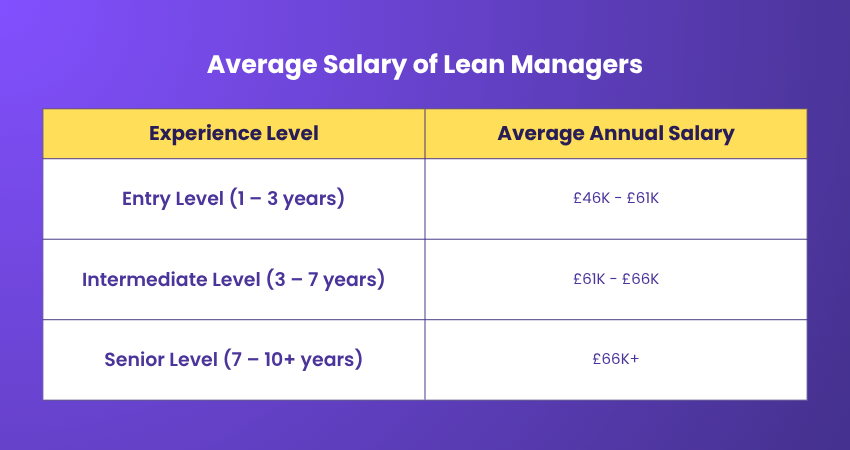
The Lean Manager Salary range showcases their role in improving efficiency and bringing Continuous Improvement to the firm. Let’s explore it here:
However, the salary range may differ based on the location and expertise level. Usually, large firms offer lucrative salary packages with added benefits.
Source: Glassdoor
Example of Lean Manager Job Description
Example:

Achieve mastery over proven Lean tools for operational excellence in our Lean Processes and Tools Training - Sign up now!
How to Become a Lean Manager?
To become a Lean Manager, you need the necessary education, experience and specialised training. Let’s see it step-by-step:
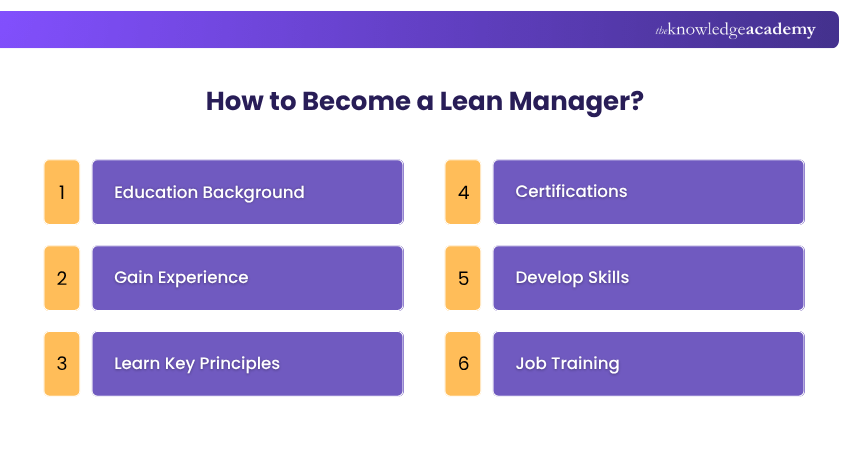
a) Education Background: Acquire a Bachelor’s Degree in Business, Engineering, Operations, and Management. It’s vital to understand the principles of Lean Management.
b) Gain Experience: Get hands-on experience in roles that enable you to understand the operations and processes of businesses. It includes roles in Quality Control, production, etc.
c) Learn Key Principles: Familiarise yourself with Lean methodologies, such as Kaizen, Toyota Production System, and Six Sigma.
d) Certifications: Acquire training certifications like Lean Six Sigma from a respected organisation to boost your qualifications.
e) Develop Skills: Hone your skills in communication, Analytical Thinking, Leadership, and problem-solving.
f) Job Training: Look for opportunities to apply Lean principles in your current role. Get practical experience, as it’s an invaluable add-on
How Does a Lean Manager Measure Success?
A Lean Manager knows success when Lean principles show in measurable results:
1) Track Lean KPIs: Focus on metrics like process efficiency, waste reduction, cycle time, and defect rates.
2) Monitor Continuous Improvement: Look for consistent gains in flow efficiency and throughput.
3) Team Engagement: Success includes an empowered team actively suggesting improvements.
4) Customer Satisfaction: Both internal and external feedback are key indicators of value delivered.
5) Lean Alignment: Check that daily activities reflect Lean principles, not just short-term fixes.
6) Cultural Impact: A sustainable Lean culture is as important as data; both drive long-term success.
Conclusion
Being a Lean Manager isn’t just about crunching numbers; it’s about creating real, lasting change. You’ll lead with purpose, cut out the clutter, and help teams work smarter. If problem-solving energises you, this role is a natural fit. The Lean Manager Job Description covers a lot, but at its heart, it’s all about people and process. Ready to champion efficiency and make a difference every day? Then Lean leadership might just be your next big move.
Master advanced Lean and customer insight, the dual engine of operational excellence. Sign up for our Advanced Lean Techniques and Understanding Customers Training now!
Frequently Asked Questions
Where Does Lean Manager Focus on?

Lean Managers focus on streamlining processes, eliminating waste, and ensuring continuous improvement within an organisation. They are responsible for analysing current workflows, identifying inefficiencies and implementing Lean strategies to improve quality.
What is the Function of Lean Manager?
A Lean Manager helps a company work more efficiently by utilising smart methods to streamline processes, eliminate waste and provide better value to customers. They lead teams, study how work gets done, and find ways to save time and money.
What are the Other Resources and Offers Provided by The Knowledge Academy?
The Knowledge Academy takes global learning to new heights, offering over 3,000+ online courses across 490+ locations in 190+ countries. This expansive reach ensures accessibility and convenience for learners worldwide.
Alongside our diverse Online Course Catalogue, encompassing 19 major categories, we go the extra mile by providing a plethora of free educational Online Resources like Blogs, eBooks, Interview Questions and Videos. Tailoring learning experiences further, professionals can unlock greater value through a wide range of special discounts, seasonal deals, and Exclusive Offers.
What is The Knowledge Pass, and How Does it Work?
The Knowledge Academy’s Knowledge Pass, a prepaid voucher, adds another layer of flexibility, allowing course bookings over a 12-month period. Join us on a journey where education knows no bounds.
What are the Related Courses and Blogs Provided by The Knowledge Academy?
The Knowledge Academy offers various Lean Training, including the Certified Lean Foundation & Practitioner Course, Lean Awareness Training, and Introduction to Lean Course. These courses cater to different skill levels, providing comprehensive insights into Lean Manager Salary.
Our Business Improvement Blogs cover a range of topics related to Lean Management, offering valuable resources, best practices, and industry insights. Whether you are a beginner or looking to advance your Lean skills, The Knowledge Academy's diverse courses and informative blogs have got you covered.

The Knowledge Academy


Global Training Provider
The Knowledge Academy is a world-leading provider of professional training courses, offering globally recognised qualifications across a wide range of subjects. With expert trainers, up-to-date course material, and flexible learning options, we aim to empower professionals and organisations to achieve their goals through continuous learning.

Upcoming Business Improvement Resources Batches & Dates
Date
 Introduction to Lean
Introduction to Lean
Fri 27th Mar 2026
Introduction to Lean
Fri 19th Jun 2026
Introduction to Lean
Fri 4th Sep 2026
Introduction to Lean
Fri 4th Dec 2026

 If you wish to make any changes to your course, please


