


 Top Rated Course

We may not have the course you’re looking for. If you enquire or give us a call on 01344203999 and speak to our training experts, we may still be able to help with your training requirements.
Customer Lifetime Value (CLV): Definition,and Examples
James Smith 16 July 2026Wondering why Customer Lifetime Value matters? It’s the total revenue a business can expect from a customer throughout their relationship. Understanding CLV helps in maximising profits, improving retention, and optimising marketing strategies. This blog explores its importance, calculation methods, and ways to enhance it.

Training Outcomes Within Your Budget!
We ensure quality, budget-alignment, and timely delivery by our expert instructors.
Table of Contents
Picture this: you have got a loyal customer who keeps returning, but do you know exactly how much they’re worth to your business in the long run? That’s where Customer Lifetime Value (CLV) comes in. This is the key to understanding the true worth of your customers over time. But how do you calculate it, and why does it matter so much?
In this blog, we’ll show you how to calculate Customer Lifetime Value and explain why it’s one of the most important metrics you can track. Ready to uncover the untapped potential of your customers and boost your business strategy? Let’s dive in!
Table of Contents
1) What is Customer Lifetime Value (CLV)?
2) Importance of Customer Lifetime Value
3) Models of Customer Lifetime Value
4) Formula for Calculating Customer Lifetime Value
5) Benefits of Customer Lifetime Value
6) Challenges in Measuring Customer Lifetime Value
7) Proven Strategies to Improve CLV
8) Conclusion
What is Customer Lifetime Value (CLV)?
Customer Lifetime Value (CLV) reveals the expected earnings that businesses can receive from one customer throughout their entire Business Relationship. CLV offers a long-term perspective, unlike metrics that only focus on immediate sales. This value-driven metric considers customer returns after the first purchase through loyalty mechanisms, repeat sales, and customer retention.
Customer Lifetime Value allows firms to evaluate their market-oriented approaches, enabling better investment in durable, profitable customer relationships. For businesses, insights from CLV analysis provide more effective tools to understand their customers. When organisations assess profitability over sustained periods rather than single transactions, it highlights the importance of long-term strategic planning.

Importance of Customer Lifetime Value
A business can optimise its strategies by understanding Customer Lifetime Value (CLV) and focusing on its most profitable customer segment. CLV analytical insights enable companies to allocate resources efficiently, boost profitability, and drive long-term business growth.

Helps Target Ideal Customers More Effectively
CLV equips businesses with essential tools to identify their most valuable customers. Data analysis highlights which customers generate the highest revenue and profit contributions, allowing for targeted engagement strategies. This information enables them to:
a) Tailor marketing campaigns to attract similar high-value customers
b) Avoid spending resources on low-value customer segments
c) Improve targeting accuracy for higher returns on marketing investment
When businesses focus on their ideal customer profiles, they reduce waste and ensure every marketing dollar is spent efficiently.
Identifies Opportunities to Improve Loyalty and Retention
Customer loyalty and retention are vital for sustainable growth, and CLV provides the insights needed to strengthen both. By analysing CLV trends, businesses can:
a) Identify areas where customers may be dropping off
b) Develop retention strategies to keep customers engaged
c) Customise offers and incentives to maintain customer interest
For example, suppose a business notices a decline in CLV among a specific customer segment. In that case, it can investigate potential issues and implement targeted solutions, such as improving product quality or offering personalised deals.
Boost Your Business Growth with Our Customer Acquisition Training– Join Now!
Reduces Customer Acquisition Costs
Retaining existing clients is more cost-effective than acquiring new ones. CLV analysis helps businesses assess the value of customer retention by comparing maintenance costs with new Customer Acquisition expenses. By focusing on improving CLV, businesses can:
a) Reduce their dependency on costly acquisition campaigns.
b) Allocate more resources to retention strategies that yield higher returns.
For instance, investing in loyalty schemes or customer engagement initiatives can lead to greater profitability.
Higher CLV Leads to Increased Long-Term Revenue
A high CLV indicates that customers are consistently generating revenue for the business. Loyal customers often:
a) Make repeat purchases
b) Spend more over time due to upselling and cross-selling opportunities
c) Advocate for the brand, bringing in new customers through referrals
By prioritising strategies that boost CLV, businesses can secure a stable revenue stream and achieve long-term growth.
Simplifies Financial Planning
CLV provides a clear and measurable Revenue Forecast for a customer or customer segment. This simplifies financial planning by:
a) Helping businesses predict cash flow more accurately.
b) Aiding in resource allocation for marketing, product development, and customer support.
c) Allowing for better investment in growth initiatives.
With CLV insights, businesses can confidently plan for the future, knowing which customers will drive their profitability.
Models of Customer Lifetime Value
Understanding Customer Lifetime Value (CLV) maximises profitability and fosters loyalty. CLV is evaluated using predictive methods for future insights and historical methods for analysing past data, enabling businesses to refine their strategies effectively.
Here’s a concise table highlighting the key differences between Predictive CLV and Historical CLV:

1) Predictive Customer Lifetime Value
Businesses can forecast the complete economic value their customers will generate through Predictive Customer Lifetime Value measurement. Advanced modelling and big data analysis enable practitioners to forecast how customers behave while predicting the ways they spend money and their potential to return as consumers.
Historical data about customers' transaction records, purchase frequency patterns, and participation measures enable businesses to determine future income estimates that each customer will produce during a defined timeframe.
This predictive system enables better marketing andProject Resource Managementchoices, together with improved customer loyalty initiatives. High-value customers receive personalised exclusive benefits from businesses because they strive to improve consumer loyalty. Through this approach, businesses gain the ability to identify potentially dissatisfied customers, making new strategies for retaining them possible.
Understanding customer behaviour stands at the core of predictive CLV modelling because this system serves purposes beyond mere number calculations. By adopting this approach, companies can deliver tailored experiences to customers, which generate better satisfaction and deliver increased profitability.
Maximise Marketing Impact with Our Data-Driven Marketing Course – Join Today!
2) Historical Customer Lifetime Value
A retrospective approach connects the Historical Customer Lifetime Value model to the revenue a customer has generated within a defined time period. This evaluation system relies solely on historical data, including purchase values, transaction counts, and customer retention periods, rather than predictive projections.
This straightforward approach gives businesses a clear picture of their most profitable customers. By analysing this data, businesses can identify trends, understand the factors driving loyalty, and improve their products or services.
While historical CLV lacks the forward-looking insights of predictive models, it remains a valuable tool for evaluating past performance and assessing the effectiveness of customer strategies. It provides a foundation for building more accurate predictive models and helps businesses appreciate their customer base’s existing contributions.
Formula for Calculating Customer Lifetime Value
Evaluating Customer Lifetime Value (CLV) is essential as it helps businesses identify valuable customers and refine their strategies to maximise earnings. Through analytical insights, companies can focus on high-growth sectors and make informed decisions based on reliable data.
1) Steps to Measure Customer Lifetime Value
1) Determine Your Average Order Value: Calculate the average order value by dividing total revenue by the number of orders. For example, if a business generates £50,000 from 1,000 orders, the average order value is £50.
2) Calculate the Average Number of Transactions Per Period: Determine how often customers purchase over a set timeframe. For instance, if a customer makes five purchases annually, the average is five transactions yearly.
3) Measure Your Customer Retention: Customer retention rate measures how long customers remain active. A high retention rate correlates with a higher CLV.
4) Calculate Customer Lifetime Value: Multiply the average order value, the average number of transactions, and the retention rate to arrive at the CLV.
Benefits of Customer Lifetime Value
Customer Lifetime Value (CLV) helps businesses understand customer relationships' long-term value, enabling informed decisions to boost profitability, loyalty, and satisfaction. Here’s how CLV benefits businesses:
1) Boosts Overall Profitability
Customer Lifetime Value is a fundamental concept for achieving maximum profitability. By targeting high-value customers, businesses can ensure sustainable growth and long-term success.
a) Identifying your most valuable customers helps you allocate resources more efficiently.
b) Directing efforts towards high-return customers increases profit margins over time.
c) A focused approach ensures marketing spending and customer service investments are optimised.
d) Improved efficiency leads to better overall profitability for the business.
2) Drives Repeat Purchases
Customer lifetime value functions as an essential factor that drives customers to make repeated transactions. Companies that build powerful customer relationships create loyal and trustworthy clients. The principal among satisfied customers is the tendency to repurchase while showing loyalty to the business. You can improve customer loyalty by learning their specific preferences, so they find your business a prominent selection for ongoing purchases.
Amplify Your Brand Reach with Our Influencer Marketing Course – Sign Up Now!
3) Encourages High-value Transactions
Customer Lifetime Value becomes a strategic tool to boost organisations' high-value deals. You can find potential upsell and cross-sell opportunities by examining customer information that matches your customers' needs. These methods increase transaction values immediately and build more meaningful customer relationships, which lead to enduring mutual advantages for both parties.
4) Enhances Customer Retention
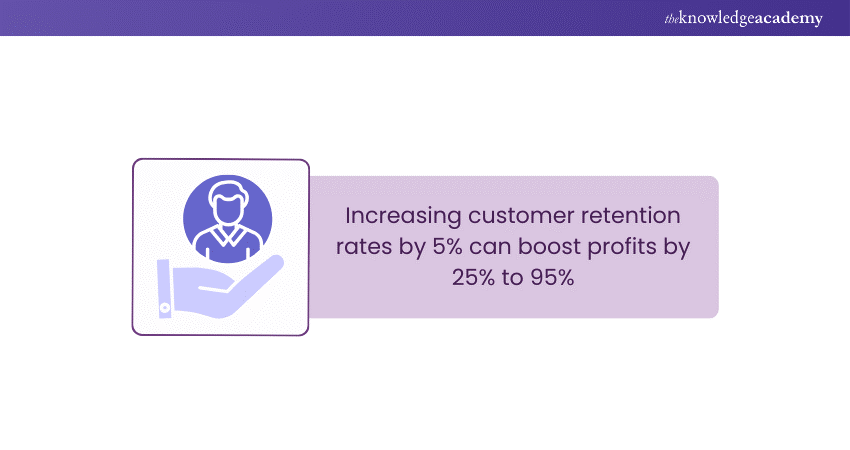
Retaining customers is crucial for sustained business growth and profitability. By prioritising customer satisfaction, businesses can build loyalty and ensure long-term success.
a) Retaining customers is more cost-effective than acquiring new ones, making it a vital business focus.
b) Delivering consistent value and exceptional service keeps customers engaged and satisfied.
c) Loyal customers are less likely to switch to competitors, reducing churn rates.
d) Strong retention strategies contribute to steady and predictable income streams while saving money on customer acquisition.
Challenges in Measuring Customer Lifetime Value
While Customer Lifetime Value (CLV) is a powerful metric, accurately measuring it comes with several challenges. Businesses must account for data limitations, behavioural variability, and analytical complexities to derive meaningful insights.
1) Difficulty in Accurate Measurement
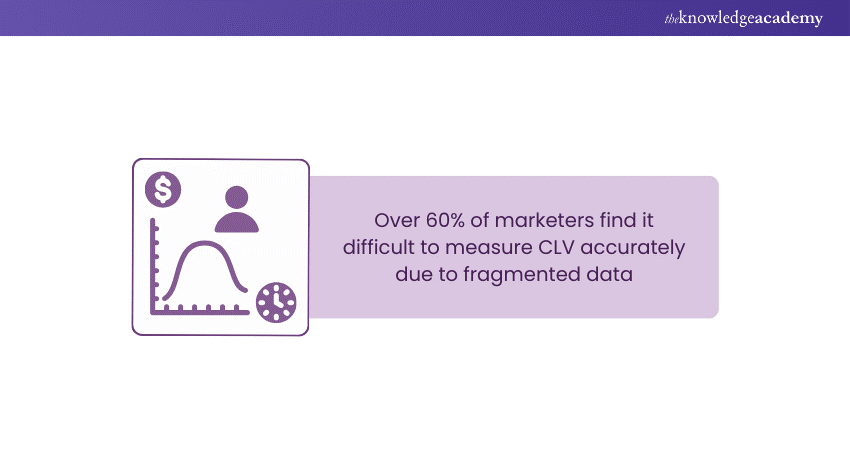
Calculating CLV requires access to reliable and comprehensive data, which can be difficult to gather and interpret. Several factors contribute to this challenge:
a) Variability in Customer Behaviour
The natural evolution of customer behaviours, including preferences, spending actions, and engagement frequency, makes on-demand future value projections unreliable.
b) Inconsistent Purchasing Patterns
Customers exhibit distinct buying patterns, combining small, frequent transactions with large yet infrequent purchases, leading to complex revenue projections.
c) Limited Data Availability
Small businesses often lack the appropriate infrastructure to track multiple touchpoints between customers and their company.
Organisations should follow three key steps to improve accuracy in their systems: they need comprehensive data collection tools, the integration of predictive AI models within their business framework, and the optimisation of existing business methods.
2) Potential for Misleading High-level Results
Relying solely on broad averages can lead to distorted CLV insights. Some key risks include:
a) Skewed Data from High-value Customers: A small group of big spenders may inflate the average CLV, masking the true value of typical customers.
b) Ignoring Customer Segmentation: Treating all customers the same overlooks differences in lifetime value across demographics, purchase history, and engagement levels.
c) Overlooking Market Changes: External factors like competition, economic shifts, and evolving customer preferences can affect future CLV projections.
Businesses should segment customers effectively to mitigate these risks, use median values alongside averages, and consider outliers separately to ensure accurate, actionable insights.
Build a Strong Workforce with Our Inducting and Retaining for Success Training– Register Today!
Proven Strategies to Improve CLV
Strategic enhancement of Customer Lifetime Value relies on deliberate efforts to retain customers while actively enhancing their satisfaction. Businesses that prioritise customer-focused initiatives build stronger client relationships and achieve maximum long-term profit growth.
1) Launch Loyalty or Rewards Systems
A well-structured loyalty programme encourages repeat purchases and fosters long-term customer relationships. Implementing rewards systems can:
a) Offer discounts, cashback, or points for frequent buyers.
b) Provide exclusive perks such as early access to sales or VIP benefits for long-term customers.
c) Create tiered loyalty programmes that incentivise higher spending and sustained engagement.
2) Establish a Customer Feedback Loop
Understanding customer needs and expectations helps refine products and services. An effective feedback loop can:
a) Collect insights through surveys, online reviews, and direct feedback forms.
b) Utilise social media to engage customers and respond to their concerns in real-time.
c) Implement improvements based on feedback to enhance customer satisfaction and retention.
3) Optimise Customer Onboarding
First impressions matter, and a smooth onboarding process ensures customers see the value in your offers. Effective onboarding should:
a) Provide clear guidance through tutorials, welcome emails, or product demonstrations
b) Offer proactive customer support to address queries and minimise confusion
c) Personalise onboarding experiences based on customer preferences and behaviour
4) Increase Customer Engagement
Keeping customers actively engaged strengthens relationships and increases retention. Businesses can:
a) Use personalised marketing campaigns tailored to customer interests
b) Share valuable content through blogs, emails, and social media
c) Create interactive campaigns, such as contests, live events, and gamified experiences
5) Elevate Customer Service Standards
Exceptional service builds trust and encourages repeat business. Key strategies include:
a) Ensuring quick and effective issue resolution to maintain customer satisfaction
b) Training staff to provide friendly, empathetic, and knowledgeable support
c) Offering multiple support channels, including chat, email, and phone assistance
6) Enhance Customer Relationship Management
Effective use of Customer Relationship Management (CRM) tools helps businesses maintain strong customer relationships. By leveraging CRM systems, businesses can:
a) Track customer preferences, purchase history, and communication records
b) Personalise interactions and recommendations based on past behaviour
c) Automated follow-ups, reminders, and special offers to nurture long-term loyalty
Implementing these strategies will help businesses maximise CLV, ensuring sustainable growth and customer satisfaction.
Craft Persuasive Content with Our Copywriting Course – Register Today!
Conclusion
Customer Lifetime Value (CLV) is more than just a number; it’s a strategic tool for driving growth, improving retention, and boosting profitability. By understanding and optimising CLV, businesses can make smarter decisions that lead to long-term success. Start tracking and enhancing CLV today to unlock your business’s full potential and build lasting customer relationships.
Frequently Asked Questions
What is a Good CLV Ratio?

A good CLV ratio depends on industry benchmarks but ideally falls between 3:1 and 5:1. This means the revenue generated from a customer should be three to five times the cost of acquiring them for sustainable growth.
What is the Difference Between CLV and LTV?
Customer Lifetime Value (CLV) and Lifetime Value (LTV) are often used interchangeably, but CLV emphasises individual customer relationships, while LTV can represent the total value across all customers. CLV is more precise for targeted business decisions.

James Smith


Digital Marketing Manager and Trainer
James Smith is a digital marketing professional with over a decade of experience in SEO, content strategy, paid media and analytics. He has supported both SMEs and global brands in transforming their digital presence. James’s writing and training are rooted in results-driven tactics and the latest marketing trends.
View Detail

 If you wish to make any changes to your course, please


