




We may not have the course you’re looking for. If you enquire or give us a call on 01344203999 and speak to our training experts, we may still be able to help with your training requirements.
Home
 Resources
Business Analysis
What is Leadership in Organisational Behaviour: A Complete Overview
Resources
Business Analysis
What is Leadership in Organisational Behaviour: A Complete Overview
Resources
Business Analysis
What is Leadership in Organisational Behaviour: A Complete Overview
What is Leadership in Organisational Behaviour: A Complete Overview
ByGaurav KalitaLast updated on: 29 September 2026
This comprehensive blog delves into the intricate dynamics of leadership within organisational frameworks. You can explore its multifaceted dimensions and how it fosters a thriving workplace culture. Besides explaining how Leadership in Organisational Behaviour can influence individuals, this blog will help them achieve their objectives.
At a Glance
1. Leadership in organisational behaviour focuses on how leaders guide, influence and coordinate people within organisations.2. Organisational culture, communication, employee involvement, decision-making and adaptability influence leadership effectiveness.3. Leadership capabilities can evolve as individuals gain experience and take on greater responsibilities.4. Effective organisational leaders rely on strategic thinking, emotional intelligence, communication, decision-making and adaptability.5. Effective leadership requires avoiding practices such as micromanagement, favouritism and poor transparency.
Leadership plays a crucial role in organisational behaviour and is vital for an organisation's high performance and effectiveness. It brings together different approaches used to guide and influence individuals and groups. Essentially, a solid grasp of leadership in organisational behaviour can help people perform their duties appropriately.
Additionally, leadership in organisational behaviour stimulates positive transformation and creativity. Through this blog, readers can understand how effective leadership supports sustainable organisational growth and success.
What is Leadership in Organisational Behaviour?
Leadership in organisational behaviour refers to guiding a team towards a common goal by inspiring individuals to perform at their best, rather than simply holding a position of authority. Approaches like Situational Leadership emphasise adapting leadership styles based on the needs of the team and situation, making leadership more effective. Effective leadership can strongly affect organisational culture, foster innovation, and enhance employee engagement, ultimately supporting long-term success.

Factors Influencing Leadership in Organisational Behaviour
Understanding the factors influencing organisational behaviour is essential for effective leadership. Let’s explore some of those factors in detail:
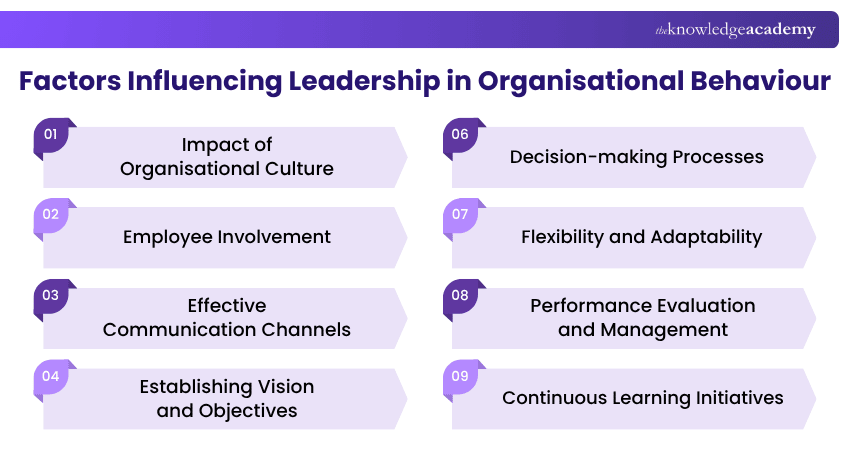
1) Impact of Organisational Culture
Organisational culture shapes leadership styles and behaviours. Leaders must align their actions with the prevailing culture to foster cohesion and alignment within the organisation. A strong culture encourages shared values, which in turn influence how leaders interact with their teams and make decisions.
2) Employee Involvement
Employee involvement can increase when leaders encourage participation in discussions, decisions, and improvement initiatives. Giving employees opportunities to contribute ideas and take ownership can strengthen engagement and commitment.
3) Effective Communication Channels
Leaders should create transparent and accessible ways to communicate vision, goals, and expectations. By listening actively, providing timely feedback, and fostering open dialogue, leaders can build stronger relationships and inspire greater engagement.
4) Establishing Vision and Objectives
Effective leadership entails formulating a compelling vision and turning it into attainable goals. Leaders encourage others to unite behind a single cause and strive towards common objectives by clearly outlining their expectations. Leaders who communicate a clear vision can encourage their teams to work together towards a common objective.
5) Decision-making Processes
Making difficult decisions that affect the organisation and its stakeholders is a necessary part of being a leader. To consider diverse viewpoints and reduce risks, leaders need to implement inclusive and participatory decision-making procedures. Leaders can make better decisions that promote positive change by considering possible consequences and involving relevant stakeholders.
Strengthen your ability to analyse situations, evaluate options, and make informed decisions with our Decision Making Course - Join today!
6) Flexibility and Adaptability
Adapting to change and embracing innovation enables leaders to steer the organisation towards growth and resilience. By remaining agile and responsive to shifting market dynamics, leaders can navigate uncertainty more effectively. They can further position their organisations for long-term success.
7) Performance Evaluation and Management
Leadership extends to nurturing talent and fostering a culture of continuous improvement. Effective performance evaluation and management practices provide feedback, recognition, and support for employee development.
8) Continuous Learning Initiatives
Effective leadership involves continuous learning and development. Hence, leaders must invest in training and development sessions. By doing so, they can promote knowledge sharing, encourage continuous improvement, and support a performance-focused culture.
Phases of Leadership Development
Leadership development can involve different stages, each offering opportunities to build skills and experience. Here are key pointers on the phases of leadership development:
1) Early Leadership Stages
Early-stage leaders frequently prioritise developing their core competencies and obtaining real-world experience. This stage involves developing self-awareness, seeking mentorship, and learning from mistakes. Emerging leaders build the foundation for future success and development by accepting challenges and seeking constructive feedback.
2) Developmental Leadership Progression
As leaders progress in their careers, they transition from individual contributors to team managers and decision-makers. This phase involves honing interpersonal skills, delegation, and conflict resolution. By mastering the art of delegation and effectively managing teams, leaders position themselves for greater responsibilities and leadership roles.
3) Transformational Leadership Evolution
Transformational leaders inspire and empower others to achieve extraordinary results. They cultivate a shared vision and foster a culture of innovation and collaboration. By leveraging their influence and charisma, transformational leaders drive organisational change and inspire others to reach their full potential.
4) Legacy Leadership Impact
The legacy of effective leadership endures beyond one's tenure. Leaders who leave a lasting impact build strong organisational cultures, develop future leaders, and create sustainable business practices. By supporting employee development and encouraging continuous improvement, leaders can create a lasting organisational impact.
Essential Skills for Organisational Leadership
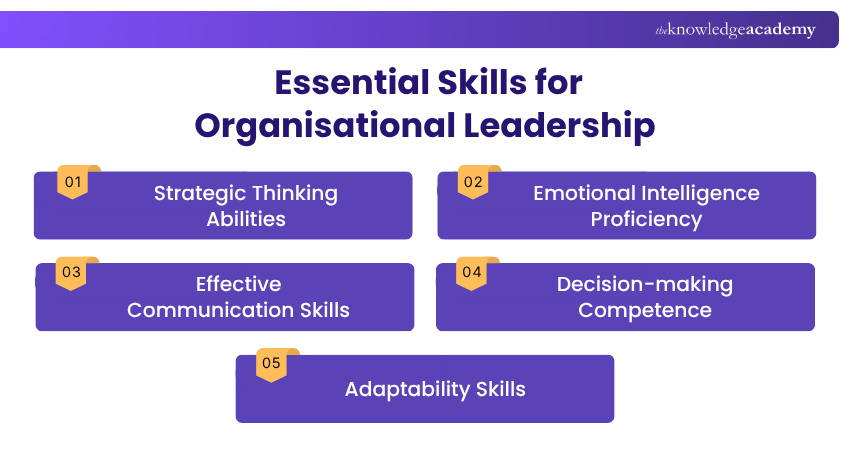
Effective organisational leadership demands a diverse skill set that enables leaders to navigate complex challenges and inspire high performance. Here are key pointers on essential skills for organisational leadership:
1) Strategic Thinking Abilities
Effective leaders must think strategically and anticipate future trends. They formulate long-term plans and adapt strategies to changing market dynamics. By analysing data, identifying opportunities, and aligning resources with organisational goals, leaders can drive innovation and competitive advantage while positioning their organisations for long-term success.
2) Emotional Intelligence Proficiency
Emotional intelligence is key for building meaningful relationships and navigating complex interpersonal dynamics. Leaders with high emotional intelligence demonstrate self-awareness, empathy, and social skills. By understanding their own and others' emotions, leaders with strong emotional awareness can help create a supportive workplace and manage conflicts more effectively.
3) Effective Communication Skills
Clear and effective communication supports successful leadership. Leaders must articulate their vision, provide feedback, and resolve conflicts with clarity and empathy. By communicating openly and transparently, leaders foster trust, inspire confidence, and align their teams towards common goals, driving organisational success.
4) Decision-making Competence
Leadership requires making tough decisions with incomplete information. Hence, leaders must excel in decision-making and possess critical thinking skills, analytical acumen, and the courage to take calculated risks. By gathering relevant data and weighing the potential outcomes, competent decision-makers minimise risks and seize opportunities.
5) Adaptability Skills
The ability to adapt is increasingly important as business conditions continue to evolve. Leaders who embrace change, pivot strategies, and learn from failures are better equipped to navigate uncertainty and drive innovation. Fostering a culture of agility and experimentation, adaptable leaders can inspire creativity and empower their teams.
Benefits of Effective Leadership
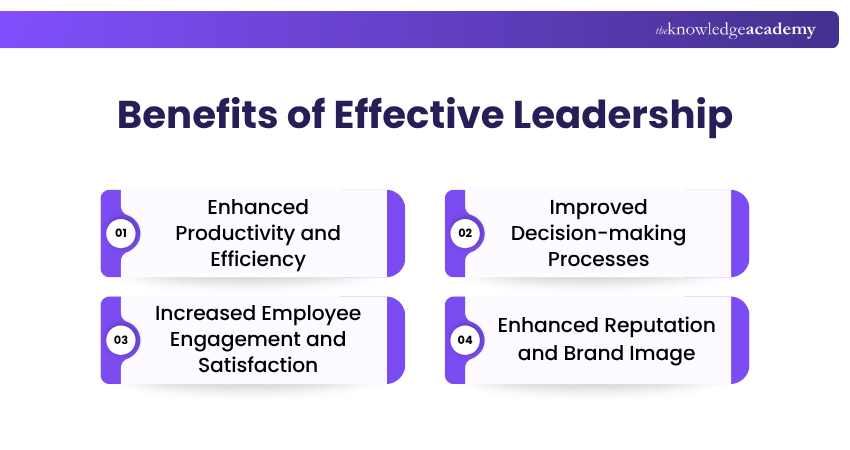
Effective leadership can support organisations in areas such as productivity, decision-making, employee engagement, and brand reputation. Here are key pointers on the benefits of effective leadership:
1) Enhanced Productivity and Efficiency
Strong leadership can encourage greater accountability and high performance, which can contribute to increased productivity and efficiency across the organisation. By setting clear expectations and recognising achievement, leaders can empower employees in different ways.
Improve productivity, prioritisation, and effective time use with our Productivity And Time Management - Join now!
2) Improved Decision-making Processes
Well-informed and inclusive decision-making processes can contribute to better outcomes and organisational alignment. Effective leaders gather input from diverse perspectives and make informed decisions, supporting more effective execution of strategies.
3) Increased Employee Engagement and Satisfaction
Strong Leaders can shape a workplace where employees feel supported, respected, and confident in contributing. By fostering open communication, providing growth opportunities, and recognising individual contributions, leaders can inspire greater engagement and satisfaction among their teams. These efforts can also support stronger employee retention and overall organisational success.
4) Enhanced Reputation and Brand Image
Effective leadership can contribute to a positive organisational reputation and stronger brand image. By consistently delivering on promises, acting with integrity, and prioritising stakeholder interests, leaders build credibility and goodwill. This can strengthen stakeholder trust and support the organisation’s long-term position in the marketplace.
Practices to Avoid as an Organisational Leader
To lead effectively, it’s crucial to understand not only which practices to adopt but also which to avoid. Here are key pointers on practices to avoid as a competent organisational leader:
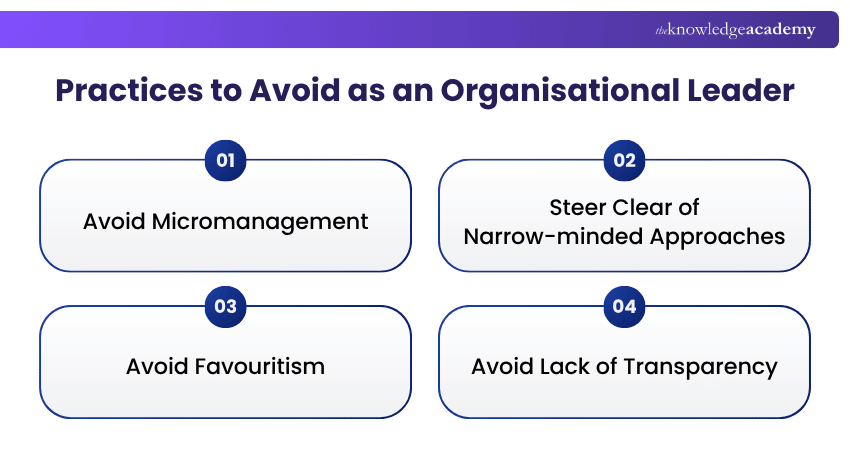
1) Avoid Micromanagement
Micromanagement stifles creativity and demotivates employees. Leaders should empower their teams, delegate tasks, and trust them to achieve results. By providing clear expectations and support, leaders can contribute to increased engagement and productivity.
2) Steer Clear of Narrow-minded Approaches
Leaders must embrace diversity and inclusion to harness the full potential of their teams. Narrow-mindedness limits innovation and stifles creativity within the organisation. By valuing diverse perspectives and promoting inclusivity, leaders foster a culture of collaboration and respect.
3) Avoid Favouritism
Fairness and equity are essential for maintaining trust and morale within the organisation. Leaders should avoid favouritism and treat all employees with respect and impartiality. By implementing transparent policies and practices, leaders build credibility and create a level playing field for all employees.
4) Avoid Lack of Transparency
Lack of transparency erodes trust and undermines organisational cohesion. Leaders should foster a culture of openness, honesty, and accountability to build strong relationships with stakeholders. By communicating openly, soliciting feedback, and addressing concerns promptly, leaders demonstrate integrity and build trust.
Master key skills to confidently support and deliver successful business transformations with the Business Analysis Courses – Join now!

Gaurav Kalita is a Content Writer with 2+ years of experience in content development, research and storytelling. His background in English literature and teaching, combined with his growing interest in AI and Machine Learning, supports his writing across Business Skills and IT and Tech.
View Detail

 If you wish to make any changes to your course, please


