




We may not have the course you’re looking for. If you enquire or give us a call on 01344203999 and speak to our training experts, we may still be able to help with your training requirements.
How to Build an Effective Team and Improve Collaboration
ByCharlotte WilsonLast updated on: 16 July 2026
Building an effective team requires clear goals, trust, communication, collaboration, and support, while valuing diverse perspectives and contributions. It improves productivity, resolves conflict, and creates a high-performing and motivated team culture. Unlock your team’s full potential for long-term and sustainable success.

You can have a field full of seeds, but without water and sunlight, nothing grows, just like your team. Talented people alone aren’t enough. Rather, it takes structure, trust, and the right environment for people to truly thrive together. Many teams have potential but fall short due to unclear goals, poor communication, or lack of accountability.
The difference between a group of individuals and a high-performing team lies in how you nurture it from the foundations to the day-to-day habits. It is a process of consistent practices, clear strategies, and intentional culture-building. Ready to transform your team? Let’s dive into this blog on How to Build an Effective Team and lay the right foundation to flourish!
Table of Contents
1) How to Build an Effective Team?
2) Essential Team-building Skills
3) What are the 7 C's of Team Effectiveness?
4) What is the Best Team Goal?
5) Conclusion
How to Build an Effective Team?
It is the responsibility of the management to nurture their employees with time and dedication to build a successful team. If you want to know how to build a strong team, here are some steps below:
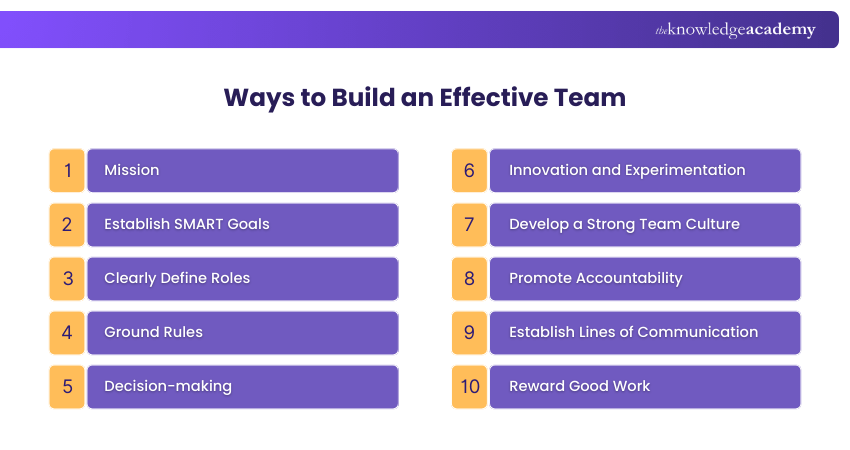
1) Mission
A clear and compelling mission serves as the team's North Star. Because any high-performing team is anchored by such a clear mission and a shared commitment to a specific purpose only. This mission isn’t just a statement handed down from above; it’s something the team defines, embraces, and rallies behind.
For example: The team’s mission is to build a user-friendly mobile app that helps users manage personal finances with ease and security.
2) Establish SMART Goals
A set of goals that are Specific, Measurable, Achievable, Relevant and Time-based (SMART goals) can help you track the team’s progress. These goals provide focus, motivation, and a way to measure progress towards a concrete destination.
For example: Instead of a vague goal like launching the app soon, your team can set a SMART goal. It could be to release version 1.0 of the mobile app with three core features (budget tracker, spending alerts, and goal setting) by 30 November.
3) Clearly Define Roles
In a team environment, clarity around roles is essential. Defining specific roles for the team members can help them segregate among them and focus on accomplishing them. Members can start working on their priorities if they get clear insights into what the team is expecting from them.
For example: In a software development team, define roles like the Frontend Developer is responsible for UI/UX implementation; the Backend Developer is responsible for API and server logic; and the QA Engineer ensures code quality through testing.
4) Ground Rules
For a team to function effectively, there needs to be a shared understanding of how members will work together. For that, you can set up some ground rules for your team. They act as behavioural guidelines that ensure respectful, productive, and focused collaboration. Also, these rules should be clear, agreed upon, and upheld by everyone.
For example: The team agrees on working norms such as daily stand-ups at 10 AM, code must be reviewed by two peers before merging, and response time on Slack within two hours during working hours.
Start to build a trustworthy team with our Productivity and Time Management Course - Join now!
5) Decision-making
Every successful team needs a clear decision-making model that is agreeable to everyone in the team. Whether decisions are made by consensus, leader authority, or majority vote, having a consistent approach improves efficiency and builds trust in leadership. A strong decision combines quality with commitment from team members.
For example: For major design changes, the team agrees that the Product Manager has final say after gathering input. This avoids analysis paralysis while ensuring diverse perspectives are considered.
6) Innovation and Experimentation
Encouraging innovation and experimentation helps your team grow and stay ahead by continually introducing new ideas. Taking calculated risks and embracing opportunities expands your team's knowledge, helping them find creative solutions and enhance productivity.
For example: The Frontend Developer proposes adding a Voice Assistant for logging expenses. The team sets aside one sprint to prototype it. Even if the feature doesn’t make the final cut, the culture of experimentation energises the team and fuels innovation.
7) Develop a Strong Team Culture
A positive and inclusive team culture is the backbone of high performance. Creating a strong team culture involves clear communication standards, consistent work practices, and shared values. Positive interactions build trust among team members, helping achieve collective goals more effectively.
For example: The Backend Developer suggests a “Tech Talk Tuesday” where team members take turns sharing a tool, framework, or tip they’ve found helpful. This not only supports peer learning but also reinforces a culture of continuous improvement and shared growth.
8) Promote Accountability
Accountability means taking ownership of their work and actions. Managers should ensure team members clearly understand their responsibilities, reinforcing accountability. Clearly defined expectations empower individuals to take ownership of their roles, benefiting the entire team.
For example: If a team member is tasked with delivering monthly reports, holding regular reviews ensures they stay focused, committed, and aware of their contribution's importance.
9) Establish Lines of Communication
Clear and effective communication directly enhances team efficiency, clarifying individual duties and streamlining interactions. Setting up structured channels ensures team members know whom to approach for support, feedback, or updates.
For example: Using communication tools such as Slack or Microsoft Teams helps ensure everyone stays informed of project changes and can promptly discuss tasks.
10) Reward Good Work
Recognising and rewarding your team’s achievements motivates them, fostering a positive working environment. Acknowledgement encourages ongoing dedication, enthusiasm, and higher performance standards.
For example: Providing monthly rewards, such as ‘Employee of the Month’ certificates or additional paid leave, motivates team members and reinforces appreciation for their effort.
Enhance productivity and build high-performing teams with proven strategies - Join our Performance Management Training now!
Essential Team-building Skills
Enhancing your team-building skills can significantly boost your performance as a manager or team member. Here are some crucial skills for building a strong team:
1) Effective written and verbal Communication skills to express your idea
2) Leadership skills to make decisions, solve problems and establish goal-setting
3) Motivation strategies to keep your group engaged and positive
4) Empathy to understand the feelings of the other team members
5) Delegate tasks according to the individual strengths of the team
6) Patience for understanding the challenges and taking the right move
7) Be someone your team can rely on in tough times
8) Resource allocation to improve their performance and learn new skills
Want to lead your team like a pro? Register for our Senior Management Training soon!
What are the 7 C's of Team Effectiveness?
Effective team building is grounded in the seven C’s, and they promote trust, synergy, and sustained performance, forming the foundation of any high-functioning team. Let's check what those seven C’s are:
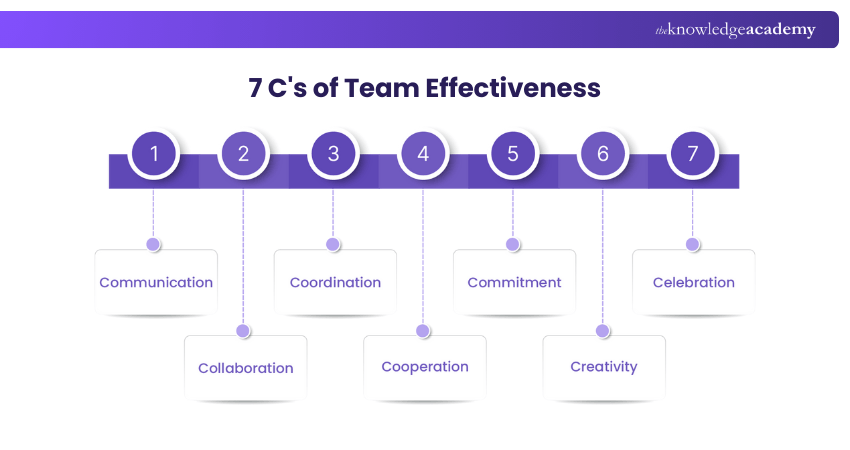
1) Communication: Clear, open communication ensures alignment, reduces misunderstandings, and strengthens team cohesion.
2) Collaboration: Team members work together, combining strengths to achieve shared goals and drive innovation.
3) Coordination: Tasks and resources are organised efficiently to avoid overlaps and meet deadlines.
4) Cooperation: Mutual support and trust create a harmonious environment and promote empathy.
5) Commitment: Dedication to team goals keeps members motivated and focused, even under pressure.
6) Creativity: A culture of innovation encourages fresh ideas and problem-solving through experimentation.
7) Celebration: Recognising achievements boosts morale, reinforces team spirit, and strengthens bonds.
What is the Best Team Goal?
The best team goal is one that is time-bound, tied to a clear business outcome and be within the team’s control. Smart Goals Examples show that rather than vague aspirations like “work harder” or “improve service,” effective goals focus on tangible deliverables that move the needle for the organisation.
Effective team goals should also inspire collaboration and stretch the team’s abilities without overwhelming them. Ultimately, the best goal fosters alignment, purpose, and motivation while contributing real value to the organisation.
Conclusion
A great team isn’t built overnight; it takes clear goals, trust, and a culture that inspires collaboration. When you master How to Build an Effective Team, you unlock the potential for innovation, productivity, and success. Now, take the next step and start shaping a team that truly thrives!
Drive success with our expert-led Management Courses – Book your spot and equip yourself with practical skills immediately!

Charlotte Wilson creates Business Skills content that helps professionals communicate more effectively, manage workplace pressures and collaborate with others. Her practical resources support stronger professional relationships, individual effectiveness and positive team behaviour.
View Detail

 If you wish to make any changes to your course, please


