




We may not have the course you’re looking for. If you enquire or give us a call on 01344203999 and speak to our training experts, we may still be able to help with your training requirements.
What is Brand Affinity? A Complete Guide
ByJames SmithLast updated on: 16 July 2026
Brand Affinity refers to the emotional connection customers develop with a brand, based on trust, values, and positive experiences. This connection fosters loyalty and advocacy. It is crucial for businesses to build, nurture, and maintain Brand Affinity for long-term growth, customer retention, and overall success.

What if your customers didn’t just buy your products, but felt connected to your brand on a deeper level? Imagine them sharing a brand story with friends, standing by the product in low times. That’s the magic of Brand Affinity. It’s that powerful bond that makes people feel like they’re part of something bigger, something they truly believe in.
So, how do you create this kind of connection? How do you turn a simple transaction into a lasting, emotional relationship? In this blog, we’ll dive into the secrets of building Brand Affinity and show you how to turn everyday buyers into your brand’s biggest fans. Ready to create a connection that lasts? Let’s get started!
Table of Contents
1) What is Brand Affinity?
2) Importance of Brand Affinity in B2B
3) Brand Affinity Affecting Factors
4) How to Build Brand Affinity?
5) Measuring Brand Affinity
6) Strategies to Sustain Brand Affinity
7) Benefits of Brand Affinity
8) Conclusion
What is Brand Affinity?
Brand Affinity refers to the relationship that a customer develops with a brand over time. It is built on trust, values and positive experiences. When customers feel aligned with a brand's mission, values and personality, they begin to develop an emotional connection. This connection motivates them to be loyal to the brand, even in the face of competition.
Unlike brand awareness, which simply means knowing about a brand, Brand Affinity involves a deeper, more personal connection. It is about customers feeling good about supporting a particular brand because they identify with its values and feel that the brand is trustworthy.

Importance of Brand Affinity in B2B
For Business-to-Business (B2B) companies, Brand Affinity is just as important as it is for Business-to-Consumer (B2C) brands. In B2B settings, Brand Affinity can make long-term relationships with customers, repeat business and even referrals. When companies feel connected to a brand, they are more likely to make partnerships and continue using its services.
1) Trust and credibility are essential in B2B relationships.
2) Companies choose to work with partners they trust and feel comfortable.
3) Brand Affinity, driven by effective B2B Marketing, helps create trust and ensures emotional connection with clients.
4) Brand Affinity makes your business excel from competitors giving similar products or services.
Brand Affinity Affecting Factors
Many factors influence the development of Brand Affinity. Understanding these elements can help you create stronger connections with your clients.

1) Brand Values and Mission
a) Align your brand’s mission with your customers’ values
b) Customers are more likely to connect emotionally with brands that share their beliefs
c) A clear brand mission helps customers easily identify with your brand
d) When customers support a brand, they believe in, Brand Affinity grows
2) Personal Brand Experiences
a) Positive Customer Experiences play a key role in building Brand Affinity.
b) Easy-to-use products and excellent Customer Service Process enhance the brand relationship.
c) Memorable marketing campaigns help customers feel valued and appreciated.
d) Exceptional experiences create loyalty, making customers more likely to advocate for your brand.
3) Influencers and Endorsements
a) Influencers and endorsements boost credibility and authenticity.
b) When trusted figures recommend your brand, customers feel more confident.
c) Influencers help bridge the gap between your brand and potential customers.
d) Endorsements, whether from celebrities or respected figures, strengthen brand connections.
Learn how to optimise strategies using SEO and social media with our Digital Marketing Tools Training - Register today!
How to Build Brand Affinity?
Building Brand Affinity requires time, effort, and consistency. It’s not something that happens overnight, but with the right strategies, you can develop strong, lasting relationships with your customers.
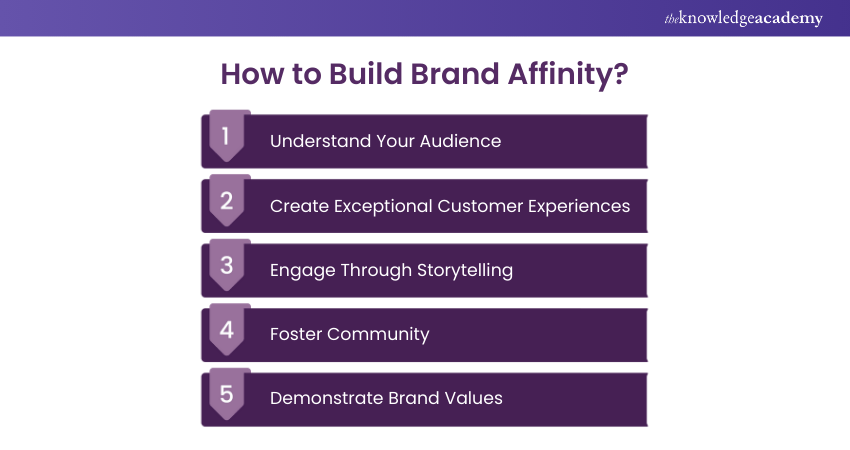
Understand Your Audience
a) Know who your audience is and what they need, value, and desire
b) Identify their pain points and what matters most to them in a brand
c) Use market research, surveys, and feedback to gain insights
d) Tailor your messaging, products, and services to align with their expectations
Create Exceptional Customer Experiences
a) Positive interactions lead to stronger emotional connections with customers
b) Focus on product usability and quality customer service
c) Ensure every customer touchpoint, from online purchases to support, is positive
d) Make customers feel valued and meet their needs consistently
Engage Through Storytelling
a) Storytelling creates emotional connections with your audience
b) Share your brand’s journey, mission, and values in relatable ways
c) Use stories in marketing, social media, and your website to engage customers
d) Customers connect with stories that reflect their own experiences and values
Foster Community
a) Create a sense of belonging for your customers beyond transactions
b) Build spaces for customers to interact, share experiences, and engage with your brand
c) Use social media groups, forums, or events to foster community
d) Customers who feel they belong are more likely to stay loyal to your brand
Demonstrate Brand Values
a) Consistently show that your brand lives by its values.
b) Customers prefer to support brands that align with their beliefs.
c) Use sustainable practices, ethical sourcing, or community contributions to demonstrate your values.
d) Show your commitment to what matters most to your audience to strengthen Brand Affinity.
Elevate your marketing skills with the Social Media with our Social Media Marketing Course – Join now!
Measuring Brand Affinity
Measuring Brand Affinity is not always straightforward, but there are several methods you can use to gauge how strong your connection with your customers is.
Engage with Your Customers
a) Regularly ask for feedback to gauge customer satisfaction and affinity
b) Participate in conversations and listen to what customers are saying about your brand
c) Engaging with customers helps you understand their feelings and level of connection
d) The more you engage, the stronger the bond and trust you build with your audience
Monitor Social Media Interactions
a) Social media is a valuable tool to track Brand Affinity.
b) Pay attention to how often customers mention your brand and engage with your content.
c) Look for positive interactions and brand mentions as signs of emotional connection.
d) Social media engagement provides real-time insights into customer sentiment and loyalty.
Conduct Net Promoter Score (NPS) Surveys
a) NPS surveys measure customer loyalty and Brand Affinity effectively
b) Ask how likely customers are to recommend your brand to others
c) A high NPS score indicates strong emotional ties and customer satisfaction
d) Use NPS feedback to identify areas for improvement and to strengthen brand loyalty.
Strategies to Sustain Brand Affinity
Once you've built Brand Affinity, it's important to sustain it over time. Here are some strategies to keep your customers connected to your brand.

Build a Strong Community
a) Foster a sense of belonging to keep customers engaged with your brand.
b) Create spaces where customers can connect, share experiences, and interact with your brand.
c) A strong community strengthens emotional connections and builds long-term loyalty.
d) Encourage customers to stay engaged and involved with your brand beyond purchases.
Monitor Brand Recognition
a) Regularly track how well your brand is recognised in the market.
b) Assess how people perceive your brand and whether it aligns with your values.
c) Monitor brand mentions and awareness to understand public perception.
d) Ensure that your brand messaging remains consistent and resonates with your audience.
Learn how to optimise ad campaigns for better performance with our Google Ads Certification – Register today!
Foster Customer Loyalty
a) Implement loyalty programs to reward repeat customers and encourage retention
b) Personalise experiences to make customers feel valued and appreciated
c) Maintain ongoing communication to keep customers engaged with your brand
d) Show gratitude and recognition for loyal customers to build a stronger bond
Benefits of Brand Affinity
Building Brand Affinity has several long-term benefits for your business. Here are some of the key advantages:
Fostering Excellent Customer Service
a) Emotionally connected customers appreciate quality service and are more forgiving
b) Loyal customers are patient, helping resolve issues more effectively
c) Exceptional service strengthens customer bonds and boosts word-of-mouth
Growing a Customer Base
a) Brand Affinity turns casual buyers into repeat customers
b) Loyal customers refer others, expanding your reach
c) A loyal base ensures consistent revenue and growth
Increasing Sales
a) Connected customers are more likely to make repeat purchases
b) Brand Affinity leads to higher spending over time
c) Loyal customers are more open to trying new products
Raising Brand Awareness
a) Emotionally invested customers share positive experiences
b) Word-of-mouth from loyal customers spreads brand awareness
c) Increased visibility attracts new customers and drives growth
Growing Relationships
a) Brand Affinity builds lasting, meaningful customer relationships
b) Strong relationships create trust and loyalty
c) Loyal customers become long-term advocates for your brand
Conclusion
Building Brand Affinity is a powerful way to foster loyalty and long-term success. By understanding your audience, offering exceptional experiences, and staying true to your values, you can create meaningful connections that lead to sustained growth. This connection not only strengthens customer relationships but also turns them into passionate advocates for your brand.
Gain expertise in targeting, tracking, and optimising marketing campaigns with our Performance Marketing Training – Join now!

James Smith is a digital marketing professional with over a decade of experience in SEO, content strategy, paid media and analytics. He has supported both SMEs and global brands in transforming their digital presence. James’s writing and training are rooted in results-driven tactics and the latest marketing trends.
View Detail

 If you wish to make any changes to your course, please


