




We may not have the course you’re looking for. If you enquire or give us a call on 01344203999 and speak to our training experts, we may still be able to help with your training requirements.
Effective Anger Management Strategies for a Calm Mind
ByThe Knowledge AcademyLast updated on: 16 July 2026
Use anger management techniques like deep breathing, taking a time-out, reframing thoughts, relaxing muscles, using humour, and exercising to reduce tension. Practical strategies and approaches help improve emotional control, manage triggers effectively, and maintain a calm, balanced state of mind in challenging situations.
Anger can build up quickly, but how you manage it makes all the difference. Managing anger effectively is essential for maintaining healthy relationships and overall well-being. While it is a natural emotion, uncontrolled reactions can lead to stress, conflict, and poor decisions.
In this blog, we will explore effective Anger Management Strategies for a calm mind. It covers practical techniques, common triggers, and simple ways to control emotional responses, helping you improve self-awareness, reduce tension, and maintain a balanced and positive mindset.
Table of Contents
1) What is Anger?
2) Effects of Anger
3) Common Causes of Anger
4) Anger Management Strategies
5) How Can I Control Anger in Relationships?
6) Conclusion
What is Anger?
Anger is a fierce emotion you feel when things have gone wrong, or someone has wronged you. It can be a normal response to frustrating or difficult situations. It can also help you express negative feelings towards something or motivate yourself to find critical solutions.
However, excessive anger is not good for your health. When you are angry, several physical changes happen to your body. These changes make it difficult for you to think straight and harm your mental health. Let’s discuss some of the effects of anger below.

Effects of Anger
The causes of anger can be different from person to person when they pass through different situations. However, excessive anger can cause short-term or long-term effects like:
a) Short-term Health Problems: Excessive anger can give you headaches, digestion issues, insomnia, increased anxiety, depression, high blood pressure, skin problems and many more.
b) Long-term Health Problems: Anger can also affect you in the long term. There is a greater risk for heart attack and stroke, weakened immune system, heart disease, anxiety, and shortened lifespan.
Some of the major reasons people may get angry are problems in relationships, work, and legal and financial difficulties. It can also be the connection to violent crimes, destruction of property, abuse and so on.
Develop emotional awareness to enhance communication, decision-making, and workplace relationships with our Emotional Intelligence Training- Sign in today!
Common Causes of Anger
Anger can be triggered by various internal and external factors, ranging from daily stress to underlying mental health conditions. While it is a natural emotional response, frequent or intense anger may indicate deeper issues.
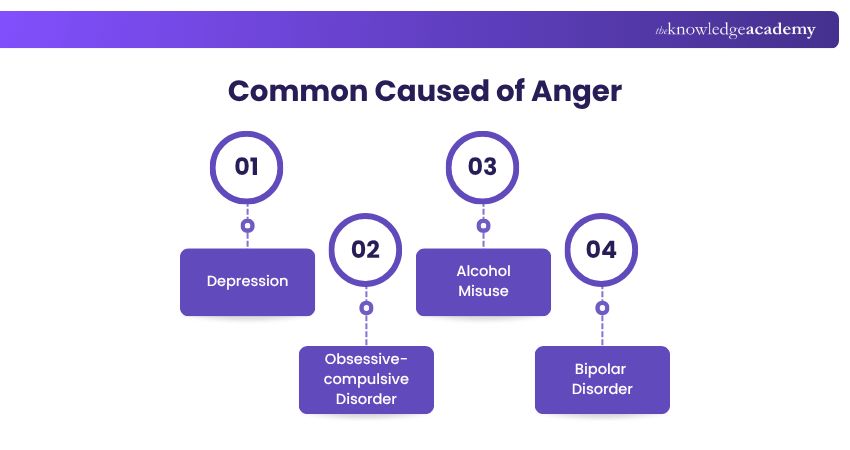
Recognising these causes is important for effectively implementing the Appropriate Anger Management Strategies. The following are some common causes of anger:
1) Depression
Depression can often manifest as irritability or anger instead of sadness. Individuals may feel frustrated, drained, or hopeless, which can lead to emotional outbursts. The way anger is expressed varies from person to person.
In addition to anger, symptoms may include low energy, loss of interest, and negative thoughts. These feelings can build over time, making it harder to manage emotions effectively.
2) Obsessive-compulsive Disorder
Obsessive-compulsive disorder involves recurring thoughts and repetitive behaviours that can create frustration. Individuals may feel overwhelmed when they are unable to control these thoughts or complete certain actions.
This frustration can lead to anger, especially when routines are disrupted. The constant mental strain can make it difficult to maintain emotional balance in everyday situations.
3) Alcohol Misuse
Alcohol misuse can affect how a person thinks, reacts, and manages emotions. It reduces self-control and increases impulsive behaviour, which can lead to aggressive or angry responses.
Frequent or excessive drinking may make it harder to handle stress and conflict calmly. Over time, this can contribute to recurring anger-related issues.
4) Bipolar Disorder
Bipolar disorder causes significant mood changes that can influence emotional responses. Individuals may experience periods of high energy or low mood, both of which can trigger irritability or anger.
These mood shifts can make emotional regulation challenging. As a result, individuals may experience sudden or intense anger during different phases of the condition.
Learn practical techniques to handle challenging behaviours with confidence and professionalism with our Dealing with Difficult People Training- Join now!
Anger Management Strategies
Managing anger effectively involves understanding how thoughts, emotions, and behaviours are connected. Using structured Anger Management Strategies can help reduce emotional intensity and improve how you respond in challenging situations.The following Anger Control Strategies provide practical ways to manage triggers and maintain a calm mindset:
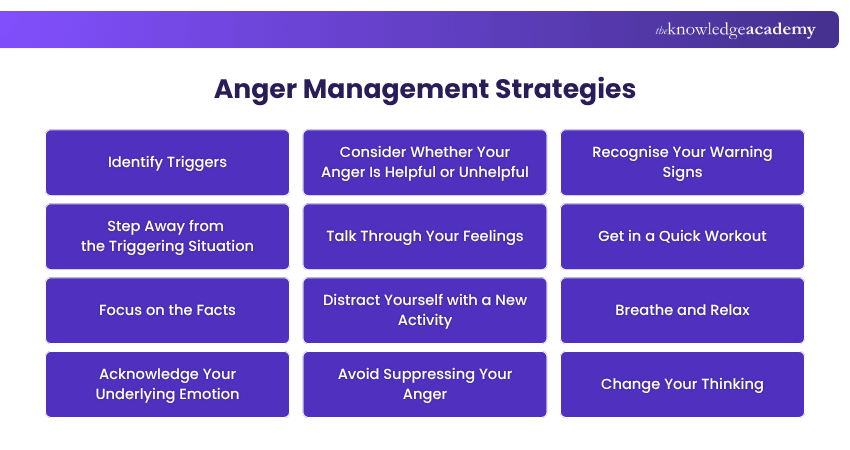
1) Identify Triggers
Understanding what triggers your anger is the first step in gaining control. Triggers can include daily stressors such as traffic, fatigue, or certain interactions that consistently lead to frustration. Recognising these patterns helps you become more aware of your emotional responses.
Once identified, you can plan ahead to manage these situations more effectively. Adjusting routines or preparing coping techniques in advance helps reduce emotional reactions and supports effective Anger Management Strategies.
2) Consider Whether Your Anger Is Helpful or Unhelpful
Anger is not always negative, as it can sometimes highlight situations that require attention or change. It may act as a signal that something is unfair, unhealthy, or needs to be addressed in a constructive way.
However, when anger leads to regret, conflict, or loss of control, it becomes harmful. Evaluating whether your anger is helping or hurting allows you to respond more thoughtfully and make better decisions.
3) Recognise Your Warning Signs
Although anger may feel sudden, it often builds up with noticeable warning signs. These may include physical changes such as a racing heartbeat, muscle tension, or feeling overheated, along with mental signals like racing thoughts.
Recognising these early signs gives you the chance to take action before emotions escalate. This awareness allows you to pause, regain control, and apply Anger Management Strategies more effectively.
4) Step Away from the Triggering Situation
Remaining in a stressful or heated situation can increase anger and lead to impulsive reactions. Taking a step back gives your mind and body the time needed to calm down and reset.
Walking away, taking a short break, or revisiting the discussion later can reduce emotional intensity. This helps you approach the situation more rationally and is one of the most practical Anger Management Strategies.
5) Talk Through Your Feelings
Talking to someone you trust can help you process your emotions and gain a clearer perspective. Sharing your thoughts calmly allows you to understand your feelings without letting them build up internally.
However, simply venting without reflection can sometimes increase frustration. It is more helpful to focus on finding solutions or shifting your mindset rather than repeating negative thoughts.
6) Get in a Quick Workout
Anger often creates a surge of energy that builds up in the body, making it harder to stay calm. Engaging in physical activity such as a brisk walk, running, or a short workout helps release this tension and improves your mood significantly.
Exercise not only reduces immediate frustration but also helps improve your ability to manage stress over time. Regular movement clears your mind, boosts focus, and allows you to approach situations with a calmer and more controlled mindset.
7) Focus on the Facts
Anger is often fuelled by exaggerated thoughts or assumptions that make situations seem worse than they are. Thinking in extremes, such as expecting the worst outcome, can increase frustration and lead to unnecessary emotional reactions.
By focusing only on the facts and avoiding distorted thinking, you can stay grounded and respond more rationally. This approach helps reduce emotional intensity and supports clearer, more balanced decision-making.
8) Distract Yourself with a New Activity
Dwelling on upsetting situations can keep your anger active and make your emotions stronger over time. Replaying events repeatedly prevents your mind from calming down and keeps you stuck in a cycle of frustration.
Shifting your focus to a different activity helps interrupt these thoughts and reset your mindset. Engaging in tasks that require attention allows your brain to relax and gradually reduces emotional tension.
9) Breathe and Relax
Relaxation techniques help calm both the physical and emotional effects of anger. Deep breathing and muscle relaxation can reduce tension quickly, allowing your body to return to a more balanced state.
Although these techniques may feel less effective at first, consistent practice makes them more powerful over time. They are considered essential Anger Management Strategies for calming both the mind and body.
10) Acknowledge Your Underlying Emotion
Anger is often a surface emotion that hides deeper feelings such as disappointment, fear, or embarrassment. Identifying these underlying emotions helps you understand the true cause of your reaction.
When you address these deeper feelings directly, you can respond more constructively instead of reacting impulsively. This improves communication and helps resolve issues more effectively.
11) Avoid Suppressing Your Anger
Suppressing anger instead of addressing it can lead to emotional build-up and increased stress over time. Ignoring your feelings may cause them to resurface later in more intense or harmful ways.
It is important to acknowledge your emotions and express them in a controlled and respectful manner. Healthy expression allows you to manage anger effectively without damaging relationships.
12) Change Your Thinking
Anger can make you feel like things around you are worse than they really are. Therefore, reduce your anger by replacing negative thoughts with positive ones. You might also distract yourself by listening to your favourite music, cooking, looking at a treasured photo, savouring a cup of tea, or stroking a pet.
Gain effective strategies to manage stress and maintain a balanced, productive mindset with our Stress Management Course- Sign in now!
How Can I Control Anger in Relationships?
Managing anger in relationships requires patience, self-awareness, and effective communication. Uncontrolled anger can damage trust and create misunderstandings, making it important to handle emotions carefully.
The following are simple ways to control anger in relationships:
1) Pause before reacting and give yourself time to calm down
2) Communicate your feelings clearly and respectfully
3) Listen actively without interrupting the other person
4) Avoid blame and focus on resolving the issue
5) Take a break if the conversation becomes heated
6) Practice empathy and try to understand the other perspective
7) Focus on solutions rather than past conflicts
8) Use a calm tone and maintain positive body language
Conclusion
Managing anger effectively is essential for maintaining emotional balance and healthy relationships. Using the right Anger Management Strategies helps you recognise triggers and respond calmly in challenging situations. Practising these techniques regularly improves communication and reduces conflict. This ultimately supports a calmer mindset and better overall well-being.
Build essential skills to grow confidently, improve performance, and achieve your personal and professional goals with our Personal Development Courses- Join today!

The Knowledge Academy is a world-leading provider of professional training courses, offering globally recognised qualifications across a wide range of subjects. With expert trainers, up-to-date course material, and flexible learning options, we aim to empower professionals and organisations to achieve their goals through continuous learning.


 If you wish to make any changes to your course, please


