


 Top Rated Course

We may not have the course you’re looking for. If you enquire or give us a call on 01344203999 and speak to our training experts, we may still be able to help with your training requirements.
Benefits of Time Management: Why it Matters and How to Improve
The Knowledge Academy 05 September 2026Discover the key Benefits of time management and how better planning, prioritisation and everyday habits can help you use your time more effectively at work and in daily life.

Training Outcomes Within Your Budget!
We ensure quality, budget-alignment, and timely delivery by our expert instructors.
Table of Contents

Key Takeaways
1. Effective time management helps direct your attention and effort towards the activities that matter most.2. Realistic planning makes workloads easier to organise and reduces reliance on last-minute action.3. Protecting dedicated time for important tasks can support deeper concentration and better-quality work.4. Clear boundaries and flexible schedules can make it easier to balance professional and personal priorities.5. Time management improves through small, consistent adjustments rather than trying to create a perfect schedule.
You know that one important task you planned to finish today?
Then came the emails. The meetings. A few “quick” requests. Some unexpected work. By the end of the day, that important task quietly moved to tomorrow, again.
This is where Time Management starts to matter. Not because you need to pack more into your day, but because you need to decide what deserves your time before everything else claims it.
When you manage time more deliberately, you can protect your focus, handle priorities with greater clarity and reduce the last-minute pressure of constantly catching up. More importantly, you can create room for the goals, people and activities that matter beyond today's to-do list.
These are just some of the Benefits of Time Management. By using your time with greater purpose, you can make steadier progress towards what matters most.
What are the Benefits of Time Management?
The Benefits of Time Management come from using available time more deliberately. When you understand your priorities, plan realistically and give important activities appropriate attention, it becomes easier to manage responsibilities without constantly reacting to whatever demands your attention next.
1) Increased Productivity
Effective Time Management helps you identify important tasks and direct your effort towards them. Instead of moving reactively between activities, you can organise your workload and focus on work that contributes most to your responsibilities and goals.
Planning also reduces uncertainty about what to do next. Schedules, calendars and dedicated time blocks can provide structure to your day, helping you spend less time deciding what to work on and more time making meaningful progress.
Trainer's Insight
Productivity is not about filling every available minute with work. Prioritise activities that contribute most to your goals and leave enough flexibility for unexpected responsibilities.

2) Reduced Stress and Overwhelm
A large workload can feel overwhelming when every responsibility appears urgent. Time Management helps create structure by allowing you to organise tasks, establish priorities and divide larger projects into manageable steps.
Planning ahead can also reduce the pressure associated with approaching deadlines. Instead of leaving important work until the last minute, you can distribute it across the available time and make steady progress.
Having greater visibility over what needs to be done and when can create a stronger sense of control over your workload.
Remember
A schedule should create clarity, not additional pressure. Plan according to the time and capacity you realistically have available.
3) Improved Work-life Balance
Effective Time Management can help create clearer boundaries between professional responsibilities and personal life. By allocating appropriate periods for work, you can also protect time for rest, relationships, hobbies and other personal priorities.
Planning breaks and personal activities is equally important. Without clear boundaries, work can gradually extend into time intended for rest and other responsibilities.
Managing time deliberately can therefore help you balance different areas of life rather than allowing one to consistently dominate the others.
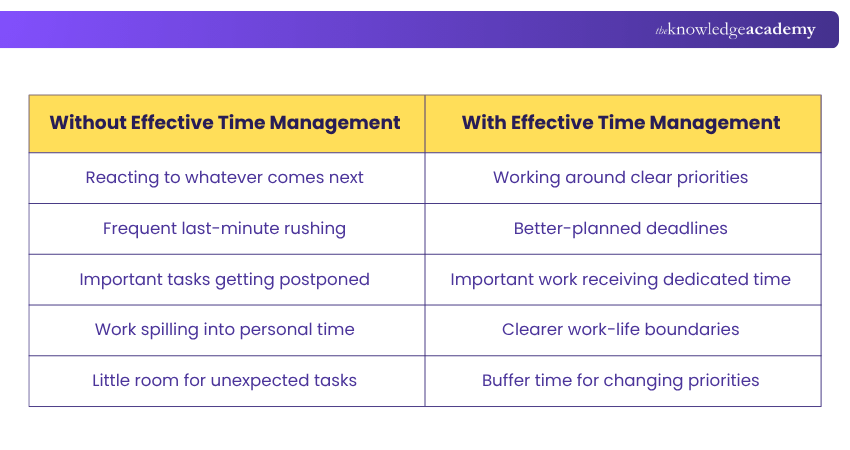
Before vs After Effective Time Management
4) Better Focus and Concentration
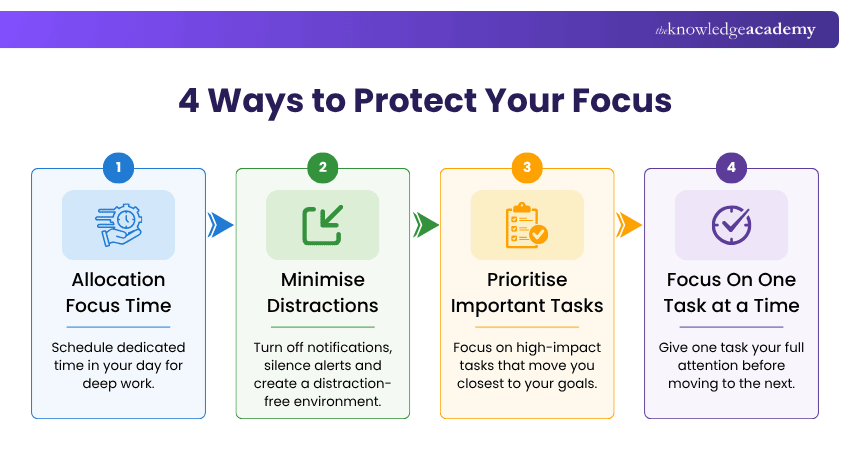
Distractions and frequent task switching can make sustained concentration difficult. Time Management allows you to reserve specific periods for important activities and give individual tasks greater attention.
Reducing avoidable interruptions strengthens this approach. Limiting unnecessary notifications or setting aside uninterrupted working periods can make it easier to remain focused.
Prioritisation also contributes to concentration. When you know what matters most, you can direct your attention towards important activities rather than dividing your energy across too many competing demands.
5) Better Prioritisation
Not every task requires the same level of attention. Effective Time Management encourages you to consider which activities are most important, which are time-sensitive and which can reasonably wait.
Clear priorities make it easier to decide where your time should go when several responsibilities compete for attention. This can prevent lower-priority work from repeatedly taking time away from more important activities.
Quick Example
Imagine you have six tasks to complete this week. Instead of automatically starting with the easiest ones, you identify two that are both important and time-sensitive. You schedule those first and organise the remaining work around them. The workload has not changed, but your priorities are clearer.
6) Reduced Procrastination
Tasks can be easier to postpone when they feel large, unclear or difficult to begin. Time Management can help by breaking broader responsibilities into smaller actions and allocating realistic time to complete them.
Setting a specific starting time can also make a task more concrete. Rather than waiting until a deadline creates urgency, you can begin earlier and make gradual progress.
This approach can reduce last-minute rushing and provide more time to complete important work carefully.
7) Improved Quality of Work
Good Time Management is not only about completing tasks faster. Allocating sufficient time to important tasks can also improve the quality of your work.
Starting work earlier gives you more opportunity to concentrate, check details and review what you have completed before a deadline. It can also reduce mistakes that may occur when work is rushed.
Time Management therefore supports both efficiency and quality by helping you give important tasks appropriate time and attention.
8) Better Progress Towards Goals
Making progress towards long-term goals can be difficult when immediate responsibilities continually take priority. Time Management helps turn broader objectives into smaller actions that can be scheduled and completed progressively.
For example, developing a new skill might involve setting aside regular periods for learning and practice. Each session may seem small, but consistent effort can move you closer to the broader goal over time.
This approach makes progress easier to track and can help prevent important goals from being repeatedly postponed.
9) Personal and Professional Growth
Effective Time Management can create space for development activities that immediate responsibilities often displace. These may include learning new skills, building professional relationships, exploring new responsibilities or pursuing personal interests.
Although managing time does not guarantee growth, it can make sustained learning and development easier to include in your routine.
Quick Check: Is Your Time Management Working?
Before deciding what to improve, take a moment to assess your current approach:
Do important tasks regularly move to the next day?
Are you often rushing as deadlines approach?
Do interruptions consume time meant for important work?
Does your schedule leave little room for unexpected tasks?
Do longer-term goals keep getting postponed?
If you answered “yes” to several of these questions, working faster may not be the solution. Instead, reconsider how you prioritise, plan and protect your available time.
Gain skills like multitasking, setting goals, and creating action plans with our Productivity and Time Management Training – Join now!
How to Improve Your Time Management?
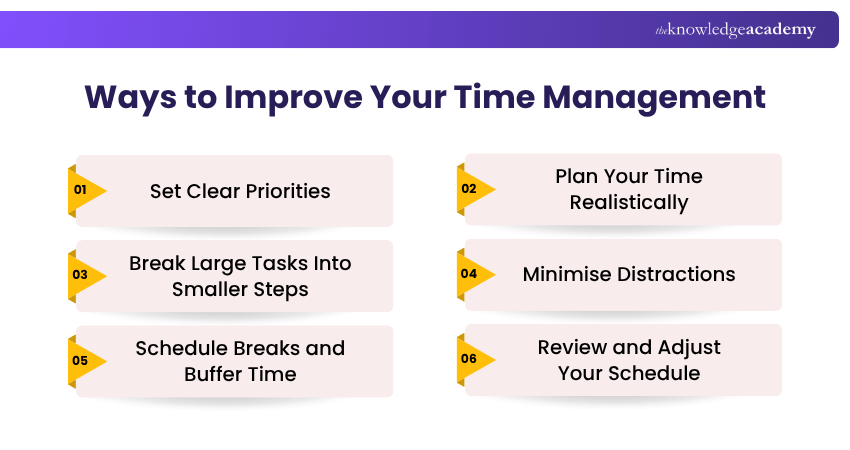
Understanding the Benefits of Time Management is useful, but applying them requires practical habits. Small adjustments to how you prioritise, plan and review your time can make it easier to manage effectively. Here are some practical ways to get started:
1) Set Clear Priorities
Before planning your day or week, identify which activities require the greatest attention. Consider their importance, urgency, deadlines and the consequences of delaying them.
Clear priorities give your schedule direction and make it easier to determine what should be completed first.
2) Plan Your Time Realistically
A realistic schedule should reflect how long activities are likely to take. Avoid filling every available minute or assuming that everything will go exactly according to plan.
Estimate tasks realistically and leave enough flexibility to accommodate unexpected responsibilities.
3) Break Large Tasks into Smaller Steps
Complex projects can feel difficult to begin when they are treated as one large responsibility. Breaking them into smaller actions makes the work easier to understand, schedule and track.
Completing individual steps also provides visible progress and can make it easier to maintain momentum.
4) Minimise Distractions
Identify the interruptions that regularly affect your concentration. These could include unnecessary notifications, frequent task switching or avoidable interruptions.
Where possible, create specific periods for focused work and reduce distractions during those periods.
5) Schedule Breaks and Buffer Time
Avoid scheduling tasks back-to-back throughout your entire day. Breaks provide opportunities to recharge, while buffer time gives you flexibility when activities take longer than expected or new responsibilities arise.
Building this flexibility into your schedule can make it more realistic and easier to maintain.
6) Review and Adjust Your Schedule
Time Management is not a one-time activity. Responsibilities, deadlines and priorities can change, so your schedule should be reviewed regularly.
Consider what you completed, what was delayed and where your time actually went. Use those observations to make future planning more realistic.
Pro Tip
Do not try to improve every time management habit at once. Identify the area causing the greatest difficulty, make one practical change and assess whether it improves how you use your time.
Common Time Management Mistakes to Avoid
Even a well-planned schedule can become ineffective because of unrealistic expectations or unhelpful habits. Recognising these common mistakes can help you manage your time more effectively.
1) Overloading Your Schedule
Filling every available period leaves little room for delays or changing priorities. Build flexibility into your schedule to accommodate unexpected tasks.
2) Treating Every Task as Equally Important
Not every task has the same value or urgency. Prioritise activities based on their importance, deadlines and impact so that lower-priority work does not consume valuable time.
3) Multitasking Too Often
Managing several attention-demanding tasks at once can divide your concentration. Where possible, focus on one important task at a time and group similar activities together.
4) Ignoring Breaks
Working without breaks does not necessarily mean using time effectively. Schedule reasonable periods of rest to recharge and maintain concentration.
5) Failing to Review Priorities
Priorities can change as deadlines and responsibilities evolve. Review your schedule regularly and adjust it to reflect your current needs.
7-day Time Management Challenge
Try one small change each day:
Day 1: Identify your three most important priorities.
Day 2: Track where your time actually goes.
Day 3: Protect one uninterrupted focus period.
Day 4: Break one postponed task into smaller steps.
Day 5: Add buffer time between demanding activities.
Day 6: Protect time for something outside work.
Day 7: Review what worked and decide what to continue.
The aim is not to create a perfect routine in seven days. It is to discover which small changes make your time easier to manage.
Remember
Effective time management is not measured by how full your calendar looks. It is about giving appropriate time and attention to the activities that matter most.
Conclusion
That important task does not have to keep moving to tomorrow. By setting clearer priorities and protecting time for what matters, you can take greater control of your day. The benefits of time management include better productivity and focus, reduced pressure and greater balance. The goal is simple: do not just fill your time, use it with purpose.
Acquire new skills crucial for workplace efficiency and effectiveness with our Personal Development Courses – Register now!
Frequently Asked Questions
Why is Time Management Important in the Workplace?

Time management helps employees organise responsibilities, prioritise important tasks and manage deadlines more effectively. It can also support focused working and make it easier to balance several professional demands without treating every task as equally urgent.
Can Time Management Improve Decision-making?
Yes. Clear priorities can make decisions about where to spend your time easier. Understanding the importance, urgency and potential impact of different activities can help you make more deliberate choices about what needs attention first.
Can Time Management Reduce Workplace Stress?
Good Time Management can help reduce avoidable pressure by making priorities, deadlines and workloads clearer. Planning ahead and allowing enough time for important tasks can also reduce last-minute rushing, although stress can still be influenced by workload, resources and other workplace factors.
Can Good Time Management Improve Teamwork?
It can support teamwork by helping individuals manage commitments, meet agreed deadlines and communicate realistic expectations. However, effective teamwork also depends on factors such as communication, coordination and shared responsibilities.
How Can You Tell if Your Time Management is Improving?
Look for practical changes rather than simply measuring how busy you are. Signs of improvement may include completing important work more consistently, experiencing fewer last-minute rushes, maintaining clearer priorities and developing more realistic estimates of how long tasks require.

The Knowledge Academy


Global Training Provider
The Knowledge Academy is a world-leading provider of professional training courses, offering globally recognised qualifications across a wide range of subjects. With expert trainers, up-to-date course material, and flexible learning options, we aim to empower professionals and organisations to achieve their goals through continuous learning.


 If you wish to make any changes to your course, please


