


We may not have the course you’re looking for. If you enquire or give us a call on 01344203999 and speak to our training experts, we may still be able to help with your training requirements.
Key Benefits of Business Analysis
ByThe Knowledge AcademyLast updated on: 14 November 2026
Explore the key benefits of business analysis, from reducing costs and managing risks to strengthening stakeholder collaboration, along with best practices for effective implementation.

What's in This Blog?
1. Business analysis helps organisations identify underlying problems, understand business needs and make informed decisions.2. Effective business analysis can improve operational efficiency, reduce unnecessary costs and support better project outcomes.3. It strengthens stakeholder collaboration, supports risk management and helps businesses deliver solutions that meet customer expectations.4. Evaluating investments, aligning initiatives with strategic goals and continuously improving processes can create long-term business value.5. Clear objectives, stakeholder engagement, requirements management and regular validation are essential practices for effective business analysis.
A £1 million project. Six months of planning. A successful launch. Everything looks perfect on paper.
Except for one problem: The solution doesn't meet the needs of the people using it. The organisation delivered what was requested, but did it deliver what was actually needed?
This is the difference business analysis can make. It helps organisations identify genuine needs, clarify expectations and evaluate solutions before and after implementation. Let's explore how business analysis supports smarter decisions, reduces unnecessary work and creates meaningful business value.
Top 10 Benefits of Business Analysis
Business Analysis is the process of identifying business needs, evaluating problems and recommending solutions that deliver value to organisations. It helps businesses make informed decisions, improve processes and align initiatives with strategic objectives.
Here are the key benefits organisations can gain from effective business analysis:
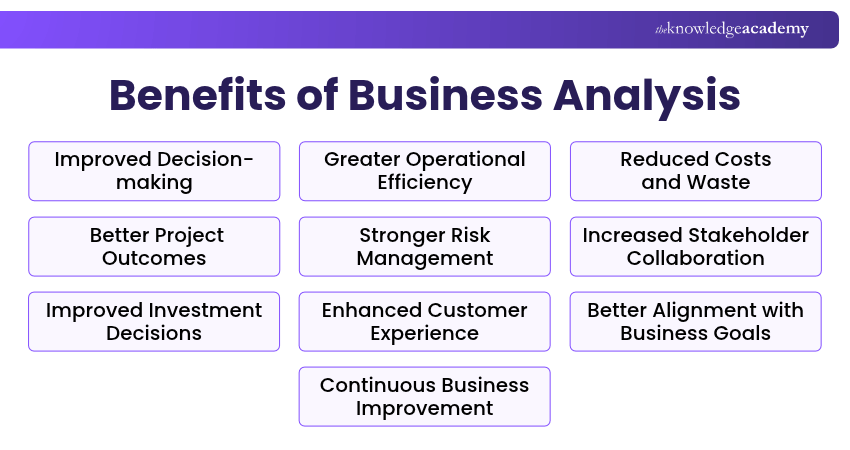
1) Improved Decision-making
Business analysis helps organisations make decisions based on relevant information rather than assumptions. By examining business requirements, operational data and stakeholder perspectives, Business Analysts identify alternatives and evaluate their potential impact.
Techniques such as SWOT (Strengths, Weaknesses, Opportunities and Threats) analysis, decision modelling, and cost-benefit analysis enable decision-makers to compare available options. This helps organisations select solutions that are more closely aligned with their priorities and available resources.
Example: A retail organisation considering expansion can analyse customer demand, operational capacity and financial implications before selecting a new location.

2) Greater Operational Efficiency
Inefficient processes can create delays, duplicated activities, and unnecessary manual work. Business analysis helps organisations examine existing workflows and identify where processes can be simplified or improved.
Process mapping, workflow analysis and value stream mapping reveal bottlenecks, unnecessary handovers and opportunities for automation. These insights help organisations improve how resources are used and how work moves between teams.
Example: A logistics company can examine its order fulfilment process to identify delays between inventory updates, picking and dispatch.
3) Reduced Costs and Waste
Business analysis supports cost optimisation by identifying activities that consume resources without delivering sufficient value. Analysts evaluate existing processes, assess alternatives and highlight opportunities to reduce unnecessary expenditure.
This can involve eliminating duplicate systems, simplifying administrative activities or preventing costly changes caused by unclear requirements. The objective is to improve cost-effectiveness without compromising essential business outcomes.
Example: A company using multiple software applications for similar activities can assess opportunities to consolidate systems and reduce maintenance costs.
Pro Tip
Consider security, accessibility, reliability and system performance alongside functional requirements. Overlooking these expectations can create complications even when a solution performs its main functions correctly.
4) Better Project Outcomes
Projects can struggle when objectives are unclear, requirements frequently change or stakeholders have different expectations. Business analysis addresses these challenges by clarifying business needs and maintaining alignment between requirements and intended outcomes.
Techniques such as requirements elicitation, prioritisation, validation and traceability help teams understand what must be delivered and why. This supports better scope management and reduces the likelihood of avoidable rework.
Example: During a software implementation, Business Analysts can help identify missing requirements before development progresses, reducing the risk of expensive changes later.
5) Stronger Risk Management
Every business initiative involves uncertainty, including operational disruptions, regulatory concerns and changing market conditions. Business analysis supports risk management by identifying potential obstacles and evaluating their impact on proposed changes.
Through risk analysis, scenario planning and stakeholder discussions, analysts help organisations consider alternative approaches. This makes it easier to prepare appropriate responses and make decisions with a clearer understanding of potential consequences.
Example: Before introducing an automated customer service system, an organisation can assess data privacy requirements, technical limitations and possible service disruptions.
6) Increased Stakeholder Collaboration
Business initiatives frequently involve departments with different objectives, priorities and expectations. Business analysis creates a structured way to bring these perspectives together and establish a shared understanding of business needs.
Interviews, workshops, stakeholder mapping and requirements reviews help identify concerns, resolve misunderstandings and clarify responsibilities. Effective collaboration also makes it easier to secure agreements on proposed changes.
Example: When introducing a new HR system, Business Analysts can coordinate input from HR, IT, finance and employees to ensure important requirements are considered.
7) Improved Investment Decisions
Business analysis helps organisations evaluate whether proposed investments are likely to generate sufficient business value. This involves considering implementation costs, expected benefits, operational impacts and potential risks.
A well-developed business case enables decision-makers to compare investment options and establish measurable success criteria. After implementation, solution evaluation helps determine whether the expected benefits have been achieved.
Example: Before investing in inventory management software, a retailer can compare implementation costs against potential reductions in stock discrepancies, processing time and lost sales.
Trainer's Insight:
Organisations often compare the costs of different solutions but overlook the consequences of maintaining existing practices. Delayed decisions, recurring service issues and missed opportunities can all carry costs. Understanding the impact of inaction provides valuable context when assessing whether a change is worthwhile.
8) Enhanced Customer Experience
Understanding customer needs is essential for developing products and services that meet expectations. Business analysis helps organisations examine customer interactions, identify frustrations and recognise opportunities to improve service delivery.
Customer journey mapping, feedback analysis and stakeholder research provide insights into how customers experience different stages of a service. These findings can guide improvements in accessibility, usability and overall customer satisfaction.
Example: An online retailer can analyse checkout abandonment to identify unnecessary steps, unclear delivery information or payment difficulties.
9) Better Alignment with Business Goals
Business analysis helps ensure that organisational initiatives contribute to defined strategic objectives. Analysts examine why a change is necessary, what outcomes are expected and how different solutions support business priorities.
By connecting business requirements with measurable goals, organisations can avoid investing in activities that offer limited strategic value. This is particularly important when multiple departments compete for funding or resources.
Example: A company focusing on customer retention can prioritise improvements to service reliability rather than investing in features that contribute little to that objective.
10) Continuous Business Improvement
Business analysis does not necessarily end when a solution is implemented. Organisations can continue evaluating performance, identifying limitations and recommending improvements as business needs evolve.
Performance indicators, stakeholder feedback and solution evaluations help determine whether changes are delivering their intended value. This enables organisations to respond to changing requirements and improve existing products, services and processes.
Example: After launching a digital banking application, a bank can monitor transaction completion rates and customer feedback to identify further usability improvements.
Turn complex business challenges into practical solutions with BCS Foundation Certificate in Business Analysis Training – Join now!
Best Practices for Effective Business Analysis
Effective business analysis requires a structured approach, clear communication and continuous collaboration with stakeholders. Following established practices helps organisations identify business needs accurately, manage requirements and deliver solutions that create value. Here are some of the best practices to follow:
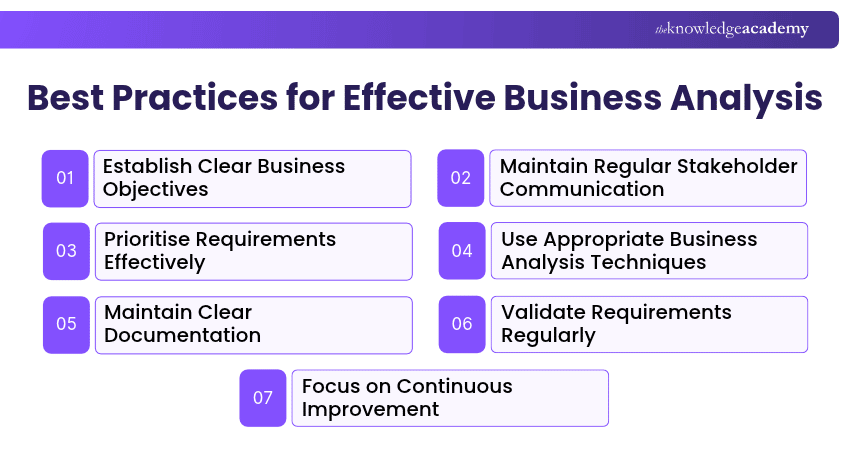
1) Establish Clear Business Objectives
Define the purpose, expected outcomes and success criteria before starting any business analysis activity. Clear objectives help teams prioritise requirements, maintain focus and ensure proposed solutions align with organisational goals.
2) Maintain Regular Stakeholder Communication
Engage stakeholders throughout the analysis process to understand their expectations and address concerns. Regular discussions, feedback sessions and progress updates help prevent misunderstandings and maintain alignment.
3) Prioritise Requirements Effectively
Assess requirements based on their importance, business value and impact on organisational goals. Focus on addressing critical needs first while considering available resources, timelines and stakeholder expectations. This helps teams manage priorities and avoid unnecessary work.
4) Use Appropriate Business Analysis Techniques
Select techniques that suit the business problem and project requirements. Tools such as SWOT analysis, process mapping, root cause analysis and stakeholder analysis can help uncover issues and evaluate potential improvements.
5) Maintain Clear Documentation
Record business requirements, assumptions, decisions and changes in a structured and accessible format. Accurate documentation supports communication, maintains traceability and helps teams avoid confusion during implementation.
6) Validate Requirements Regularly
Review requirements with stakeholders to confirm they are accurate, complete and aligned with business needs. Early validation helps identify gaps, resolve conflicting expectations and reduce unnecessary changes during development.
7) Focus on Continuous Improvement
Regularly assess business analysis practices and gather feedback from stakeholders and project teams. Use lessons learned and performance insights to refine approaches, address recurring challenges and improve future outcomes.
Manage complex business challenges and support effective change initiatives with BCS Advanced International Diploma in Business Analysis Training – Join now!

The Knowledge Academy develops accessible learning content across Project Management, IT, Cybersecurity, Data Science, Business Analysis, HR, Accounting and Finance, Leadership and Health and Safety. Its resources combine subject research with clear explanations to help professionals build practical knowledge across a wide range of disciplines.
View Detail

 If you wish to make any changes to your course, please


