


We may not have the course you’re looking for. If you enquire or give us a call on +44 1344 203999 and speak to our training experts, we may still be able to help with your training requirements.
15 Essential Transferable Skills With Examples
ByNaveena VenkatesanLast updated on: 29 October 2026
Transferable skills are abilities that can be applied to various jobs, industries and everyday situations. From communication and teamwork to problem-solving and adaptability, these skills support career development and workplace performance. Discover 15 essential skills with practical examples and ways to showcase them.

Imagine you are starting a new job or even switching industries. The skills you have gained in past roles can help you succeed, no matter where you go. These are called transferable skills, which are abilities you can apply across different roles and workplace situations.
Whether you've managed a project, resolved a customer complaint or worked with a team, you may already possess valuable skills that apply to other careers. This blog explores transferable skills, provides examples and explains how to present them to employers.
15 Essential Transferable Skills
Employers value transferable skills because they can be applied across different roles and industries. The following 15 skills can be developed through work, study and other experiences:
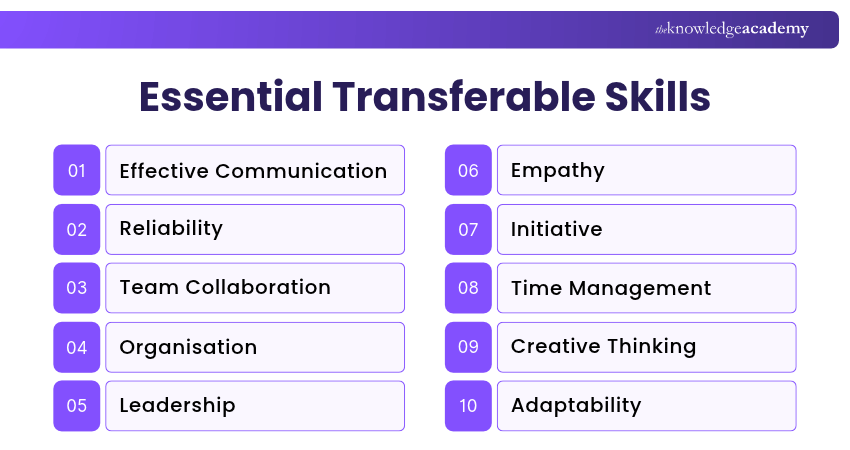
1) Effective Communication
This means sharing information clearly through talking, writing or other ways. Good communication helps you ask questions, express ideas, understand information and communicate appropriately with different audiences. At work, strong communicators can work well with others and keep projects moving forward.
Example: A retail employee who explains product information clearly to customers may apply the same communication skills when supporting clients in an office-based role.

2) Reliability
Being dependable means people can trust you to do your job well and on time. It includes being punctual, organised and responsible. Employers look for dependable employees to manage tasks and relationships effectively.
Example: Consistently completing assigned work on time demonstrates reliability that can be valuable in administration, customer service and project-related roles.
3) Team Collaboration
Team collaboration means contributing to shared work, coordinating with others and supporting a common goal. It involves listening, sharing responsibilities and addressing differences constructively.
Example: A hospitality employee who coordinates with kitchen and service staff to manage busy periods can apply similar collaboration skills when working with colleagues in another industry.
4) Organisation
Being organised means keeping your workspace and tasks in order. Organised people maintain records, coordinate activities and manage information so that work can proceed efficiently. Employers value organisational skills because they support accuracy, preparation and effective coordination.
Example: An Administrative Assistant who maintains accurate records and organises appointments can transfer these abilities to operations or project support roles.
5) Leadership
Leadership entails guiding and motivating others to reach shared goals. It includes strong communication, relationship building and dependability. Leadership is not limited to management positions. Employees can demonstrate it by taking responsibility, supporting colleagues and helping groups achieve shared objectives.
Example: A student who coordinates a group assignment can demonstrate leadership skills that may later be useful when managing workplace projects.
Pro Tip
You don't need a management title to demonstrate leadership. Taking responsibility for a task, guiding colleagues or coordinating a group activity can provide practical examples of leadership skills.
6) Empathy
Empathy means understanding others' feelings and recognising their perspectives and experiences. It helps build strong relationships and a healthy work environment. Jobs that involve working with people value empathy.
Example: A healthcare Receptionist who responds sensitively to concerned patients can apply empathy when working in customer service or employee support roles.
7) Initiative
Being self-motivated at work is valuable across different industries. Taking the initiative to tackle new tasks, share ideas and deliver high-quality work shows dedication. Employees who demonstrate initiative recognise opportunities for improvement and take appropriate action without needing detailed instructions for every task.
Example: An employee who suggests a simpler way to organise team documents demonstrates initiative that could be valuable in administrative, operational or supervisory roles.
8) Time Management
Good time management helps individuals organise their schedules, prioritise responsibilities and allocate sufficient time to important activities. It helps to allocate time based on task priority, set boundaries for focus time and consistently meet deadlines.
Example: An individual balancing coursework and part-time employment may develop time management skills that are useful when handling multiple workplace deadlines.
Work smarter, prioritise better and achieve more every day with the Time Management Training now!
9) Creative Thinking
Creative thinking is valuable in many careers. It helps you think outside the box when facing problems. Creative thinkers generate multiple ideas, explore alternatives and develop new approaches to existing challenges.
Example: A customer service employee who suggests a new way to explain frequently asked questions demonstrates creative thinking that could be applied in marketing, training or process improvement.
10) Adaptability
Adaptability means adjusting to changes and continuing to work towards goals. Employers value flexible candidates who can learn new skills quickly. Adaptable people handle changes in teams, projects or management with a positive attitude.
Example: A sales employee who learns to use a new customer relationship management system demonstrates adaptability that could be useful when moving into another customer-facing role.
11) Decision-making
Decision-making involves evaluating available information, considering alternatives and selecting an appropriate course of action. It includes analysing situations, assessing possible outcomes and taking responsibility for decisions within your role. Employers value decision-makers for their judgement and ability to make informed choices.
Example: A Team Coordinator deciding which urgent requests to address first can demonstrate decision-making skills applicable to operations and project support.
12) Problem-solving
Problem-solving skills are crucial for handling the challenges and complexities of different jobs. People with strong problem-solving abilities can identify issues, analyse their root causes and develop practical solutions.
Example: A warehouse employee who identifies a recurring stock-recording error and recommends a clearer checking process demonstrates problem-solving skills that may transfer to quality assurance or operational roles.
Turn workplace challenges into opportunities for smarter solutions with the Problem Solving Course now!
13) Active Listening
Listening skills are vital for communication and understanding others' needs and perspectives. Those with strong listening skills can focus attentively, understand information accurately and respond thoughtfully. By actively listening to colleagues, clients or stakeholders, they build trust, foster collaboration, and address issues effectively.
Example: A customer support employee who listens carefully to a complaint before clarifying the issue can transfer this skill to stakeholder engagement, sales or team coordination.
14) Project Management
Project management skills involve planning, organising, executing and overseeing projects from start to finish. Individuals with these skills can set project goals, create detailed plans, allocate resources, monitor progress and manage risks. By coordinating tasks, managing timelines and ensuring quality deliverables, they can help teams achieve agreed project objectives.
Example: A retail employee who helps coordinate a seasonal promotion by tracking stock, scheduling displays and meeting launch deadlines demonstrates project management abilities.
15) Relationship Building
Relationship-building skills involve creating and maintaining connections based on trust, mutual respect and shared interests. People with strong relationship-building skills can network effectively, form meaningful connections and develop long-term partnerships. By building rapport with colleagues, clients or stakeholders, they enhance teamwork, foster collaboration, and work towards shared goals.
Example: An employee who maintains positive relationships with suppliers can apply similar skills in customer relationship management, business development or stakeholder engagement.
How to Showcase Transferable Skills?
You can highlight your transferable skills on your CV, cover letter and during interviews. The aim is to connect your previous experiences with the responsibilities of the role you are applying for. Let's look at it below:
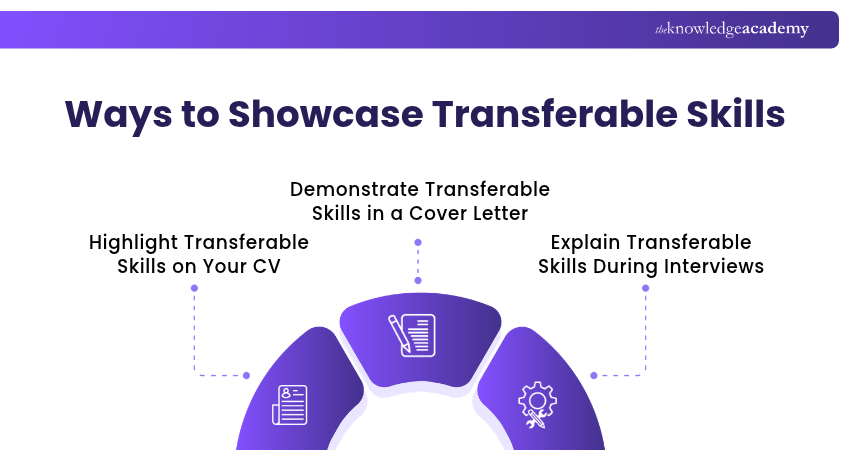
1) Highlight Transferable Skills on Your CV
On your CV, you can highlight transferable skills in several sections:
a) Professional Summary: Mention your most relevant skills and explain how they relate to your experience.
Example: "Team Leader with 7+ years of experience coordinating projects, communicating with stakeholders and supporting cross-functional teams."
b) Employment History: Instead of just listing job duties, highlight two or three accomplishments that demonstrate your transferable skills.
Example: "Coordinated a team of five employees to complete a customer service improvement project within the agreed deadline."
c) Skills Section: Include your strongest transferable skills, tailored to the job description. Look for skills mentioned under job responsibilities or requirements.
Examples include communication, problem-solving, project coordination, adaptability and time management.
2) Demonstrate Transferable Skills in a Cover Letter
In your cover letter, focus on one or two transferable skills that are highlighted in the job description. Describe how you have used these skills in past roles.
For example:
"In my previous role as a Project Coordinator, I organised team schedules, communicated with stakeholders and monitored project deadlines. These experiences helped me develop planning and collaboration skills that I can apply to this position."
Keep your examples relevant to the role and avoid repeating your CV word for word. A cover letter should explain why your experience is valuable for the position you are seeking.
3) Explain Transferable Skills During Interviews
During interviews, use specific examples to showcase your transferable skills. Instead of just telling the interviewer about your skills, share stories that show how you have successfully used them in the past.
One useful approach is the STAR method: Situation, Task, Action and Result. It provides a structure for explaining how you applied a skill in a real situation.
For example, when asked about problem-solving:
a) Situation: Our team regularly experienced delays when processing customer requests.
b) Task: I needed to identify the reason for the delays and suggest improvements.
c) Action: I reviewed the existing process, spoke with colleagues and proposed a clearer system for prioritising requests.
d) Result: The team adopted the revised process, which made responsibilities clearer and reduced unnecessary follow-up.
Lead with confidence and inspire success wherever you go with the Leadership Skills Training today!
Keep This in Mind
Transferable skills are valuable across different roles and industries, but their relevance depends on your career goals. Focus on skills that match job requirements, support them with real examples and recognise abilities gained through work, education or volunteering. Keep strengthening these skills through regular practice, feedback and new experiences.

Naveena Venkatesan is a Content Editor with 2+ years of experience in content writing, editing and linguistic quality assurance. Her research, fact-checking and editorial experience enable her to develop accurate, accessible resources across Business Skills, Human Resources, and Accounting and Finance.
View Detail

 If you wish to make any changes to your course, please


