




We may not have the course you’re looking for. If you enquire or give us a call on 01344203999 and speak to our training experts, we may still be able to help with your training requirements.
What is Brand Trust: Meaning, Importance and How to Build It
ByJames SmithLast updated on: 18 August 2026
Discover what Brand Trust means, why it matters, how to build it, and how businesses can measure and strengthen it.

Key Takeaways
1. Brand Trust develops when customers believe a brand is reliable, transparent, and capable of delivering what it promises.2. Consistent quality, honest communication, and positive customer experiences are key trust-building factors.3. Brand Trust can influence customer loyalty, recommendations, repeat purchases, and long-term relationships.4. Businesses can assess trust using customer feedback, retention behaviour, reviews, sentiment, and direct trust surveys.5. Trust can take time to build but may be damaged quickly when expectations are repeatedly unmet.
Ask yourself:
Does the brand deliver what it promises?
Does it communicate honestly?
Does it take responsibility when something goes wrong?
If the answer to these questions is consistently “yes”, customers are more likely to feel confident in that brand. This confidence forms Brand Trust, which can influence how customers perceive, choose and stay connected with a business.
This raises an important question: What is Brand Trust, and what factors shape it? Let’s explore this in detail.
What is Brand Trust?
Brand Trust represents the level of confidence customers have in a brand’s reliability, promises and actions. It develops over time through reliable products or services, transparent communication, positive customer experiences and responsible behaviour.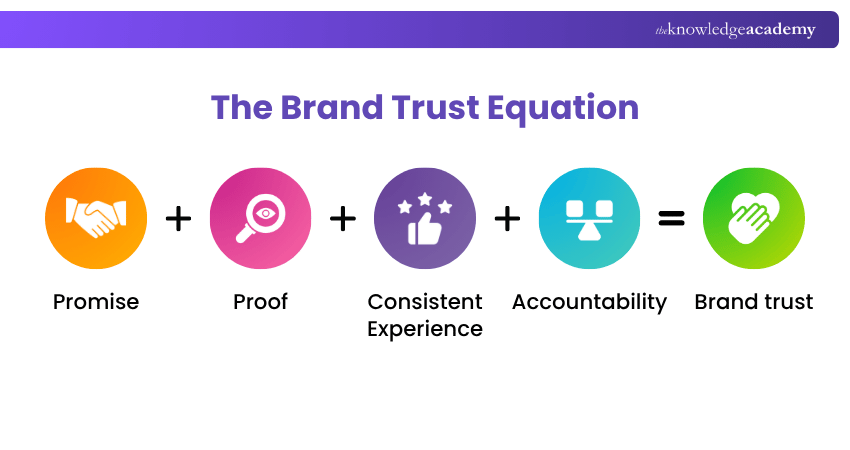
For example, imagine a company promises next-day delivery, clearly explains its return policy and quickly resolves problems when they occur. When customers repeatedly see these promises fulfilled, they become more confident in the brand.
Brand Trust is not built on what a business says alone. It strengthens when customers repeatedly see the brand’s promises reflected in their actual experiences.

Importance of Brand Trust
Here are some of the key reasons Brand Trust matters:
1) Strengthens Customer Loyalty
Customers who consistently receive reliable experiences may be more likely to develop a preference for the same brand.
Trust reduces uncertainty because customers know what to expect, making them more confident about choosing the brand again.
2) Encourages Customer Recommendations
People are generally more comfortable recommending brands when they have experienced consistent quality and dependable service.
Positive recommendations can also provide reassurance to potential customers who have not interacted with the brand before.
3) Improves Customer Retention
Customers may be less likely to switch immediately to another provider when they have confidence in an existing brand.
However, retaining trust requires brands to continue delivering satisfactory experiences rather than relying on previous success.
Strengthen customer relationships and loyalty with our Customer Retention Training – Sign up today!
4) Strengthens Brand Reputation
A brand's reputation develops from many customer experiences, opinions and interactions.
Consistent delivery, honest communication and responsible actions can contribute to a stronger perception of reliability over time.
5) Helps Brands Recover From Occasional Mistakes
Even reliable businesses can make mistakes.
Responsible data handling and clear privacy policies can strengthen customer confidence in how their information is managed.
Did You Know?
52% of consumers stopped using or purchasing from a brand following a negative experience with its products or services.
Brand Trust vs Brand Loyalty vs Brand Reputation
Brand Trust, Brand Loyalty and Brand Reputation are closely connected, but they do not mean exactly the same thing.
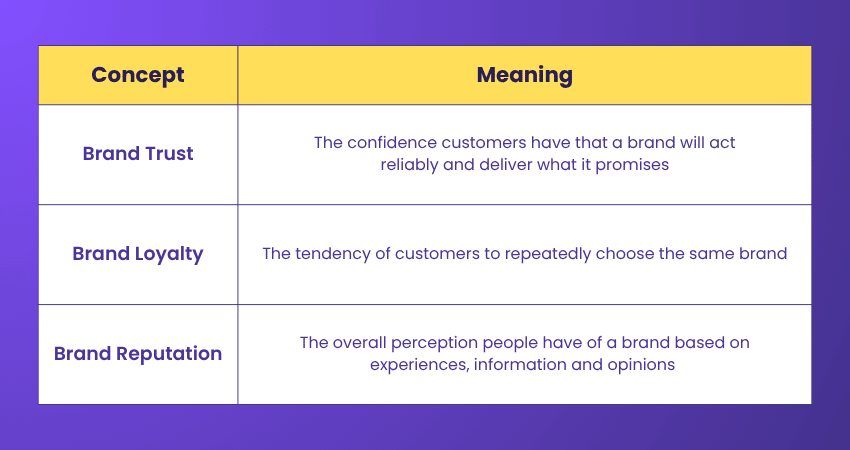
An easy way to remember the difference is:
Trust is what customers believe. Loyalty is what they repeatedly do. Reputation is how the brand is perceived.
A customer may trust a company without being completely loyal to it. Similarly, a well-known brand may have a strong reputation but still need to continually earn the trust of individual customers.
Trainer's Pro Tip
Don't chase loyalty programmes or referral incentives before trust exists. Rewards work best once customers already believe in the brand, not as a substitute for that belief.
What Builds Brand Trust?
Brand Trust rarely depends on one factor. It usually develops through a combination of experiences that influence how customers perceive a business.
1) Consistency
Customers expect a reasonably consistent experience whenever they interact with a brand. This may include product quality, service standards, website information, customer support and communication.
Consistency helps demonstrate that customers can rely on the organisation rather than receiving unpredictable experiences.
2) Transparency
Clear and honest communication can reduce uncertainty. Brands should make important information about prices, policies, services, limitations and changes easy for customers to understand.
Transparency also means avoiding claims that create expectations the business cannot realistically meet.
3) Quality
Reliable product or service quality is an important foundation of customer confidence.
When quality repeatedly falls below what customers were promised, trust can decline regardless of how strong the brand's marketing may be.
Any factor scoring 1 or 2 highlights an area that may need immediate attention. Start with the lowest scoring factor and identify one practical improvement.
4) Customer Experience
Customers engage with brands across various touchpoints, such as websites, sales teams, customer support and social media.
Helpful service, straightforward processes and responsive communication can contribute to a more trustworthy experience.
5) Security and Privacy
Customers often provide organisations with personal or financial information.
Clear privacy practices and responsible handling of customer data can help reassure customers that their information is being managed appropriately.
6) Accountability
Trust is not built by pretending mistakes never happen.
Brands can demonstrate accountability by acknowledging problems, communicating clearly, and taking reasonable steps to correct them.
Quick Self-Check: How Trustworthy Is Your Brand?
Rate your brand from 1 (needs work) to 5 (strong) on each factor below:
We deliver consistently on what we promise
We communicate openly, including when things go wrong
We act on customer feedback, not just collect it
We protect customer data and are transparent about how it's used
Our reviews and reputation reflect real customer experiences
Any factor scoring 1 or 2 highlights an area that may need immediate attention. Start with the lowest scoring factor and identify one practical improvement.
Learn to build your personal brand campaign and unique ways to launch it with our Personal Branding Course – Join now!
How to Build Brand Trust?
Building Brand Trust requires more than creating positive marketing messages. Businesses need to demonstrate reliability throughout the customer journey. Here are six practical ways to do it:
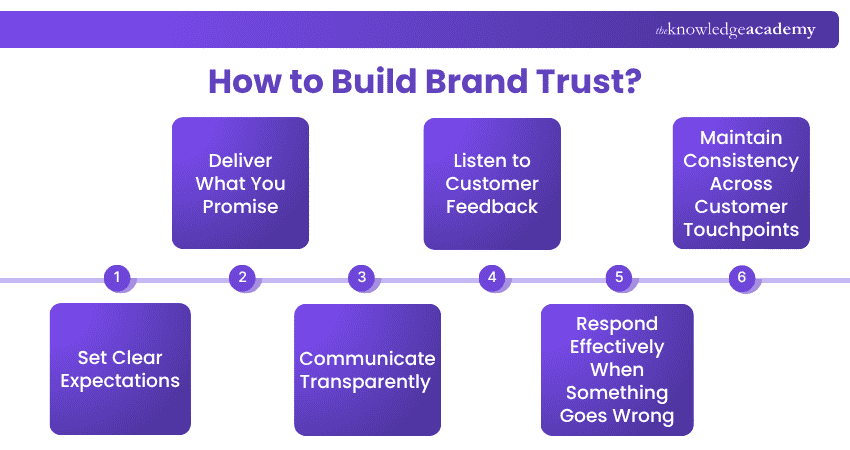
1) Set Clear Expectations
Start by clearly communicating what customers can expect from your products or services. Descriptions, prices, policies, timelines and conditions should be accurate and easy to understand.
Avoid exaggerating capabilities simply to attract attention. Short-term interest created by unrealistic promises can lead to long-term disappointment.
2) Deliver What You Promise
A brand promise becomes meaningful only when the business consistently fulfils it. If a company promises a particular service level, quality standard or delivery timeframe, the customer experience should reflect that commitment.
Trust grows when brands consistently deliver on their promises.
3) Communicate Transparently
Customers should not have to search extensively for important information.
Communicate clearly about:
a) Products and services
b) Prices and additional charges
c) Returns and refunds
d) Service changes
e) Delivery expectations
f) Privacy practices
g) Relevant limitations
Transparent communication can help customers make informed decisions and reduce misunderstandings.
4) Listen to Customer Feedback
Customer feedback can reveal where the actual experience differs from what the business believes it provides. Surveys, reviews, customer support conversations and feedback forms can help identify recurring concerns.
Collecting feedback is only the first step. Businesses should also assess it and make appropriate improvements.
5) Respond Effectively When Something Goes Wrong
The way a company responds to a problem can influence trust just as much as the original issue.
When appropriate, brands should:
1) Acknowledge the problem
2) Explain the situation clearly
3) Provide a suitable solution
4) Keep the customer informed
5) Minimise the chance of the same issue recurring
Customers may not expect perfection, but they are likely to notice whether a company takes responsibility.
6) Maintain Consistency Across Customer Touchpoints
Customers should receive a reasonably consistent message and experience across the organisation.
For example, information on the website should not contradict what customer support or sales teams communicate.
Alignment across touchpoints can reduce confusion and reinforce confidence.
How to Measure Brand Trust?
Brand Trust can be difficult to represent with a single number because it reflects customer perceptions as well as behaviour. Businesses can therefore use several indicators together.
1) Customer Trust Surveys
One of the most direct approaches is asking customers how much they trust the organisation.
Questions can explore whether customers consider the brand:
a) Reliable
b) Transparent
c) Credible
d) Consistent
e) Responsible
Tracking these responses over time can help identify changes in customer perception.
2) Customer Retention and Repeat Purchases
Customer retention and repeat purchase behaviour can provide useful supporting information.
Customers who continue choosing a brand may have confidence in the experience it provides. However, retention alone does not prove trust because customers may remain for other reasons, such as price or convenience.
3) Reviews and Customer Feedback
Reviews can reveal how customers describe their experiences in their own words.
Businesses can look for recurring themes relating to reliability, service quality, communication, honesty and problem resolution.
4) Customer Sentiment
Monitoring customer discussions across relevant channels can help organisations understand whether conversations about the brand are generally positive, negative or neutral.
The reasons behind that sentiment are particularly useful for identifying trust-related issues.
5) Complaints and Resolution Data
Businesses can track:
a) Number of complaints
b) Recurring complaint themes
c) Resolution times
d) Repeat problems
e) Customer responses after resolution
These measures can help identify weaknesses affecting customer confidence.
6) Net Promoter Score (NPS)
Net Promoter Score measures customers willingness to recommend a company, product or service. It can provide useful supporting information about customer relationships. However, NPS should not be treated as a direct measurement of Brand Trust by itself.
Combining NPS with direct trust questions, feedback and behavioural data provides a more complete picture.
Conclusion
Understanding What is Brand Trust starts with a simple principle: customers need confidence that a brand will do what it says it will do. Trust develops through consistent quality, transparent communication, reliable experiences and accountability. Businesses should therefore view Brand Trust as an ongoing relationship rather than a one-time marketing activity.
When promises and customer experiences consistently align, brands can create stronger relationships, improve their reputation and encourage long-term customer confidence.
Build stronger digital strategies and customer connections with our Digital Marketing Courses – Register now!

James Smith produces results-focused content that helps marketers plan, evaluate and improve their online activities. His writing connects channel selection, audience behaviour and performance data with measurable marketing objectives.
View Detail

 If you wish to make any changes to your course, please


