




We may not have the course you’re looking for. If you enquire or give us a call on +31 208081674 and speak to our training experts, we may still be able to help with your training requirements.
Who is a Receptionist: Types, Responsibilities, & Skills
ByAishwarya UnniLast updated on: 22 September 2026
Read this blog to learn everything about Receptionists, including the different types of Receptionists, their diverse responsibilities and essential skills. In this blog, 'Who is a Receptionist', you will discover the key attributes that make an effective Receptionist and understand their role in creating positive first impressions.

The Main Idea
1. Receptionists are often the first point of contact for visitors, clients, and callers.2. They manage calls, appointments, enquiries, and front-desk activities.3. Their duties may vary depending on the industry and organisation they work in.4. Receptionists also provide basic administrative support to help daily operations run smoothly.5. Strong communication, customer service, organisational, and technical skills are important for the role.
In the dynamic landscape of modern businesses, Receptionists play a pivotal role as an organisation's welcoming face and efficient organisers. This blog delves into the multifaceted world of ‘Who is a receptionist’, exploring their diverse responsibilities and the essential skills that empower them.
From managing communication channels to fostering positive first impressions, Receptionists are the unsung heroes who ensure the smooth functioning of offices. Join us on a journey to uncover the intricacies of what it truly means to be a receptionist, shedding light on their crucial contributions to the seamless operation of diverse workplaces.
Who is a Receptionist?
A Receptionist is a frontline administrative professional responsible for managing the front desk of an organisation. Their primary role involves greeting visitors, answering phone calls, and directing inquiries to the appropriate individuals or departments. Receptionists create the first impression of a company by providing a welcoming and organised environment.
They handle administrative tasks such as sorting and distributing mail, managing appointments, and maintaining office supplies. Effective communication and interpersonal skills are essential, as Receptionists often liaise between clients, employees, and management.

Different Types of Receptionists
Receptionists play a crucial role in various industries, and their responsibilities can vary based on the organisation's specific needs. Here are the different types of Receptionists:
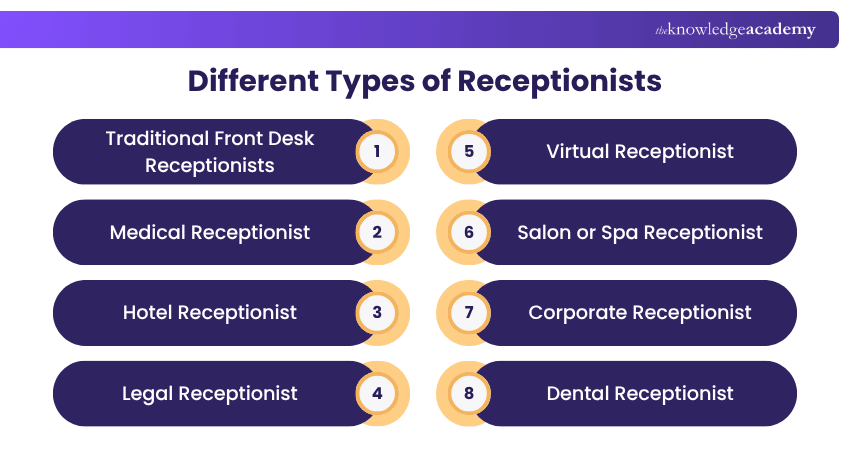
a) Traditional Front Desk Receptionists: Found in office settings, they manage phone calls, greet visitors, and handle administrative tasks.
b) Medical Receptionist: In healthcare settings, they schedule appointments, maintain patient records, and ensure a smooth patient flow.
c) Hotel Receptionist: Found in the hospitality industry, they handle guest check-ins, reservations and enquiries, and provide information about hotel services.
d) Legal Receptionist: In law firms, they manage incoming calls, schedule appointments, and assist with administrative tasks specific to legal settings.
e) Virtual Receptionist: Works remotely to answer calls, manage appointments, respond to enquiries and provide customer support on behalf of an organisation.
f) Salon or Spa Receptionist: In beauty and wellness establishments, they manage appointments, handle customer inquiries, and support overall salon operations.
g) Corporate Receptionist: Works in corporate offices, managing front-desk operations, welcoming visitors, handling calls and enquiries, coordinating meeting rooms and appointments, and providing general administrative support to ensure smooth day-to-day operations.
h) Dental Receptionist: In dental offices, they schedule appointments, manage patient records, and handle billing inquiries.
i) Educational institution Receptionist: Found in schools or universities, they assist with student inquiries, manage calls, and handle administrative tasks related to education.
j) Government Receptionist: In government offices, they manage public inquiries, schedule appointments, and provide general information about government services.
Responsibilities of a Receptionist
A Receptionist serves as the initial point of contact for visitors and callers, pivotal in creating a positive and professional first impression for an organisation. The primary responsibilities of a Receptionist are multifaceted.
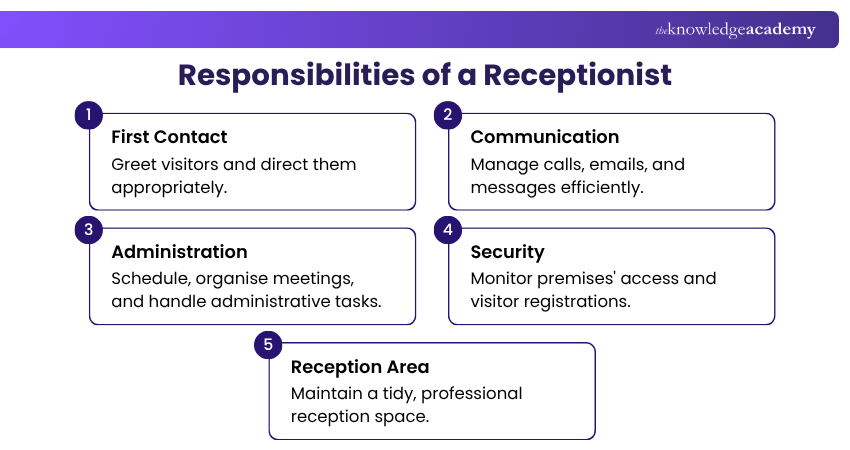
1) Firstly, they greet and welcome visitors, providing them with essential information and directing them to the appropriate personnel or department.
2) Answering and managing incoming calls is another crucial aspect, as Receptionists act as a central communication hub.
3) In addition to managing physical and virtual traffic, Receptionists handle administrative tasks. This includes managing appointments, maintaining schedules, and coordinating conference room bookings.
4) Receptionists may also receive and sort mail and packages, ensuring timely distribution to the respective recipients within the organisation.
5) Receptionists often assist with basic clerical duties, such as data entry, photocopying, and filing.
6) Furthermore, a Receptionist must stay attuned to security measures, monitoring, and granting access to individuals based on established protocols.
Exceptional communication and interpersonal skills are vital for Receptionists as they interact with individuals at all levels, from clients to employees. Overall, the role demands a blend of organisational, communication, and customer service skills to contribute effectively to the smooth operation of the office environment.
First Impression Check
A Receptionist often shapes a visitor’s first experience with an organisation through communication, professionalism, and organisation.
What Does a Receptionist do?
The following are the main duties performed by a Receptionist:
a) Frontline Communication: Receptionists serve as the frontline communication hub for an organisation. They greet visitors, clients, and employees, offering a positive and welcoming first impression.
b) Phone and Email Management: Managing incoming calls and emails is crucial to a Receptionist's role. They answer inquiries, direct calls to the appropriate personnel, and relay messages efficiently.
c) Appointment Scheduling: Receptionists often handle appointment scheduling. They manage calendars, book appointments, and notify staff of schedule changes.
d) Visitor Assistance: Receptionists guide and assist visitors to the right departments or individuals. They may issue visitor badges, provide information about the organisation, and ensure a smooth visitor experience.
e) Administrative Support: Receptionists provide administrative support by handling tasks such as data entry, filing, and maintaining office supplies. They also assist with basic bookkeeping duties.
f) Mail Handling: Sorting and distributing mail is a common responsibility. Receptionists manage incoming and outgoing mail, ensuring it reaches the correct recipients promptly.
g) Security: Receptionists often play a role in maintaining office security. They monitor access to the premises, verify the identity of visitors, and enforce security protocols.
h) Problem Solving: Receptionists need strong problem-solving skills. They address various issues, such as unexpected schedule changes, and find quick and effective solutions.
i) Multitasking: The role requires effective multitasking as Receptionists juggle various responsibilities simultaneously, from answering calls to managing visitor traffic and administrative tasks.
j) Professionalism and Etiquette: Displaying professionalism and excellent etiquette is essential. Receptionists represent the organisation, and their demeanour contributes significantly to the overall image and reputation.
k) Technology Proficiency: Receptionists often use office software, phone systems, and other technologies. Proficiency in these tools is crucial for efficient communication and task management.
l) Team Coordination: They collaborate with other administrative staff and team members to ensure seamless operations. Effective communication within the organisation is a key aspect of their role.
Skills Required for a Receptionist Position
Below is a list of basic skills and competencies you must possess to become a Receptionist and succeed in the role:
1) Typing Skills
Accurate typing and data-entry skills can help Receptionists handle emails, records, bookings and other administrative tasks efficiently.
Rapid typing allows Receptionists to streamline workflow, responding promptly to inquiries and maintaining organised records. With a focus on touch typing, Receptionists can easily navigate their responsibilities, contributing to the office's overall efficiency.
2) Technical Skills
Receptionists require a range of technical skills to navigate modern office environments. Familiarity with office software, phone systems, and other technical tools is essential. Receptionists often use software for scheduling, email communication, and data entry.
Proficiency in these tools ensures the smooth operation of daily tasks, contributing to a well-functioning office. Additionally, technical skills extend to managing office equipment, troubleshooting basic issues, and adapting to new technologies as they emerge. A Receptionist's ability to leverage technical tools enhances productivity and effectiveness in supporting the organisation's daily operations.
3) Customer Service
Customer service skills are paramount for a Receptionist, as they are the first point of contact for visitors and callers. A friendly, helpful demeanour creates a positive experience for individuals interacting with the organisation. Receptionists with strong customer service skills can effectively address inquiries, provide information, and assist visitors with a welcoming attitude.
Moreover, clear communication, active listening, and a customer-centric approach contribute to a positive and professional atmosphere at the front desk. By fostering positive interactions, Receptionists play a crucial role in shaping the overall impression of the organisation, which is key to advancing in Receptionist careers.
Small Detail, Big Impact
Remembering a visitor’s name, giving clear directions, or keeping the reception area organised can significantly improve the overall experience.
4) Interpersonal Skills
Interpersonal skills are essential for Receptionists who regularly interact with diverse people, including visitors, clients, and colleagues. Effective interpersonal skills contribute to successful communication, creating a welcoming environment at the front desk. Receptionists with strong interpersonal skills can navigate various personalities, build rapport, and professionally handle inquiries.
Clear communication, empathy, and adaptability are key to effective interpersonal interactions. Receptionists who excel in this area contribute to a positive workplace atmosphere where individuals feel valued and well-assisted at the first point of contact.
5) Organisational Skills
Organisational skills help Receptionists manage appointments, schedules, visitor records, correspondence, and other administrative tasks efficiently. Since they often handle multiple responsibilities at once, staying organised helps prevent delays, missed appointments, and misplaced information.
Strong organisational abilities also enable Receptionists to prioritise tasks, maintain accurate records, and keep front-desk operations running smoothly, even during busy periods.
Acquire essential skills and strategies with Administrative Assistant Training to shine in the dynamic world of administrative support!

Aishwarya Unni is a Copywriter with 2+ years of experience in reporting, web content, blogs, email marketing, and case studies. Her journalism background, combined with her research and writing experience across Business Skills and Human Resources, helps her create clear, engaging content for different audiences.
View Detail

 If you wish to make any changes to your course, please


