




We may not have the course you’re looking for. If you enquire or give us a call on 01344203999 and speak to our training experts, we may still be able to help with your training requirements.
4 Types of Public Speaking: A Brief Guide
ByShristi RoyLast updated on: 02 October 2026
Explore the main types of public speaking and understand how different speaking approaches can help you inform, influence, engage or inspire an audience effectively.

Public speaking is about connecting and leaving an impact. Whether you are addressing a packed auditorium or a small team meeting, the way you speak shapes the way you are heard. This is why public speeches come in many forms. The types of public speaking have their own rhythm and purpose suited to diverse listener types.
In this blog, we’ll explore the four main types of public speaking and how exploring them can transform your words into powerful tools of influence. So read on, strengthen your oratory skills and make it your top tool for lasting success!
What is Public Speaking?
Public speaking is the act of delivering a message to an audience with the aim of informing, persuading, entertaining or inspiring them. It can take place in various settings, from business presentations and conferences to classrooms, ceremonies and community events. Good public speaking requires a clear purpose, well-structured content, audience awareness and confident delivery.
Skills such as vocal clarity, body language, eye contact and audience engagement can help speakers communicate their ideas more effectively. The approach a speaker uses largely depends on their intended outcome.

Four Main Types of Public Speaking
Different speeches have different objectives. A lecture designed to explain scientific research, for example, serves a very different purpose from a sales presentation intended to influence a purchasing decision. Let's explore the four types of public speaking in detail:
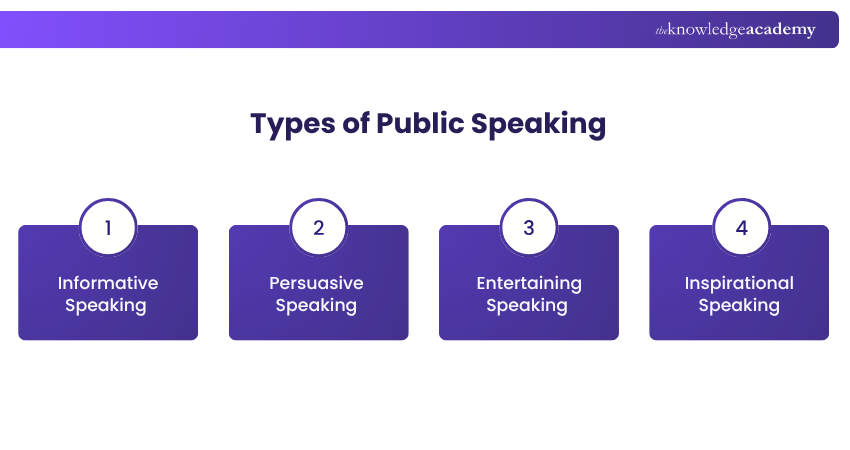
1) Informative Speaking
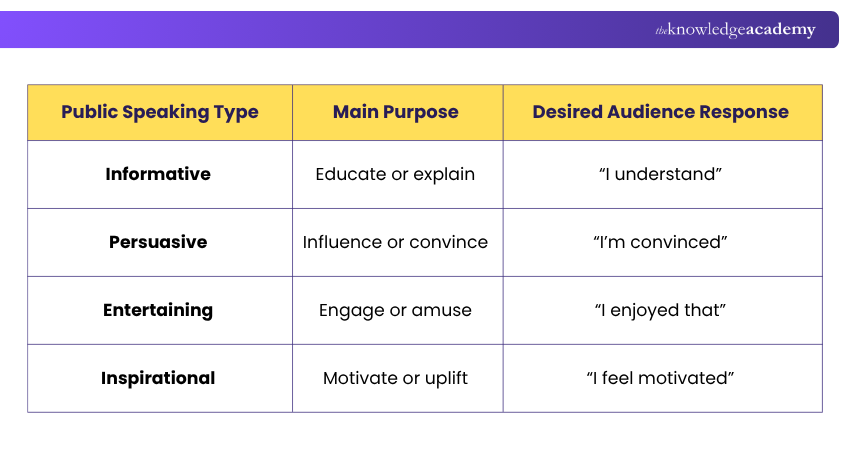
Informative speaking aims to educate an audience and improve their understanding of a particular topic. The speaker shares facts, explanations, insights or ideas in a structured and accessible way.
Effective informative speaking requires careful research and preparation. Information should be accurate and relevant, while complex concepts should be presented in a way the intended audience can understand.
Some important elements include:
a) Clear Structure: Organise information into a logical introduction, main body and conclusion.
b) Reliable Evidence: Support important points with appropriate facts, examples or evidence.
c) Simple Language: Explain ideas clearly and avoid unnecessary technical language.
d) Visual Support: Use charts, images or slides when they genuinely improve understanding.
e) Audience Engagement: Use examples, questions or activities where appropriate.
f) Confident Delivery: Maintain an appropriate pace, clear voice and suitable body language.
Examples of Informative Speaking
a) A scientist presenting research findings at a conference
b) A university professor delivering a lecture
c) A manager explaining a new workplace process
d) A professional conducting an educational workshop
Lectures, presentations, demonstrations and workshops can all serve informative purposes when their primary goal is sharing knowledge
Trainer's Pro Tip
Don't try to include everything you know about a subject. Identify what your audience genuinely needs to understand and make those points as clear as possible.
2) Persuasive Speaking
Persuasive speaking aims to influence an audience's beliefs, opinions, decisions or actions. Instead of simply explaining a subject, the speaker builds a case for a particular viewpoint or outcome.
The speaker may combine evidence, logical reasoning, examples and emotional appeals to make the message convincing. Understanding the audience's needs, values and existing beliefs can also help the speaker tailor the argument more effectively.
Important elements of persuasive speaking include:
a) Clear Objective: Know exactly what you want listeners to think or do.
b) Audience Awareness: Understand their concerns, interests and expectations.
c) Supporting Evidence: Use relevant facts and examples to strengthen your argument.
d) Logical Reasoning: Connect your evidence clearly to your conclusions.
e) Emotional Connection: Use appropriate stories or examples that resonate with listeners.
f) Call to Action: Clearly communicate what you want the audience to do next.
Examples of Persuasive Speaking
a) A sales professional encouraging a client to purchase a service
b) A politician seeking support for a policy
c) An employee proposing a new workplace initiative
d) An advocate encouraging people to support a cause
Persuasive speeches often end with a clear desired outcome or call to action so that listeners understand what the speaker wants them to consider or do.
Great communication opens doors and great influencing skills keep them open. Enhance them with our Communication and Influencing Skill Course - Sign up now!
3) Entertaining Speaking
Entertaining speaking primarily aims to engage, amuse or create an enjoyable experience for listeners. It may still communicate a message, but audience enjoyment and engagement are central to the speech.
Storytelling, interesting observations, expressive delivery and audience interaction can all make an entertaining speech more memorable. Humour can also be useful, although an entertaining speech does not necessarily need to be comedic.
Key elements include:
a) Audience Awareness: Match the content to the audience and occasion.
b) Engaging Content: Choose relatable or interesting material.
c) Storytelling: Use narratives to maintain interest.
d) Expressive Delivery: Use vocal variety, gestures and facial expressions appropriately.
e) Audience Interaction: Encourage participation when it suits the setting.
f) Adaptability: Respond to audience reactions and adjust where necessary.
Examples of Entertaining Speaking
a) A best man or maid of honour delivering a wedding speech
b) An after-dinner speaker entertaining guests
c) A host addressing attendees at an event
d) A speaker sharing humorous or engaging stories
Wedding speeches and after-dinner talks are particularly clear examples because their primary purpose is often to create an enjoyable experience for listeners.
Quick Tip
Entertaining does not simply mean being funny. An interesting story, surprising observation or engaging delivery can hold attention without turning your speech into a comedy routine.
4) Inspirational Speaking
Inspirational speaking aims to motivate, encourage and uplift an audience. Speakers often seek to create an emotional connection that encourages listeners to believe in an idea, pursue a goal or approach challenges with renewed motivation.
Personal experiences and compelling stories are frequently used to demonstrate resilience, achievement or personal growth. Authenticity is especially important because audiences are more likely to connect with a message that feels genuine and relatable.
Important elements include:
a) Audience Connection: Relate the message to listeners' goals or challenges.
b) Authenticity: Communicate sincerely rather than relying on exaggerated language.
c) Storytelling: Use meaningful experiences and narratives.
d) Emotional Appeal: Create an appropriate emotional connection.
e) Motivational Techniques: Encourage confidence, perseverance or optimism.
f) Engaging Delivery: Use vocal variety, pauses, gestures and eye contact effectively.
Trainer's Pro Tip
Authenticity can be more powerful than dramatic language. Use meaningful experiences that allow listeners to connect your message with their own ambitions or challenges.
Examples of Inspirational Speaking
a) A commencement speaker encouraging graduates
b) A leader motivating employees through a challenging period
c) A speaker sharing how they overcame a significant challenge
d) A charity speaker inspiring people to support a meaningful cause
Tips for Effective Public Speaking
Regardless of the type of public speaking you choose, several fundamental techniques can help make your speech clearer and more engaging. Below are some of the tips to enrich your public speaking expertise:
1) Define Your Purpose: Decide what you want the audience to know, feel or do after listening. A clear objective helps you decide what information belongs in your speech.
2) Understand Your Audience: Consider their knowledge, expectations, interests and needs. Adjust your vocabulary, examples and level of detail accordingly.
3) Create a Clear Structure: Give your speech a logical beginning, middle and end. Introduce the topic, develop your key points and finish with a clear conclusion.
4) Use Relevant Supporting Material: Evidence, examples, stories, statistics and visual aids can strengthen your message when they directly support its purpose.
5) Focus on Your Delivery: Speak clearly and maintain an appropriate pace. Use eye contact, gestures, pauses and vocal variety to emphasise important ideas and maintain attention.
6) Practise and Seek Feedback: Practising aloud helps you become familiar with your speech and identify awkward wording or timing issues. Constructive feedback can also reveal areas that may need improvement.
Quick Public Speaking Checklist
Before delivering your speech, check:
□ Purpose: What should my audience know, feel or do?□ Audience: Who am I speaking to?□ Message: Is my central point clear?□ Structure: Does the speech flow logically?□ Evidence: Are my examples and supporting points relevant?□ Engagement: How will I maintain attention?□ Delivery: Are my tone, pace and body language suitable?□ Practice: Have I rehearsed aloud?
Checking these elements helps keep your speech clear, engaging and audience-focused while improving confidence and delivery.
Communicate effectively in any situation with confidence and professionalism. Sign up for our Communication Skills Courses now!

Shristi Roy is a Content Writer with experience in journalism, article writing and web content development. Her experience researching and writing about Business Skills and Accounting and Finance enables her to communicate specialised information through clear, engaging narratives.
View Detail

 If you wish to make any changes to your course, please


