


 Top Rated Course

We may not have the course you’re looking for. If you enquire or give us a call on 01344203999 and speak to our training experts, we may still be able to help with your training requirements.
What are Short-Term Goals and How to Plan and Achieve Them?
The Knowledge Academy 16 July 2026Short-term Goals refer to specific, achievable objectives set to be completed soon, typically within days, weeks, or months, to support long-term success. They help break down larger goals into manageable pieces. They often focus on immediate actions, whether in personal development, career advancement, or other areas.

Training Outcomes Within Your Budget!
We ensure quality, budget-alignment, and timely delivery by our expert instructors.
Table of Contents

Dreams don’t happen overnight; they grow one step at a time. If your big goals feel distant or overwhelming, it’s not because they’re impossible; they just need a clearer path. That’s where Short-term Goals come in. Think of them as small, focused wins that bring your long-term vision within reach.
Short-term Goals give you structure, momentum, and the satisfaction of visible progress. In this blog, we’ll uncover what they are, why they matter, and how you can plan and achieve them with confidence. Let’s get started and turn those dreams into doable steps!
What is a Short-term Goal?
“A Short-term Goal is a specific objective you plan to accomplish in the near future. It typically spans a few days, weeks or months. These goals give you direction and momentum, helping you focus your energy on immediate priorities. They can serve as practical steps toward bigger ambitions by breaking big dreams into smaller, manageable actions.
Short-term Goals aren’t always tied to long-term plans. They can also be used to address smaller projects or personal interests. Whether it’s completing a work task, learning a new skill, or improving a habit, these goals offer quick wins that build confidence and motivation.

What are the Benefits of Setting Short-term Goals?
Short-term Goals are the building blocks of bigger ambitions. They don’t replace long-term objectives. They simply create a clear, achievable path toward them. By setting and pursuing Short-term Goals, you can:
1) Take immediate action and see what’s possible today
2) Receive quick feedback on your progress
3) Build momentum and start sooner
4) Establish realistic deadlines
5) Organise, manage, and prioritise tasks effectively
How to Plan and Achieve Your Goals?
There are countless ways to set and reach short-term goals. After all, success comes from self-awareness and adaptability, as well as a willingness to embrace failure and learn from it. Here are practical strategies to help you create meaningful Short-term Goals:

1) Visualise the End Result
Start by identifying what you want to accomplish and picture the end result. Examine if it is a small habit shift, a big career move or something in between. Your Short-term Goals must connect to your long-term dreams. Tools like vision boards or manifestation journals can keep your aspirations front and centre. Make visualisation part of your daily routine.
2) Plan Backwards
Once you decide on your target, map out the steps you'll need to reach it. Think of Short-term Goals as the ideal stepping stones leading you forward. Some goals may need to be completed before others, such as passing an exam before finishing a course. Treat each goal as part of a chain pulling you toward success.
3) Apply the SMART Method
SMART goals are as follows:
1) Specific: What do you want to achieve?
2) Measurable: How will you track success?
3) Attainable: Can you realistically achieve it with your current resources?
4) Relevant: Does it align with your values and ambitions?
5) Time-bound: Is there a clear deadline?
4) Process vs Outcome Goals
Outcome goals are binary. This means you either achieve them or you don’t. While they are helpful for measuring results, they can feel overwhelming. On the other hand, process goals focus on building habits that move you forward. For example: “I will write 500 words every day to improve my skills for writing long fiction.” This approach makes progress steady and achievable.
5) Start with Small Steps
Overloading yourself can result in burnout fairly quickly. Just as overexercising requires recovery, taking on too much in life can set you back. So start with smaller, manageable tasks that can build momentum. For example, boosting your discipline starts with focusing on simple tasks, as you gradually work toward bigger challenges.
6) Track Your Progress
Monitoring your progress keeps you accountable. You can use goal-tracking apps, or you can stick to good old pen and paper. Journals are especially powerful for reflecting on achievements, setbacks and the lessons learned. Regular reviews will help you adjust your approach when needed.
7) Reward Yourself
It's vital that you celebrate your wins, big or small. Build a reward system that gives you something to look forward to. It could be a treat, a break or time spent on something you enjoy. Rewards go a long way to reinforce motivation and make the journey more enjoyable.
8) Schedule Your Goals
It's important that you carve out some dedicated time to work on your milestones. Block it in your calendar, free from distractions. It could be 20 minutes of daily reading or hours set aside for personal projects. Scheduling is the key to building consistency, turning working on goals into a habit.
Stop chasing the clock and learn how to lead it with Time Management strategies. Sign up for our Time Management Training now!
How Short-term Goals can Support You at Work?
Short-term Goals are proven tools for career growth. Be it team projects or personal development, they provide structure and measurable progress. Here’s how they can elevate your work life:
1) Team Goals: Clear, short-term objectives keep everyone aligned and accountable.
2) Productivity Goals: Milestones can help refine the workflows and showcase reliability.
3) Skill Goals: Taking small steps makes learning new abilities manageable. This builds stronger leadership and expertise.
4) Job search Goals: Setting specific targets like applying to five roles weekly or connecting with professionals online helps maintain momentum and keeps motivation high.
Examples of Short-term Career Goals
Whether you’re improving your career or strengthening connections, these goals act as stepping stones toward long-term success. Below are examples to inspire both your professional and personal journey:
1) Professional Short-term Goals Examples
1) Lead the upcoming monthly project review from start to finish.
2) Earn certification in a collaboration tool within the next two months.
3) Improve customer satisfaction scores by three points this quarter.
4) Publish four LinkedIn posts per week for the next six weeks.
5) Arrange two networking coffee chats this month.
6) Call 30 new leads over the next quarter.
7) Wrap up your workday by 6:00 PM three times this week.
8) Refresh your portfolio with updated projects before next month ends.
2) Personal Short-term Goals Examples
1) Save 15% of your salary for the next two months.
2) Spend 15 minutes daily exploring a new hobby like sketching or baking.
3) Read one fiction and one non-fiction book this month.
4) Cut daily screen time by 20 minutes this week.
5) Track expenses for two weeks to find saving opportunities.
6) Call or message a friend twice a week this month.
7) Go for a 20-minute walk every morning starting next week.
8) Dedicate 10 minutes daily to practising a new language for 45 days.
9) Journal once a week, focusing on gratitude and personal growth.
3) Workplace Short-term Goals Examples
1) Declutter your inbox and set up filters within the next three days.
2) Attend an online webinar on time management within two weeks.
3) Create a checklist template for weekly tasks by this Friday.
4) Automate two routine tasks this month to save time.
5) Share a short project update at the next team meeting.
6) Shadow a colleague for half a day to learn a new skill.
7) Provide constructive feedback on two team projects this week.
8) Research and sign up for an online skills course within 10 days.
Cultivate the mindset of the great strategic thinkers with our in-depth Strategic Planning and Thinking Course – Sign up today!
Difference Between Short-term Goals and Long-term Goals
Here are the key differences between Short-term Goals and long-term goals:
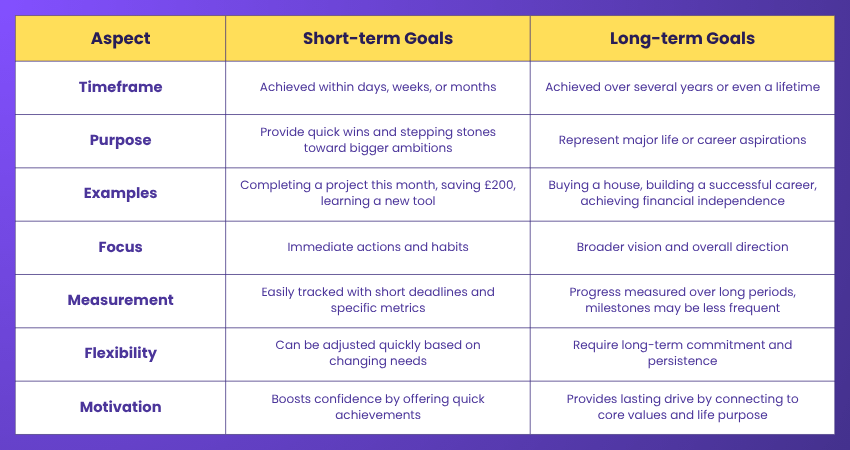
Here are the key differences:
1) Timeframe
Short-term goals are designed to be achieved within a relatively brief period, ranging from a few days to several months. They focus on immediate priorities and help maintain consistent progress. In contrast, long-term goals extend over months or even years and require sustained commitment, patience, and strategic planning to accomplish.
2) Purpose
The purpose of short-term goals is to break down larger ambitions into smaller, manageable actions that lead to steady progress. They act as stepping stones toward a bigger objective. Long-term goals, on the other hand, define the ultimate direction or vision you want to achieve, serving as the foundation for all short-term planning.
3) Focus
Short-term goals concentrate on immediate actions and quick outcomes. They keep attention on specific tasks that yield visible results. Long-term goals, however, focus on the broader picture, encouraging individuals to think strategically about growth, future achievements, and long-lasting impact rather than instant success.
4) Measurement
Short-term goals are measurable through frequent check-ins and clear milestones. Progress can be tracked easily, allowing adjustments when necessary. In contrast, long-term goals require more comprehensive evaluation over time, focusing on cumulative results and overall advancement rather than daily performance metrics.
5) Flexibility
Short-term goals are typically more flexible, allowing for quick adjustments based on new challenges or opportunities. Their short duration makes it easier to pivot or refine strategies. In contrast, long-term goals are more stable and structured, though they may evolve over time due to significant life or business changes.
6) Motivation
Short-term goals offer immediate motivation by delivering quick wins and a sense of accomplishment. They help build momentum and maintain enthusiasm. On the other hand, long-term goals provide deeper motivation by connecting daily actions to a larger purpose, giving individuals a vision to strive for and a reason to persist through challenges.
Conclusion
Short-term Goals may feel small, but they create the momentum that will get you to your long-term goals. Each of these small milestones builds confidence and discipline and keeps your bigger dreams within reach. It's the way to turn intentions into actions and actions into achievements. Your future self will thank you for taking every step.
Become the best version of you with our diverse Personal Development Courses - Register now!
Frequently Asked Questions
What is the Best Way to Stay Consistent With Short-term Goals?

Consistency comes from planning and tracking your progress. Break larger tasks into smaller actions, set reminders, celebrate small wins, and review your progress regularly to stay motivated and on track.
What is Short-term Motivation?
Short-term motivation refers to the drive to take immediate action toward achieving near-term goals. It often comes from small wins or clear deadlines. This motivation can help you stay focused, build momentum and maintain consistency while working toward larger ambitions.

The Knowledge Academy


Global Training Provider
The Knowledge Academy is a world-leading provider of professional training courses, offering globally recognised qualifications across a wide range of subjects. With expert trainers, up-to-date course material, and flexible learning options, we aim to empower professionals and organisations to achieve their goals through continuous learning.


 If you wish to make any changes to your course, please


