




We may not have the course you’re looking for. If you enquire or give us a call on 01344203999 and speak to our training experts, we may still be able to help with your training requirements.
What is Time Management: An Ultimate Guide
ByShristi RoyLast updated on: 05 October 2026
Time management is the practice of planning and organising tasks to use time wisely, improving your productivity, efficiency, and overall effectiveness. It also helps reduce stress, prioritise key goals, maintain focus, and create a balanced workflow that supports long-term personal and professional success.

Quick Snapshot
1. Time management involves planning, prioritising, and organising tasks to use time effectively.2. Setting goals, creating schedules, and tracking time can improve daily organisation.3. Common challenges include procrastination, distractions, heavy workloads, and multitasking.4. Approaches like the Pomodoro technique, time blocking, and the two-minute rule can help you structure tasks and stay focused.5. Effective time management can help improve productivity, reduce pressure, and support work-life balance.
Time is a finite resource, and how we manage it can greatly impact our professional and personal lives. Time management is an essential skill that helps us use our limited time better, work toward our goals, and maintain a healthy work-life balance.
In this blog, we will explore what time management is, along with various techniques and tips for managing time effectively. So, read on!
What is Time Management?
Before we delve deeper into the blog, we will first define time management. Time management is the technique of planning, organising, and prioritising tasks and activities to make the best use of your time.
It consists of setting goals, creating schedules, and making conscious choices about how to assign your time to various tasks and responsibilities. Effective time management can help you use your time more efficiently, reduce stress, improve productivity, and maintain a better work-life balance.

Key Components of Time Management
Now that we have defined time management, let’s look at its core components and how they support better planning and organisation.
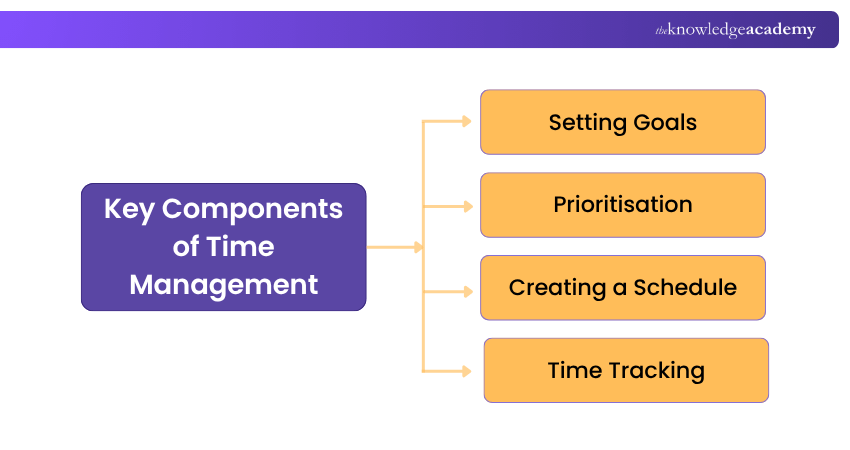
1) Setting Goals
Setting clear and measurable goals gives your tasks direction and purpose. Specific, time-bound objectives help you focus on priorities and track progress effectively, ensuring each activity contributes to your larger aims.
2) Prioritisation
Prioritisation helps identify which tasks matter most. Using tools like the Eisenhower matrix, you can categorise tasks by urgency and importance to focus on high-impact activities and manage time wisely.
3) Creating a Schedule
A structured schedule can help you organise your time around important tasks. Include buffer time for delays and keep your plan realistic, balancing productivity with flexibility throughout your day.
4) Time Tracking
Monitoring how you use your time can highlight patterns and areas where time is being lost. By reviewing time data or using tracking tools, you can align daily activities with goals and continuously improve time management practices.
Benefits of Time Management
Effective time management can improve productivity, focus, and overall organisation. It can also support better performance, reduce stress, and help individuals and teams use their time more effectively. Here are its benefits:
a) Happier Employees: Better time allocation can help reduce workload pressure and support greater job satisfaction.
b) Improved Creativity: A balanced schedule can give employees more time and mental space to think clearly and develop new ideas.
c) Lower Absenteeism: Better workload management can help reduce stress-related time off and support employee well-being.
d) Higher Retention: Manageable workloads can support employee satisfaction and may contribute to stronger retention.
e) Increased Productivity: Efficient time use can help teams focus on key priorities and complete tasks more effectively.
f) Better Organisation: Effective time management practices can contribute to a more organised and supportive workplace.
Build stronger prioritisation and goal-setting skills with our Motivation and Goal Setting Training. Join now!
Challenges of Time Management
Time management challenges can be divided into two main categories: internal barriers and external barriers. Understanding these can help individuals identify what affects their productivity and how to address these challenges.
Internal Barriers
a) Lack of Self-control: Distractions and impulsive actions reduce focus and goal achievement.
b) Procrastination: Delaying tasks leads to stress and reactive decision-making.
c) Lack of Motivation: Without a clear sense of purpose, individuals may find it harder to prioritise tasks effectively.
d) Anxiety: Feelings of anxiety can make it harder to concentrate, organise tasks, and manage time effectively.
e) People-pleasing: Trying to meet everyone’s expectations can divide your attention and make it harder to manage priorities effectively.
f) Multitasking: Handling several tasks at once can reduce focus, efficiency, and accuracy.
External Barriers
a) Heavy Workload: An excessive workload can divide attention, reduce concentration, and affect the overall quality of completed work.
b) Job Constraints: Workplace structures, policies, or processes may limit flexibility and make it harder to manage time efficiently.
c) Insufficient Resources: Limited access to the right tools, information, or support can delay tasks and make time management more difficult.
d) Distractions: Factors such as social media, noise, interruptions, or unexpected events can make it harder to maintain focus.
While external barriers are often beyond your control, you can manage their impact through greater awareness, clear prioritisation, and flexible planning.
Time Management Techniques
The following are some commonly used time management techniques that can help improve focus, organisation, and productivity.
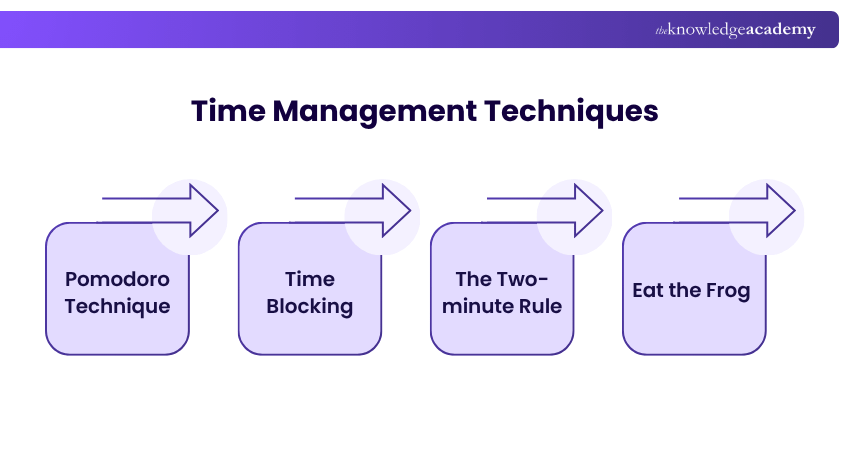
1) Pomodoro Technique
The Pomodoro technique promotes focused work through short, timed sessions. You work for 25 minutes, followed by a 5-minute break. After four sessions, take a longer rest of 15–30 minutes. This cycle can help sustain attention, manage fatigue, and support productivity by balancing focus and rest.
2) Time Blocking
Time blocking divides your day into dedicated segments for specific tasks or activities. Assign high-priority work during your most productive hours, and include breaks to avoid burnout. This method can help prevent task overlap, encourage discipline, and support consistent progress towards goals.
Pro Tip
Schedule demanding tasks during the hours when your energy and concentration are usually highest, and use lower-energy periods for routine or administrative work.
3) The Two-minute Rule
The two-minute rule encourages completing quick tasks immediately if they take two minutes or less. This approach can help clear small tasks before they pile up, keep your to-do list manageable, and reduce unnecessary delays.
4) Eat the Frog
‘Eat the frog’ means tackling your toughest or most important task first. Finishing it early can create a sense of progress and make the remaining tasks feel easier to approach. This approach can help reduce stress, build confidence, and keep high-priority tasks on track.
Tips for Successful Time Management
Effective time management can support goal achievement and help maintain balance in daily life. By applying practical techniques, you can make better use of your time. Here are some tips to help you manage it more effectively:
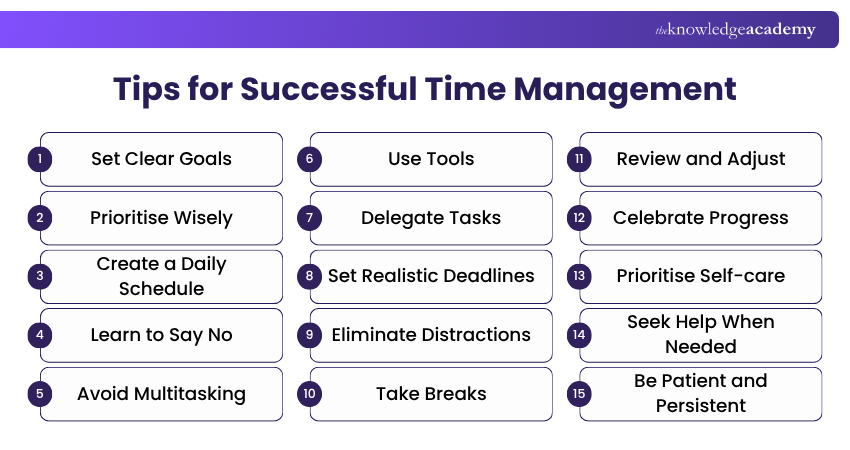
1) Set Clear Goals: Begin with well-defined, measurable objectives to give purpose to your tasks.
2) Prioritise Wisely: Identify your most important and time-sensitive tasks before starting your day.
3) Create a Daily Schedule: Plan your day realistically, allocating time blocks for various activities, including breaks.
4) Learn to Say No: Avoid overloading yourself by declining tasks that can wait or are beyond your capacity.
5) Avoid Multitasking: Focus on a single task at a time to improve concentration, efficiency, and work quality.
6) Use Tools: Use calendars, task lists, and other planning tools to organise your work and deadlines.
7) Delegate Tasks: Share responsibilities with team members when appropriate to free up your time.
8) Set Realistic Deadlines: Set achievable timeframes for your tasks to reduce unnecessary pressure and manage expectations better.
9) Eliminate Distractions: Identify and mitigate common interruptions in your workspace for focused work.
10) Take Breaks: Regular pauses can help refresh your mind and support focus throughout the day.
11) Review and Adjust: Periodically review how you manage your time and adapt your approach to changing circumstances.
12) Celebrate Progress: Acknowledge and reward your accomplishments to stay motivated.
13) Prioritise Self-care: Make time for adequate sleep, relaxation and exercise to support your overall well-being.
14) Seek Help When Needed: If you struggle with time management, seek guidance from a mentor, manager, or relevant professional.
15) Be Patient and Persistent: Remember that improving your time management is an ongoing process that requires patience, consistency, and adaptability.
Build practical skills to manage your time more effectively and improve productivity with our Productivity and Time Management Course. Join today!

Shristi Roy is a Content Writer with experience in journalism, article writing and web content development. Her experience researching and writing about Business Skills and Accounting and Finance enables her to communicate specialised information through clear, engaging narratives.
View Detail

 If you wish to make any changes to your course, please


