


 Top Rated Course

We may not have the course you’re looking for. If you enquire or give us a call on 01344203999 and speak to our training experts, we may still be able to help with your training requirements.
What is SEM: A Comprehensive Guide to Search Engine Marketing
James Smith 15 July 2026Search Engine Marketing in Digital Marketing is a dynamic strategy that leverages paid advertising to boost online visibility. This blog explores the essence of SEM, its importance and benefits. Dissect the power of SEM and learn how it can boost your online presence. Find out What is SEM and how to get started. Read along to learn more!

Training Outcomes Within Your Budget!
We ensure quality, budget-alignment, and timely delivery by our expert instructors.
Table of Contents

In today’s digital race, showing up first matters and that’s where SEM comes in. Search Engine Marketing is the paid side of search visibility, putting your business in front of the right eyes at the right time. Unlike SEO, it delivers instant results through paid search ads.
SEM helps your business stand out when it matters most: the very moment someone is searching for what you offer. This blog breaks down What is Search Engine Marketing, how it works, and why it’s one of the smartest marketing moves you can make. Ready to bid your way to the top? Let’s dive in.
Table of Contents
1) What is Search Engine Marketing (SEM)?
2) Importance of SEM
3) How SEM Works?
4) Creating an SEM Strategy
5) How can A/B Testing Complement SEM?
6) SEO vs SEM
7) What is an Example of a SEM?
8) What are the Three Types of Search Engine Marketing?
9) Conclusion
What is Search Engine Marketing (SEM)?
Search Engine Marketing (SEM) is a digital marketing strategy used to increase a website’s visibility on search engine results pages (SERPs) through paid advertising. Unlike SEO, which focuses on improving organic rankings over time, SEM allows businesses to appear instantly in top search results by bidding on specific keywords and creating targeted ads.
When someone searches for a product or service using a keyword you’ve bid on, your ad appears at the top or bottom of the search results, marked as sponsored or ad. If a user clicks the ad, you're charged a fee, known as pay-per-click (PPC).
Key Areas:
1) SEM includes platforms like Google Ads, Bing Ads, and YouTube Ads.
2) It enables precise targeting based on:
a) Location
b) Device type
c) Language
d) Demographics
e) User behavior and interests
3) It helps brands appear at the top of search engine results through paid listings.
4) SEM is ideal for reaching high-intent users actively searching for products or services.
Importance of SEM
SEM is one of the crucial Digital Marketing Trends that helps a company reach more consumers who are looking for products online. SEM is the practice of using paid ads to increase the visibility and traffic of your website on search engines. SEM is important for several reasons, such as:
a) SEM can help you reach your target audience who are actively looking for your products or services.
b) SEM can help you generate more conversions and sales by directing your ads to landing pages that match the user’s intent.
c) SEM can help you increase your brand awareness and recognition by displaying your ads on the top of the search results pages.
d) SEM can help you complement your organic SEO efforts and achieve a balanced and effective online marketing strategy.
e) SEM can help you get immediate and measurable results that can help you optimise your campaigns and budget.
How SEM Works?
Search Engine Marketing (SEM) works by placing paid advertisements on search engine results pages to attract users to search for specific keywords. Businesses bid on keywords related to their products or services, and when users enter those terms, the ads appear alongside organic results. Advertisers are charged when someone clicks their ad (pay-per-click). SEM allows for targeted reach, measurable performance, and quick visibility online.
Key Functions Include:
1) SEM displays paid ads on search engine results pages (SERPs)
2) Ads appear when users search for specific, targeted keywords
3) Advertisers bid on these keywords using a pay-per-click model
4) Ad visibility is determined by both the bid amount and ad quality
5) Users click on ads and are directed to a relevant landing page
6) SEM helps drive targeted traffic to websites quickly
7) It offers instant visibility and competitive positioning on SERPs
8) Campaign performance is tracked for real-time optimisation
Transform your Google AdWords expertise and drive exceptional results with our Google AdWords Certification - sign up now!
Creating an SEM Strategy
With the right strategies, SEM can bring in high-quality traffic, boost conversions, and maximise your ROI. Let’s dive into each step of a successful SEM strategy:
Keyword Research
Keyword research is the starting point of any SEM strategy. It’s all about understanding how your target audience searches online and what phrases they use. The goal is to find keywords that:
1) Have high search intent (commercial or transactional)
2) Are relevant to your business, services, or products
3) Show a balance between search volume and competition
4) Include both broad and long-tail keywords
Tools to Use: Google Keyword Planner, SEMrush, Ahrefs, Ubersuggest
Example: A fitness brand may target keywords like “best home workout equipment” or “buy resistance bands online.”
Setting up PPC Campaigns
Once your keywords are ready, you need to create structured Pay-Per-Click (PPC) campaigns. This involves organising your ads for maximum efficiency and relevance.
1) Create campaigns based on product categories or services
2) Break them into ad groups with tightly themed keywords
3) Define your audience by location, device, interests, or demographics
4) Set campaign goals (traffic, conversions, sales)
5) Platforms to use: Google Ads, Microsoft Advertising (Bing), Amazon Ads
Example: A travel agency might have separate campaigns for domestic tours, international vacations, and honeymoon packages.
Create Ad Copy
Your ad copy is what convinces users to click. It must be compelling, clear, and relevant to the searcher’s intent. A great ad copy includes:
1) A strong headline using your main keyword
2) A clear benefit or value proposition
3) A sense of urgency or exclusivity like Limited Offer
4) A call to action (CTA) like Shop Now, Book Today, or Get a Free Quote
Example:
1) Headline: Buy Premium Yoga Mats - 25% Off Today
2) Description: Non-slip, eco-friendly yoga mats with free shipping. Order yours now!
Optimise Landing Pages
A great ad will bring users in, but your landing page is what converts them. If the page isn’t relevant, fast, or user-friendly, you risk losing potential customers.
Key Landing Page Elements:
1) Clear and consistent headline matching the ad
2) Fast load speed (under 3 seconds)
3) Mobile-friendly and responsive design
4) Strong, visible CTA
5) Trust signals (reviews, guarantees, secure checkout)
Example: If your ad promotes “Running Shoes - Free Delivery,” the landing page should immediately showcase running shoes and the free delivery offer.
Manage your Bid Strategy
Your bid strategy controls how much you're willing to pay for a click. It affects ad visibility, cost-per-click, and overall campaign ROI.
Bid Strategies Include:
1) Manual CPC: You set bids for each keyword
2) Enhanced CPC: Google adjusts your bids based on likelihood to convert
3) Target CPA: You aim for a specific cost per acquisition
4) Target ROAS: Bid based on desired return on ad spend
Example: A service business may use Target CPA to ensure leads are affordable.
Allocate Budget
Strategic budget allocation ensures your ad spend delivers real value. How you allocate budget impacts exposure, test performance, and overall campaign success.
Things to Consider:
1) Set daily and monthly budgets
2) Allocate more to high-converting campaigns
3) Reserve budget for testing new keywords or ad copy
4) Use performance data to shift budgets dynamically
Example: Spend more on seasonal promotions during peak sales months and reduce during slower periods.
Refine and Optimise
SEM success doesn’t come from a one-time setup. It’s about ongoing improvement through regular monitoring, tweaking, and testing.
Key Features:
1) Pause or revise underperforming keywords
2) Update ad copy based on click-through rate (CTR)
3) Adjust bids and budget allocation based on performance
4) Optimise landing pages based on user behavior
5) Explore new keyword opportunities
Example: If a keyword has lots of impressions but low clicks, try rewriting the ad or testing a different CTA.
Unlock the power of data-driven insights and elevate your Digital Marketing strategies with our comprehensive Google Analytics Certification - sign up today!
How can A/B Testing Complement SEM?
A/B testing is an impactful strategy that works hand-in-hand with Search Engine Marketing (SEM) to optimise both traffic and conversions. Here are five key ways A/B testing complements SEM:
1) Enhanced User Experience: A/B testing lets you experiment with multiple elements of your landing pages to determine what resonates best with your audience. This leads to a more engaging user experience, which is a critical factor in SEM success.
2) Improved Conversion Rates: By testing variations of your landing pages, you can identify which version drives the most conversions. This optimisation ensures that the traffic generated from SEM campaigns is more likely to complete the desired action, be it signing up for a newsletter, filling out a contact form, or making a purchase.
3) Higher Quality Score: Search engines reward relevant and high-quality landing pages with a higher Quality Score. A/B testing helps in fine-tuning your pages to meet these criteria, which can result in lower cost-per-click (CPC) and better ad placements.
4) Data-Driven Decisions: A/B testing provides concrete data on what changes lead to better performance. This data-driven approach to SEM can help you make informed decisions about where to allocate your budget and how to shape your ad strategies.
5) Continuous Improvement: The digital landscape is always changing, and what worked yesterday may not work today. A/B testing is an ongoing process that allows for continual refinement of your SEM efforts, ensuring that your campaigns remain effective over time.
Learn the strategies to rank higher on Search Engines with our SEO Course – register now and see the difference!
SEO vs SEM
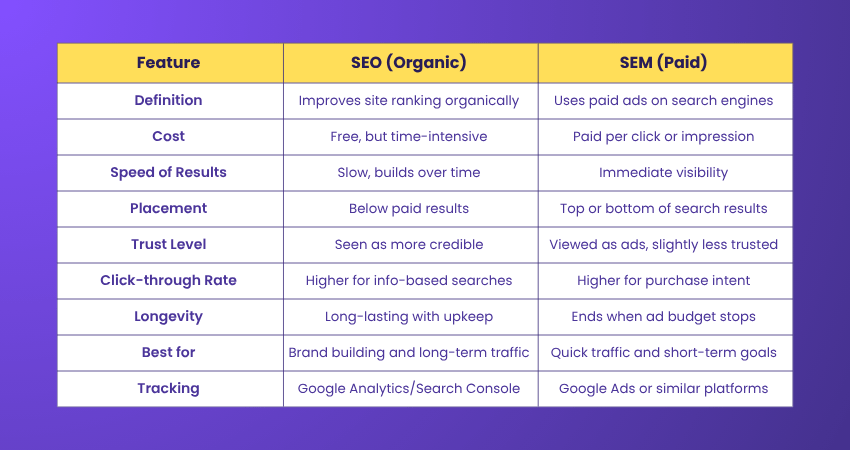
Search Engine Optimisation (SEO) and Search Engine Marketing (SEM) are two powerful strategies for increasing a website’s visibility on search engines. Interestingly, they work very differently as SEO focuses on improving organic rankings through content, keywords, and technical optimisation.
On the other hand, SEM involves paid advertising to instantly appear in search engine results. The best digital strategies often combine both, using SEO to build a strong foundation and SEM to drive quick wins or support short-term campaigns.
What is an Example of a SEM?
An example of SEM is a Google Ads campaign promoting a new online clothing store. When users search for "buy summer dresses online," the paid ad appears at the top of search results. The store pays only when someone clicks the ad, which drives the targeted traffic instantly.
What are the Three Types of Search Engine Marketing?
The Three Types of Sem Are:
1) Pay-Per-Click (PPC): Ads shown on search engines, paid per click.
2) Product Listing Ads (PLAs): Visual ads for e-commerce, showing product info and prices.
3) Local SEM: Targeted ads for local businesses appearing in geographic-based searches.
Conclusion
Search Engine Marketing (SEM) is a smart way to get your business seen on search engines through paid ads. It helps you reach the right people fast and increase your traffic. From choosing the right keywords to writing strong ads, a good SEM strategy brings real results. If you’re asking What is Search Engine Marketing, it’s your shortcut to better visibility, more clicks, and quick online success.
Unlock your Digital Marketing potential and accelerate your career growth with our comprehensive Digital Marketing Courses – sign up now!
Frequently Asked Questions
Is SEM the Same as SEO?

No, SEM (Search Engine Marketing) includes both paid search ads and SEO (Search Engine Optimisation). SEO focuses on organic search rankings, while SEM encompasses a wider range of strategies, including paid advertising.
What are the key Components of a Successful SEM Campaign?
A successful SEM campaign includes keyword research, effective ad copy, targeted audience selection, budget management, and continuous performance analysis to optimise results. It also involves A/B testing different ads and landing pages to improve click-through and conversion rates over time.

James Smith


Digital Marketing Manager and Trainer
James Smith is a digital marketing professional with over a decade of experience in SEO, content strategy, paid media and analytics. He has supported both SMEs and global brands in transforming their digital presence. James’s writing and training are rooted in results-driven tactics and the latest marketing trends.
View Detail

 If you wish to make any changes to your course, please


