


 Top Rated Course

We may not have the course you’re looking for. If you enquire or give us a call on 01344203999 and speak to our training experts, we may still be able to help with your training requirements.
Project vs Program vs Portfolio Management: What sets them apart?
David Evans 18 November 2025Do you know the differences between Project vs Program vs Portfolio Management? Read this blog to know the distinctions and their role in project success. In this blog, learn how these approaches impact your business's goals. Boost your Project Management knowledge and gain valuable insights into making informed strategic decisions.

Training Outcomes Within Your Budget!
We ensure quality, budget-alignment, and timely delivery by our expert instructors.
Table of Contents
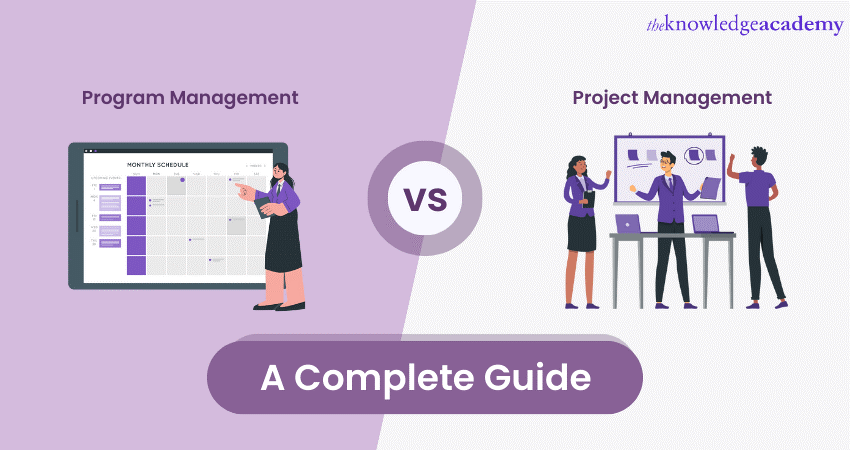
Are you someone who is confused between Project, Program and Portfolio Management? Well! You are in the right place. Many people use these three roles interchangeably, which can be confusing. Despite having crucial roles in organisation management, there are several differences between Project vs Program vs Portfolio Management.
Inefficient Project Management can often lead to resource wastage. This happens when there is a lack of alignment between projects and Portfolio Management. Companies should invest equally in Project, Program and Portfolio Management to avoid or reduce such failures. Read this blog to learn the differences between Project vs Program vs Portfolio Management. From this, you will understand how they help in successful project delivery.
Table of Contents
1) What is Project Management?
2) What is Program Management?
3) What is Portfolio Management?
4) Key Differences between Project vs Program vs Portfolio Management
5) Conclusion
What is Project Management?
Project Management includes planning, organising, and controlling resources to achieve specific goals within a specific time period. It involves initiating, planning, executing, monitoring, and closing a project while considering various factors like scope, time, cost, quality, and risk. Project Managers oversee projects to ensure they meet objectives.
Each project has a different requirement for achieving goals. The Project Management team efficiently implements the plan and resources to meet these objectives.
What is Program Management?
Program Management involves overseeing multiple related projects to achieve strategic business goals. It ensures that all projects align with the overall objectives, coordinating efforts, managing risks, and maintaining consistent quality and communication with stakeholders.
This role is crucial for large organisations handling complex initiatives, as it helps ensure that all projects contribute to broader strategic objectives. PGMP-certified Program Managers provide strategic oversight, allocate resources, and keep stakeholders informed about progress and potential issues.
Sign up for our Program Management Professional (PgMP)® Training to achieve the knowledge you need to manage complex programs.
What is Portfolio Management?
Portfolio Management involves managing programs, projects, and other related activities to achieve the strategic goal of an organisation. Its major focus is on aligning project investments with business priorities and optimising the allocation of resources to deliver the greatest value. Portfolio Managers monitor the performance of projects and programs, assess risks, and make informed decisions to maximise the return on investment.
Understand how to align the objectives of your company while managing multiple projects with our Portfolio Management Professional PfMP® Training.
Key differences between Project vs Program vs Portfolio Management
Project, Program, and Portfolio Management share the common goal of delivering successful outcomes. Meanwhile, they differ in scope, objectives, responsibilities, approach, and Risk Management. Let's learn the difference between these job roles.
Scope
Here are some differences between Project, Program, and Portfolio Management in terms of their scope:
1) Project Management
Project Management consists of detailed planning and execution of tasks to meet project requirements. Project Managers describe project scope, develop work breakdown structures, create schedules, allocate resources, and manage project risks. They also closely monitor progress and track project milestones. Moreover, they ensure that the project is completed within the defined constraints of time, cost, quality, and scope.
2) Program Management
Program Managers clearly understand the collective results and benefits of Program Management in multiple projects within a program. They define program goals, develop strategies, allocate project resources, and manage program-level risks. They also ensure that projects within the program match the company's strategic objectives and contribute to the desired results together.
3) Portfolio Management
Portfolio Managers' major task is to take a high-level view of all projects and programs within the portfolio. They align the portfolio with the organisation's strategic goals, ensuring that the right projects and programs are selected and prioritised based on their strategic value and alignment. They manage risks at the portfolio level, optimise resource allocation across projects and programs, and monitor the overall performance and progress of the portfolio.
Do you want to learn the principles of Project Management? Register today with our PMP® Certification.
Objectives
Now, let’s learn the differences between Project, Program, and Portfolio Management as per their objectives:
1) Project Management
Project Managers work closely with stakeholders to understand project objectives and requirements. They develop project plans, define project scope, break down work into manageable tasks, estimate resources and timelines, and create project schedules. They coordinate the efforts of team members, manage risks, track progress, and ensure that the project stays on track and delivers successful outcomes.
2) Program Management
Program Managers work closely with Senior Management to define program goals and objectives. They develop program-level strategies and plans, identify and manage project interdependencies, and allocate resources across the program. Program Managers monitor the progress of projects, identify and resolve issues and conflicts, and ensure that the program delivers the anticipated benefits and value to the organisation.
3) Portfolio Management
Portfolio Managers work at a strategic level, aligning the portfolio with the organisation's vision and goals. They analyse and select projects and programs based on their strategic fit, potential benefits, and resource requirements. Portfolio Managers optimise resource allocation, manage risks across the portfolio, and monitor the performance of projects and programs. This makes sure that they contribute to the organisation's strategic goals.
Responsibilities
Here are some differences between Project, Program, and Portfolio Management in terms of their responsibilities:
1) Project Management
Project Managers look after the daily project activities management. They collaborate with upper management, handle project schedules and budgets, track milestones, and make sure the deliverables meet quality standards. They also focus on achieving project-specific goals within the defined limitations while successfully completing the project.
2) Program Management
Program Managers have broader responsibilities compared to Project Managers. They develop program-level plans and strategies, align projects with program objectives. Furthermore, they also ensure effective coordination among project teams and manage risks and resolve issues affecting multiple project projects. They also engage with stakeholders at various levels, provide program-level governance, and communicate the overall program progress to stakeholders.
3) Portfolio Management
Portfolio Managers analyse the strategic value and risks associated with each project and program within the portfolio. Portfolio Managers allocate resources based on strategic priorities, balance the portfolio to optimise benefits and make decisions to add, remove, or modify projects and programs within the portfolio. They provide strategic guidance, monitor portfolio performance, and ensure that the portfolio aligns with the organisation's overall strategic direction. These responsibilities should be clearly articulated in a Portfolio Manager Resume to demonstrate a comprehensive understanding of the role.
Learn how to effectively implement business analysis frameworks and gain knowledge of the Project Management fundamentals with PMI Project Management Ready Training.
Approach
Given below are the differences between Project, Program, and Portfolio Management in terms of their approach:
1) Project Management
Project Management follows a linear and sequential approach, commonly known as the waterfall model. It includes clear steps like initiation, planning, execution, monitoring, and closure. Each step is completed before moving on to the next one, with limited flexibility for changes once the project is underway. This approach is suited for projects with well-defined requirements and predictable results.
However, an increasing number of projects are using Agile Methodologies for flexibility and higher efficiency. Traditional approaches like waterfall can be useful for smaller projects, but as complexity increases, advanced methodologies are required.
2) Program Management
Program Management adopts a more iterative and adaptive approach. It recognises the fact that projects in a program are interdependent and may change, even evolving with time. Therefore, the Program Manager deploys approaches that include agile or hybrid methodologies, which are more open for changes and responsive to the mutable environment. This way, continuous improvement is realised, encouraging the individual to work with others in team projects, and eventually, at their earliest stages, risks are identified and mitigated.
3) Portfolio Management
Portfolio management is a strategic process that involves long-term planning and decision-making. In fact, Portfolio Managers assess strategic goals and evaluate what the organisation can do in terms of projects and align them with the strategy, being part of a portfolio of an organisation. This will ensure that these resources are monitored and evaluated continuously in the performance of the portfolio. Accordingly, reprioritisation and reallocation are carried out. It assures that investments within the organisation are in line with the strategic direction of the organisation.
Risk Management
Following is an explanation of the differences between Project, Program, and Portfolio Management in terms of their responsibilities:
1) Project Management
Project Managers pay more emphasis on risk identification and control of all the risks related to the project. Risk assessment in the project is followed by the identification of strategies for mitigation and continued monitoring throughout the lifecycle of the project. In a project, it is important to manage possibilities regarding success or delay, cost overrun, and quality issues avoidance.
2) Program Management
The Program Manager takes a much broader view of the risks that relate to potential impacts on many projects within the program. He identifies the program-level risks, manages the same coming from interdependencies, and ensures that the same is managed within the projects. It reflects upon the culture of risk awareness that has to be nurtured, whereby the Program Manager collaborates with project teams in managing program-level risks proactively.
3) Portfolio Management
Portfolio Managers assess risks at a higher level, considering the risks that may affect the entire portfolio. They consider strategic risks, market risks, resource risks, and other factors that may impact the organisation's overall portfolio performance. Portfolio Managers develop Risk Management strategies and processes to identify, analyse, and mitigate risks that can affect the achievement of strategic objectives.
Conclusion
When we compare Project vs Program vs Portfolio Management, we get to know how they are different from each other. They all contribute greatly to the success of an organisation. Understanding these key differences allows effective decision-making and improves the management of overall organisational initiatives.
Learn various levels of Project Management, Program and Portfolio Management with our extensive library of PMP Training.
Frequently Asked Questions
How do Portfolio Managers and Program Managers differ in their decision-making roles?

Portfolio Managers make decisions about project selection, prioritisation and resource allocation across the organisation's portfolio. Meanwhile, Program Managers make decisions about coordinating and managing projects that work together in their program.
How do these three management disciplines contribute to an organisation's success?
Portfolio Management ensures that the organisation invests in related projects and programs. Program Management helps projects work well together, making everything more efficient and successful. On the other hand, Project Management ensures each project is done right on time and within budget.
What are the other resources and offers provided by The Knowledge Academy?
The Knowledge Academy takes global learning to new heights, offering over 3,000+ online courses across 490+ locations in 190+ countries. This expansive reach ensures accessibility and convenience for learners worldwide.
Alongside our diverse Online Course Catalogue, encompassing 19 major categories, we go the extra mile by providing a plethora of free educational Online Resources like Blogs, eBooks, Interview Questions and Videos. Tailoring learning experiences further, professionals can unlock greater value through a wide range of special discounts, seasonal deals, and Exclusive Offers.
What is the Knowledge Pass, and how does it work?
The Knowledge Academy’s Knowledge Pass, a prepaid voucher, adds another layer of flexibility, allowing course bookings over a 12-month period. Join us on a journey where education knows no bounds.
What are related courses and blogs provided by The Knowledge Academy?
The Knowledge Academy offers various Project Management Courses, including Introduction to Project Management Course, Project Management Office (PMO) Fundamentals Course and Certified Digital Services Project Manager Course. These courses cater to different skill levels, providing comprehensive insights into Project Management Trends.
Our Project Management Blogs cover a range of topics offering valuable resources, best practices, and industry insights. Whether you are a beginner or looking to advance your Business Improvement skills, The Knowledge Academy's diverse courses and informative blogs have you covered.

David Evans


Certified Project Trainer and Agile Delivery Expert
David Evans brings over a decade of hands-on experience in project delivery, Agile transformation, and team leadership. With a background in technology and business consulting, David has led cross-functional teams through Agile and Waterfall projects in both public and private sectors. He combines technical knowledge with practical insights to help readers navigate the challenges of modern project environments.

Upcoming Project Management Resources Batches & Dates
Date
 PMP® Certification Training Course
PMP® Certification Training Course
Sat 21st Mar 2026, Sun 22nd Mar 2026
PMP® Certification Training Course
Mon 23rd Mar 2026
PMP® Certification Training Course
Mon 30th Mar 2026
PMP® Certification Training Course
Sat 4th Apr 2026, Sun 5th Apr 2026
PMP® Certification Training Course
Tue 7th Apr 2026
PMP® Certification Training Course
Mon 13th Apr 2026
PMP® Certification Training Course
Sat 18th Apr 2026, Sun 19th Apr 2026
PMP® Certification Training Course
Mon 20th Apr 2026
PMP® Certification Training Course
Mon 27th Apr 2026
PMP® Certification Training Course
Tue 5th May 2026
PMP® Certification Training Course
Sat 9th May 2026, Sun 10th May 2026
PMP® Certification Training Course
Mon 11th May 2026
PMP® Certification Training Course
Mon 18th May 2026
PMP® Certification Training Course
Sat 23rd May 2026, Sun 24th May 2026
PMP® Certification Training Course
Tue 26th May 2026
PMP® Certification Training Course
Mon 1st Jun 2026
PMP® Certification Training Course
Sat 6th Jun 2026, Sun 7th Jun 2026
PMP® Certification Training Course
Mon 8th Jun 2026
PMP® Certification Training Course
Mon 15th Jun 2026
PMP® Certification Training Course
Sat 20th Jun 2026, Sun 21st Jun 2026
PMP® Certification Training Course
Mon 22nd Jun 2026
PMP® Certification Training Course
Mon 29th Jun 2026
PMP® Certification Training Course
Sat 4th Jul 2026, Sun 5th Jul 2026
PMP® Certification Training Course
Mon 6th Jul 2026
PMP® Certification Training Course
Mon 13th Jul 2026
PMP® Certification Training Course
Sat 18th Jul 2026, Sun 19th Jul 2026
PMP® Certification Training Course
Mon 20th Jul 2026
PMP® Certification Training Course
Mon 27th Jul 2026
PMP® Certification Training Course
Sat 1st Aug 2026, Sun 2nd Aug 2026
PMP® Certification Training Course
Mon 3rd Aug 2026
PMP® Certification Training Course
Mon 10th Aug 2026
PMP® Certification Training Course
Mon 17th Aug 2026
PMP® Certification Training Course
Sat 22nd Aug 2026, Sun 23rd Aug 2026
PMP® Certification Training Course
Mon 24th Aug 2026
PMP® Certification Training Course
Tue 1st Sep 2026
PMP® Certification Training Course
Sat 5th Sep 2026, Sun 6th Sep 2026
PMP® Certification Training Course
Mon 7th Sep 2026
PMP® Certification Training Course
Mon 14th Sep 2026
PMP® Certification Training Course
Sat 19th Sep 2026, Sun 20th Sep 2026
PMP® Certification Training Course
Mon 21st Sep 2026
PMP® Certification Training Course
Mon 28th Sep 2026
PMP® Certification Training Course
Sat 3rd Oct 2026, Sun 4th Oct 2026
PMP® Certification Training Course
Mon 5th Oct 2026
PMP® Certification Training Course
Mon 12th Oct 2026
PMP® Certification Training Course
Sat 17th Oct 2026, Sun 18th Oct 2026
PMP® Certification Training Course
Mon 19th Oct 2026
PMP® Certification Training Course
Mon 26th Oct 2026
PMP® Certification Training Course
Mon 2nd Nov 2026
PMP® Certification Training Course
Sat 7th Nov 2026, Sun 8th Nov 2026
PMP® Certification Training Course
Mon 9th Nov 2026
PMP® Certification Training Course
Mon 16th Nov 2026
PMP® Certification Training Course
Sat 21st Nov 2026, Sun 22nd Nov 2026
PMP® Certification Training Course
Mon 23rd Nov 2026
PMP® Certification Training Course
Mon 30th Nov 2026
PMP® Certification Training Course
Mon 7th Dec 2026
PMP® Certification Training Course
Sat 12th Dec 2026, Sun 13th Dec 2026
PMP® Certification Training Course
Mon 14th Dec 2026
PMP® Certification Training Course
Mon 21st Dec 2026

 If you wish to make any changes to your course, please


