


 Top Rated Course


We may not have the course you’re looking for. If you enquire or give us a call on 01344203999 and speak to our training experts, we may still be able to help with your training requirements.
Project Management Processes: Key Phases, Tools and Best Practices
David Evans 28 February 2026Project Management Processes include five key stages: Initiation, Planning, Execution, Monitoring, and Closure for successful project delivery. These phases create a clear path through the project lifecycle. They help teams stay organised, manage risks, improve collaboration, and achieve project targets on time and within the set budget.
Home
 Resources
Project Management
Project Management Processes: Key Phases, Tools and Best Practices
Resources
Project Management
Project Management Processes: Key Phases, Tools and Best Practices
Resources
Project Management
Project Management Processes: Key Phases, Tools and Best Practices

Training Outcomes Within Your Budget!
We ensure quality, budget-alignment, and timely delivery by our expert instructors.
Table of Contents
Ever felt like your project is spinning out of control, with missed deadlines, shifting goals, and team confusion? You’re not alone. That’s why smart teams turn to Project Management Processes to bring structure and direction. These steps help turn ideas into real results, guiding every stage from start to finish with clarity.
From goals to delivery, Project Management Processes like Initiation, Planning, Execution, Monitoring, and Closure offer a clear roadmap. Each process keeps teams organised, supports change, and ensures results. This blog covers key processes, their phases, differences, and the Project Management Office (PMO) Project Process.
Table of Contents
1) What are Project Management Processes and Phases?
2) Key Project Management Processes
3) Phases of Project Management
4) What is the Difference Between the Project Management Process and Phase?
5) What is the PMO Project Process?
6) Conclusion
What are Project Management Processes and Phases?
Project Management Processes provide a structured framework for initiating, planning, executing, monitoring, and closing projects. They guide Project Managers and teams through every stage of a project's lifecycle. They also help in ensuring that resources are allocated effectively, timelines are met, and goals are achieved. Staying informed about Project Management trends allows you to adjust processes to be more efficient and aligned with industry best practices.
At the initiation stage, the project's viability and scope are determined. Project Planning involves detailing the Project's path, resources, and risk management. During execution, tasks are delegated and carried out. The monitoring phase ensures that the project stays on track, identifying and rectifying any deviations. Finally, the closure phase reviews the project's success and delivers the end product. These processes, combined with the Benefits of Project Management Qualification, form the foundation for delivering successful projects.

Key Project Management Processes
Main Stages of Project Management guide projects from start to finish, ensuring clarity, control, and successful delivery, as shown in a Project Management Planning Guide. These are the Project Management key processes:
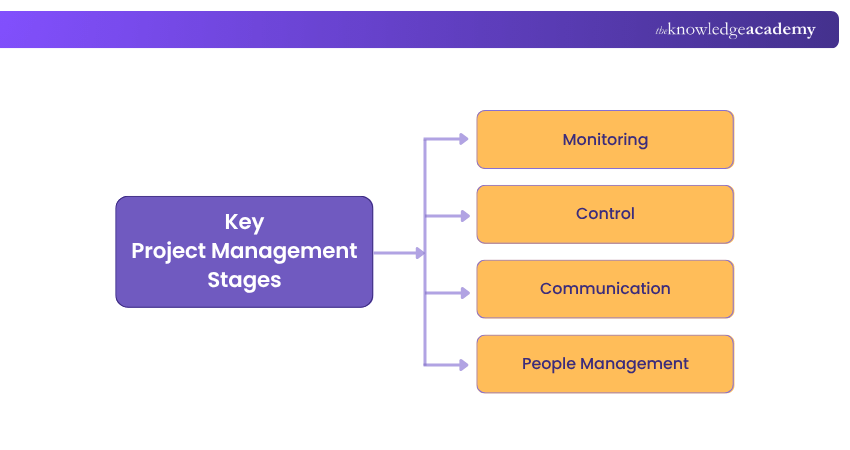
1) Monitoring:
Planning happens at the beginning of a project, but regular monitoring is needed throughout. This helps ensure the project is kept on budget and on schedule. It also checks that the right resources are available and the project can deliver the expected results. As the project moves forward, estimates, deadlines, and goals may need to be adjusted.
2) Control:
Every project will face some problems. The Project Manager’s job is to handle these issues early so they don’t affect the outcome. This also includes managing risks and keeping the project steady.
3) Communication:
Clear and honest communication is crucial to a successful project. When everyone involved talks openly whether in meetings, emails, or informal chats many problems can be avoided. Both written and spoken communication matter.
4) People Management:
Project Managers don’t just handle tasks; they also manage the people doing them. Even in large projects with many teams, the manager plays a role in supporting individuals. This includes encouraging the team, giving helpful feedback, and keeping morale high.
Learn practical experience through real-world case studies and interactive exercises. Join our Project Risk Management Course now!
Phases of Project Management
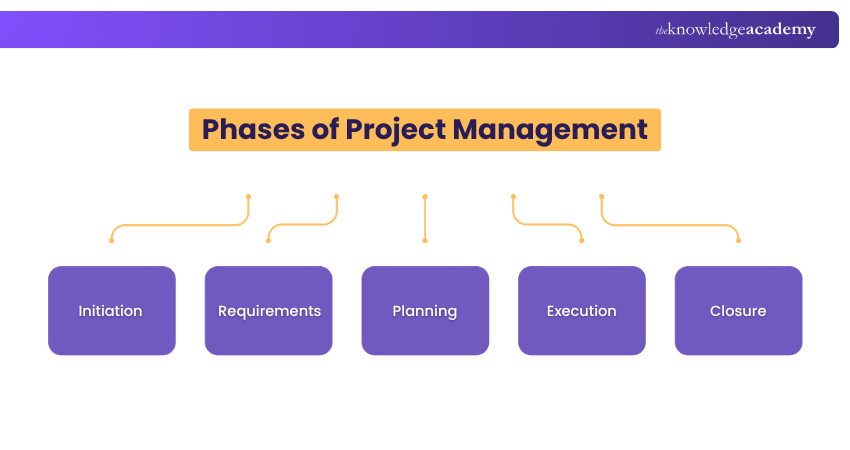
Project Management is a structured discipline that guides a project from start to finish. It involves five key phases, each designed to move the project forward with control and clarity, ensuring it meets its goals and delivers value. These are the phases of Project Management:
1) Initiation:
This is the initial point of a project. A business event is developed to describe why the project is required and what benefits it will give. It summarises the targets, scope, anticipated results, and who will be accountable for what.
A project proposal may also be developed to give a distinct summary of the Project’s Management. This phase is crucial for setting prospects and ensuring everybody understands their duties and the project's goal.
2) Requirements:
At this point, the team determines what needs to be provided. This involves setting clear targets, and deadlines and understanding any limitations. The accomplishment of the project relies on how well the demands are settled.
A few times, a recursive method is used, especially in agile projects, enabling teams to refine requirements eventually. Documenting requirements clearly helps match stakeholder expectations and reduces confusion later.
3) Planning:
Planning is the most detailed phase. It includes creating a project schedule, assigning tasks, managing resources, and preparing for risks. Communication plans and change control processes are also defined.
Tools like Gantt charts help visualise task sequences and dependencies. This phase helps ensure that everyone understands what needs to be done, when, and how progress will be measured. A solid plan makes the execution phase much smoother.
4) Execution:
This is when the actual work takes place. Team members are given tasks and timelines. They need to understand what’s expected, what the task includes, and how success will be measured.
The Project Manager ensures work is completed on time, issues are addressed quickly, and everyone stays informed. Regular updates and collaboration are essential to keep things running smoothly.
5) Closure:
Once all work is completed and approved, the project enters the closure phase. This involves reviewing what was delivered, checking that all goals were met, and closing any contracts.
A final review is held to discuss what went well and what could be improved next time. Lessons learned are documented, helping future projects succeed. At this point, the project team may be released or reassigned.
Learn essential Project Management skills for Non-Project Managers. Join our Project Management For Non-Project Managers Course now!
What is the Difference Between Project Management Process and Phase?
Project Management Processes are ongoing tasks like planning and monitoring that happen throughout the project. They help maintain control and adapt to changes as needed. Phases are distinct stages in the project lifecycle such as initiation, execution, and closure. While processes may repeat across phases, phases occur in a set, sequential order.
What is the PMO Project Process?
The Project Management Office Project Process is a standardised approach to managing projects, including resource allocation, budget tracking, stakeholder communication, and performance measurement. It involves defining scope, assigning tasks, scheduling, monitoring milestones, and identifying risks. This process ensures consistency, improves oversight, and aligns project goals with business objectives.
Conclusion
Project Management Processes bring structure, clarity, and control to every project stage. By following these steps, teams can avoid confusion, stay aligned, and deliver real results. Whether you're starting fresh or refining your approach, these processes set the foundation for smoother execution and better outcomes turning project goals into measurable success.
Learn comprehensive Project Management skills utilising Jira tools. Join our Jira Training today!
Frequently Asked Questions
What Tools Should be Used Throughout the Project Lifecycle to Maximise Success?

Utilise Project Management software, communication platforms, and time-tracking tools throughout the project. These tools make tasks more efficient, improve teamwork, and guarantee punctual completion, increasing project effectiveness.
What are the Best Practices for Project Management?
Good Project Management starts with clear targets and including the correct people early. It is essential to understand who does what, follow a set process, communicate sometimes, handle risks and check progress constantly. These steps help projects run easily and complete successfully.
What are the Other Resources and Offers Provided by The Knowledge Academy?
The Knowledge Academy takes global learning to new heights, offering over 3,000+ online courses across 490+ locations in 190+ countries. This expansive reach ensures accessibility and convenience for learners worldwide.
Alongside our diverse Online Course Catalogue, encompassing 17 major categories, we go the extra mile by providing a plethora of free educational Online Resources like Blogs, eBooks, Interview Questions and Videos. Tailoring learning experiences further, professionals can unlock greater value through a wide range of special discounts, seasonal deals, and Exclusive Offers.
What is The Knowledge Pass, and How Does it Work?
The Knowledge Academy’s Knowledge Pass, a prepaid voucher, adds another layer of flexibility, allowing course bookings over a 12-month period. Join us on a journey where education knows no bounds.
What are the Related Courses and Blogs Provided by The Knowledge Academy?
The Knowledge Academy offers various Project Management Courses, including the Project Risk Management Course, Jira Training, and the Project Management Certification. These courses cater to different skill levels, providing comprehensive insights into Project Integration Management.
Our Project Management Blogs cover a range of topics related to Project Management, offering valuable resources, best practices, and industry insights. Whether you are a beginner or looking to advance your Project Management skills, The Knowledge Academy's diverse courses and informative blogs have got you covered.

David Evans


Certified Project Trainer and Agile Delivery Expert
David Evans brings over a decade of hands-on experience in project delivery, Agile transformation, and team leadership. With a background in technology and business consulting, David has led cross-functional teams through Agile and Waterfall projects in both public and private sectors. He combines technical knowledge with practical insights to help readers navigate the challenges of modern project environments.

Upcoming Project Management Resources Batches & Dates
Date
 Introduction to Project Management Course
Introduction to Project Management Course
Fri 17th Apr 2026
Introduction to Project Management Course
Fri 15th May 2026
Introduction to Project Management Course
Fri 12th Jun 2026
Introduction to Project Management Course
Fri 17th Jul 2026
Introduction to Project Management Course
Fri 14th Aug 2026
Introduction to Project Management Course
Fri 11th Sep 2026
Introduction to Project Management Course
Fri 16th Oct 2026
Introduction to Project Management Course
Fri 13th Nov 2026
Introduction to Project Management Course
Fri 18th Dec 2026

 If you wish to make any changes to your course, please


