




We may not have the course you’re looking for. If you enquire or give us a call on 01344203999 and speak to our training experts, we may still be able to help with your training requirements.
Panic Attack vs Anxiety Attack: What is the Difference?
ByThe Knowledge AcademyLast updated on: 01 September 2026
Panic Attack vs Anxiety Attack have distinct differences. Panic Attacks suddenly come with intense fear, while Anxiety Attacks build gradually with excessive worry. Recognising their symptoms, causes, and treatment options can help avoid confusion, as well as effectively managing both conditions effectively and seeking the right support.

Assume that you are in the middle of a normal day; maybe at work, in a crowded place, or even just relaxing at home, when suddenly, your heart races, your chest tightens, and a wave of fear grips you. You are overwhelmed, but is it a Panic Attack or an Anxiety Attack? While the two are often confused, understanding Panic Attack vs Anxiety Attack can make a huge difference in managing them effectively.
A Panic Attack feels like a sudden storm—unexpected, intense, and all-consuming. Anxiety Attacks, on the other hand, build up gradually, often triggered by ongoing stress or worry. In this blog, we’ll explore Panic Attack vs Anxiety Attack, breaking down their key differences, causes, and coping strategies. The more you understand, the better you can regain control when these moments strike.
Table of Contents
1) What is a Panic Attack?
2) What is an Anxiety Attack?
3) Similarities between a Panic Attack and an Anxiety Attack
3) Symptoms of Panic Attack vs Anxiety Attack
4) What Causes Panic and Anxiety Attacks?
5) Risk Factors for Panic Attack vs. Anxiety Attack
6) Diagnosis and Treatments for Anxiety and Panic Attacks
7) What is the 3-3-3 Rule for Panic Attacks?
8) What is the 54321 Method for Anxiety?
9) Conclusion
What is a Panic Attack?
A Panic Attack is a sudden, intense feeling of fear. It can cause physical symptoms such as a rapid heartbeat, difficulty breathing, and nausea.
There are two primary types of Panic Attacks: unexpected ones that occur without any apparent reason and expected ones that are triggered by specific factors like phobias. These attacks can sometimes mimic the Signs of Heart Attack, making them particularly alarming. Experiencing multiple Panic Attacks may indicate a Panic Disorder,a condition characterised by recurrent attacks happening within a short timeframe.
What is an Anxiety Attack?
“Anxiety Attacks" are not officially recognised as a diagnosis in the DSM-5-TR (a mental health guidebook). Instead, it lists several Anxiety-related disorders like Generalised Anxiety and Panic Disorder, among others. Anxiety is basically a feeling of worry or fear that can appear slowly or suddenly.
When these feelings become very strong or overwhelming, people might term it "Anxiety Attacks.” Although they could mean Panic Attacks or severe Anxiety episodes.
Symptoms of Panic Attack vs. Anxiety Attack
Both Panic Attacks and Anxiety Attacks exhibit a similar range of symptoms. Below is a table that outlines the symptoms and differences between Panic Attacks and Anxiety Attacks.

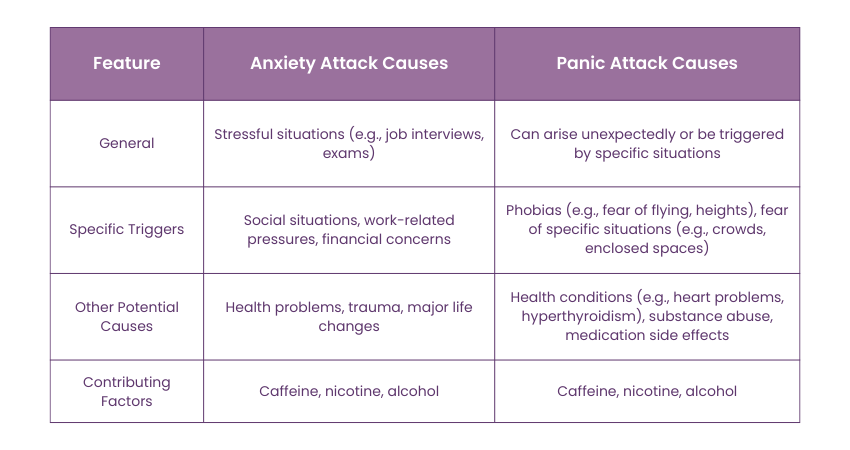
What Causes Panic and Anxiety Attacks?
Panic and Anxiety Attacks can be triggered by various factors. We have illustrated these causative factors in the table below:
Risk Factors for Panic Attack vs. Anxiety Attack
The risk factors for Panic Attacks and Anxiety Attacks vary from person to person. Below is a table outlining the standard risk factors for both Panic Attacks and Anxiety Attacks.

Master psychological distress prevention - Sign up for our Prevention Psychology Training now!
Diagnosis and Treatments for Anxiety and Panic Attacks
Self-diagnosing anxiety or Panic Attacks can be harmful, so it’s essential to consult a General Psychologist or Psychiatrist if you notice concerning symptoms. These professionals use standardised tests to diagnose the condition and assess its severity.
Treatment plans may include therapy, relaxation techniques, or lifestyle changes. In severe cases, a Psychiatrist may prescribe medication to help manage and reduce the impact of panic or Anxiety Attacks.
Home Remedies
Here are some practical tips for managing anxiety and stress at home:
a) Reduce or manage stressors.
b) Limit alcohol and Caffeine intake.
c) Eat a healthy, balanced diet.
d) Ensure you sleep for at least 8 hours a night.
e) Practice Meditation, Yoga, or deep breathing techniques.
f) Build a strong support network.
During a panic or Anxiety Attack, specific strategies can help:
a) Acknowledge the Situation: Recognise that symptoms are temporary and will pass.
b) Breathing Techniques: Use controlled breathing to ease symptoms like shortness of breath.
c) Relaxation Methods: Try progressive muscle relaxation or guided imagery.
d) Mindfulness: Stay focused on the present moment to reduce overwhelming feelings.
Medical Treatments
For more severe cases, professional treatment options include some medical treatments. These include:
a) Cognitive Behavioural Therapy (CBT): Focuses on understanding and changing reactions to stressors. It helps develop healthy behavioural habits and stress-management techniques. Therapy can take place in person or remotely.
b) Selective Serotonin Reuptake Inhibitors (SSRIs): Antidepressants that increase Serotonin levels.
c) Serotonin and Noradrenaline Reuptake Inhibitors (SNRIs): Another type of Antidepressant that also boosts noradrenaline.
d) Pregabalin: Often used when Antidepressants are ineffective; helps reduce Anxiety symptoms.
e) Benzodiazepines: A sedative prescribed for short-term relief in severe cases, but it carries risks like dependency and dangerous interactions with alcohol or other substances.
Learn, grow, and advocate for Mental Health – join our Mental Health Coursesnow!
What is the 3-3-3 Rule for Panic Attacks?
The 3-3-3 Rule for Panic Attacks is a grounding technique to regain control. It involves naming three things you can see, identifying three sounds you can hear, and moving three parts of your body.
What is the 54321 Method for Anxiety?
The 5-4-3-2-1 Method for Anxiety helps bring focus to the present. Recognise five things you see, four you can touch, three you hear, two you smell, and one you taste.Create a safe space for everyone around you with our Mindfulness Training – Get started now!
Conclusion
Recognising the difference between Panic Attack vs Anxiety Attack empowers you to take control of your mental well-being. Panic Attacks hit like a storm, sudden and overwhelming, while Anxiety Attacks simmer, building over time. Understanding these signs can be the first step towards better coping and support.
Learn to manage stress mindfully and build resilience with our Handle Stress And Develop Your Resilience Training - Register now!

The Knowledge Academy is a world-leading provider of professional training courses, offering globally recognised qualifications across a wide range of subjects. With expert trainers, up-to-date course material, and flexible learning options, we aim to empower professionals and organisations to achieve their goals through continuous learning.


 If you wish to make any changes to your course, please


