


 Top Rated Course

We may not have the course you’re looking for. If you enquire or give us a call on 01344203999 and speak to our training experts, we may still be able to help with your training requirements.
How to Make a Study Plan for Exams and Daily Learning
Charlotte Wilson 16 July 2026Making a study plan helps organise study time, subjects, and goals into a clear schedule, improving focus, time management, and overall learning outcomes. It also reduces last-minute stress by creating a clear and structured routine. A well-planned schedule helps learners stay consistent, remain organised, and track their progress.

Training Outcomes Within Your Budget!
We ensure quality, budget-alignment, and timely delivery by our expert instructors.
Table of Contents

Balancing multiple subjects and deadlines can make studying feel overwhelming. Without a clear structure, it becomes difficult to stay focused and organised. This is where learning How to Make a Study Plan can help bring clarity to your study routine.
A well-structured plan helps manage time, prioritise topics, and maintain consistent progress. It also reduces last-minute stress and keeps your learning on track. Let’s explore the key steps to create an effective study plan.
Table of Contents
1) What is a Study Plan
2) What Makes a Study Plan Effective?
3) Steps to Create a Study Plan
4) Common Mistakes to Avoid When Making a Study Plan
5) Best Tools to Create a Study Plan
6) Conclusion
What is a Study Plan?
A study plan is a structured schedule that outlines what topics to study and when to study them. It helps learners organise their time, prioritise subjects, and track their progress throughout a course.
By following a clear study plan, students can manage workloads effectively, stay consistent with learning goals, and improve their overall academic performance.

What Makes a Study Plan Effective?
A well-structured study plan serves as a roadmap to academic success by organising your time and setting clear and Smart Goals. Here is why a Study Plan is highly effective:
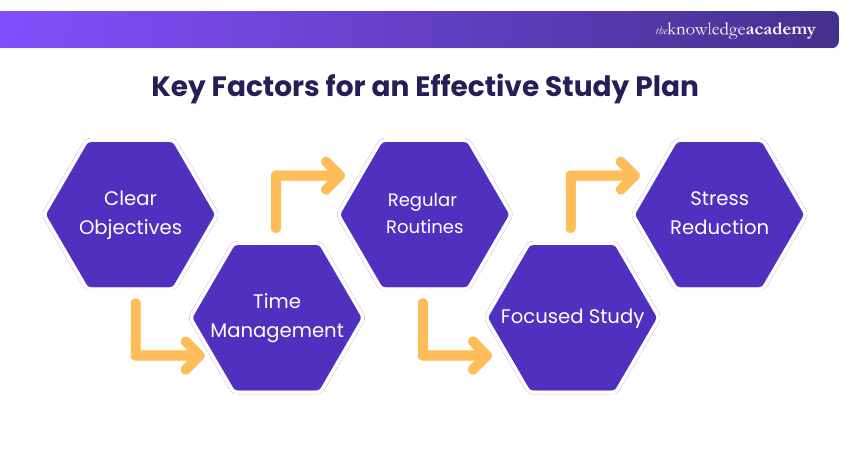
1) Clear Objectives: A study plan sets clear targets that guide your daily learning and keep you focused.
2) Time Management: Time Management structures your day to ensure optimal use of study hours and minimises time wastage.
3) Regular Routines: Study Plans enable a consistent schedule and build habitual study practices that further enhance learning retention.
4) Focused Study: It minimises distractions, enabling you to focus better on key subjects.
5) Stress Reduction: Organised study sessions reduce last-minute cramming and lower overall stress levels.
Steps to Create a Study Plan
An effective approach to learning starts with knowing how to create a study plan, which helps organise your daily routine and commitments. By following key steps, you can map your schedule strategically, balance study time, and include essential breaks for optimal results.
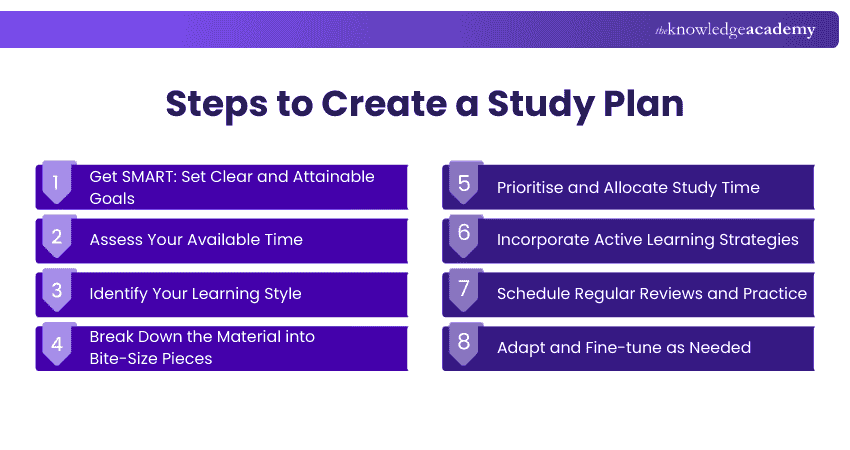
Step 1: Get SMART: Set Clear and Attainable Goals
Define clear goals that guide what you want to achieve in your studies. Using the SMART framework helps ensure your goals are specific, measurable, achievable, relevant, and time-bound.
Example: Instead of saying “I want to study maths,” set a goal like “Complete two algebra chapters and practise 20 questions by Friday.”
Step 2: Assess Your Available Time
Review your daily routine and commitments to determine how much time you can realistically dedicate yourself to studying. This helps you create a balanced schedule without feeling overwhelmed.
Example: If you have free time from 7–9 PM on weekdays, you can allocate one hour for studying and another for revision or practice.
Transform ambition into actionable goals - Join our Motivation and Goal Setting Training today!
Step 3: Identify Your Learning Style
Understanding how you learn best can improve how effectively you study. Some people retain information better through visuals, while others benefit from reading, listening, or hands-on practice.
Example: A visual learner might use diagrams or mind maps, while an auditory learner may prefer recorded lectures or group discussions.
Step 4: Break Down the Material into Bite-Size Pieces
Large topics can feel overwhelming, so divide them into smaller sections that are easier to manage. This approach makes progress more visible and keeps you motivated.
Example: Instead of studying an entire history unit at once, break it into sections such as key events, timelines, and important figures.
Step 5: Prioritise and Allocate Study Time
Focus more time on subjects or topics that are difficult or carry greater importance in exams. Prioritising ensures that critical areas receive the attention they need.
Example: If you struggle with statistics but feel confident in theory topics, allocate extra study sessions to statistics practice.
Step 6: Incorporate Active Learning Strategies
Engage with the material instead of simply reading it. Active learning techniques help deepen understanding and improve retention.
Example: Use flashcards to test yourself, solve practice questions, or explain a concept to a friend to reinforce your knowledge.
Step 7: Schedule Regular Reviews and Practice
Regular revision helps reinforce what you have already learned and prevents forgetting important information. Practice tests and quizzes also help identify areas that need improvement.
Example: Review notes every Sunday and complete a short practice test to check your understanding of the week’s topics.
Step 8: Adapt and Fine-tune as Needed
A study plan should be flexible and adjusted based on your progress. If certain strategies or schedules are not effective, modify them to better suit your learning needs.
Example: If late-night study sessions reduce your focus, switch to studying earlier in the evening when your concentration is stronger.
Unlock your potential and cultivate personal growth today with our transformative Personal Development Courses – sign up now!
Common Mistakes to Avoid When Making a Study Plan
When creating a study plan, avoiding common mistakes can help you stay organised, manage your time effectively, and make your study sessions more productive.
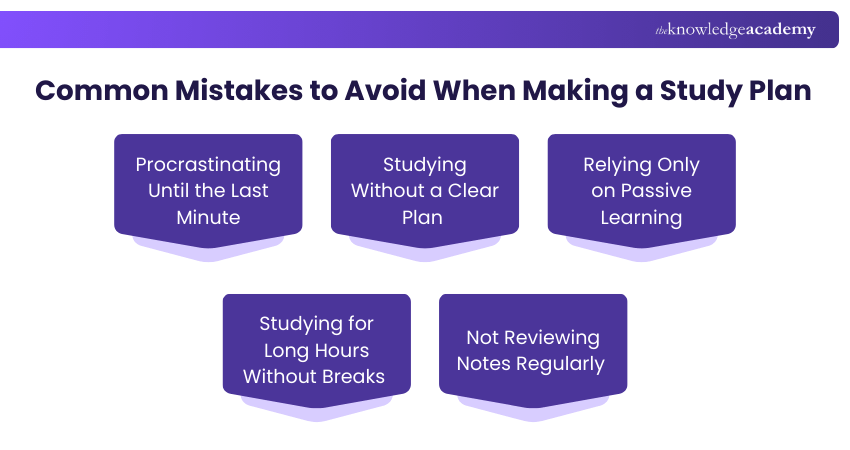
1) Procrastinating Until the Last Minute
Leaving studying until the last moment can lead to stress and poor understanding of the material. Consistent study sessions help improve retention and make learning more manageable.
2) Studying Without a Clear Plan
Starting study sessions without defined goals often leads to wasted time and missed topics. A structured plan helps you stay organised and focused on what needs to be covered.
3) Relying Only on Passive Learning
Simply reading or highlighting notes may not help you retain information effectively. Active techniques like practising questions or summarising concepts improve understanding.
4) Studying for Long Hours Without Breaks
Long, uninterrupted study sessions can reduce concentration and productivity. Short breaks during study time help maintain focus and prevent burnout.
5) Not Reviewing Notes Regularly
Failing to revisit study material can cause you to forget important information. Regular revision strengthens memory and helps reinforce key concepts over time.
Best Tools to Create a Study Plan
Several digital tools can help you organise study schedules, track progress, and stay focused. These tools simplify planning, reduce distractions, and make managing tasks easier.

1) Notion
An all‑in‑one study planner to organise notes, create dashboards, and track study progress in one place.
2) Forest
Encourages distraction‑free study sessions by growing a virtual tree while you focus, motivating you to stay off your phone.
3) Quizlet
Uses flashcards and quizzes for memorisation, making it easier to learn definitions, formulas, and key concepts.
4) Microsoft OneNote
A digital notebook to organise subjects, take notes, and add diagrams, accessible across multiple devices.
5) Google Calendar
Helps schedule study sessions, revision blocks, and deadlines with reminders for better time management.
6) Shovel
A simple task management app to prioritise and track study tasks, ensuring you complete important topics on time.
Conclusion
A well-structured study plan helps you stay on track and make the most of your learning time. When you break tasks into manageable steps and review your progress regularly, studying becomes more effective. Learning How to Make a Study Plan can support long-term success in your academic journey.
Reduce daily pressure and stay productive by joining our Stress Management Course designed for real-life challenges.
Frequently Asked Questions
Which Time Does the Brain Function 100%?

There is no optimal time for 100% brain function, as it operates consistently throughout the day. However, certain areas of the brain may become active at specific times. Additionally, it depends on your dedication, focus, and commitment to performing your work.
What is the Time Limit for Revision?
There isn’t a strict time limit for study revision. However, it's advisable to revise frequently and at regular intervals instead of single-instance cramming. Aim for 3 to 4 hours of daily focused revision and increase frequency as the exam approaches.

Charlotte Wilson


Soft Skills and Business Training Manager
Charlotte Wilson is an expert in soft skills development, with over 14 years of experience helping individuals and teams improve communication, productivity and emotional intelligence in the workplace. Her training content is focused on enhancing interpersonal effectiveness and fostering positive, collaborative environments across all levels of an organisation.
View Detail

 If you wish to make any changes to your course, please


