


 Top Rated Course

We may not have the course you’re looking for. If you enquire or give us a call on 01344203999 and speak to our training experts, we may still be able to help with your training requirements.
How to Become a Personal Assistant : Explained
Charlotte Wilson 15 July 2026How to Become a Personal Assistant covers key skills, qualifications and career steps to manage schedules, handle tasks and support executives effectively. It involves developing strong organisational, communication, and time management skills, while understanding how to support professionals in their daily tasks.

Training Outcomes Within Your Budget!
We ensure quality, budget-alignment, and timely delivery by our expert instructors.
Table of Contents
Starting a career can feel confusing, especially when you are looking for a role that offers both stability and real growth. If you enjoy organising tasks, managing schedules, and helping others stay on track, you may have explored How to Become a Personal Assistant (PA). It is a career that puts you at the centre of daily operations, where your support directly impacts success.
The job of a Personal Assistant goes beyond understanding basic duties. It involves building strong communication skills, staying organised under pressure, and gaining practical experience that sets you apart. In this blog, you will learn How to Become a Personal Assistant, essential career steps, key skills, their responsibilities, and more. Let's begin!
Table of Contents
1) What is a Personal Assistant?
2) Steps to Become a Personal Assistant
3) Essential Skills and Qualifications for Personal Assistants
4) Tips to Get a Job as a Personal Assistant
5) What are the Responsibilities of Personal Assistants?
6) What's the Difference Between a Personal Assistant and an Executive Assistant?
7) Conclusion
What is a Personal Assistant?
A Personal Assistant (PA) is a professional who supports a specific individual in an organisation by managing their daily tasks and acting as their first point of contact. They help organise schedules, handle communications, and ensure work runs smoothly.
Usually, PAs assist senior professionals such as heads of departments or managers, and the role is not limited to any one industry. They are also referred to as personal secretaries or executive assistants.
Steps to Become a Personal Assistant
Following a structured set of steps to become a Personal Assistant is crucial for success in this dynamic role. It ensures a comprehensive understanding of responsibilities, the development of essential skills, including Personal Assistant Skills, and strategic navigation of the job market.
This systematic approach maximises opportunities, setting the foundation for a fulfilling and prosperous career. Below are the key steps explained in detail:
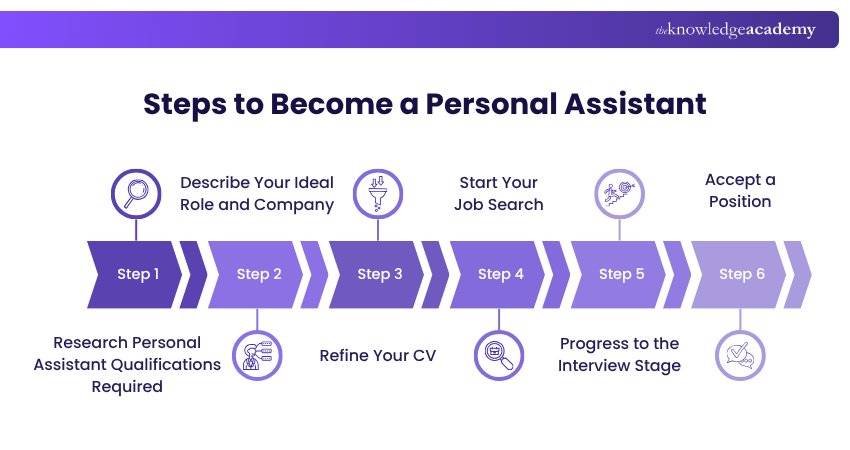
Step 1: Research Personal Assistant Qualifications Required
The first step is to understand what employers expect from a Personal Assistant. While formal qualifications are not always required, having the right mix of skills and basic knowledge can make a big difference when applying for roles.
Key Actions to Consider:
a) List your existing qualifications and education
b) Highlight relevant skills like organisation and communication
c) Review your experience for transferable skills
d) Identify gaps and consider short courses (e.g., Microsoft Office)
Step 2: Describe Your Ideal Role and Company
Before applying, it is important to be clear about the type of Personal Assistant role you want. Understanding your preferences helps you focus your efforts on opportunities that match your interests and career goals.
Key Actions to Consider:
a) Decide on the industry or type of company you prefer
b) Set realistic salary expectations
c) Explore real-life PA roles for a better understanding
d) Align roles with your long-term career goals
Step 3: Refine Your CV
A well-structured Curriculum Vitae (CV) is your first opportunity to make a good impression on employers. It should clearly present your skills, experience, and strengths in a professional and organised way.
Key Actions to Consider:
a) Write a strong personal statement
b) Include relevant education and work history
c) Highlight key skills and unique strengths
d) Create a base CV and personalise it for each role
Step 4: Start Your Job Search
Once your CV is ready, the next step is to actively search for suitable roles. Using multiple channels can increase your chances of finding the right opportunity quickly.
Key Actions to Consider:
a) Apply through job boards and company websites
b) Register with recruitment agencies
c) Reach out directly to companies
d) Apply widely to improve chances of success
Step 5: Progress to the Interview Stage
Getting an interview means you are one step closer to securing a role as a PA. Proper preparation helps you present yourself confidently and demonstrate that you are the right fit for the position.
Key Actions to Consider:
a) Research the company and role
b) Plan travel and arrive on time
c) Dress appropriately for the organisation
d) Prepare answers and thoughtful questions
Step 6: Accept a Position
After receiving a job offer, it is important to handle the next steps professionally to ensure a smooth start. This stage sets the tone for your new role and helps you begin with confidence.
Key Actions to Consider:
a) Respond promptly to job offers
b) Confirm your notice period and start date
c) Prepare documents for your first day
d) Update your professional profiles after joining
Build confidence in everyday office tasks with the Office Skills Training now!
Essential Skills and Qualifications for Personal Assistants
Becoming a Personal Assistant does not require formal qualifications, making it an accessible entry-level role. However, having the right practical skills is essential to managing tasks effectively and supporting senior professionals. Let’s look at them below:
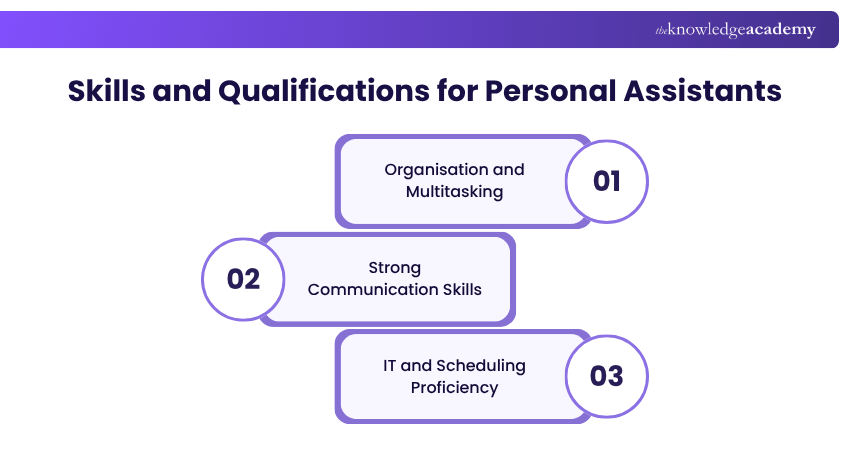
1) Organisation and Multitasking
Personal Assistants manage multiple tasks daily, so strong organisation and multitasking skills are essential. These help you prioritise work, manage schedules, and meet deadlines. Tasks may include coordinating meetings, organising documents, and taking clear notes.
2) Strong Communication Skills
Effective communication is crucial, as you act as a link between your manager and others. This includes handling emails, calls, and messages, as well as sharing information clearly and professionally. Also, additional language skills can be useful in global or client-facing roles.
3) IT and Scheduling Proficiency
Basic IT skills are important for managing daily tasks. Familiarity with tools like Microsoft 365 helps you organise work, manage calendars, and schedule meetings accurately. This ensures smooth coordination and efficient workflow.
Tips to Get a Job as a Personal Assistant
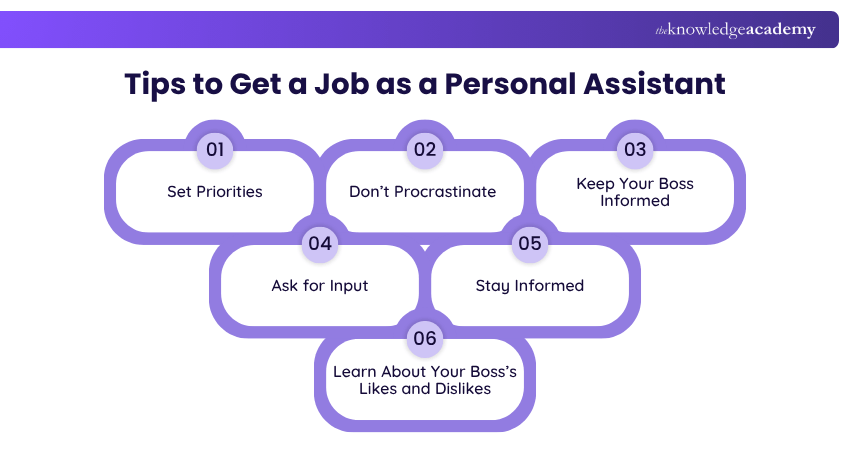
Getting a job as a Personal Assistant requires strong organisational abilities, communication skills, and a proactive mindset to stand out and succeed in this role. Here are some practical tips to help you excel in a Personal Assistant position:
1) Set Priorities
A key part of the role is keeping both yourself and your boss organised. Prioritising tasks helps you manage your workload effectively and meet deadlines. Use checklists to track tasks, review them daily, and adjust based on urgency.
2) Don’t Procrastinate
Delaying tasks can lead to missed deadlines and increased pressure. Staying focused and tackling tasks early helps maintain productivity. Treat less important tasks like scheduled meetings to ensure they are completed on time.
3) Keep Your Boss Informed
Regular updates are essential to ensure smooth communication. Keep track of your tasks and progress and share updates with your manager. This shows reliability and helps them stay informed about ongoing work and priorities.
4) Ask for Input
Being open to feedback helps you improve and grow in your role. Regularly ask your boss and colleagues for input and be willing to take on additional responsibilities. This demonstrates initiative and a willingness to learn.
5) Stay Informed
Understanding your manager’s work and the organisation’s activities helps you provide better support. Prepare for meetings, stay updated on projects, and be aware of key responsibilities within the team.
6) Learn About Your Boss’s Likes and Dislikes
Every boss has their own working style. Learning their preferences for scheduling, communication, and organisation helps you support them more effectively. Paying attention to small details can make a big difference in your performance.
Learn how to become a reliable office professional with Administrative Assistant Training today!
What are the Responsibilities of Personal Assistants?
The responsibility of a Personal Assistant depends on the needs of the individual they support. The role is flexible and includes both professional and personal tasks to help manage daily life efficiently. Let's look at the core ones below:
a) Daily Task and Schedule Management: Personal Assistants organise schedules, manage appointments, and support individuals in their workplace to ensure smooth daily operations.
b) Communication and Relationship Support: They help communicate needs, manage interactions, and maintain relationships with family, friends, and professional contacts.
c) Travel and Mobility Assistance: They assist with travel by driving, arranging transport, or accompanying individuals to appointments and events.
d) Personal Care and Wellbeing Support: In some roles, they support personal care, daily routines, and overall wellbeing, including health and recovery.
e) Household and Administrative Tasks: They handle tasks, such as cooking, cleaning, shopping, and organising paperwork, to maintain an organised environment.
f) Support for Activities and Development: They assist with hobbies, appointments, and personal goals, including learning new skills or exploring job opportunities.
What's the Difference Between a Personal Assistant and an Executive Assistant?
Personal Assistants (PAs) and Executive Assistants (EAs) both support senior staff with daily administrative tasks like managing schedules and communications. However, PAs support one individual and focus on routine tasks, while EAs work with top-level executives and handle more complex responsibilities.
The key difference is in experience and scope. EAs typically have several years of experience and take on tasks, such as Project Management and supporting decision-making. Also, they practise upward management, while PAs mainly provide direct administrative support.
Conclusion
A Personal Assistant role can open doors to diverse industries and long-term growth opportunities. Building the right skills, staying organised, and approaching each step confidently will position you for success in this dynamic role. Also, an effective understanding of How to Become a Personal Assistant sets the foundation for a rewarding and progressive career path.
Learn the essentials for PA success and step into a high-demand admin role with PA and Secretarial Courses – Sign up now!
Frequently Asked Questions
What educational background is ideal for becoming a Personal Assistant?

Prospective Personal Assistants often wonder about the educational requirements. While a specific degree may not be mandatory, courses in business administration or related fields, along with certifications in relevant skills, can enhance qualifications.
How important is networking in the journey to become a Personal Assistant?
Aspiring Personal Assistants often inquire about the significance of networking. Establishing connections in the industry through events, professional associations, and online platforms is crucial for accessing opportunities and staying informed about industry trends and job openings.

Charlotte Wilson


Soft Skills and Business Training Manager
Charlotte Wilson is an expert in soft skills development, with over 14 years of experience helping individuals and teams improve communication, productivity and emotional intelligence in the workplace. Her training content is focused on enhancing interpersonal effectiveness and fostering positive, collaborative environments across all levels of an organisation.
View Detail

 If you wish to make any changes to your course, please


