


We may not have the course you’re looking for. If you enquire or give us a call on +34 932716793 and speak to our training experts, we may still be able to help with your training requirements.
7 Important Factors Affecting Negotiation: A Comprehensive Overview
ByAkhil KLast updated on: 13 October 2026
Dive into the realm of seven important factors affecting negotiation. Explore the key elements that play a crucial role in the negotiation process. Delve into topics such as preparation, power dynamics, effective communication, emotional intelligence, flexibility, cultural influences, and the concept of BATNA.

In This Blog
You’ll learn about:
1. The seven important factors that can influence negotiation outcomes2. How preparation and power dynamics shape the negotiation process3. The role of communication, active listening, and emotional intelligence in every negotiation4. Why flexibility and cultural awareness matter during negotiations5. How BATNA can help you evaluate your alternative options and make informed decisions
Negotiation plays an important role in various aspects of our personal and professional lives. Whether it's securing a business deal, resolving conflicts, or even discussing personal matters, effective negotiation skills are essential.
However, negotiations are not just about persuasive arguments and strong communication; they are influenced by several factors that can significantly impact the outcome. Further, in this blog, we will explore seven important factors affecting negotiation and gain a comprehensive understanding of their significance. So, read on!
What are the Factors Affecting Negotiation?
Several factors can influence how a negotiation unfolds and whether both parties reach a satisfactory agreement. Understanding these factors can help negotiators handle challenges, make informed decisions and achieve better outcomes. Let's explore the key factors affecting negotiation.
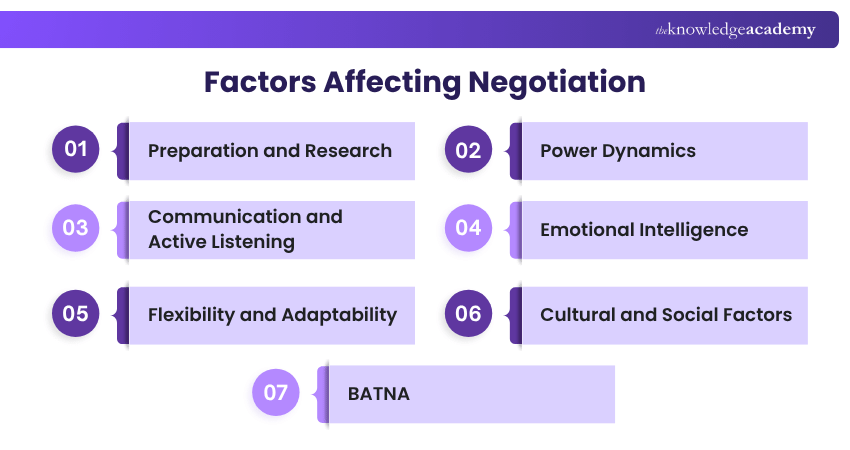
1) Preparation and Research
Successful negotiation begins long before the actual discussion takes place. Adequate preparation is vital for achieving favourable outcomes. Researching the subject matter, understanding the opposing party's position, and setting clear objectives are crucial steps in effective preparation for negotiation. The more prepared you are, the more confident and better equipped you will be during the negotiation process.

2) Power Dynamics
Power dynamics play an integral role in negotiations. Understanding who holds power and how it can be leveraged is essential. Power can be obtained from various sources, such as expertise, authority, information, or resources. Recognising the power dynamics at play allows negotiators to adapt their strategies accordingly, supporting a more informed approach to the negotiation process.
3) Communication and Active Listening
Effective communication is at the core of successful negotiations. Expressing ideas clearly, using persuasive language, and maintaining a respectful tone are essential skills. Moreover, active listening is equally important. By attentively listening to the other party's concerns, needs, and perspectives, negotiators can build rapport, gain valuable insights, and find common ground. Strong communication and active listening foster trust and create a collaborative negotiation environment.
Trainer's Insight
During negotiations, pay attention not only to what the other party is asking for but also why they want it. A stated demand is a position, while the underlying reason behind it reflects an interest. Understanding those interests can reveal alternative solutions that may satisfy both parties without requiring either side to simply accept the other's original position.
4) Emotional Intelligence
Emotional intelligence plays an important role in negotiations. Being aware of one's emotions and managing them effectively, as well as understanding the emotions of others, enables negotiators to navigate through challenging situations.
Emotional intelligence helps in building empathy, defusing tensions, and finding mutually beneficial solutions. By recognising and managing emotions during negotiations, negotiators can reduce misunderstandings, handle disagreements more effectively and work towards mutually beneficial outcomes.
5) Flexibility and Adaptability
Negotiations rarely follow a linear path, and unexpected challenges may arise. Being flexible and adaptable to changing circumstances is crucial. It involves being open to alternative solutions, adjusting strategies, and finding creative compromises. Flexibility allows negotiators to overcome obstacles, explore practical alternatives and work towards an agreement that meets their key objectives.
Elevate your sales game and learn the art of negotiation with the Sales Negotiation Training now!
6) Cultural and Social Factors
Negotiations often involve parties from diverse cultural and social backgrounds. Understanding and respecting the cultural and social differences is essential for effective negotiation. Cultural norms, values, communication styles, and decision-making processes can significantly impact negotiation dynamics. Being aware of and adapting to these cultural and social factors fosters mutual understanding and increases the likelihood of successful negotiations.
Bonus Tip
Cultural awareness should help you ask better questions. Communication styles and decision-making preferences can vary across cultures, but individuals may not always follow broader cultural patterns. Observe, listen, clarify expectations, and adapt your approach to the person and situation.
7) Best Alternative to a Negotiated Agreement (BATNA)
The BATNA concept refers to the best alternative course of action available to a negotiator if an agreement cannot be reached. Having a strong BATNA can increase a negotiator's bargaining power and confidence during negotiations.
Understanding your BATNA and considering the other party's likely BATNA can help you assess your relative negotiation position. A strong BATNA gives negotiators greater flexibility to reject an unfavourable agreement and pursue a better alternative.
Example: A company negotiating with a supplier already has an alternative supplier offering similar products at a reasonable price. If the current supplier refuses to offer acceptable terms, the company can choose the alternative supplier. Having this backup option strengthens its negotiating position and helps it avoid an unfavourable agreement.
Refine your assertiveness and excel in communication with the Assertiveness Skills Training!

Akhil K is a Copywriter and Video Editor with experience in content creation, visual storytelling, advertising and brand communication. His background in journalism, research and audience-focused communication strengthens his ability to create clear and engaging Business Skills content.
View Detail

 If you wish to make any changes to your course, please


