




We may not have the course you’re looking for. If you enquire or give us a call on 01344203999 and speak to our training experts, we may still be able to help with your training requirements.
12 Barriers to Communication: Overcome Them in 6 Powerful Ways
ByGaurav KalitaLast updated on: 19 September 2026
Barriers to communication can cause confusion, misunderstandings, and missed opportunities. Learn the common barriers, their impact, and practical ways to overcome them.
In This Blog You'll Learn:
1) What Communication Barriers Are and Why They Matter
2) Common Types of Communication Barriers Explained
3) How Barriers Affect Workplace Communication Daily
4) Practical Ways to Reduce Misunderstandings Effectively
5) Strategies for Clearer Team Communication
6) Improving Communication Across Diverse Workplace Teams
Ever had a conversation with your partner where you said one thing, but they heard something completely different? Maybe you texted, “We need to talk,” meaning something casual, but they panicked, thinking it was serious. Or maybe at work, you gave clear instructions, yet somehow, everything still went wrong. That’s because barriers to communication sneak into our conversations without us even realising it.
Misunderstandings like these happen in relationships, friendships, and workplaces all the time. Maybe it's a tone that sounded harsher than intended, a distraction that made someone miss an important detail, or cultural differences causing confusion. The good news? You can overcome them! In this blog, we’ll explore 12 common barriers to communication and six powerful ways to fix them. Let’s make every conversation clearer and stress-free!
What is a Communication Barrier?
Communication Barriers are obstacles that obstruct the effective exchange of information. These barriers can prevent the right message from reaching the right person at the right time. Let's explore three common types of Communication Barriers that can complicate effective communication:
1) Physical Barriers: These include factors like social distancing, remote work, the nature of deskless jobs, and closed office doors. Such barriers can physically separate communicators, making it difficult to convey messages effectively.
2) Emotional Barriers: Emotions such as mistrust and fear can create significant hurdles in communication. When people are emotionally distressed, they may misinterpret messages or be reluctant to communicate openly.
3) Language Barriers: These refer to the challenges in verbal and nonverbal communication. Differences in language, jargon, and even body language can lead to misunderstandings and miscommunication.
While these categories provide a broad overview, it's important to delve deeper into the specific Communication Barriers that employers face today. Understanding these nuances can help in developing strategies to overcome them and enhance overall communication effectiveness.

Top 12 Barriers to Communication
Communication enables individuals to understand each other and work together effectively. Nevertheless, many obstacles may impede the process of communication, resulting in misinterpretation, conflicts, and inefficiency. The following are 12 common barriers to communication, along with practical examples.
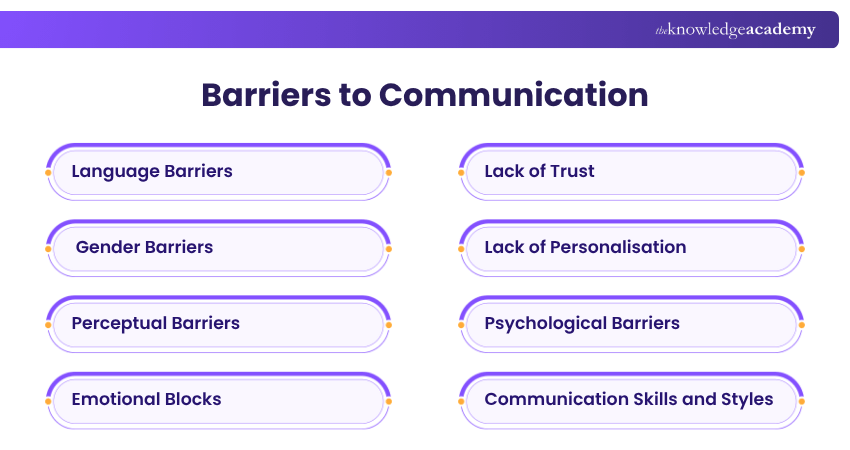
1) Language Barriers
Language barriers go further than the lack of a shared primary language. People may also use slang, jargon, or technical words that can sometimes be difficult to understand. This may result in Communication Barriers or misinterpretation of meaning. Organisations must ensure that clear, jargon-free language is used and consider translation services or language training where necessary.
Consider a team with members from France, Japan, and Brazil working on a software development project. Despite their expertise, misunderstandings may arise from differences in English proficiency. The team must use a real-time translation tool to bridge this gap during meetings and shared documents. This simple step can ensure everyone is on the same page, fostering a more inclusive and productive environment.
2) Gender Barriers
Gender-related communication barriers can arise from stereotypes, unconscious bias, unequal opportunities to contribute, or assumptions about how people should communicate based on gender. Creating inclusive discussions and giving everyone equal opportunities to participate can help reduce these barriers.
3) Perceptual Barriers
Perceptual barriers occur because of different perceptions and experiences. Different people may see the world differently and make other interpretations that create misunderstandings. Organisations must develop empathy and understanding among team players to eliminate perceptual barriers.
For example, a new marketing campaign receives mixed reviews within the team. To some, it is innovative, and to others, it is out of character. The team must arrange the workshop to ensure that everyone has the same idea of the brand’s identity and values. This joining of forces can harmonise different perspectives to produce a more purposeful and effective campaign strategy.
Build stronger workplace relationships and communicate confidently with our practical Interpersonal Skills Training for professionals.
4) Emotional Blocks
Emotions often determine how communications are put together and understood. Anger, fear, or frustration can result in a loss of clarity and lead to ineffective communication. Organisations can overcome emotional obstacles by fostering an atmosphere of Emotional Intelligence and giving access to Stress Management.
As a deadline approaches, pressure may build and create tension between team members. The team leader must organise a stress-relief session with a simple mindfulness exercise to ensure that emotions do not influence communication. This intervention can diffuse tensions and initiate a conversation about how the expected workload and expectations can be managed, improving team dynamics and communication.
5) Lack of Trust
Trust is fundamental to effective communication. Without it, messages may be doubted or ignored. Building trust requires consistency, transparency, and integrity in all communications. For example, a manager’s lack of trust in remote employees leads to micromanagement, causing frustration and disengagement.
Thus, the manager must start setting clear expectations and outcomes to rebuild trust rather than focusing on activity monitoring. Regular check-ins must replace constant oversight, fostering a culture of trust and autonomy that boosts morale and productivity.
Unlock the power of effective communication with our Effective Communication Skills Training - signup now!
6) Lack of Personalisation
In an age of emails and memos, the lack of personalisation can give the impression of shallowness and disconnection in communication. This can be achieved if the messages are well-attuned to the audience members.
For instance, a generic email is sent to all employees which congratulates them on their work anniversary, and this is perceived as impersonal and disingenuous. The company should use these insights to customise rewards by recognising individual accomplishments and showing real appreciation. This can help make employees feel valued truly, and their connection to the company is enhanced.
7) Psychological Barriers
Psychological barriers can arise from anxiety, bias, assumptions, fear of judgement, or past experiences that affect how people communicate. These factors may cause individuals to withhold ideas, misinterpret messages, or avoid open discussion.
For example, a team member may hesitate to contribute if previous suggestions were dismissed or criticised. Creating a supportive environment, encouraging respectful feedback, and giving everyone fair opportunities to participate can help reduce these barriers.
8) Communication Skills and Styles
Differences in Communication Skills and styles can lead to misunderstandings. Some people may be more direct, while others are more nuanced. Training in effective communication techniques can help bridge these gaps.
Imagine a team member misinterprets a brief, to-the-point email from a supervisor as being curt and dismissive. Realising the misunderstanding, the supervisor should begin incorporating a more conversational tone and explicitly express appreciation for the team's efforts. This adjustment in communication style can clear up misconceptions and improve the overall team atmosphere.
9) Social Distance and Physical Barriers
Social distances, either hierarchical or geographical, might block communication. Physical barriers, like locations in different buildings or countries, are also among the Physical Barriers to Communication. Technology can minimise these barriers and provide opportunities for in-person exchange. However, this does not eliminate the necessity of such interactions.
For example, a remote colleague feels disconnected from the team, missing out on the latest information and informal chats. To counter this, the team must arrange virtual coffee breaks during which the team members have non-work-related discussions. This initiative can help bridge the physical gap, encouraging a sense of belonging and team cohesion.
10) Information Overload
The sheer amount of information in the digital age can be enormous. This can result in valuable messages not being seen or considered. Organisations should focus on communicating concisely and properly using the information.
Suppose a new employee is bewildered by the information overflow and is doubtful about which tasks must be done first. Recognising this, their mentor must create a curated list of essential resources and set up a weekly meeting to discuss priorities and answer questions. This targeted approach can help the new hire navigate the information deluge, allowing them to focus on what’s most important and gradually integrate into the team.
11) Disengagement
Employees who feel disconnected from their work or organisation are less likely to communicate effectively. Engaging employees through meaningful work and recognition can help overcome this barrier.
For instance, in a product design team, one member has gradually become less vocal and appears disinterested during meetings. Their disengagement may stem from feeling their ideas are consistently overlooked.
To counter this, the team leader must initiate a "spotlight" segment in meetings, where each team member gets the floor to present their ideas or concerns without interruptions. This approach can help re-engage the silent team member by providing a dedicated space for their contributions, reaffirming their value to the team and boosting their engagement and participation.
12) Organisational Structure
Complex or rigid organisational structures can stifle communication. Flatter structures facilitate better communication, reducing the layers of hierarchy that messages must pass through. For example, in a large corporation, a junior analyst discovers inefficiencies in a common reporting process but feels there’s no direct way to communicate these findings to senior management due to the hierarchical organisational structure.
Recognising the need for a more fluid communication flow, the company must introduce an innovative platform where employees at all levels can submit suggestions directly to a department dedicated to operational improvements. This initiative can solve the rigid hierarchy impeding communication issues and encourage a culture of continuous improvement and inclusivity, where everyone’s voice can be heard and make a difference.
Strengthen clarity, confidence, and workplace communication with our Effective Communication Skills Course for professional success.
Strategies for Overcoming Workplace Communication Barriers
Communication Barriers in the workplace have negative impacts on productivity, innovation and cooperation. Overcoming these is a prerequisite for creating a favourable workplace. Here, we will take a deeper look into the key six strategies for dealing with these barriers successfully:
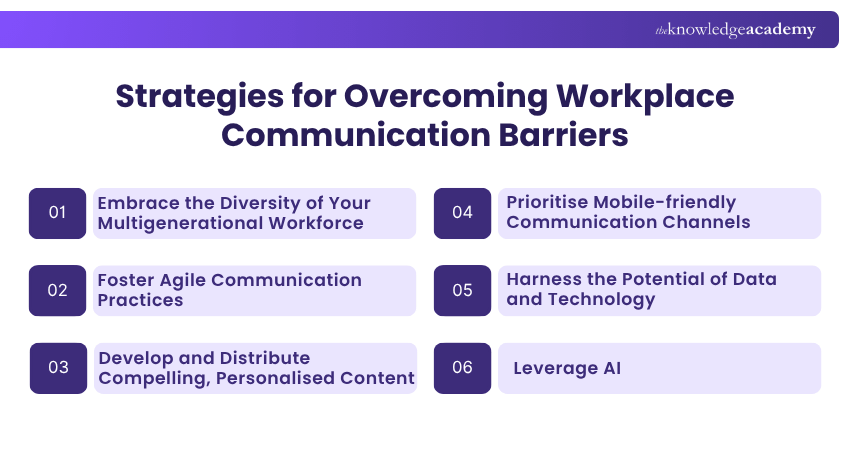
1) Embrace the Diversity of Your Multigenerational Workforce
Modern workplaces often include employees of different ages, experiences, and communication preferences. Rather than assuming that everyone within a generation communicates in the same way, organisations should understand individual preferences and provide flexible ways to share information and feedback.
2) Foster Agile Communication Practices
Today's fast-paced work environments require Agile communication skills as a foundation stone. Traditional hierarchical communication structures can sometimes slow down the information flow.
Agile communication implies using adaptive and responsive strategies that focus on urgency and collaboration. Teams can use instant messaging platforms, Project Management software and collaborative workspaces to share information spontaneously, discuss problems and find solutions instantaneously. Repetitive check-ups, meetings, and stand-ups accelerate the decision-making process and reinforce to the whole team that they are working towards a single goal.
3) Develop and Distribute Compelling, Personalised Content
Effective communication has the power to make the audience resonate with the speaker. Through the creation of personalised content that is geared towards addressing the needs of different audiences, you can increase relevance and engagement.
This could include dividing the workforce into different groups by roles, departments, or interests and developing messages to suit their needs and concerns. Utilising storytelling techniques, visual aids, and multimedia formats can further enhance the appeal and impact of your content.
4) Prioritise Mobile-friendly Communication Channels
In the age of smartphones, it is necessary for communication channels to be able to adjust to mobile phone users. Mostly, employees use their smartphones and tablets for official communication if they are outside the office or working remotely.
Hence, the main course of action is to choose mobile-friendly channels of communication so that everyone can enjoy the convenience. This may be through mobile apps, responsive email templates, and text messaging services for sending important news, updates and alerts. By meeting employees where they are and optimising for mobile devices, you can improve communication reach and effectiveness.
5) Harness the Potential of Data and Technology
Data-driven insights and technological tools have become an invaluable asset for shaping communication strategies. Analysis of the communication patterns, feedback, and performance metrics provides a clue for organisations to make corrections and create specific action plans.
Advanced analytics platforms can unravel such valuable information about employee engagement, sentiment, and interaction trends, allowing for prompt and effective interventions and readjustments. Moreover, using communication tools like video conferencing, virtual reality and Artificial Intelligence can enhance collaboration and streamline communication processes across geographically dispersed teams.
6) Leverage AI
Artificial intelligence (AI) is transforming communication by breaking down language and cultural barriers with AI-powered translation tools. Generative AI enhances content creation, making messages more engaging and personalised.
This allows professionals to focus on strategic and creative tasks, improving overall efficiency. Although some may be sceptical, AI should be recognised as a valuable tool that enhances human capabilities, allowing individuals to focus on tasks that require human insight.

Gaurav Kalita is a Content Writer with 2+ years of experience in content development, research and storytelling. His background in English literature and teaching, combined with his growing interest in AI and Machine Learning, supports his writing across Business Skills and IT and Tech.
View Detail

 If you wish to make any changes to your course, please


