




We may not have the course you’re looking for. If you enquire or give us a call on 01344203999 and speak to our training experts, we may still be able to help with your training requirements.
What is Business Environment: A Comprehensive Guide
ByThe Knowledge AcademyLast updated on: 03 October 2026
This blog explores the features, types, and key factors of the business environment. It also shows how analysing internal and external influences can support planning, decision-making and business development.
At a Glance
1. Internal factors, such as leadership, resources and organisational culture, can be managed directly by the business.2. External factors, including economic shifts, laws and competitor activity, require businesses to monitor and adapt.3. Customers, suppliers and competitors form the immediate market environment surrounding an organisation.4. Wider forces, such as technological change, social trends and environmental conditions, can shape long-term business strategy.5. A practical business environment analysis helps organisations prioritise risks, opportunities and necessary actions.
Imagine a world where businesses succeed by adapting to their surroundings and making smart decisions. In this context, the secret to success lies in understanding the business environment, everything that influences how a company operates. From technology and culture to competition and resources, these factors shape a business’s growth and challenges.
In this blog, we will discuss about what the business environment is in detail. You will also discover how these elements drive innovation in today’s world. Let's get started!
Features of Business Environment
The business environment includes all the factors that affect how a business operates. These features help us understand its nature and how it impacts business activities. Here are some of the features:
1) Dynamic Nature
a) The business environment keeps changing constantly.
b) Changes can come from new technology or market trends.
c) Businesses need to adapt to these changes fast.
d) It helps companies stay competitive and relevant.
Pro Tip
Review important environmental factors regularly rather than treating business environment analysis as a one-time exercise. Changes in markets, technology or regulation can alter business priorities.
2) External Influences
a) Many external factors affect business operations.
b) These include government policies, economic conditions, and social trends.
c) Businesses cannot control these factors directly.
d) They must plan and adjust to manage these influences.

3) Complexity
a) The business environment can be very complicated.
b) It involves many interconnected elements, like customers and competitors.
c) Understanding all the factors requires research and analysis.
d) Businesses simplify this by focusing on key areas.
4) Uncertainty
a) The business environment is often unpredictable.
b) Events like natural disasters or market crashes can impact businesses suddenly.
c) Companies prepare by creating backup plans and staying flexible.
d) Monitoring trends and preparing for different scenarios can help manage uncertainty.
5) Opportunities and Threats
a) The environment provides chances for growth and innovation.
b) It also brings challenges like competition or changing laws.
c) Businesses must identify opportunities and avoid threats.
d) Staying aware helps in turning risks into rewards.
Trainer’s Insight
Do not analyse environmental factors in isolation. A change in one area can influence customers, competitors, costs and operations, so look for connections between factors.
Importance of Business Environment
Here are some of the key areas that demonstrate the importance of the business environment:
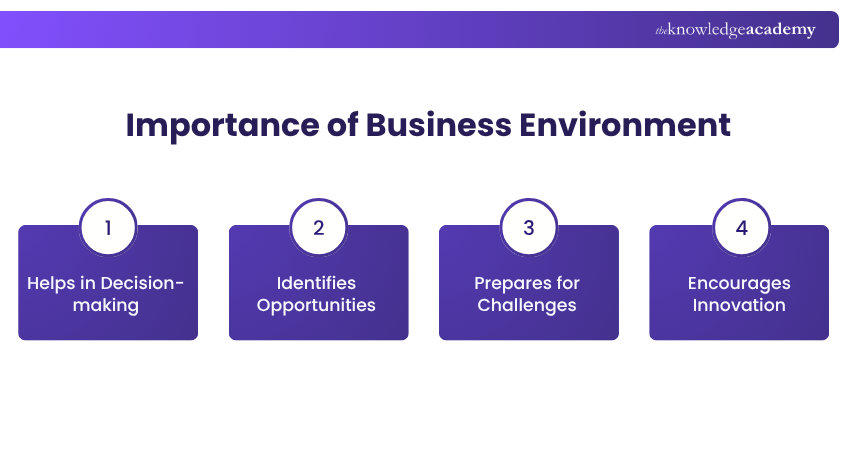
1) Helps in Decision-making
The business environment provides important information about market trends and customer needs. This helps businesses make smart decisions, like what products to offer or how to price them. Good decisions lead to better results and success.
2) Identifies Opportunities
Understanding the business environment helps businesses spot new chances to grow. For example, they might find untapped markets or new customer demands. Taking advantage of these opportunities helps businesses expand and stay competitive.
3) Prepares for Challenges
The environment can bring challenges like competition or economic changes. By studying it, businesses can prepare and plan solutions in advance. This helps them stay strong during tough times.
4) Encourages Innovation
A changing business environment pushes companies to come up with new ideas. They can develop better products or services to meet customer needs. Innovation helps businesses stay ahead of competitors.
Pro Tip
Develop response plans for high-impact environmental changes instead of trying to predict every possible event. This can help the business respond more quickly when conditions shift.
Types of Business Environments
Business environments are broadly divided into internal and external types. Internal factors arise within the organisation, while external factors come from outside and can influence its decisions, operations and performance. Let's learn about them below:
1) Internal Business Environment
The internal Business Environment includes factors within the organisation that management can influence or control. These factors affect daily operations, employee performance and the ability to achieve business objectives.
2) External Business Environment
The external business environment includes factors outside the organisation that can affect its operations and performance. Businesses cannot control these factors directly, so they must monitor them and adapt their strategies when needed.
Develop communication techniques with the Performance Management Training – Join today!
Factors Influencing the Internal Business Environment
Here are the factors that affect the internal business environment:
1) Technology
Technology in an internal business environment refers to the tools, systems, and capabilities the business uses in its operations. Updated technology makes work faster, cheaper, and more efficient. Using outdated tools can slow down the business and reduce quality.
Examples:
a) A company using modern software can manage customer data more effectively.
b) Automating production lines helps reduce errors and increase output.
2) Resource Management
This is about how a business manages its employees, money, and materials. Good resource management ensures smooth operations and higher productivity. Poor management can lead to delays or wasted resources.
Example:
a) Proper budgeting helps a company avoid running out of money for projects.
b) Scheduling staff shifts efficiently ensures enough workers are available during busy times.
Bonus Tip
Review how people, budgets and materials are being used before investing in more resources. Improving allocation can often solve problems without increasing costs.
3) Overall Vision and Objectives
The vision and goals of a business guide all its actions and decisions. A clear vision helps employees stay focused and motivated. Without clear objectives, the business may struggle to grow.
Example:
a) A business with a vision to be eco-friendly may focus on green practices in all operations.
b) A company aiming to lead in customer service trains employees to exceed expectations.
4) Organisation Structure
This refers to how tasks, roles, and responsibilities are arranged in the business. A well-structured organisation allows smooth communication and quick decision-making. Poor structure can lead to confusion and delays.
Example:
a) A company with a clear hierarchy knows who is responsible for what tasks.
b) Team-based structures encourage collaboration and faster problem-solving.
5) Value System
A value system is the set of beliefs and ethics a business follows. It shapes how employees act and how the company interacts with customers. Strong values build trust and a good reputation.
Example:
a) A company focused on honesty and fairness gains customer loyalty.
b) Businesses that prioritise sustainability attract environmentally conscious customers.
6) Operational Procedures
These are the daily processes and rules that keep the business running. Clear and efficient procedures save time and avoid mistakes. Poor procedures can slow down work and lower quality.
Example:
a) A restaurant with a strict cleaning routine ensures hygiene and customer satisfaction.
b) A warehouse with organised storage processes can ship orders faster and more accurately.
Develop the right management skills and learn how to lead teams of any size. Sign up for the Management Courses now!
Factors Influencing the External Business Environment
The external business environment includes factors outside an organisation that can affect its operations and performance. Businesses cannot control these factors directly, so they must monitor changes and adapt their strategies accordingly. Let's look at them below:
Trainer Insights
Businesses cannot control external conditions, but they can prepare for them. Regularly monitor the factors most likely to affect costs, customer demand and operations.
1) Customers, Suppliers and Competitors
Customers influence demand, while suppliers affect the availability and cost of resources. Competitors can influence pricing, product development and market strategies.
Examples:
a) Customer feedback may encourage a business to improve its products or services.
b) A supplier shortage can increase production costs or delay deliveries.
2) Economic Conditions
Inflation, income levels and interest rates can affect customer spending and business costs. Economic changes may also influence borrowing, investment and growth plans.
Examples:
a) Higher inflation can increase the cost of raw materials and transport.
b) Higher interest rates can make business loans more expensive.
3) Political and Legal Changes
Government policies, laws and regulations affect how businesses operate. Changes to tax, employment or consumer-protection rules can require businesses to adjust their practices.
Examples:
a) A change in employment law may require a business to update its workplace policies.
b) New environmental regulations may affect how a manufacturer manages waste.
4) Sociocultural Trends and Customer Preferences
Values, lifestyles and demographic changes influence what customers expect from businesses. Organisations may need to adapt their products, services and communication accordingly.
Examples:
a) Growing interest in sustainability may increase demand for environmentally responsible products.
b) Changes in lifestyle can affect when, where and how customers prefer to shop.
5) Technological and Environmental Developments
New technology can create opportunities for innovation, automation and improved customer service. Environmental conditions and sustainability expectations can also affect operations, costs and business decisions.
Examples:
a) New digital tools can help businesses automate routine tasks and improve efficiency.
b) Extreme weather can disrupt supply chains, transport and production activities.
Business Environment Analysis Checklist
When analysing the business environment, check whether you have:
□ Reviewed employees, leadership and organisational culture□ Assessed internal resources and capabilities□ Reviewed organisational objectives and processes□ Considered customer needs and behaviour□ Assessed competitors□ Reviewed important suppliers□ Considered economic conditions□ Checked political and legal developments□ Reviewed sociocultural changes□ Monitored technological developments□ Considered environmental factors□ Identified opportunities and threats□ Prioritised the most significant factors□ Considered whether action or further monitoring is required

The Knowledge Academy develops accessible learning content across Project Management, IT, Cybersecurity, Data Science, Business Analysis, HR, Accounting and Finance, Leadership and Health and Safety. Its resources combine subject research with clear explanations to help professionals build practical knowledge across a wide range of disciplines.
View Detail

 If you wish to make any changes to your course, please


