




We may not have the course you’re looking for. If you enquire or give us a call on 01344203999 and speak to our training experts, we may still be able to help with your training requirements.
What is Decision Making? A Complete Beginner’s Guide
ByThe Knowledge AcademyLast updated on: 09 September 2026
Decision Making is the process of evaluating alternatives and choosing the best option to solve problems and achieve goals in personal and professional life. It helps individuals and organisations assess situations and select suitable solutions. Effective Decision Making supports better judgement, productivity, and results.

Decision Making is an integral part of our daily lives, whether we're deciding what to eat for breakfast or steering a business through a major strategic shift. Every choice we make shapes the path ahead, but how often do we stop to truly think about the process behind these decisions? What is Decision Making, and why is it such a critical skill?
In this blog, we’ll dive into the fascinating world of Decision Making, exploring the various steps involved and understanding the types of decisions we encounter. By examining these aspects, we will uncover What is Decision Making truly entails, which is the first step toward mastering it. Let’s get started!
What is Decision Making?
Decision Making meaning refers to the process of selecting a course of action from various alternatives to achieve a desired outcome. It involves identifying options, evaluating their potential consequences, and choosing the best path forward. This process is vital in both personal and professional contexts, helping individuals and organisations navigate challenges and seize opportunities.
Effective Decision Making leads to successful outcomes, while poor Decision Making can result in negative consequences. By carefully considering options and potential impacts, decision makers can make informed choices that align with their goals and values, a process that is especially important in supervisor decision-making.

Steps of the Decision Making Process
Decision Making Process involves the following steps:
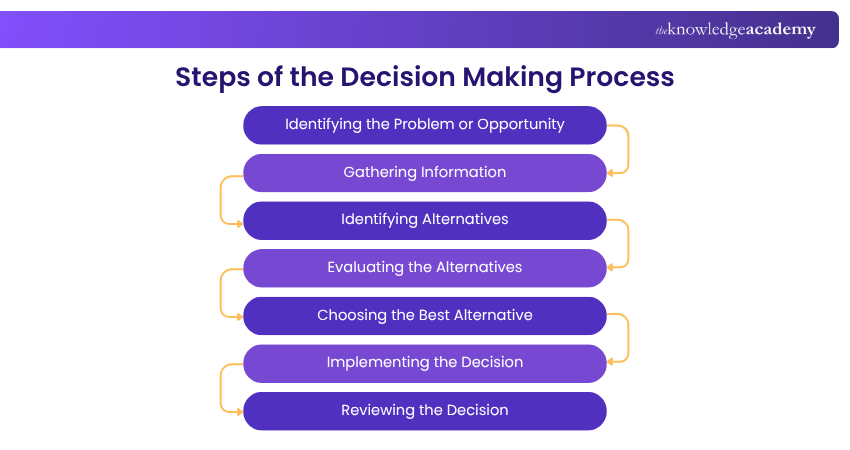
1) Identifying the Problem or Opportunity
a) Start by identifying the problem you need to solve or the question you need to answer.
b) Define the decision clearly and ensure the problem is specific and not too broad.
c) If there’s a specific goal tied to the decision, make it measurable and time-bound.
2) Gathering Information
a) Collect all necessary data related to the decision, including internal assessments of past successes and failures.
b) Seek insights from external sources like studies, market research, or consultants if needed.
c) Be careful about information overload, as too much data can complicate the Decision Making process.
3) Identifying Alternatives
a) With the gathered information, outline all possible solutions or courses of action.
b) Consider different strategies to meet your goal. For instance, if the goal is boosting social media engagement, alternatives could include paid ads, refining your organic strategy, or using a combination of both.
4) Evaluating the Alternatives
a) Evaluate the pros and cons of each alternative.
b) Examine similar scenarios from other organisations and review your own company’s history of wins and losses.
c) Identify the risks and rewards associated with each option and consider potential pitfalls.
5) Choosing the Best Alternative
a) After analysing all the alternatives, make your decision.
b) Ensure you’ve clearly defined the decision, reviewed all relevant information, and thoroughly weighed each potential option.
c) Confirm that the chosen alternative aligns with organisational goals, available resources, and long-term objectives.
6) Implementing the Decision
a) Implement the decision by creating a detailed action plan.
b) Assign specific tasks to your team members to execute the plan and ensure the decision becomes a reality.
c) Monitor the implementation process regularly and make adjustments if challenges or unexpected issues arise.
7) Reviewing the Decision
a) After a set period of time (established in the first step), review the outcome of your decision.
b) Reflect on whether you solved the problem, answered the question, or met the goals.
c) If successful, note the key factors for future decisions. If not, learn from any mistakes and refine the process for next time.
Strengthen Agile Leadership Training – elevate your Leadership journey today!
Types of Decisions
Now that we’ve covered the Decision Making Process, it’s important to understand the different types of decisions one may face in life. Decisions can be categorised based on factors such as complexity, impact, and time frame. Let’s explore each of these decision types in detail:
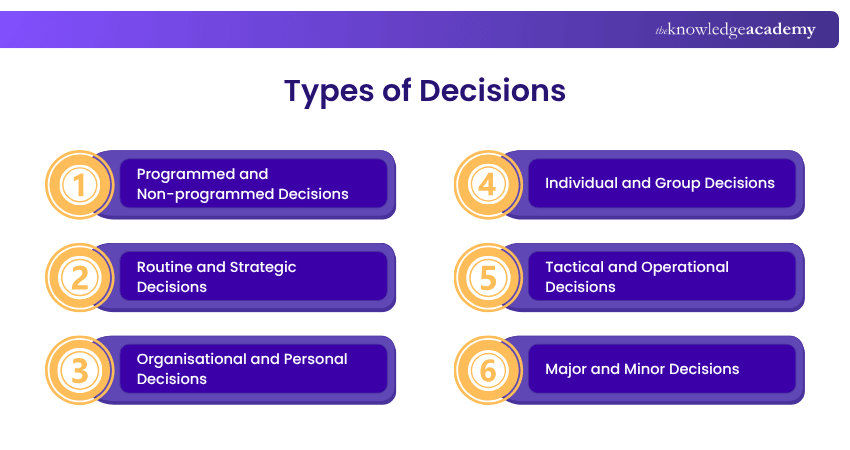
1) Programmed and Non-programmed Decisions
Programmed Decisions:
a) Address routine repetitive problems
b) Use established methods and procedures
c) Simple, short-term, and made by lower-level managers
d) Example: Handling employee tardiness using a standard disciplinary process
Non-programmed Decisions:
a) Deal with unique, complex issues requiring executive judgment
b) No predefined solutions; require creative problem-solving
c) Made by higher-level managers
d) Example: Deciding to launch a new product or choosing a factory location
2) Routine and Strategic Decisions
Routine Decisions:
a) Repetitive and related to day-to-day operations
b) Short-term, handled by lower-level management using established procedures
c) Example: Deciding on employee overtime payments
Strategic Decisions:
a) Long-term involves significant investment and planning
b) Impact the future direction of the organisation
c) Made by higher management
d) Example: Entering a new market or implementing major organisational changes
Make better decisions with the Decision Making Process PDF. Download it now!
3) Organisational and Personal Decisions
Organisational Decisions:
a) Made by managers in their official capacity as resource allocators
b) Directly impact the organisation’s functioning
c) Can be delegated
d) Example: Allocating resources for a new project
Personal Decisions:
a) Made by managers in their individual capacity
b) Related to personal matters and cannot be delegated
c) It may indirectly impact the organisation
d) Example: A manager deciding to retire early, affecting company succession planning
4) Individual and Group Decisions
Individual Decisions:
a) Made by a single person based on available information
b) Quick and often straightforward
c) Example: A manager deciding on a budget allocation for a department
Group Decisions:
a) Involve input from multiple people, often made by committees or boards
b) Encourage diverse perspectives but may cause delays
c) Example: A Board of Directors making decisions on company mergers
Be a great leader through our Leadership Skills Course - sign up now!
5) Tactical and Operational Decisions
Tactical Decisions:
a) Focus on short-term actions to implement broader strategies
b) Made by middle management
c) Example: Deciding on a marketing campaign to boost sales next quarter
Operational Decisions:
a) Concern routine day-to-day activities and procedures
b) Short-term and handled by lower-level managers or supervisors
c) Example: Creating daily work schedules for employees
6) Major and Minor Decisions
Major Decisions:
a) Significant, long-term decisions that can affect life or business outcomes
b) Requires careful thought, research, and often external advice
c) Example: Deciding on a career path or buying a house
Minor Decisions:
a) Small, everyday choices with short-term impacts
b) Made quickly with minimal deliberation
c) Example: Deciding what to eat for lunch or which movie to watch
How Can Decision Making Be Improved?
The improvement of Decision Making can be achieved through the acquisition of information that is relevant, the analysis of available alternatives, and the evaluation of possible consequences of each choice. Risk assessment, consulting others when necessary, and understanding past choices are other methods that could empower individuals to make more effective and confident choices.
What Are Common Decision Making Challenges?
The issues that are common in Decision Making include the inadequacy of information, time, uncertainty, and personal bias. These aspects may complicate the process of assessing options. It can also result in poor decisions due to overthinking of decisions or depending on assumptions, unless the situations are analysed.
Enhance your organisational efficiency through our Decision Making Course – Register today!

The Knowledge Academy develops accessible learning content across Project Management, IT, Cybersecurity, Data Science, Business Analysis, HR, Accounting and Finance, Leadership and Health and Safety. Its resources combine subject research with clear explanations to help professionals build practical knowledge across a wide range of disciplines.
View Detail

 If you wish to make any changes to your course, please


