


We may not have the course you’re looking for. If you enquire or give us a call on 01344203999 and speak to our training experts, we may still be able to help with your training requirements.
Benefits of Soft Skills in the Workplace
ByThe Knowledge AcademyLast updated on: 12 November 2026
Soft skills help professionals communicate effectively, build stronger relationships and handle workplace challenges with confidence. Explore the top benefits of soft skills, from improved leadership and productivity to greater adaptability, creativity and professional growth.

Quick Preview
1. Soft skills improve communication, encourage professionalism and strengthen workplace relationships.2. Empathy, patience and active listening help professionals deliver better customer experiences.3. Strong interpersonal abilities support effective leadership, employee satisfaction and constructive conflict resolution.4. Creativity, time management and adaptability help employees improve productivity and respond to workplace changes.5. Regular practice, feedback and self-awareness help individuals develop soft skills and build confidence.
Two professionals. Similar qualifications. Comparable technical expertise.
Yet one builds stronger relationships, handles challenges calmly, and adapts quickly to change.
What makes the difference?
Often, it comes down to soft skills. From managing disagreements to navigating workplace changes, these abilities complement technical expertise and influence how professionals perform and interact at work. In this blog, we’ll explore the key benefits of soft skills and how they contribute to better workplace relationships and long-term career growth. Read on!
Top 10 Benefits of Soft Skills
Soft skills play an important role in how professionals communicate, collaborate and handle workplace challenges. Beyond improving individual performance, they also contribute to stronger teams and career development. Here are the top 10 benefits of soft skills in the workplace:
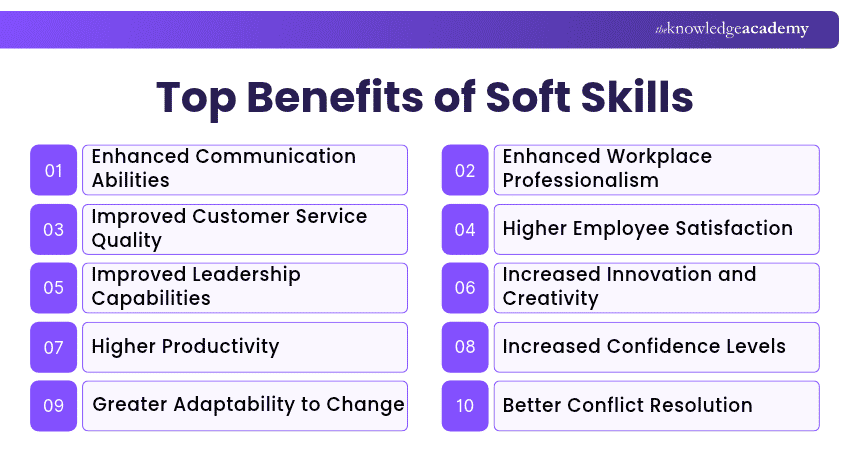
1) Enhanced Communication Abilities
Effective communication is essential for exchanging information, explaining ideas, and understanding different perspectives. Soft skills strengthen verbal, non-verbal, and written communication, helping individuals convey information clearly and appropriately.
They also encourage active listening, which involves paying attention, asking relevant questions, and confirming understanding. These abilities can reduce misunderstandings, support workplace discussions, and make everyday interactions more effective.

2) Enhanced Workplace Professionalism
Professional behaviour reflects how individuals manage their responsibilities, demonstrate integrity, and interact with others at work. Soft skills encourage accountability, reliability, respect, and appropriate workplace conduct.
These abilities help individuals respond constructively to feedback, maintain professional boundaries, and approach responsibilities with a positive attitude. Consistent professional behaviour can strengthen credibility and build trust among colleagues and managers.
3) Improved Customer Service Quality
Customer service involves more than responding to enquiries or resolving complaints. It requires understanding customer expectations, communicating clearly, and handling different situations professionally.
Soft skills such as empathy, patience, and active listening help individuals recognise customer concerns and provide appropriate responses. They also support effective complaint handling and constructive interactions, contributing to better customer experiences and potentially stronger customer relationships.
4) Higher Employee Satisfaction
A supportive workplace environment can influence employee satisfaction and willingness to remain with an organisation. Soft skills help managers and colleagues communicate respectfully, recognise concerns, and address disagreements constructively.
Empathy, emotional intelligence, and interpersonal awareness can also contribute to an environment where employees feel heard and valued. These abilities support healthy working relationships and may contribute to employee retention alongside factors such as fair pay, manageable workloads, career opportunities and organisational policies.
5) Improved Leadership Capabilities
Effective leadership requires more than assigning responsibilities and monitoring performance. Leaders also need to understand team dynamics, make informed decisions, and guide individuals through workplace challenges.
Soft skills such as empathy, conflict resolution and adaptability help leaders respond thoughtfully to different situations. These capabilities support constructive feedback, balanced decision-making, and effective team management.
Trainer's Insight:
General feedback such as "be more professional" provides limited direction. Specific observations about meeting contributions, responses to challenges or approaches to workplace tasks make development goals easier to understand and act upon.
Strengthen your ability to lead teams and make confident decisions with Leadership Courses – Join now!
6) Increased Innovation and Creativity
Innovation often begins with questioning existing approaches and exploring alternative solutions. Soft skills such as open-mindedness, curiosity, and collaborative problem-solving help individuals examine challenges from different perspectives.
They also encourage constructive discussions where team members can share suggestions, challenge assumptions, and build ideas. This creates opportunities to develop creative solutions, improve existing processes, and respond to changing business requirements.
7) Higher Productivity
Managing multiple responsibilities requires effective planning, organisation and time management. Soft skills help individuals establish priorities, maintain focus, and allocate appropriate time to important activities.
For example, prioritisation skills enable individuals to assess tasks according to urgency, importance, and deadlines rather than simply completing the easiest activities first. These practices can reduce unnecessary delays, improve workload management, and support consistent performance.
Take control of your schedule and accomplish more with Time Management Training - Register now!
8) Increased Confidence Levels
Confidence helps individuals express their opinions, take initiative, and approach unfamiliar professional situations with greater assurance. Developing soft skills can make it easier to participate in meetings, deliver presentations, and handle challenging conversations.
Skills such as self-awareness, assertiveness, and constructive feedback also help individuals recognise their strengths and identify areas for improvement. As these abilities develop through practice and experience, individuals can become more comfortable taking on new responsibilities.
9) Greater Adaptability to Change
Workplace requirements continue to evolve due to technological advancements, changing business priorities, and new ways of working. Soft skills such as flexibility, resilience, and openness to learning help individuals adjust to unfamiliar situations and changing expectations.
These abilities enable professionals to approach organisational changes with a constructive mindset, develop new working habits, and remain effective during periods of uncertainty. Greater adaptability also supports career development as job responsibilities and industry requirements evolve.
10) Better Conflict Resolution
Workplace disagreements can arise from differences in opinions, expectations, or approaches to completing tasks. Soft skills such as negotiation, patience, and emotional regulation help individuals address these situations objectively and constructively.
These abilities can help professionals identify underlying concerns, consider different viewpoints, and work towards mutually acceptable solutions. Effective conflict resolution can prevent disagreements from escalating and help maintain a respectful working environment.
How to Improve Your Soft Skills?
Improving soft skills requires consistent practice, self-awareness and a willingness to learn from everyday experiences. Whether you're looking to communicate better, build stronger relationships or grow professionally, small changes can make a meaningful difference. Here are some practical ways to improve your soft skills:
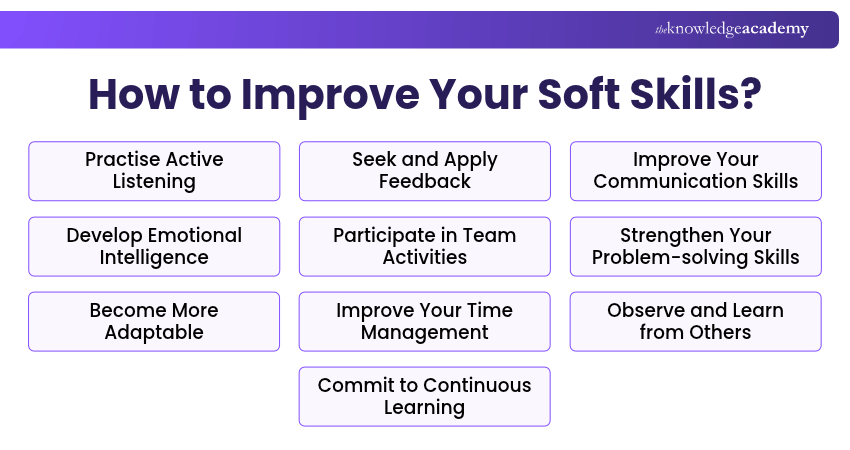
1) Practise Active Listening: Pay attention when others speak, avoid interruptions and ask relevant questions. This helps improve understanding and build stronger professional relationships.
2) Seek and Apply Feedback: Ask colleagues, managers or mentors for constructive feedback. Use their suggestions to find areas for improvement and develop your skills.
3) Improve Your Communication Skills: Practise explaining ideas clearly, structuring written messages and delivering presentations. Adapt your language and tone to suit different audiences and situations.
4) Develop Emotional Intelligence: Recognise your emotions, practise empathy and remain calm under pressure. This helps you manage workplace relationships and disagreements effectively.
5) Participate in Team Activities: Engage in group projects and team discussions to strengthen collaboration, cooperation and interpersonal skills.
6) Strengthen Your Problem-solving Skills: Analyse challenges, consider different solutions and evaluate outcomes before making decisions.
7) Become More Adaptable: Stay open to new responsibilities, changing priorities and different ways of working to handle workplace changes confidently.
8) Improve Your Time Management: Prioritise tasks, set realistic deadlines and organise your workload to improve productivity and reliability.
9) Observe and Learn from Others: Learn how experienced colleagues handle communication, conflicts and workplace challenges, and apply effective approaches in your own work.
10) Commit to Continuous Learning: Attend workshops, complete relevant training and practise new skills regularly to support ongoing personal and professional development.
Strengthen your ability to understand emotions and respond effectively with Emotional Intelligence Training – Join now!

The Knowledge Academy develops accessible learning content across Project Management, IT, Cybersecurity, Data Science, Business Analysis, HR, Accounting and Finance, Leadership and Health and Safety. Its resources combine subject research with clear explanations to help professionals build practical knowledge across a wide range of disciplines.
View Detail

 If you wish to make any changes to your course, please


