


We may not have the course you’re looking for. If you enquire or give us a call on 01344203999 and speak to our training experts, we may still be able to help with your training requirements.
Top Benefits of IT Service Management (ITSM) for Businesses
ByThe Knowledge AcademyLast updated on: 11 November 2026
IT Service Management (ITSM) helps organisations improve service delivery, efficiency and business resilience. Explore the key benefits of ITSM, including safer IT changes, faster incident resolution, reduced manual workload and better cost management.
At a Glance
1. Improved Efficiency: ITSM streamlines workflows and supports consistent service delivery.2. Faster Resolution: Structured incident management helps minimise service disruptions.3. Reduced Workload: Automation and self-service tools simplify routine IT tasks.4. Business Resilience: Service continuity planning helps organisations manage unexpected disruptions.5. Better Accountability: Clear responsibilities and service tracking improve transparency.
An employee cannot access an important application. A customer reports a recurring technical issue. An unexpected system outage disrupts business operations.
Different problems, but one common challenge: managing IT services effectively.
This is where IT Service Management (ITSM) comes into play. It provides a structured approach to designing, delivering, managing and improving IT services. But what makes ITSM valuable beyond resolving technical issues? This blog examines its wider benefits and why they matter to organisations. Read on to find out more!
Benefits of IT Service Management
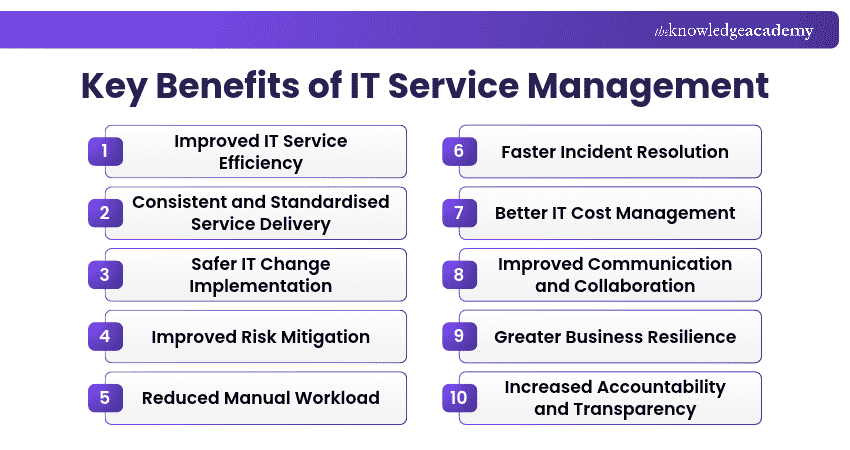
Effective ITSM practices help organisations manage service requests, resolve incidents, coordinate changes and improve overall service performance. Here are the key benefits of IT service management:
1) Improved IT Service Efficiency
ITSM helps organisations manage IT resources, workflows and service activities more effectively. By identifying unnecessary steps and improving resource allocation, IT teams can complete tasks with greater consistency.
Clear workflows also help minimise delays, improve coordination between teams and reduce unnecessary handovers. This enables IT professionals to respond to service needs more efficiently while maintaining service quality.

2) Consistent and Standardised Service Delivery
A well-implemented ITSM approach establishes clear procedures for handling IT services and support requests. Standardised workflows help teams follow consistent practices, reduce confusion and maintain service quality.
This consistency also makes it easier to train new IT staff, manage service requests across different teams and identify areas where service delivery can be improved. As a result, organisations can provide more reliable support and maintain service standards as their operations grow.
3) Safer IT Change Implementation
Poorly planned IT changes can disrupt business operations and affect service availability. ITSM practices, such as change enablement, provide a structured approach to assessing risks, authorising changes and planning their implementation.
Testing changes where appropriate, coordinating implementation schedules and preparing backout or recovery plans can further reduce the risk and impact of unsuccessful changes. These measures help IT teams identify potential problems before deployment and respond more effectively if a change does not proceed as expected.
4) Improved Risk Mitigation
ITSM helps organisations identify, assess and manage risks that could affect IT services and business operations. By examining service dependencies, security vulnerabilities, capacity limitations and potential points of failure, IT teams can better understand threats to service availability and performance.
Regular risk assessments, documented controls and clearly assigned responsibilities help organisations prioritise preventive actions based on the likelihood and potential impact of identified risks. This supports more informed decisions and reduces exposure to avoidable operational disruptions.
5) Reduced Manual Workload
Integrating automation into ITSM practices can reduce repetitive tasks such as ticket routing, service request processing and routine notifications. Automated workflows can also help ensure that requests reach the appropriate teams and that users receive timely status updates.
By reducing the time spent on routine administrative activities, effective automation can free up IT professionals to focus on resolving complex technical issues, improving service quality and addressing more demanding business needs.
6) Faster Incident Resolution
ITSM helps organisations respond to technical incidents through structured processes for identifying, logging, prioritising and resolving issues. Clear responsibilities and escalation procedures allow IT teams to assign incidents to the appropriate specialists and coordinate their response effectively.
Knowledge bases and automated workflows provide support teams with access to relevant solutions and help streamline incident handling. This can help teams restore services more quickly, minimise downtime and improve the user experience.
Pro Tip
Review recurring incidents instead of resolving each one in isolation. Identifying patterns and investigating their underlying causes can help IT teams reduce repeated disruptions and improve long-term service reliability.
7) Better IT Cost Management
ITSM supports better cost management by improving resource utilisation, reducing avoidable service disruptions and providing greater visibility into IT-related expenditure. Effective asset and service management also helps organisations track resource requirements, monitor costs and identify underused assets.
By analysing service costs and usage patterns, organisations can make informed budgeting decisions, prioritise essential investments and allocate financial resources more effectively.
8) Improved Communication and Collaboration
ITSM encourages clearer communication between IT teams, employees and other business departments. A well-organised service desk can provide users with a consistent channel for reporting issues and requesting support. Shared information and defined responsibilities also help teams coordinate activities, track progress and respond to service needs more effectively.
9) Greater Business Resilience
ITSM supports business resilience by helping organisations prepare for, respond to and recover from IT service disruptions. Practices such as service continuity management and recovery planning help organisations establish procedures for maintaining essential services during unexpected events.
For example, a documented recovery procedure can help IT teams restore critical services after a system failure. Regularly testing recovery plans and reviewing service dependencies can reveal preparedness gaps, allowing organisations to strengthen their continuity arrangements.
10) Increased Accountability and Transparency
ITSM promotes accountability by defining responsibilities, documenting service activities and tracking how requests and incidents are handled. This helps establish clear ownership of tasks and ensures that service-related decisions and actions can be traced to the responsible teams.
Service reports and performance indicators provide visibility into response times, unresolved requests and compliance with agreed service targets. This transparency supports better decision-making and helps organisations identify areas where service performance needs improvement.
Turn service standards into everyday excellence by joining the ISO 20000 Foundation Training now!

The Knowledge Academy develops accessible learning content across Project Management, IT, Cybersecurity, Data Science, Business Analysis, HR, Accounting and Finance, Leadership and Health and Safety. Its resources combine subject research with clear explanations to help professionals build practical knowledge across a wide range of disciplines.
View Detail

 If you wish to make any changes to your course, please


