


We may not have the course you’re looking for. If you enquire or give us a call on +31 208081674 and speak to our training experts, we may still be able to help with your training requirements.
12 Benefits of Email Marketing for Business
ByThe Knowledge AcademyLast updated on: 05 November 2026
Email Marketing delivers high ROI through cost-effective, targeted campaigns that build relationships, boost sales, grow loyalty, and nurture leads. It is one of the most effective ways for businesses to connect with their audience in a meaningful way, share tailored messages, promote products, and build strong customer relationships.

Attracting customers is only the beginning of business growth. The real challenge lies in maintaining their interest, encouraging repeat purchases and converting potential leads into loyal customers. Email marketing helps businesses achieve these goals through targeted messages, relevant offers and timely communication. To understand its impact, it is important to explore the benefits of email marketing and how they contribute to business growth.
12 Key Benefits of Email Marketing
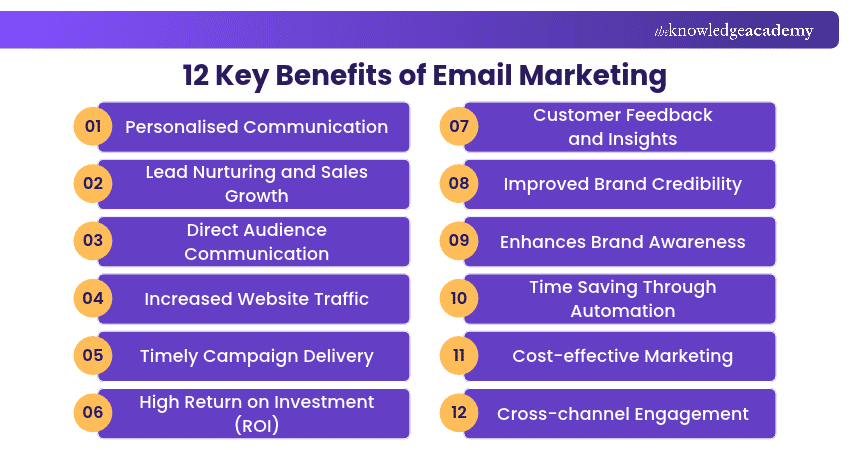
Email marketing enables businesses to share targeted messages, updates and offers with subscribers. When these communications are relevant and timely, they can support stronger customer relationships and business growth. The following 12 benefits show how email marketing can support customer engagement and business growth.
1) Personalised Communication
Email marketing enables businesses to personalise messages using subscriber names, preferences, purchase history and previous interactions. With appropriate customer data and audience segmentation, organisations can deliver content that reflects individual interests and encourages meaningful engagement.
2) Lead Nurturing and Sales Growth
Email marketing helps businesses nurture leads and guide potential customers through different stages of the buying journey. Drip campaigns, product information and relevant offers can help prospects assess their options and support purchase decisions.
3) Direct Audience Communication
One of the important benefits of email marketing is that it creates a direct and reliable communication channel between businesses and their audience. It helps brands stay connected, share updates, and maintain visibility. This leads to establishing familiarity, reinforcing trust, and retaining customers over the long term.

4) Increased Website Traffic
Well-written email campaigns can drive traffic to your website by featuring blog posts, new products or exclusive content. Including compelling Calls-To-Action (CTAs) encourages subscribers to visit relevant pages and explore additional resources. Increased website traffic creates more opportunities for engagement, lead generation and conversions.
5) Timely Campaign Delivery
Email marketing allows businesses to schedule campaigns and trigger messages based on subscriber actions or important events. Welcome emails, product updates and personalised offers can reach customers at appropriate times, helping maintain relevant and consistent communication.
6) High Return on Investment (ROI)
Email marketing offers the potential for a strong Return on Investment by allowing businesses to reach targeted audiences at a relatively low cost. Through audience segmentation, automation and performance tracking, businesses can optimise campaigns and improve marketing efficiency. The actual return depends on factors such as audience quality, engagement levels and conversion rates.
7) Customer Feedback and Insights
Email marketing helps businesses collect customer feedback and understand their experience with the brand. Businesses can share surveys through email campaigns to gather opinions, measure satisfaction, and track customer loyalty. These insights help to identify what is working well and highlight areas that need improvement.
Master email marketing strategies to boost engagement, conversions, and growth. Sign up for our Digital Email Marketing Course now!
8) Improved Brand Credibility
Consistent, high-quality email content helps build credibility and trust with your audience. When subscribers receive valuable information, insightful tips, or expert advice through email, they are more likely to see your brand as a reliable source of knowledge and expertise. This trust can strengthen customer relationships and encourage long-term loyalty.
9) Enhances Brand Awareness
Regular email campaigns help businesses maintain brand visibility and communicate consistently with subscribers. Sharing valuable content, updates, and relevant offers ensures that the brand remains top of mind. Over time, this familiarity can improve recognition and influence purchasing decisions when customers are ready to buy.
10) Time Saving Through Automation
Email marketing automation allows businesses to schedule messages, create automated sequences and respond to specific subscriber actions. This reduces repetitive manual work, supports consistent communication and gives marketing teams more time for campaign planning and optimisation.
11) Cost-effective Marketing
Email marketing can be a cost-effective way to communicate with existing subscribers and targeted audiences. Many email marketing platforms offer flexible pricing options, allowing businesses to scale campaigns according to their needs and budgets. This helps organisations maximise marketing reach while maintaining control over expenditure.
12) Cross-channel Engagement
Email marketing helps businesses connect subscribers with other digital channels, including websites and social media platforms. By sharing relevant links, content and campaign updates, organisations can encourage audiences to explore and interact with their wider online presence.
Strengthen your skills in multichannel campaigns, audience targeting and performance tracking with our Digital Marketing Training – Sign up today!
What Have We Learned?
1. Email marketing strengthens customer relationships through personalised communication.2. It helps generate leads, drive traffic and support conversions.3. Automation improves efficiency and maintains consistent engagement.4. Responsible email practices contribute to effective campaign performance.5. Campaign insights help businesses refine strategies and achieve better results.

The Knowledge Academy develops accessible learning content across Project Management, IT, Cybersecurity, Data Science, Business Analysis, HR, Accounting and Finance, Leadership and Health and Safety. Its resources combine subject research with clear explanations to help professionals build practical knowledge across a wide range of disciplines.
View Detail

 If you wish to make any changes to your course, please


