


We may not have the course you’re looking for. If you enquire or give us a call on 01344203999 and speak to our training experts, we may still be able to help with your training requirements.
15 Essential Virtual Assistant Skills for Professional Success
ByThe Knowledge AcademyLast updated on: 02 November 2026
Explore 15 essential Virtual Assistant skills, from communication and time management to scheduling, technical proficiency and data protection. Learn how these skills help Virtual Assistants manage daily tasks, support clients and deliver reliable remote administrative assistance.
Before We Dive In
Virtual Assistant skills combine clear communication, digital proficiency and organised working practices. Strong abilities in these areas help professionals handle remote administrative responsibilities accurately and efficiently.
A client needs an urgent meeting arranged, an overflowing inbox organised and an important report prepared before the end of the day. Handling these responsibilities remotely requires more than basic administrative knowledge. It demands strong Virtual Assistant skills.
From managing schedules and digital documents to communicating with clients and maintaining accurate records, Virtual Assistants support essential business activities. In this blog, we'll explore 15 essential Virtual Assistant skills and show how they support everyday professional responsibilities.
Essential Skills for Virtual Assistants
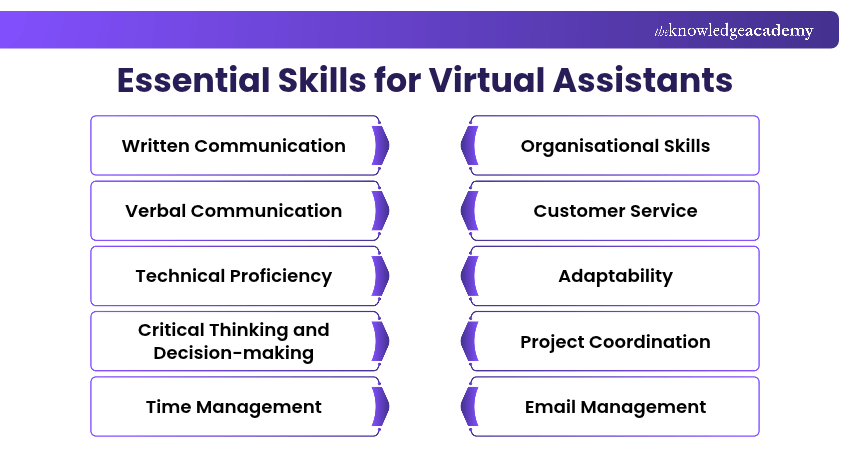
Virtual Assistants provide remote administrative and operational support to businesses, professionals and teams. Their responsibilities require communication, organisational, technical and problem-solving abilities. Here are 15 essential skills for effective virtual assistance:
1) Written Communication
Written communication helps Virtual Assistants prepare professional emails, reports, meeting notes and other business documents. Strong writing skills ensure information is presented clearly, with appropriate language and a consistent professional tone, reducing the risk of misunderstandings.

2) Verbal Communication
One of the key Virtual Assistant skills is effective communication. Virtual Assistants must communicate clearly during calls, virtual meetings and discussions with clients or colleagues.
Active listening, asking relevant questions and providing timely updates help them understand instructions and confirm expectations. These abilities support smooth collaboration, particularly when working remotely.
3) Technical Proficiency
Virtual Assistants need practical knowledge of digital tools, including email applications, calendars, spreadsheets, document editors and communication platforms.
Familiarity with Microsoft 365, Google Workspace, Microsoft Teams or Zoom can help Virtual Assistants complete administrative tasks efficiently. They should also be comfortable learning new applications based on client requirements.
4) Critical Thinking and Decision-making
Critical thinking and decision-making help Virtual Assistants assess situations, identify problems and choose appropriate solutions within their responsibilities.
For example, when two appointments overlap, a Virtual Assistant may review their priorities, check availability and suggest alternative times. More significant decisions should be referred to the client or relevant manager.
These skills support independent working while ensuring that decisions remain aligned with agreed instructions.
5) Time Management
Time management helps Virtual Assistants organise competing responsibilities, meet deadlines and maintain a manageable workload.
Virtual Assistants must prioritise tasks according to deadlines, urgency and client instructions while allocating sufficient time for meetings, correspondence and documentation. Using calendars, reminders and task schedules helps them complete assignments on time while maintaining accuracy.
Stop chasing deadlines; start taking control of your time by signing up for the Time Management Training today!
6) Organisational Skills
Organisational skills help Virtual Assistants maintain structured digital folders, update records and keep important information accessible. Clear filing systems and consistent naming practices make it easier to retrieve documents and support efficient administrative work.
7) Customer Service
Customer service skills help Virtual Assistants respond professionally to customers and maintain positive relationships. They may provide information, manage appointment requests, address routine concerns and refer complex issues to the appropriate team. Patience, clear communication and timely responses contribute to a positive customer experience.
Real-world Example
A customer contacts a business because they have not received confirmation of an appointment. The Virtual Assistant checks the booking records, confirms the appointment details and responds with the correct information.If the booking cannot be verified, they contact the appropriate team and keep the customer informed. This demonstrates professional communication, patience and effective customer support.
8) Adaptability
Adaptability helps Virtual Assistants respond to changing client priorities, unexpected requests and unfamiliar working processes. They may need to adjust schedules, learn new software or change their approach to complete assignments effectively. This flexibility allows them to handle changing situations while maintaining consistent support for clients.
9) Project Coordination
Virtual Assistants may support projects by organising task lists, tracking deadlines, arranging meetings and following up on assigned activities.
Their role typically involves coordinating administrative details rather than taking responsibility for overall project management. Familiarity with tools such as Trello, Asana or Microsoft Planner can help them monitor progress and maintain task visibility.
10) Email Management
Email management helps Virtual Assistants organise inboxes, categorise correspondence, flag urgent messages, prepare draft replies and follow up on outstanding requests. Effective email management helps maintain communication, prevent important messages from being overlooked and support timely responses.
Bonus Tip
Divide incoming emails into three groups: Action Required, Awaiting Response and Reference. Review urgent messages first, flag items requiring client approval and archive completed correspondence according to workplace policies. This creates a clearer inbox workflow and reduces the chance of missing important requests.
11) Data Entry Accuracy
Data entry accuracy helps Virtual Assistants maintain reliable business information and reduce errors in administrative records.
They may update spreadsheets, customer databases, contact lists and internal records. Accurate data entry requires checking information carefully, using consistent formats and correcting identified errors.
12) Calendar and Appointment Management
Calendar management is an important Virtual Assistant skill because professionals frequently rely on remote support to organise meetings and appointments.
Virtual Assistants schedule meetings, coordinate availability, send invitations and update calendars when plans change. They must also consider time zones, meeting durations and possible scheduling conflicts.
Simplify meeting schedules and calendar coordination with the Microsoft Outlook Training now!
13) Confidentiality and Data Protection
Virtual Assistants may handle sensitive information, including client contact details, business documents, appointment records and internal communications. Maintaining confidentiality is therefore essential.
They should follow organisational data protection policies, use approved storage and communication systems, protect account access and share information only with authorised individuals.
Trainer's Insight
Being authorised to access client information does not mean it can be shared freely. Before forwarding documents or granting access, confirm the recipient's permissions and use approved communication channels. This is particularly important when supporting several clients with separate accounts and records.
14) Attention to Detail
Attention to detail helps Virtual Assistants maintain accuracy when preparing documents, scheduling meetings, entering information and completing administrative tasks.
Checking names, dates, attachments and instructions before submitting work can prevent avoidable errors. This skill is particularly valuable when handling important correspondence, records or time-sensitive requests.
15) Research Skills
Virtual Assistants may conduct online research to gather business information, compare services, identify suppliers or prepare summaries for clients.
Effective research requires using reliable sources, checking the accuracy of information and presenting findings clearly. These abilities help clients make informed decisions without spending unnecessary time gathering basic information.
Get organised, stay focused and make productivity happen with the Organisational Skills Training – Sign up now!
Try This: Your Weekly Virtual Assistant (VA) Skills Challenge
Choose one administrative task you want to improve, such as preparing meeting notes or organising a shared document library. Practise it during the week, review your work and identify one improvement to apply next time. Repeat the exercise with a different skill each week.

The Knowledge Academy develops accessible learning content across Project Management, IT, Cybersecurity, Data Science, Business Analysis, HR, Accounting and Finance, Leadership and Health and Safety. Its resources combine subject research with clear explanations to help professionals build practical knowledge across a wide range of disciplines.
View Detail

 If you wish to make any changes to your course, please


