


We may not have the course you’re looking for. If you enquire or give us a call on +48 221041849 and speak to our training experts, we may still be able to help with your training requirements.
Top 15 Receptionist Skills for Workplace Success
ByCharlotte WilsonLast updated on: 24 October 2026
Receptionist skills combine communication, organisation, customer service and technical abilities to support smooth front-desk operations. This blog explores 15 essential Receptionist skills, explains their practical applications and provides useful ways to develop them for a professional workplace environment.
A Quick Look
1. Front-desk Coordination: Handling multiple enquiries requires clear priorities, accurate records and appropriate follow-up.2. Digital Proficiency: Familiarity with office applications and visitor management systems supports daily operations.3. Professional Conduct: Reliability, discretion and a calm approach are important when interacting with employees and visitors.4. Task Prioritisation: Managing competing demands requires organisation, judgement and effective use of time.5. Skill Development: Regular practice, feedback and continuous learning can strengthen Receptionist performance.
Digital Check-in System: “Check-in complete.”
Visitor: “Thanks, but I'm not sure where I need to go.”
Receptionist: “Of course. Let me help you find the right place.”
Sometimes, the smallest interaction makes the biggest difference. While technology can simplify routine reception tasks, communication, empathy and problem-solving remain important when people need personalised assistance. That's why developing Receptionist skills matters in today's workplaces.
Top 15 Essential Receptionist Skills
Receptionists often serve as the first point of contact for visitors, customers and employees. The following 15 skills help them manage front-desk responsibilities, communicate professionally and maintain accurate administrative records.
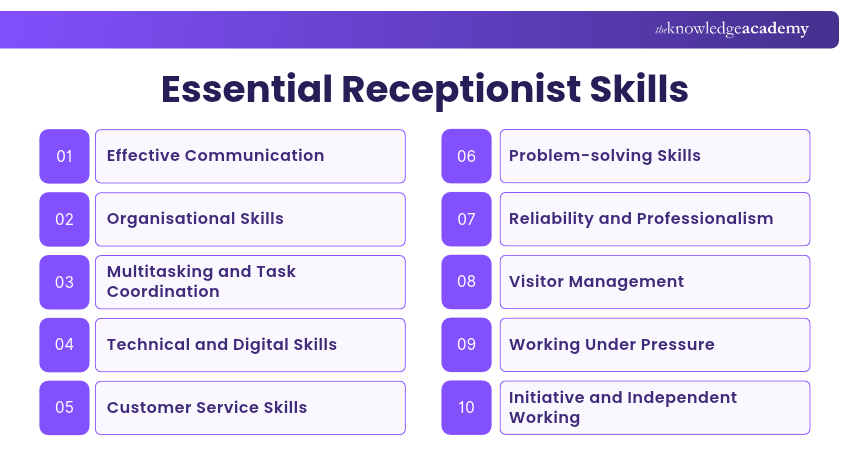
1) Effective Communication
Effective communication helps Receptionists welcome visitors, answer enquiries and share information clearly. It involves speaking politely, listening attentively and adapting communication styles to different situations. Receptionists should also confirm important details and communicate messages accurately to avoid misunderstandings between visitors, employees and departments.

2) Organisational Skills
Organisational skills enable Receptionists to maintain orderly schedules, documents, appointments and front-desk records. They help ensure essential information is accessible when needed and that administrative responsibilities are handled systematically. An organised approach also supports a welcoming reception area and reduces the risk of misplaced information or overlooked tasks.
3) Multitasking and Task Coordination
Receptionists frequently manage several responsibilities, including greeting visitors, answering calls, responding to emails and coordinating appointments. Effective task coordination involves recognising which activity needs immediate attention and switching between duties without losing important information. Rather than attempting everything simultaneously, Receptionists should organise competing requests according to urgency and workplace requirements.
Real-world Scenario
A visitor arrives while the Receptionist is answering a telephone call and preparing meeting documents. The Receptionist acknowledges the visitor, completes or appropriately transfers the call and then assists with check-in before returning to the documents.
4) Technical and Digital Skills
Modern reception work often involves using office software, email systems, digital calendars and visitor management platforms. Receptionists may also use document-sharing tools, spreadsheets, video meeting applications and industry-specific booking systems. Familiarity with these technologies helps them manage information accurately, coordinate schedules and adapt when organisations introduce new tools.
Pro Tip – Keep Your Digital Skills Current
Practise using commonly required office applications and learn the functions most relevant to your workplace. For example, creating recurring appointments, organising shared calendars and managing electronic records can make everyday tasks easier to coordinate.
5) Customer Service Skills
Customer service skills help Receptionists create a professional and welcoming experience for visitors and callers. These involve patience, courtesy, empathy and the ability to respond appropriately to different requests. Receptionists should listen carefully, provide accurate information and direct enquiries to the relevant person when a request falls outside their responsibilities.
Build empathy and emotional intelligence for better customer interactions with our Exceptional Customer Service Training – Sign up now!
6) Problem-solving Skills
Receptionists may encounter scheduling conflicts, missing information, delayed visitors or unexpected administrative issues. Problem-solving skills help them identify the issue, assess available options and take appropriate action. They should also recognise when a situation requires assistance from a manager, technical support team or another authorised employee.
7) Reliability and Professionalism
Reliability involves being punctual, completing responsibilities consistently and following agreed workplace procedures. Professionalism includes respectful behaviour, appropriate communication, accountability and maintaining suitable workplace standards. Together, these qualities help Receptionists establish trust with colleagues and visitors while supporting dependable front-desk operations.
8) Visitor Management
Visitor management involves welcoming guests, confirming appointments, following sign-in procedures and directing people to the appropriate location. Depending on workplace policies, Receptionists may also issue visitor passes, notify hosts and assist with access arrangements. Accurate visitor records and established security procedures help organisations manage entry responsibly while maintaining a professional experience.
Practical Example
A visitor arrives without a confirmed appointment. The Receptionist checks the booking information, contacts the relevant employee and follows the organisation's visitor access procedures. Entry to restricted areas should only be permitted after the required authorisation.
9) Working Under Pressure
Receptionists may face busy periods involving frequent calls, unexpected visitors and urgent requests. Working under pressure requires patience, emotional control and the ability to remain focused when several demands arise. Staying calm helps Receptionists communicate clearly, assess priorities and respond professionally without rushing important administrative tasks.
10) Initiative and Independent Working
Receptionists often need to make routine decisions without constant supervision. Initiative involves identifying what needs attention, taking appropriate action and completing responsibilities within established guidelines. Independent working also requires sound judgement, particularly when deciding whether a request can be handled directly or should be referred to an authorised colleague.
11) Industry and Organisational Knowledge
Understanding an organisation's services, departments, procedures and commonly used terminology helps Receptionists provide accurate assistance. The knowledge required may vary between sectors such as healthcare, hospitality, education and professional services. Familiarity with internal contacts and relevant workplace policies also helps Receptionists direct enquiries appropriately without giving information beyond their expertise.
12) Attention to Detail
Attention to detail is important when recording contact information, scheduling appointments, preparing documents and sharing messages. Small errors in names, dates or instructions can cause confusion or delays. Receptionists should check important information carefully and maintain accurate records to support reliable communication and administration.
13) Confidentiality and Data Protection
Receptionists may handle personal information, visitor records, contact details and confidential business documents. When processing personal data, they must follow applicable data protection requirements and organisational procedures.
Good practice includes protecting access to records, verifying identities where required and sharing information only with authorised people for appropriate purposes.
Confidentiality Check
Before sharing information, consider:
a) Authorisation: Is the recipient permitted to receive it?b) Necessity: Is sharing this information necessary for an authorised and legitimate purpose?c) Accuracy: Have the details been checked?d) Security: Is an approved communication method being used?
If you are uncertain, follow the organisation's data protection procedure rather than disclosing information without confirmation.
Learn practical techniques to prioritise tasks and improve daily productivity with our Time Management Training – Register now!
14) Time Management and Prioritisation
Time management helps Receptionists plan routine administrative duties around appointments, meetings and visitor enquiries. Prioritisation involves identifying tasks that need immediate attention and scheduling less urgent work appropriately. Unlike multitasking, which focuses on coordinating simultaneous demands, time management concerns planning workloads and using available time effectively.
Quick Priority Guide
|
Type of Task |
Suggested Approach |
|---|---|
|
Urgent safety or security concern |
Follow the relevant emergency or escalation procedure immediately |
|
Visitor waiting for an appointment |
Acknowledge the visitor and follow check-in procedures |
|
Time-sensitive call or message |
Record, transfer or communicate the information promptly |
|
Routine filing or record updates |
Schedule for a suitable period |
|
Non-urgent administrative request |
Confirm the expected deadline and plan accordingly |
Priorities may change according to workplace policies and the situation.
15) Telephone and Email Etiquette
Telephone and email etiquette involves maintaining clear, polite and professional communication across different channels. Receptionists should answer calls appropriately, identify themselves where required, take accurate messages and transfer enquiries to the correct person. Written communication should use clear subject lines, suitable greetings, concise explanations and accurate information.
For Example
Instead of sending an email saying, "Your appointment has changed," provide the revised date, time, location and any action the recipient needs to take.
How to Improve Your Receptionist Skills?
Improving Receptionist skills involves combining everyday practice with feedback, training and a willingness to learn. Whether you are preparing for your first Receptionist position or developing your existing abilities, the following approaches can help.
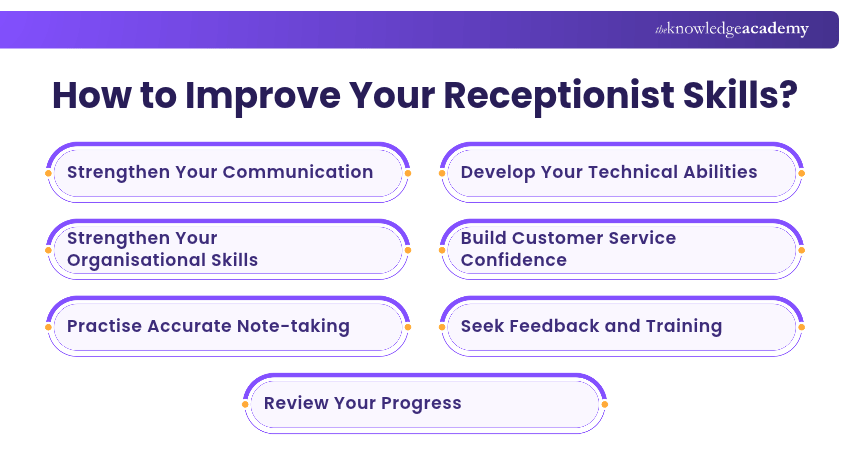
a) Strengthen Your Communication: Practise active listening, clear explanations and professional telephone conversations. Ask colleagues for feedback on how effectively you share and record information.
b) Strengthen Your Organisational Skills: Use calendars, task lists and organised filing systems to manage appointments, deadlines and administrative records.
c) Practise Accurate Note-taking: Record important details during calls, meetings and visitor interactions. Review notes for accuracy and use clear formats that make information easy to retrieve.
d) Develop Your Technical Abilities: Build confidence using office applications, scheduling platforms and digital communication tools. Learn relevant new systems as workplace requirements change.
e) Build Customer Service Confidence: Practise responding to common visitor enquiries, handling complaints courteously and identifying when assistance or escalation is appropriate.
f) Seek Feedback and Training: Request constructive feedback from colleagues or supervisors and consider relevant Receptionist, customer service or office administration training.
g) Review Your Progress: Set manageable development goals, practise regularly and reflect on which methods help you perform your responsibilities more effectively.
Understand how customer relationship management is used to build relationships with our Customer Relation Management Training – Register today!

Charlotte Wilson creates Business Skills content that helps professionals communicate more effectively, manage workplace pressures and collaborate with others. Her practical resources support stronger professional relationships, individual effectiveness and positive team behaviour.
View Detail

 If you wish to make any changes to your course, please


