


We may not have the course you’re looking for. If you enquire or give us a call on 01344203999 and speak to our training experts, we may still be able to help with your training requirements.
Top Event Planning Skills You Need for Successful Events
ByCharlotte WilsonLast updated on: 21 October 2026
Discover the essential event planning skills needed to manage budgets, suppliers, teams, risks and event delivery, along with practical ways to develop these abilities.
In this Blog
1. Event planning combines organisational, technical and interpersonal skills.2. Strong communication keeps clients, teams and suppliers aligned.3. Budgeting and negotiation help manage event costs effectively.4. Risk management and adaptability support smooth event delivery.5. Regular practice and feedback help strengthen event planning skills.
Planning a successful event looks exciting from the outside, but behind the scenes, it involves demanding deadlines, competing priorities and countless decisions. One missed detail or communication gap can disrupt months of preparation.
That's why creativity alone isn't enough to succeed in event management. Professionals need a combination of organisational, technical and interpersonal abilities to handle challenges effectively.
Whether you're starting your career or looking to improve your expertise, this blog explores the essential event planning skills and practical strategies to strengthen them. So, read on!
Essential Event Planning Skills
Successful event planning requires a combination of creativity, organisation and practical decision-making. From managing budgets and coordinating suppliers to handling unexpected challenges, Event Planners must balance multiple responsibilities while ensuring everything runs smoothly. Each skill supports a different stage of the event planning process, from preparation and coordination to delivery and evaluation.
Here are the essential event planning skills that contribute to effective planning and successful event execution:
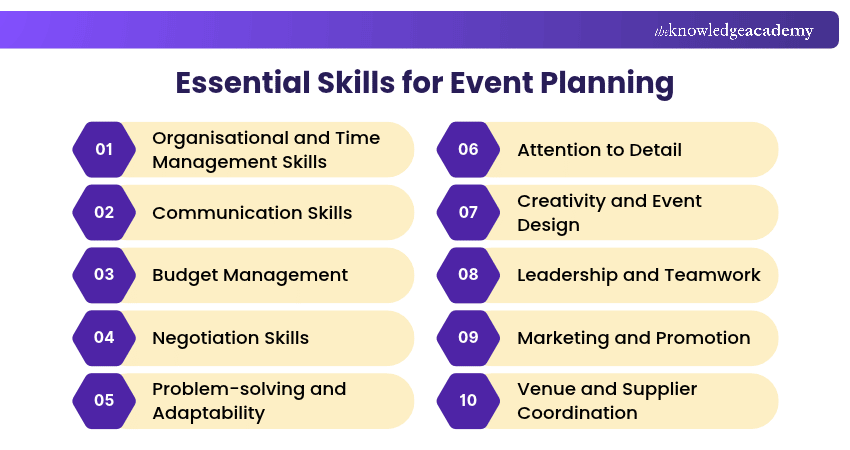
1) Organisational and Time Management Skills
Organisational and time management skills help Event Planners coordinate schedules, prioritise tasks and meet important deadlines. These abilities ensure that different activities, from initial preparations to event-day operations, are completed in the correct sequence.
Example: An Event Planner creates a detailed timeline for a corporate conference, scheduling venue preparations, speaker sessions and guest registrations to prevent delays.
How to Develop: Practise creating event timelines, setting realistic deadlines and using planning tools such as Trello, Asana or Google Calendar to track progress.
2) Communication Skills
Effective communication helps Event Planners convey information clearly to clients, suppliers, attendees and team members. It involves providing timely updates, explaining expectations and ensuring everyone understands their responsibilities. Strong communication also reduces misunderstandings and supports smooth coordination throughout the event.
Example: An Event Planner briefs the catering team about dietary requirements and confirms arrangements with the client before a corporate dinner.
How to Develop: Practise writing clear emails, delivering concise briefings and adapting your communication style to different audiences.
3) Budget Management
Budget management involves estimating expenses, allocating funds and monitoring costs throughout the event planning process. Event Planners must balance financial limitations with quality expectations while accounting for venue charges, catering, equipment and other operational expenses.
Example: An Event Planner prepares a budget for a product launch, allocating funds to venue hire, promotional materials, catering and contingency expenses.
How to Develop: Practise creating event budgets using Excel, comparing estimated and actual expenses, and identifying opportunities to control costs.
Trainer’s Pro Tip
Build a small contingency allowance into your event budget for unexpected costs. Track estimated and actual expenses throughout planning so you can adjust spending before costs become difficult to control.
4) Negotiation Skills
Negotiation skills help Event Planners secure suitable agreements with venues, suppliers and service providers. Effective negotiation involves understanding pricing structures, discussing contract terms and finding arrangements that meet event requirements without compromising essential standards.
Example: An Event Planner negotiates a discounted accommodation package with a hotel for a three-day business conference.
How to Develop: Practise comparing supplier quotations, discussing service terms and identifying mutually beneficial agreements through negotiation exercises.
Strengthen your ability to influence decisions with our Negotiation Skills Training – Join now!
5) Problem-solving and Adaptability
Problem-solving and adaptability help Event Planners make timely adjustments when day-to-day issues or unexpected changes affect planned activities. These skills involve assessing immediate challenges, identifying workable alternatives and adjusting arrangements without losing sight of event objectives.
Example: When a keynote speaker arrives late, an Event Planner rearranges the session order to keep the conference running without major interruptions.
How to Develop: Practise solving realistic event scenarios, evaluating alternative solutions and making timely decisions under pressure.
6) Attention to Detail
Attention to detail involves carefully reviewing event arrangements to identify errors, omissions or inconsistencies. It ensures that important elements, such as seating arrangements, guest information, signage and presentation materials meet the agreed specifications.
Example: Before a wedding reception, an Event Planner checks seating cards, dietary preferences and table arrangements to ensure every guest is accommodated correctly.
How to Develop: Create detailed event checklists, review arrangements systematically and practise identifying errors in sample event plans.
7) Creativity and Event Design
Creativity and event design skills help planners develop engaging concepts that reflect an event's purpose, audience and desired atmosphere. These abilities involve selecting suitable themes, layouts, visual elements and interactive experiences that make an event distinctive.
Example: An Event Planner designs an interactive product launch featuring themed displays, live demonstrations and branded experience zones.
How to Develop: Explore event design trends, create mood boards and practise developing concepts for different audiences and event formats.
8) Leadership and Teamwork
Leadership and teamwork skills enable Event Planners to guide teams, delegate responsibilities and maintain cooperation during event preparation and delivery. Effective leadership involves assigning tasks according to individual strengths, monitoring performance and keeping team members motivated.
Example: During a music festival, an Event Planner assigns responsibilities to registration staff, stage coordinators and volunteers while supervising overall team performance.
How to Develop: Take responsibility for small group projects, practise delegating tasks and seek feedback on your leadership approach.
9) Marketing and Promotion
Marketing and promotion skills help Event Planners attract the right audience and generate interest before an event. These skills involve identifying target attendees, selecting promotional channels, developing campaign messages and monitoring registration performance.
Example: An Event Planner promotes a business networking event through email invitations, LinkedIn posts and targeted digital advertisements to increase registrations.
How to Develop: Practise creating promotional campaigns, writing engaging event descriptions and evaluating campaign performance using engagement and registration metrics.
Quick Check
Which metric can help an Event Planner evaluate whether promotional activity is attracting attendees?
A. Seating capacityB. Registration performanceC. Supplier availabilityD. Venue layoutAnswer: B. Registration performance
10) Venue and Supplier Coordination
Venue and supplier coordination involves managing the logistical arrangements required to deliver an event successfully. Event Planners oversee venue readiness, equipment delivery, catering schedules and supplier responsibilities to ensure that services are available when needed.
Event Planners should also consider accessibility requirements, including suitable venue access, seating arrangements and facilities, to help ensure attendees can participate comfortably.
Example: An Event Planner coordinates with the venue manager, audiovisual technicians and catering providers to prepare a conference hall before attendees arrive.
How to Develop: Practise preparing supplier schedules, reviewing service requirements and creating logistical plans for different event formats.
11) Technical Skills (Event Software and Tools)
Technical skills help Event Planners use digital platforms to simplify registration, ticketing, attendee management and event operations. Familiarity with event management software also supports coordination across physical, virtual and hybrid event formats.
Example: An Event Planner uses Eventbrite to manage registrations and Microsoft Teams to coordinate virtual speaker sessions during a hybrid conference.
How to Develop: Explore event management platforms, practise setting up registration pages and familiarise yourself with virtual meeting and event technologies.
12) Risk and Crisis Management
Risk and crisis management skills help Event Planners identify potential threats, assess their impact and prepare suitable response plans. These skills cover safety considerations, emergency procedures, weather disruptions and other situations that could affect event continuity.
Example: Before an outdoor exhibition, an Event Planner prepares a contingency plan covering severe weather, emergency evacuation and alternative indoor arrangements.
How to Develop: Practise conducting risk assessments, preparing contingency plans and reviewing safety procedures relevant to different event environments.
13) Data Analysis and Post-event Evaluation
Data analysis and post-event evaluation help Event Planners measure performance and identify opportunities for future improvement. By reviewing attendance figures, financial outcomes, attendee feedback and engagement metrics, professionals can assess whether an event achieved its intended objectives.
Example: After a corporate seminar, an Event Planner analyses registration numbers, attendance rates and survey responses to evaluate participant satisfaction.
How to Develop: Practise creating post-event reports, interpreting survey results and using event performance metrics to recommend improvements.
Build practical data analysis skills with our Data Analysis Skills – join today!
How to Develop and Strengthen Your Event Planning Skills?
Improving your event planning skills requires practical experience, continuous learning and regular feedback. Here are some effective ways to develop your expertise:
1) Explore Relevant Event Planning Qualifications: Consider professional learning opportunities that strengthen your knowledge of event management practices.
2) Gain Practical Experience: Volunteer at events, complete internships or assist experienced organisers to develop real-world expertise.
3) Build an Event Planning Portfolio: Document event timelines, budgets, supplier plans and outcomes from projects you have worked on to demonstrate your growing capabilities.
4) Seek Structured Feedback: Ask clients, colleagues or experienced planners for constructive feedback on your planning, communication and event delivery.
5) Stay Updated with Industry Trends: Follow event management publications, industry reports and professional associations to learn about emerging practices.
6) Learn and Network Through Social Media: Connect with event professionals on LinkedIn and participate in relevant industry discussions.
7) Build Your Soft Skills: Develop emotional intelligence, conflict resolution and resilience through teamwork, practice and constructive feedback.
Remember
Focus on one or two event planning skills at a time. Set a practical improvement goal, apply it during an event and review the outcome before moving on to your next development area.
Strong event planning skills develop through consistent practice, reflection and real-world application. Focus on the areas you want to improve, apply your learning across different events and continue refining your approach as your responsibilities grow.
Strengthen confidence in handling people, projects, and business challenges with Management Courses – Sign up now!

Charlotte Wilson creates Business Skills content that helps professionals communicate more effectively, manage workplace pressures and collaborate with others. Her practical resources support stronger professional relationships, individual effectiveness and positive team behaviour.
View Detail

 If you wish to make any changes to your course, please


