


 Top Rated Course

We may not have the course you’re looking for. If you enquire or give us a call on 01344203999 and speak to our training experts, we may still be able to help with your training requirements.
Top 10 Digital Marketing Skills
James Smith 28 August 2026This blog explains the essential Digital Marketing Skills, including SEO, social media, content creation, email marketing and analytics.

Training Outcomes Within Your Budget!
We ensure quality, budget-alignment, and timely delivery by our expert instructors.
Table of Contents
Key Takeaways
a) Digital Marketing needs a mixture of creative, analytical, technical and communication skills.b) SEO, content, social media, and paid advertising are key areas to develop.c) Understanding the target audience is key for building relevant campaigns.d) Practical projects and a portfolio can help demonstrate your skills to employers.e) Digital Marketers should keep learning as platforms, tools and customer behaviour change.
Imagine a brand investing time and money in its online presence but still struggling to reach the people most likely to engage with it. Its website may be difficult to find, its content may be overlooked, and its campaigns may not deliver the expected results.
Now imagine the team behind that brand asking:
“How can we reach the right audience and make our digital activity more effective?”
This is where Digital Marketing Skills become important. Skills such as SEO, content creation, social media, email marketing and analytics help professionals plan relevant campaigns, understand audience behaviour and measure what works.
This blog explores the key Digital Marketing Skills and practical ways to develop them. Let’s begin!
What are Digital Marketing Skills?
Digital Marketing Skills are the abilities used to promote products, services or brands through online channels. These channels can include search engines, websites, email, social media, video platforms and paid advertising.
Digital Marketing Skills combine technical knowledge with creativity and communication. A Digital Marketer may research audiences, create content, optimise a webpage, manage an advertising campaign and use data to understand what should improve next.

Top Digital Marketing Skills
This section of the blog will expand on some of the most essential skills required in the domain of Digital Marketing. Let’s explore them in detail:
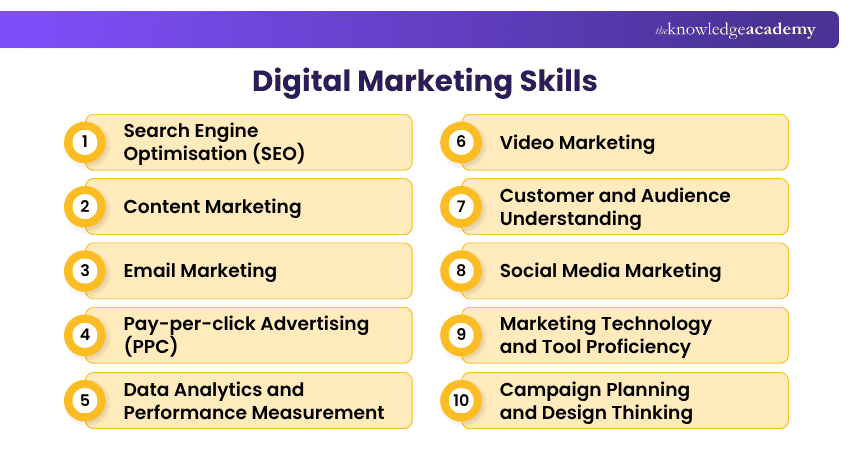
1) Search Engine Optimisation (SEO)
Search Engine Optimisation (SEO) refers to the practice of helping search engines understand website content and helping users find relevant pages through search results. It involves researching the words and questions an audience uses, creating useful content and ensuring pages are easy for search engines to understand.
Digital Marketers should understand on-page optimisation, internal linking, basic technical SEO and performance measurement. Strong SEO focuses on people-first content that genuinely meets a user’s needs, rather than using tactics designed only to influence rankings.
Learn to turn search intent into lasting visibility with the SEO Course now!
2) Content Marketing
Content marketing refers to a Digital Marketing strategy that involves creating and sharing valuable, relevant content to attract and retain a clearly defined audience. The goal is to drive profitable customer actions by meeting the needs of that audience. This content can take many forms, such as blogs, e-books, podcasts, or webinars.
Content marketing is based on the thought that conventional ads are less productive. Today’s customers are more aware and choose useful content through direct promotions. Instead of relying on ads, content marketing concentrates on sharing helpful and appropriate information.
3) Email Marketing
Email marketing means sending promotional or business emails to people who’ve signed up to hear from a company. It helps organisations communicate directly with people who have agreed to receive their messages. It can be used to welcome new subscribers, share useful content, promote relevant offers or maintain customer relationships.
A capable Email Marketer understands audience segmentation, subject lines, message structure, calls to action and performance measures like delivery, click and conversion rates. They should also follow applicable privacy and marketing-consent requirements.
4) Pay-per-click Advertising (PPC)
Pay-per-click advertising is a model in which advertisers may pay when a user clicks their advert. Search advertising commonly involves selecting relevant keywords, creating suitable adverts, setting budgets and directing users to useful landing pages.
This skill requires more than bidding on keywords. Ad placement and performance can be influenced by factors like bid, expected click-through rate, ad relevance and landing-page experience. Digital Marketers should learn how to define campaign goals, test messaging, monitor spending and evaluate results.
5) Data Analytics and Performance Measurement
Data analytics helps Digital Marketers understand how audiences interact with a website, campaign or piece of content. Relevant measures may include traffic sources, engagement, leads, sales, conversion rates and customer behaviour.
The most valuable skill is selecting meaningful measures, interpreting them in context and using the findings to make better decisions. For example, a campaign with high traffic but low conversions may need a clearer message, a more relevant landing page or a different audience strategy.
6) Video Marketing
Video marketing uses visual content to explain ideas, demonstrate products, share customer stories or engage audiences across digital channels. Depending on the objective, videos may be short social clips, tutorials, webinars, interviews or product demonstrations.
Marketers should understand how to plan a clear message, adapt content to the platform and measure whether viewers take the intended next step. Effective video marketing depends more on relevance and clarity than on expensive equipment.
7) Customer and Audience Understanding
Successful marketing begins with understanding the people an organisation wants to reach. This includes their needs, challenges, goals, preferences and the channels they use to seek information or make decisions.
Digital Marketers can develop this skill through customer research, surveys, interviews, website data, search behaviour and feedback. These insights help them create more relevant messages, content and campaigns rather than relying on broad assumptions.
Important Note
Digital Marketing tools will continue to change. However, the ability to understand audiences, communicate clearly, evaluate performance and improve campaigns using evidence remains valuable across different roles and technologies.
8) Social Media Marketing
Social media marketing involves using relevant social platforms to build awareness, encourage engagement and support wider marketing objectives. It can include organic content, community interaction, paid advertising and performance analysis.
The key skill is choosing the platforms and content formats that suit the audience and objective. Digital Marketers should know how to plan content, maintain a consistent brand voice, respond appropriately to engagement and measure meaningful results.
Find, engage and convert the right leads by signing up for the Lead Generation Course today!
9) Marketing Technology and Tool Proficiency
Digital Marketers work with a range of tools, such as analytics platforms, email systems, content management systems, customer relationship management tools and advertising dashboards. They should be confident learning and using the tools relevant to their role.
Tool proficiency also includes understanding how data moves between systems, maintaining accurate information and using technology responsibly. This helps marketers collaborate effectively with teams such as sales, design, development and data analytics.
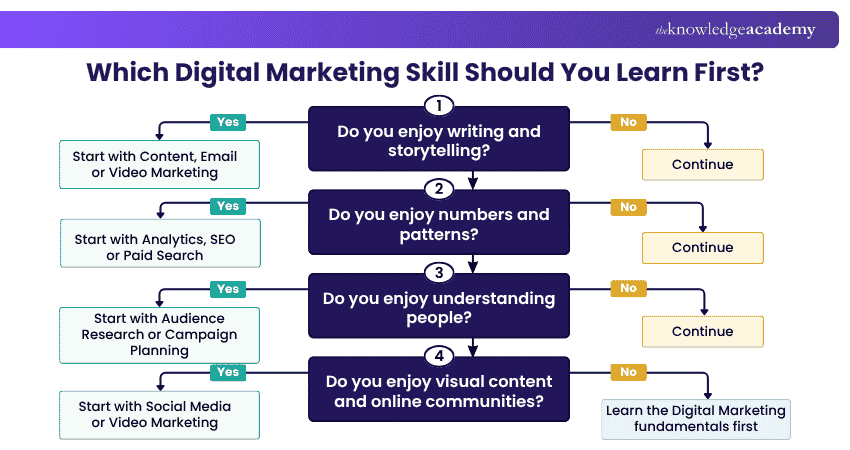
Trainer Insight
You do not need to master every Digital Marketing Skill at once. Start by building a strong foundation in audience understanding, content and analytics. Then develop deeper expertise in the area that best matches your interests and career goals.
10) Campaign Planning and Design Thinking
Campaign planning involves setting a clear objective, identifying an audience, selecting channels, assigning resources and deciding how success will be measured. It helps teams create connected activity rather than publishing content or adverts without a defined purpose.
Design thinking adds a customer-centred approach to this process. By researching user needs, testing ideas and improving based on feedback, Digital Marketers can create campaigns that are more relevant, useful and effective.
How to Develop Digital Marketing Skills?
Learning how to develop your Digital Marketing Skills is key to growing your career in the field. Here are some effective steps you can take to strengthen and improve your Digital Marketing abilities:
1) Build Practical Projects
Develop your skills through realistic work like creating a content plan, auditing a webpage, designing an email sequence or planning a small campaign. Use a personal project, voluntary opportunity or simulated brief to show how you researched an audience, made decisions and evaluated results.
2) Learn Relevant Tools and Platforms
Learn tools that support your chosen area of Digital Marketing, such as website analytics and reporting tools for analytical roles or content management. Focus on the principles behind each tool, including setting objectives, interpreting data and improving performance, as platforms can change over time.
3) Develop an Evidence-based Portfolio
Create a portfolio that shows how you apply Digital Marketing Skills in practice. Include work samples alongside the goal, your approach, key decisions and outcome or learning gained. You do not need confidential data; a clear campaign plan, content sample or performance analysis can demonstrate your ability.
4) Keep Up with Industry Changes
Digital Marketing evolves as search behaviour, technology, privacy expectations and advertising platforms change. Regularly review reliable industry guidance and platform updates, then assess which changes are relevant to your audience, objectives and organisation.
Quick Self-check
Which Skill Should You Develop Next?
a) Can you explain who your target audience is and what they need?b) Can you create content that supports a clear marketing objective?c) Can you measure whether a campaign is achieving its intended result?d) Are you comfortable using at least one marketing or analytics tool?e) Can you explain how you would improve a campaign using feedback or data?
Conclusion
Strong Digital Marketing Skills help you plan effective campaigns, reach the right audiences and evaluate results. From SEO and social media to analytics, each skill supports better decision-making. Also, continued learning and practical experience can help you adapt to change and progress in your Digital Marketing career.
Learn how to optimise strategies using SEO, social media, and content tools. Join the Digital Marketing Tools Training now!
Frequently Asked Questions
How are Digital Marketing Strategies Different from Traditional Marketing Methods?

Digital Marketing utilises online channels like social media, email, and websites, offering real-time analytics and targeted advertising. Whereas traditional marketing relies on offline methods such as print, TV, and radio.
What are Some Cost-effective Digital Marketing Tactics for Small Businesses?
Cost-effective strategies include leveraging social media platforms, optimising SEO, utilising email marketing, and creating engaging content to attract and retain customers.
Do I Need a Degree to Develop Digital Marketing Skills?
A degree is not always required to develop Digital Marketing Skills or enter the field. Employers often value practical ability, relevant work examples and an understanding of how to use digital channels to support business goals.

James Smith


Digital Marketing Manager and Trainer
James Smith is a digital marketing professional with over a decade of experience in SEO, content strategy, paid media and analytics. He has supported both SMEs and global brands in transforming their digital presence. James’s writing and training are rooted in results-driven tactics and the latest marketing trends.
View Detail

 If you wish to make any changes to your course, please


