


 Top Rated Course

We may not have the course you’re looking for. If you enquire or give us a call on 01344203999 and speak to our training experts, we may still be able to help with your training requirements.
Communication Skills: The Key to Better Interactions
Charlotte Wilson 03 September 2026Learn about communication skills, their different types, key benefits, and practical techniques for improving the way you interact with others.

Training Outcomes Within Your Budget!
We ensure quality, budget-alignment, and timely delivery by our expert instructors.
Table of Contents
Key Takeaways
1. Communication skills enable individuals to share ideas clearly while understanding different perspectives and responses.
2. Strong communication supports clearer understanding, better collaboration, and stronger personal and professional relationships.
3. Active listening, empathy, clarity, assertiveness, and feedback are important communication abilities.
4. Effective communicators adapt their message, tone, and communication channel based on their audience and situation.
5. Communication skills can improve through regular practice, feedback, reflection, and greater awareness of common barriers.
“Sure.”
One word. Yet depending on the tone, expression, and situation, it could mean absolutely, if I have to, I don’t believe you, or even let’s just move on.
That is the fascinating thing about communication. What we say is only part of what others understand. Our tone, body language, timing, and choice of words all shape an interaction. Developing strong communication skills can help close this gap and make everyday conversations clearer, more thoughtful, and more effective.
So, how can we make sure our message is understood the way we intend? Let’s find out.
What are Communication Skills?
Communication skills are the abilities used to express, receive and understand information, ideas and emotions effectively. They include speaking, listening, writing, non-verbal communication and adapting messages to different audiences.
In everyday and professional settings, these skills support clearer understanding, stronger relationships and more effective interactions. Good communicators also adjust their tone, level of detail and communication method according to the situation.
Types of Communication Skills
Communication can take different forms depending on how information is shared. Each type contributes to how effectively people understand one another. The main types of communication include the following:
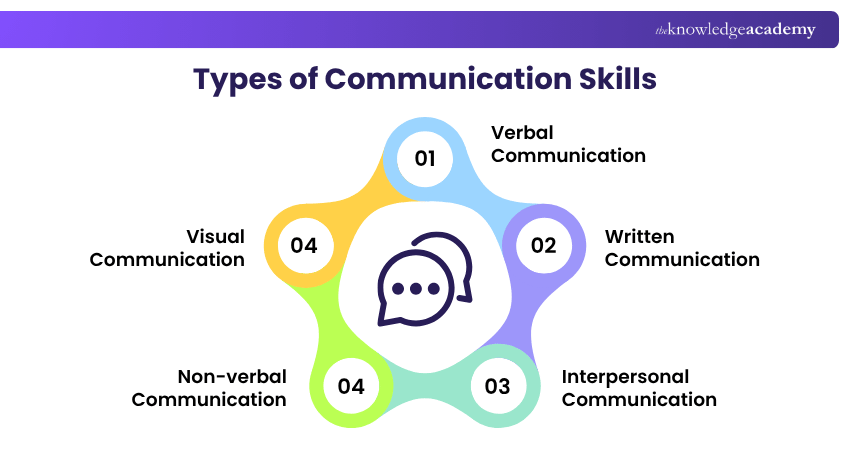
1) Verbal Communication
Verbal communication means sharing thoughts using spoken words. It’s about what you say and how you say it. Your tone, pitch and clarity can make a huge difference in how people understand your message.
2) Written Communication
Written communication is about expressing your thoughts through writing. This includes emails, messages, reports, or notes that are clear, simple, and easy to read. Good writing helps others understand your ideas quickly.
3) Interpersonal Communication
Interpersonal communication helps you build and maintain good relationships with others. It includes listening, showing empathy, understanding feelings, and responding in a kind and respectful way.
Myth vs Fact
Myth: Being a confident speaker automatically makes someone a good communicator.Fact: Good communication also requires listening, understanding others, adapting your approach, and checking that the intended message has been understood.
4) Non-verbal Communication
Non-verbal communication is the way you express yourself without using words. Your gestures, facial expressions and eye contact can say a lot about how you feel and what you mean.
5) Visual Communication
Visual communication is the way of sharing information using pictures, charts, graphs, or diagrams. It helps people understand ideas more easily, especially during presentations or when reading reports.
Boost communication with compelling visuals with the Visual Communication Course - Register today!
Essential Communication Skills
Effective communication depends on several connected abilities rather than one single skill. Let’s check the essential communication skills that can enhance how you interact:
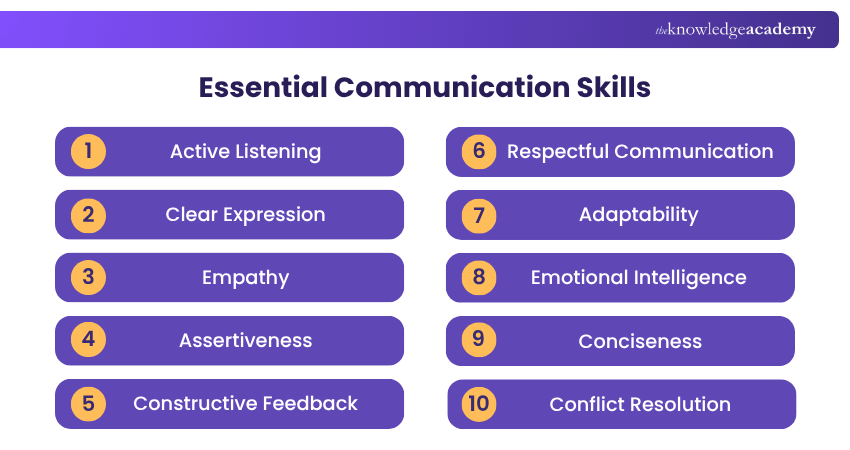
1) Active Listening
Active listening involves giving another person your attention and making an effort to understand their complete message before responding. Asking relevant questions and summarising key points can help confirm understanding.
2) Clear Expression
Clear expression means presenting information in a way that is easy for others to understand. Direct language, logical structure, and sufficient context can reduce unnecessary confusion.
3) Empathy
Empathy helps you consider another person’s feelings, experiences, and perspective. It can be particularly valuable during sensitive conversations, disagreements, or situations involving different viewpoints.
4) Assertiveness
Assertive communication allows you to express ideas, requirements, and boundaries clearly while remaining respectful. It helps individuals communicate confidently without becoming aggressive or dismissive.
5) Constructive Feedback
Constructive feedback focuses on specific behaviour, outcomes, and possible improvements rather than personal criticism. Receiving feedback effectively also requires listening carefully before responding.
6) Respectful Communication
Respectful communication involves acknowledging different viewpoints, avoiding unnecessary interruptions, and responding professionally even when opinions differ.
Trainer’s Tip: Before responding during an important conversation, confirm that you have understood the other person correctly. A short clarification can prevent an incorrect assumption from shaping the rest of the discussion.
7) Adaptability
Different audiences and situations may require different communication approaches. A detailed technical explanation may suit one colleague, while another may only need a concise summary of the main decision.
8) Emotional Intelligence
Emotional intelligence is the ability to recognise, understand, and manage your own emotions while being aware of how others feel. In communication, it helps you respond thoughtfully, show empathy, handle disagreements calmly, and adjust your approach based on the situation.
9) Conciseness
Conciseness means communicating the necessary information without unnecessary detail or repetition. It helps keep messages focused and makes it easier for others to identify the main point, particularly in emails, presentations, meetings, and time-sensitive conversations.
10) Conflict Resolution
Conflict resolution involves addressing disagreements constructively while keeping communication respectful and focused on the issue. It requires listening to different perspectives, identifying common ground, and working towards solutions that those involved can accept.
Speak with clarity and confidence - Sign up for Public Speaking Course today.
Why are Communication Skills Important?
Communication skills influence how effectively people exchange information, collaborate, solve problems, and maintain professional relationships. Their importance can be seen in several areas:
1) Supports Clear Understanding: Clear messages and careful listening reduce the likelihood of confusion and misunderstandings.
2) Strengthens Relationships: Respectful communication can support trust and more productive working relationships.
3) Improves Collaboration: Teams can exchange ideas, responsibilities, updates, and feedback more effectively.
4) Supports Conflict Resolution: Good communication helps people discuss disagreements without unnecessarily escalating them.
5) Improves Decision-making: Asking questions and sharing relevant information can reveal perspectives that may otherwise be overlooked.
6) Makes Feedback More Effective: Clear communication helps keep feedback focused on improvement rather than personal criticism.
7) Builds Confidence: Being able to express ideas clearly can make meetings, presentations, negotiations, and workplace discussions easier to manage.
Communication Skills in the Workplace
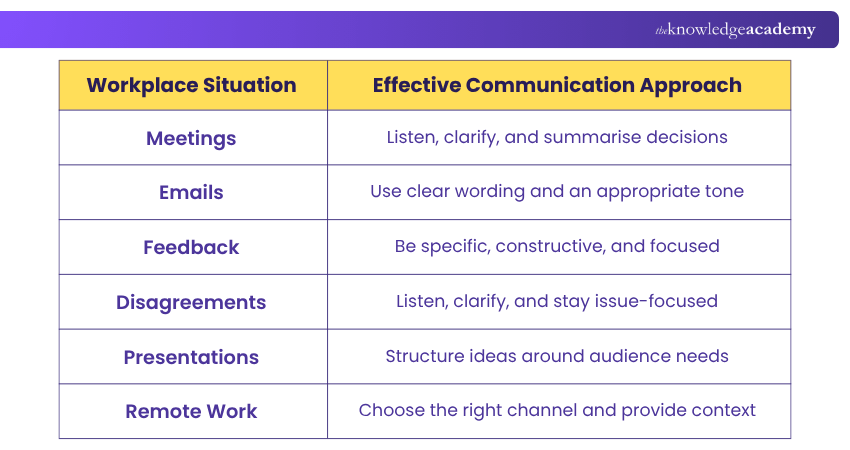
Workplace communication takes different forms depending on the situation, audience, and purpose. Here are some common workplace situations where effective communication skills can make a clear difference:
How to Improve Your Communication Skills?
Communication skills can be strengthened through deliberate practice and reflection. Instead of trying to “communicate better” generally, focus on specific behaviours that can be observed and improved. Here are the ways you can improve them:
1) Understand Your Audience: Consider the listener’s knowledge, priorities, expectations, and communication needs before deciding how much detail to provide.
2) Choose the Right Communication Channel: Not every message belongs to an email, meeting, or instant message. Consider the complexity, urgency, and sensitivity of the information before selecting a channel.
3) Listen Before Responding: Give the other person enough time to complete their point. When necessary, clarify or summarise what you have heard before giving your response.
4) Use Clear and Direct Language: Remove unnecessary jargon and complexity. Focus on what the other person actually needs to understand or do.
5) Pay Attention to Non-verbal Signals: Observe facial expressions, posture, tone, and eye contact while also considering what your own non-verbal behaviour may be communicating.
6) Ask Better Questions: Open questions can reveal information that simple yes-or-no questions may miss. They can also encourage people to explain their reasoning and concerns more fully.
7) Encourage Participation: Make space for different viewpoints, particularly during group discussions. Communication improves when people feel able to contribute rather than when only the most confident voices are heard.
8) Request Feedback: Ask trusted colleagues where your communication could become clearer or more effective. Look for patterns across feedback rather than reacting to one isolated comment.
Communication Check
Before an important conversation, ask yourself:
1. What outcome am I trying to achieve?2. Does the other person have enough context?3. Am I using clear language?4. Have I listened to their complete point?5. Am I making any unchecked assumptions?6. Is my tone appropriate?7. Have I chosen the right communication channel?8. Have I given them an opportunity to respond?
Build essential skills to lead with clarity and influence decisions with our Executive Communication Training – Join now!
Common Barriers to Effective Communication
Even experienced communicators can encounter barriers that reduce understanding. Recognising these problems early makes them easier to address. Let’s explore them below:
1) Poor Listening: Interrupting, becoming distracted, or preparing a response too early can cause important details to be missed.
2) Unclear Language: Jargon, vague wording, or excessive detail can make a straightforward message difficult to understand.
3) Assumptions: People may assume they understand another person’s intentions without checking whether their interpretation is correct.
4) Emotional Reactions: Stress, frustration, or defensiveness can influence both how a message is delivered and how it is interpreted.
5) Information Overload: Providing too much information at once can make the main message difficult to identify.
6) Choosing the Wrong Communication Channel: Complex or sensitive discussions may be difficult to resolve through short written messages.
Conclusion
Communication skills shape how clearly individuals can share ideas, understand others and respond in different situations. Strengthening listening, clarity and adaptability can make your interactions more effective. Ultimately, good communication is not only about what you say, but whether your message is understood.
Improve professional communication and workplace confidence with our Business Communication Course - Join now.
Frequently Asked Questions
What is the Difference Between Communication Skills and Interpersonal Skills?

Communication skills focus specifically on exchanging and understanding information, while Interpersonal skills are broader and can include teamwork, relationship-building, leadership, and other abilities used when interacting with people.
Can Communication Skills be Improved with Practice?
Yes. Communication skills can improve through regular practice, feedback, active listening, reflection, and greater awareness of how others respond to your communication.
Which Communication Skill is Most Important in the Workplace?
There is no single skill that suits every situation, but active listening is particularly important because effective communication depends on understanding others as well as expressing your own ideas.

Charlotte Wilson


Soft Skills and Business Training Manager
Charlotte Wilson is an expert in soft skills development, with over 14 years of experience helping individuals and teams improve communication, productivity and emotional intelligence in the workplace. Her training content is focused on enhancing interpersonal effectiveness and fostering positive, collaborative environments across all levels of an organisation.
View Detail

 If you wish to make any changes to your course, please


