


We may not have the course you’re looking for. If you enquire or give us a call on 01344203999 and speak to our training experts, we may still be able to help with your training requirements.
Top 15 Coaching Skills to Become an Effective Coach
ByCharlotte WilsonLast updated on: 23 October 2026
Effective coaching requires strong communication, active listening and the ability to guide others towards their goals. This blog explores 15 essential coaching skills that help build trust, encourage growth and support meaningful progress.
A Quick Look
1. Active listening and empathy help coaches understand different perspectives.2. Powerful questioning encourages individuals to explore solutions independently.3. Constructive feedback supports improvement through clear and respectful communication.4. Goal setting and motivation help individuals maintain direction and commitment.5. Self-awareness and reflection help coaches recognise their strengths, biases and areas for professional development.
Have you ever had a conversation that helped you see a problem differently or discover a solution you hadn't considered? That's what effective coaching can achieve. But guiding someone towards meaningful progress takes more than simply offering advice. It requires the right coaching skills to listen, understand and encourage independent thinking.
Whether you're a manager, team leader or aspiring professional coach, developing these skills can help you support others with greater confidence. So, what makes someone an effective coach, and how can you strengthen those abilities? Let's explore them in this blog.
Top 15 Essential Coaching Skills
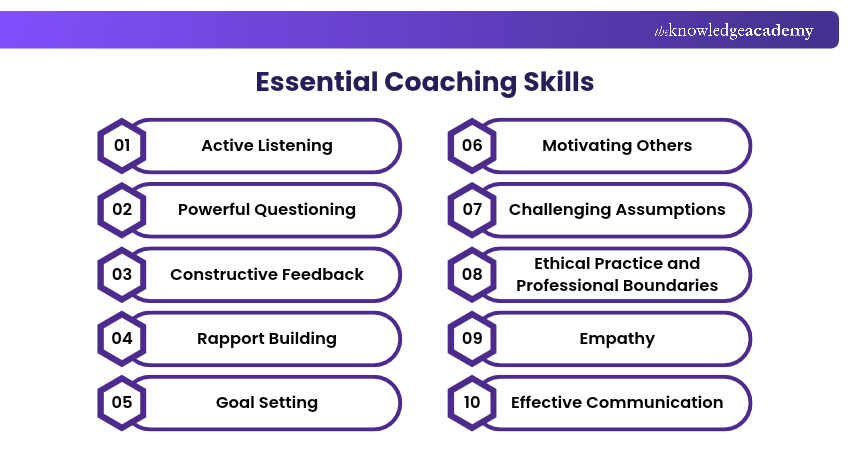
Effective coaching involves a combination of communication, interpersonal and self-management skills. These skills help coaches understand individual needs, encourage reflection and support meaningful progress. Here are 15 essential coaching skills worth developing:
1) Active Listening
Active listening requires paying full attention to what the other person is saying, both verbally and non-verbally. It involves observing body language, paraphrasing, summarising and asking clarifying questions to demonstrate understanding.
This skill is essential for coaching because it helps you build rapport, establish trust and identify the needs, goals and challenges of the individuals you coach.

2) Powerful Questioning
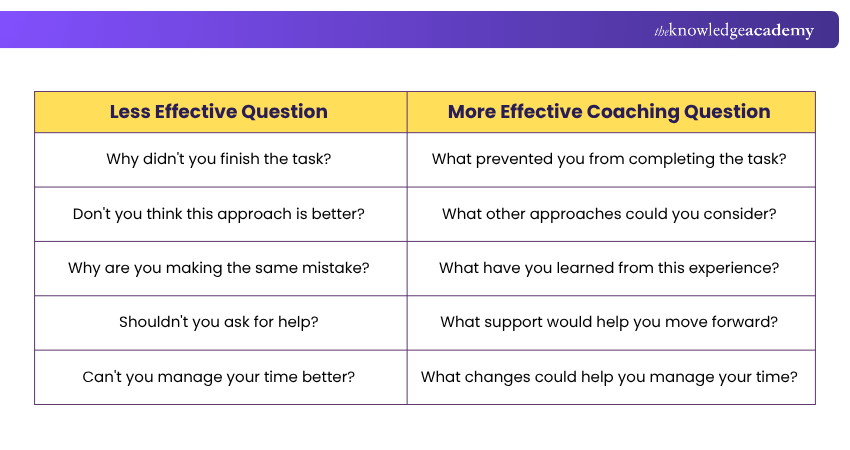
Powerful questioning is the skill of asking open-ended, probing and relevant questions that encourage deeper thinking, self-awareness and independent decision-making.
Powerful questions are usually short, simple and focused on the coachee's experiences, perspectives and goals. This skill helps individuals explore their situations, challenge assumptions and identify possible solutions.
3) Constructive Feedback
Constructive feedback is one of the fundamental coaching skills. It involves giving honest, specific and timely feedback that helps individuals improve their performance or behaviour.
Constructive feedback is based on facts, observations and examples. It helps individuals recognise their strengths, understand areas for improvement and identify practical actions for development. Feedback should be delivered respectfully and encourage reflection rather than judgement.
4) Rapport Building
Rapport building is the skill of creating a positive coaching relationship based on mutual trust, respect and understanding. It involves using verbal and non-verbal communication techniques, such as maintaining appropriate eye contact, demonstrating genuine interest and responding attentively.
This skill is important because it creates a comfortable and supportive atmosphere, encouraging individuals to communicate openly and participate actively in coaching conversations.
5) Goal Setting
Goal setting is an essential coaching skill that involves helping individuals identify meaningful objectives and develop realistic plans to achieve them. Effective coaches use techniques such as the Specific, Measurable, Achievable, Relevant and Time-bound (SMART) framework to guide individuals in setting clear and actionable goals.
This skill enables coaches to help individuals clarify their priorities, break larger goals into manageable steps and track their progress. It also allows coaches to encourage accountability and support individuals in making decisions that align with their personal or professional aspirations.
6) Motivating Others
Motivating others means helping people recognise their reasons for pursuing goals and maintain their commitment when challenges arise. It involves strategies such as recognising progress, encouraging reflection, celebrating achievements and helping individuals connect their actions with personal goals.
This skill helps coaches encourage coachees to stay focused on their goals, build confidence and remain resilient when facing challenges. By recognising progress and offering constructive encouragement, coaches can help individuals maintain motivation and overcome setbacks throughout their development.
7) Challenging Assumptions
Challenging assumptions involves encouraging individuals to question limiting beliefs, reconsider familiar perspectives and explore alternative approaches. It includes asking thought-provoking questions, providing constructive observations and respectfully highlighting inconsistencies between stated goals and actions.
This skill is important because it encourages critical thinking, promotes self-discovery and helps individuals recognise opportunities they may have overlooked.
Pro Tip
When challenging someone's assumptions, ask questions that encourage curiosity rather than defensiveness. For example, “What makes you see the situation this way?” can help individuals reconsider their thinking without feeling criticised.
8) Ethical Practice and Professional Boundaries
Ethical practice involves maintaining confidentiality, respecting individual autonomy and establishing clear boundaries throughout the coaching relationship. Effective coaches act with integrity, recognise potential conflicts of interest and explain the responsibilities and expectations of everyone involved.
For example, before beginning a coaching engagement, a coach should agree on confidentiality, session objectives and professional boundaries with the coachee. This helps establish trust, protect sensitive information and maintain a respectful coaching relationship.
Inspire growth, build confidence and guide others towards their goals with the Coaching and Mentoring Training - Register now!
9) Empathy
Empathy means understanding another person's feelings, experiences and perspectives without making assumptions or passing judgement. It involves using emotional intelligence and attentive listening to recognise the individual's concerns and respond with sensitivity.
This skill helps build rapport and trust while allowing coaches to adapt their communication and approach to individual circumstances and needs.
10) Effective Communication
Effective communication in coaching involves exchanging information, ideas and feedback clearly while adapting your communication style to the coachee's needs. It involves verbal and non-verbal communication skills, including clear explanations, appropriate tone, body language and checking for mutual understanding.
Effective communication is crucial because it reduces misunderstandings, supports productive discussions and ensures coaching conversations remain clear and purposeful.
11) Problem-solving
Problem-solving involves helping individuals being coached understand challenges, consider possible solutions and make informed decisions. It draws on logical, analytical and creative thinking techniques, such as brainstorming, evaluating alternatives and action planning.
Rather than solving problems on behalf of coachees or individuals, an effective coach encourages them to assess their options and develop solutions that suit their circumstances.
12) Emotional Intelligence
Emotional intelligence is the ability to recognise, understand and manage your own emotions while responding appropriately to the emotions of others. It includes self-awareness, emotional regulation, empathy and interpersonal awareness.
Emotional intelligence supports coaching because it helps maintain trust, navigate sensitive conversations and respond constructively when individuals experience frustration, uncertainty or setbacks.
Understand emotions, build connections and communicate with greater confidence by joining the Emotional Intelligence Training now!
13) Self-awareness
Self-awareness is the ability to recognise your own strengths, weaknesses, values, beliefs and biases. It involves using feedback, reflection and assessment to understand how your behaviour, communication style and assumptions influence coaching conversations.
This skill helps coaches identify areas for improvement, recognise personal limitations and remain focused on the individual's needs rather than their own preferences.
14) Self-regulation
Self-regulation helps manage your emotions, impulses and behaviours during coaching interactions. It involves techniques such as mindfulness, controlled breathing and pausing before responding to challenging situations.
This skill helps coaches remain composed, avoid reactive judgements and maintain professionalism during emotionally demanding conversations.
15) Creativity
Creativity involves generating new ideas, perspectives and approaches to challenges. It includes techniques such as brainstorming, mind mapping and exploring alternative possibilities.
Creativity is important because it encourages flexible thinking, helps individuals move beyond familiar patterns and supports the discovery of practical solutions that align with their goals.
How to Improve Your Coaching Skills?
Developing coaching skills takes consistent practice, a willingness to learn and regular reflection. Whether you're new to coaching or looking to strengthen your existing abilities, the following approaches can help you become more effective. Let's look at them below:
1) Practise Coaching Regularly: The best way to improve your coaching skills is to practise them consistently. You can practise these skills by coaching willing colleagues, peers or clients in appropriate settings. You can also join a coaching community, participate in supervised practice sessions or join structured training programmes to receive constructive feedback.
2) Learn From Experienced Coaches: Another way to improve your coaching skills is to learn from various sources and resources. You can learn from books, articles, podcasts, videos and professional coaching programmes. You can also learn from experienced coaches, mentors and supervisors who can demonstrate effective questioning, listening and feedback techniques.
3) Reflect on Your Coaching Practice: A third way to improve your coaching skills is to reflect on your own coaching practice and outcomes. You can evaluate your effectiveness through reflective journals, feedback from team members, and professional coaching supervision.
Coaching Skills Self-assessment Checklist
Use this checklist to reflect on how effectively you apply coaching skills during conversations.□ Do I listen carefully without unnecessary interruptions?□ Do I ask open-ended questions that encourage independent thinking?□ Do I provide specific, respectful and constructive feedback?□ Do I recognise and manage my own assumptions and biases?□ Do I help individuals establish realistic goals and actions?□ Do I reflect on my coaching approach and seek feedback regularly?
Transform your leadership approach and empower others to excel with the Executive Leadership Coaching Training - Join today!

Charlotte Wilson creates Business Skills content that helps professionals communicate more effectively, manage workplace pressures and collaborate with others. Her practical resources support stronger professional relationships, individual effectiveness and positive team behaviour.
View Detail

 If you wish to make any changes to your course, please


